Green Bean Salad: Calories, Nutrition and Health Benefits
A crisp, refreshing, nutrient-dense salad with powerful health benefits for every wellness goal.
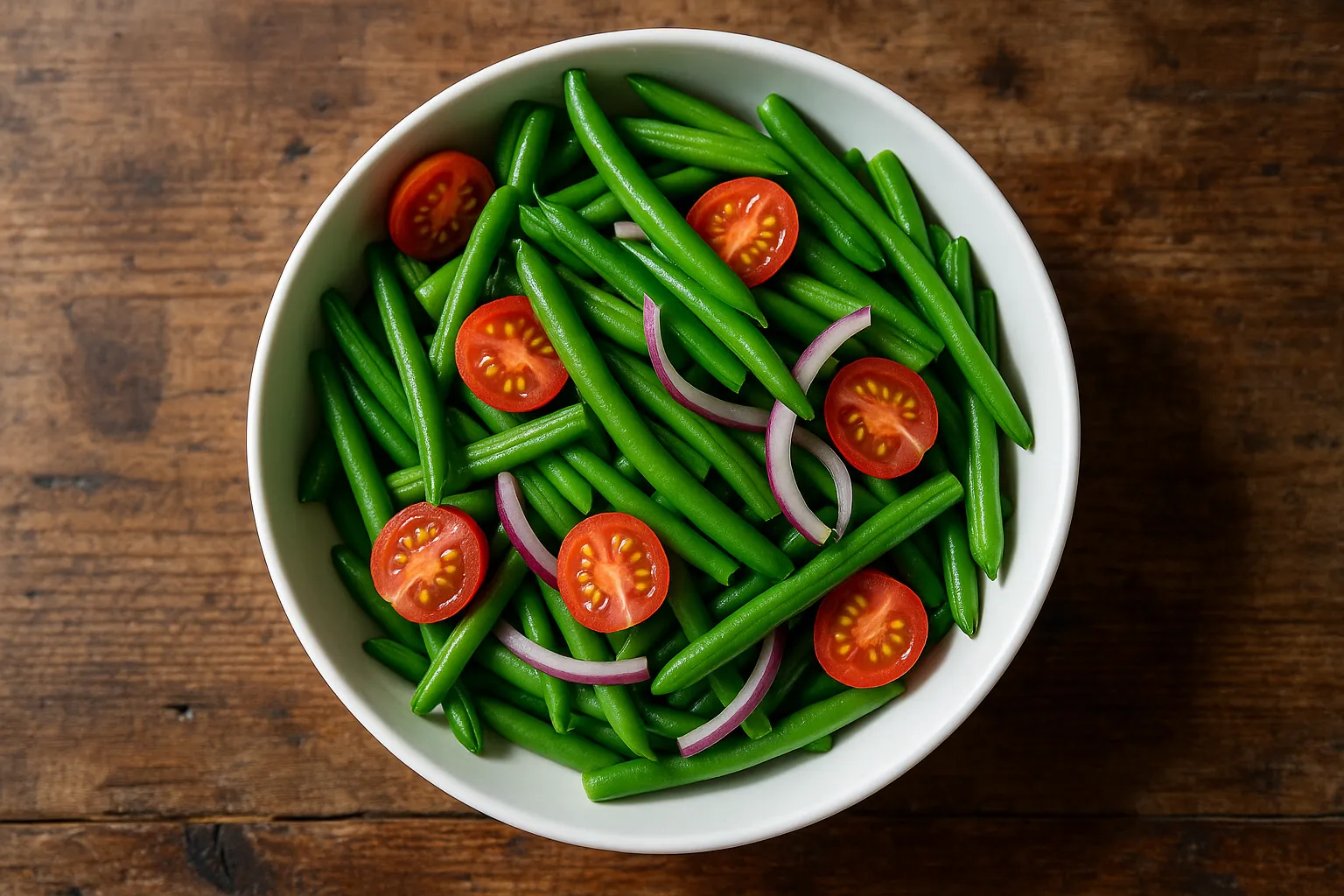
Quick Nutrition Facts
Per 1 Cup Green Bean Salad (125g)
| Nutrient | Amount |
|---|---|
| Calories | 44 kcal |
| Protein | 2.4g |
| Carbohydrates | 10g |
| Fiber | 4g |
| Sugars | 2g |
| Fat | 0.1g |
| Vitamin K | 60mcg |
| Vitamin C | 16mg |
| Folate | 42mcg |
| Iron | 1.2mg |
Macronutrient Breakdown
 ChatGPT
  Claude
  AI Mode
  Perplexity
NUTRITIONIST INSIGHT
Green beans deliver 75% of your daily vitamin K needs in just one cup. The high fiber content (4g) supports gut health and blood sugar control with only 44 calories.
Myth Busters
MYTH #1: Green Beans Are Just Water with No Nutrients
TRUTH: Despite being 90% water, green beans are nutrient powerhouses with high fiber, vitamin K, vitamin C, folate, and antioxidants. The low-calorie density makes them perfect for nutrient-rich weight loss diets.
MYTH #2: Green Beans Are Too High in Carbs for Diabetics
TRUTH: Green beans have a low glycemic index of 32, meaning they don't spike blood sugar. The 4g fiber per cup slows glucose absorption, making them ideal for diabetes management.
MYTH #3: Raw Green Beans Are Toxic
TRUTH: While raw green beans contain lectins that can cause digestive discomfort in large amounts, lightly steaming for 5-7 minutes eliminates this concern while preserving nutrients. Blanched or steamed green beans are perfectly safe and nutritious.
MYTH #4: Green Beans Have No Protein Value
TRUTH: One cup provides 2.4g plant protein. While not a primary protein source, green beans contribute to daily protein intake and pair excellently with protein-rich foods like chicken, fish, tofu, or eggs for complete nutrition.
MYTH #5: Canned Green Beans Are Nutritionally Worthless
TRUTH: Canned green beans retain most nutrients but may contain added sodium. Rinse canned beans to reduce sodium by 40%. Fresh or frozen are preferred, but canned beans still provide fiber, vitamins, and convenience.
NutriScore by Health Goals
| Health Goal | NutriScore | Why This Score? |
|---|---|---|
| Weight Loss |  | Only 44 calories per cup, 4g fiber promotes fullness, low GI (32) prevents cravings. Unlimited servings recommended. |
| Muscle Gain |  | Provides 2.4g protein, vitamin C for collagen synthesis, vitamin K for bone health. Best paired with lean proteins. |
| Diabetes Management | | Low glycemic index (32) and high fiber stabilize blood sugar. Excellent vegetable choice for diabetics at any meal. |
| PCOS Management | | Low-calorie, high-fiber, low-GI food improves insulin sensitivity and supports weight management. Eat freely. |
| Pregnancy Nutrition | | Vitamin K supports fetal bone development, folate prevents neural tube defects, iron aids blood production. Safe daily. |
| Viral/Flu Recovery | | High vitamin C (16mg) boosts immunity, easy to digest, hydrating with 90% water content, provides energy without digestive strain. |
PERSONALIZED NUTRITION
Track your meals with NutriScan for personalized NutriScores based on your specific health goals!
Blood Sugar Response to Green Bean Salad
Understanding how green bean salad affects your blood glucose shows why it's ideal for diabetes management and weight control.
Typical Glucose Response Curve
This chart shows typical blood glucose response for general healthy individuals. Individual responses may vary. Not medical advice.
How to Maximize Blood Sugar Benefits
Pairing green beans with protein or healthy fat creates minimal glucose impact and sustained energy:
- 🍗 Grilled chicken or fish - Complete protein with healthy fats
- 🥚 Hard-boiled eggs - Protein and satiety
- 🥜 Sliced almonds - Healthy fats and crunch
- 🧀 Feta or goat cheese - Protein and flavor
This combination keeps blood sugar stable while providing complete nutrition, ideal for all health goals especially diabetes and PCOS.
Cultural Significance
Green beans (also called string beans, snap beans, or French beans) have been cultivated for over 7,000 years, originating in Central and South America.
In India:
- Popular in Gujarati, Punjabi, and South Indian cuisines
- Used in sabzi (stir-fry), sambhar, and mixed vegetable dishes
- Called "French beans" in Indian English
- Often combined with potatoes, carrots, or paneer
- Ayurveda considers green beans cooling and digestive-friendly
Global Impact:
- Second most consumed fresh vegetable in the US after potatoes
- Grown in over 130 countries worldwide
- Available year-round due to global cultivation
- Essential ingredient in French cuisine (haricots verts)
Compare & Substitute
Green Bean Salad vs Similar Vegetables (Per 100g)
| Nutrient | 🥗 Green Beans | 🥦 Broccoli | 🥒 Cucumber | 🫛 Snap Peas |
|---|---|---|---|---|
| Calories | 35 kcal | 34 kcal | 15 kcal | 42 kcal |
| Carbs | 8g | 7g | 3.6g | 7.6g |
| Fiber | 3.2g | 2.6g | 0.5g | 2.6g |
| Protein | 1.8g | 2.8g | 0.7g | 2.8g |
| Fat | 0.1g | 0.4g | 0.1g | 0.2g |
| Vitamin K | 48mcg | 102mcg | 16mcg | 25mcg |
| Vitamin C | 13mg | 89mg | 2.8mg | 60mg |
| Iron | 1mg | 0.7mg | 0.3mg | 2.1mg |
| Best For | Weight loss, low-calorie | High vitamin C, immunity | Hydration, ultra low-cal | Protein, sweet crunch |
Frequently Asked Questions
Are green beans good for weight loss?
Yes, green beans are excellent for weight loss. With only 35 calories per cup and 4g of fiber, they promote fullness and satiety while providing essential nutrients. The low glycemic index (32) helps control appetite and prevents blood sugar spikes that trigger hunger.
Best practices: Eat 1-2 cups daily; steam or stir-fry with minimal oil; add to salads, soups, or as side dishes; combine with lean proteins for complete meals.
Can diabetics eat green bean salad?
Yes, green bean salad is ideal for diabetics. Green beans have a low glycemic index of 32 and provide 4g of fiber per cup, which slows sugar absorption and stabilizes blood sugar levels.
Tips for diabetics:
- Eat unlimited amounts as a vegetable side
- Pair with protein sources (chicken, fish, tofu)
- Best timing: lunch or dinner as part of balanced meals
- Avoid heavy dressings with added sugars
Green beans are recommended by diabetes educators as a "free food" that can be eaten in generous portions without affecting blood sugar significantly.
How much protein is in green bean salad?
One cup of green bean salad contains 2.4g of protein. While not a significant protein source, green beans contribute to daily protein intake and excel as sources of fiber (4g), vitamin K (60mcg), and vitamin C (16mg) with minimal calories.
For muscle gain or high-protein diets, combine green bean salad with grilled chicken, hard-boiled eggs, chickpeas, or quinoa for complete nutrition.
What are the main health benefits of green beans?
Key Benefits:
- Bone Health: 60mcg vitamin K (75% DV) supports bone mineralization and calcium absorption
- Digestive Health: 4g fiber supports regular bowel movements and gut bacteria
- Weight Management: 35 calories per cup allows large portions without weight gain
- Blood Sugar Control: Low GI (32) prevents glucose spikes
- Heart Health: Fiber, potassium, and antioxidants support cardiovascular function
- Immunity: Vitamin C and antioxidants strengthen immune response
When is the best time to eat green bean salad?
Depends on your goal:
- Weight Loss: Lunch or dinner (high volume, low calories fills you up). Start meals with salad to reduce overall calorie intake.
- Muscle Gain: Post-workout paired with protein (chicken, fish). Add to lunch or dinner for nutrient density.
- Diabetes: Any meal to add fiber and nutrients without blood sugar impact.
- General Health: Versatile for lunch or dinner; pairs well with all protein sources.
PRO TIP
Eating green bean salad before your main meal can reduce total calorie intake by 10-15% due to fiber-induced fullness.
Are raw or cooked green beans healthier?
Both have benefits - choose based on digestibility and taste preference:
Lightly Steamed/Blanched Green Beans:
- More digestible and easier on stomach
- Eliminates trace lectins that can cause discomfort
- Retains 90% of nutrients with 5-7 minute cooking
- Better flavor and texture for most people
Raw Green Beans:
- Slightly higher vitamin C content (loses 10% when cooked)
- Maximum fiber content
- Can cause digestive discomfort in some people
- Requires thorough washing
Recommendation: Steam or blanch for 5-7 minutes for optimal nutrition, digestibility, and taste. Raw is safe for those with strong digestion.
How many servings of green bean salad should I eat per day?
General Guidelines:
- 1-2 cups daily - Most people (covers vegetable needs, low calories)
- 2-3 cups daily - Weight loss diets (fills you up, prevents hunger)
- 1 cup daily - Diabetes, PCOS (excellent choice, eat freely)
- Unlimited - Athletes, active individuals (hydrating, nutrient-dense)
No upper limit: Green beans are so low in calories and high in nutrients that you can eat them freely without health concerns.
Track your meals with NutriScan app to see how green beans fit your personal nutrition goals.
Should I be concerned about lectins in green beans?
Not if you cook them. Raw green beans contain lectins (plant proteins) that can cause digestive discomfort in large amounts, but lightly steaming or blanching for 5-7 minutes eliminates this concern completely.
Safe preparation methods:
- Steam: 5-7 minutes
- Blanch: 3-4 minutes in boiling water
- Stir-fry: 5-6 minutes
- Roast: 15-20 minutes at 400°F
Cooked green beans are perfectly safe and retain excellent nutritional value.


Similar Nutritious Fruits
4505 Chicharrones Classic Chili Salt
7 Eleven Japan Crispy Corn Cheese
Explore More Nutrition Tools & Resources
AI Calorie Counter App - Snap a Photo, Get Macros
AI Nutritionist App That Reads Your Logged Meals
Best Protein Supplements for Women
Bulking Meal Plan App That Sets Your Surplus
ChatGPT Calorie Counter Alternative That Keeps the Total
ChatGPT Diet Plan Alternative That Tracks What You Eat
ChatGPT Weight Loss Coach Alternative With a Food Log
Fast Food Calorie Counter App That Reads the Tray
Free Calorie Tracker App with AI Photo Scans | NutriScan
Indian Diet Plan App With Veg and Non Veg Meals
Indian Food Calorie Calculator - Get Instant Nutrition Facts for Desi Meals — 2026
Intermittent Fasting for Women, Timer and Meal Log App
Intermittent Fasting Tracker App - Free Fasting Timer
Macro Tracker App That Fills the Numbers From a Photo
Mediterranean Diet Meal Plan App That Counts the Oil
Micronutrient Tracker App for Vitamins and Minerals
MyFitnessPal Alternative That Stays Free | NutriScan
NutriScore App: A Free Grade on Every Meal | NutriScan
Nutrition Label Scanner App for the Amount You Ate
Second Trimester Protein Guide
Vegetarian Meal Plan App With a Protein Target
Voice Calorie Counter - Speak to Track Meals Hands-Free
Water and Calorie Tracker App - Free Water Log