Green Olives: Calories, Nutrition and Health Benefits
Mediterranean superfood packed with heart-healthy fats, antioxidants, and anti-inflammatory compounds for optimal wellness.
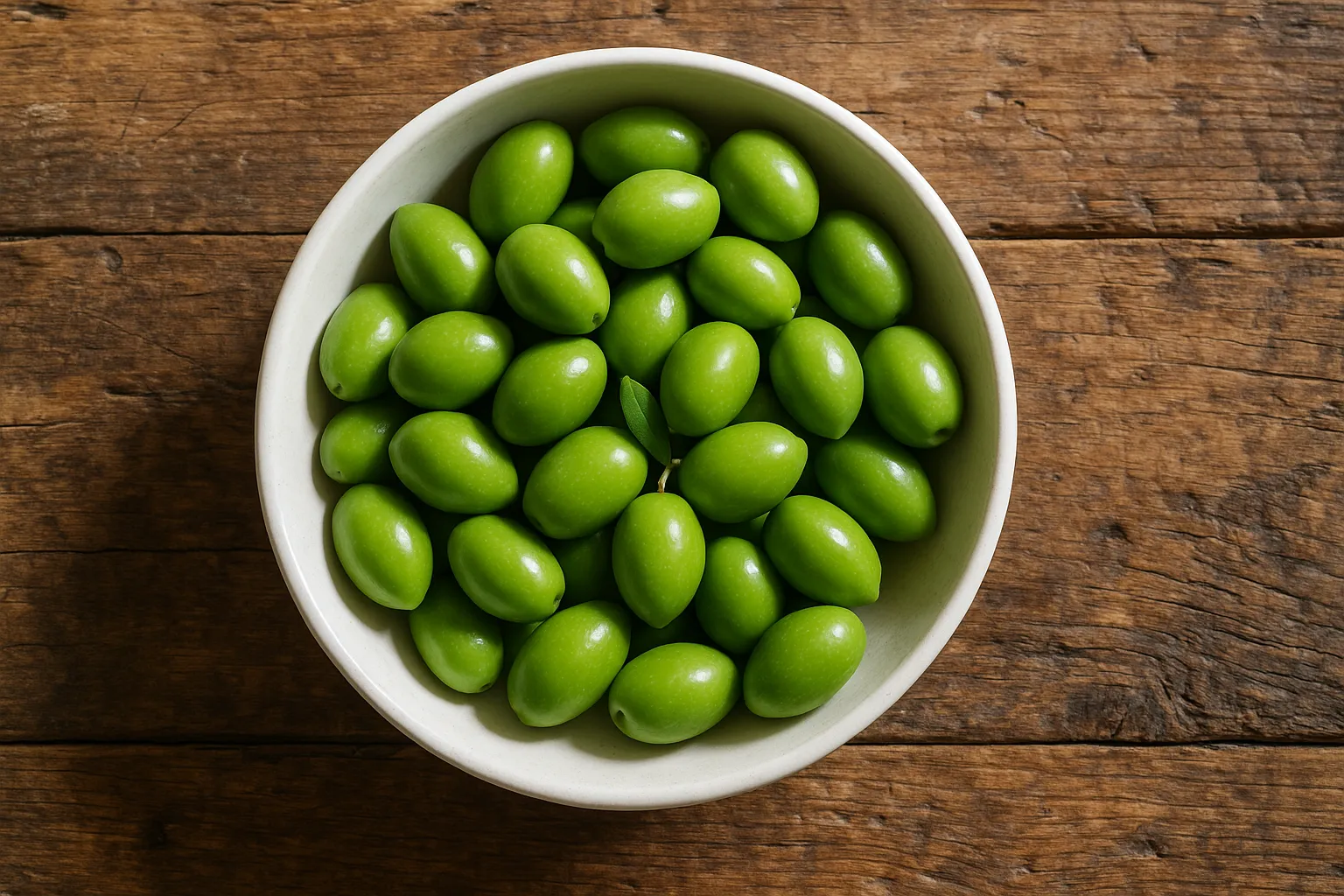
Quick Nutrition Facts
Per 10 Green Olives (34g)
| Nutrient | Amount |
|---|---|
| Calories | 49 |
| Protein | 0.3g |
| Carbohydrates | 1.3g |
| Fiber | 1.1g |
| Sugars | 0g |
| Fat | 5.1g |
| Monounsaturated Fat | 3.8g |
| Sodium | 248mg |
| Vitamin E | 1.1mg |
| Iron | 1.1mg |
| Calcium | 29mg |
| Polyphenols (Approx.) | 55mg |
Macronutrient Breakdown
 ChatGPT
  Claude
  AI Mode
  Perplexity
NUTRITIONIST INSIGHT
Green olives are rich in oleic acid, the same heart-healthy monounsaturated fat found in extra virgin olive oil. Their polyphenol antioxidants provide anti-inflammatory benefits that support cardiovascular health.
Myth Busters
MYTH #1: Olives Are Too High in Fat to Be Healthy
TRUTH: Olives contain primarily monounsaturated fats (74% of total fat), the same heart-healthy fats that reduce LDL cholesterol and lower cardiovascular disease risk. These fats are beneficial, not harmful.
MYTH #2: The High Sodium in Olives Makes Them Unhealthy
TRUTH: While olives are high in sodium (248mg per 10 olives), Mediterranean diet studies show olive consumption associates with lower blood pressure, likely due to potassium and polyphenols. Those on low-sodium diets should limit portions or rinse olives.
MYTH #3: Olives Cause Weight Gain Due to Fat Content
TRUTH: Despite being calorie-dense, olives support weight management. The healthy fats promote satiety and reduce overall calorie intake. Mediterranean diet followers who eat olives regularly maintain healthier weights.
MYTH #4: Green and Black Olives Have Different Nutritional Value
TRUTH: Green and black olives are the same fruit at different ripeness stages. Both provide similar calories, healthy fats, and antioxidants. Green olives are firmer with slightly higher polyphenol content; black olives are milder and softer.
MYTH #5: Stuffed Olives Are Just as Healthy
TRUTH: Pimento-stuffed olives are similar to plain ones. However, cheese-stuffed, garlic-stuffed, or cream-cheese-stuffed varieties add significant calories (70-90 per 10 vs 49), saturated fat, and sodium. Check nutrition labels.
MYTH #6: All Olives Are Processed and Lack Nutrients
TRUTH: While olives undergo curing (brining or dry-salting) to remove bitterness, this doesn't destroy nutrients. Olives retain vitamin E, polyphenols, and healthy fats. Naturally brined olives preserve more antioxidants than lye-cured varieties.
NutriScore by Health Goals
| Health Goal | NutriScore | Why This Score? |
|---|---|---|
| Weight Loss |  | Low carbs (1.3g), healthy fats promote satiety, 49 calories per 10 olives fit calorie-controlled diets. Limit to 10-15 daily due to sodium. |
| Muscle Gain |  | Minimal protein (0.3g); healthy fats support hormone production. Use as flavor addition, not primary protein source. |
| Diabetes Management |  | Very low carbs (1.3g), negligible impact on blood sugar, healthy fats may improve insulin sensitivity. |
| PCOS Management | | Anti-inflammatory fats support hormone balance, low glycemic impact, polyphenols may reduce PCOS-related inflammation. |
| Pregnancy Nutrition | | Healthy fats for fetal brain development, iron supports increased blood volume. Moderate sodium intake. |
| Viral/Flu Recovery | | Vitamin E and polyphenols support immune function, anti-inflammatory properties aid recovery, easy to digest. |
PERSONALIZED NUTRITION
Track your meals with NutriScan for personalized NutriScores based on your specific health goals!
Blood Sugar Response to Green Olives
Green olives have minimal impact on blood glucose due to very low carbohydrate content and high healthy fat composition.
Typical Glucose Response Curve
This chart shows minimal blood glucose response to green olives. The tiny carb content causes virtually no blood sugar elevation. Individual responses may vary. Not medical advice.
Blood Sugar Benefits
Green olives are ideal for blood sugar management and can help reduce glucose spikes when paired with higher-carb foods:
- 🥖 With bread or crackers - Healthy fats slow carb absorption
- 🍝 In pasta dishes - Reduces overall glycemic impact of the meal
- 🥗 In salads - Enhances satiety without raising blood sugar
- 🧀 With cheese and nuts - Creates balanced, low-glycemic snack
The monounsaturated fats in olives may improve insulin sensitivity over time when consumed as part of a Mediterranean diet pattern.
Cultural Significance
Olives are one of humanity's oldest cultivated foods, central to Mediterranean civilization for over 6,000 years.
Mediterranean Origins:
- First cultivated in Syria and Palestine around 4000 BCE
- Ancient Greeks and Romans considered olives sacred
- Olive branches symbolize peace, wisdom, and victory across cultures
- Central to Mediterranean diet, one of world's healthiest eating patterns
In Indian Context:
- Not traditionally Indian but gaining popularity in urban areas
- Used in Continental and Mediterranean restaurants
- Growing health awareness driving olive and olive oil consumption
- Premium imported olives available in major cities
Global Impact:
- Spain, Italy, and Greece produce 75% of world's olives
- Mediterranean diet (olive-rich) linked to longevity and disease prevention
- Olive cultivation supports millions of farmers globally
- Sustainable crop requiring minimal water compared to other fats
Compare & Substitute
Green Olives vs Similar Foods (Per 100g)
| Nutrient | 🫒 Green Olives | ⚫ Black Olives (Ripe) | 🥑 Avocado | 🌰 Almonds |
|---|---|---|---|---|
| Calories | 145 kcal | 115 kcal | 160 kcal | 579 kcal |
| Carbs | 3.8g | 6.3g | 8.5g | 21.6g |
| Fiber | 3.3g | 3.2g | 6.7g | 12.5g |
| Protein | 1.0g | 0.8g | 2.0g | 21.2g |
| Fat | 15.3g | 10.7g | 14.7g | 49.9g |
| Monounsaturated Fat | 11.3g | 7.9g | 9.8g | 31.6g |
| Sodium | 735mg | 735mg | 7mg | 1mg |
| Vitamin E | 3.2mg | 1.7mg | 2.1mg | 25.6mg |
| Polyphenols | ~160mg | ~120mg | ~150mg | ~200mg |
| Best For | Low-carb snacks | Milder flavor | Vitamins | Protein/Fat |
Frequently Asked Questions
Are green olives good for weight loss?
Yes, green olives support weight loss when consumed in moderation. They provide healthy monounsaturated fats that promote satiety and reduce hunger between meals.
Weight loss benefits:
- Only 49 calories per 10 olives
- Healthy fats increase meal satisfaction
- Virtually no sugar or refined carbs
- Fit Mediterranean diet patterns linked to healthy weight
Best practices: Limit to 10-15 olives daily (50-75 calories). Watch sodium content if you're salt-sensitive. Avoid calorie-dense stuffed varieties (cheese, cream cheese).
Track with NutriScan app to fit olives into your daily calorie goals.
What are the main health benefits of green olives?
Green olives offer powerful health benefits primarily from monounsaturated fats and polyphenol antioxidants.
Key Benefits:
- Heart Health: Oleic acid reduces LDL cholesterol and blood pressure
- Anti-Inflammatory: Polyphenols combat chronic inflammation
- Antioxidant Protection: Vitamin E and hydroxytyrosol protect cells
- Blood Sugar Control: Minimal carbs, may improve insulin sensitivity
- Bone Health: Calcium and anti-inflammatory compounds support bone density
- Digestive Health: Fiber promotes healthy gut bacteria
Mediterranean populations with high olive consumption show lower rates of cardiovascular disease, diabetes, and certain cancers.
How many green olives can I eat per day?
Depends on your health goals and sodium tolerance:
- General health: 10-15 olives daily (50-75 calories, 250-375mg sodium)
- Weight loss: 10-12 olives as satisfying, low-carb snack
- Low-sodium diet: 5-7 olives maximum; rinse before eating
- Diabetes/PCOS: 15-20 olives (excellent low-carb option)
- Mediterranean diet: 20-25 olives as part of balanced nutrition
Monitor total daily sodium intake; aim to stay under 2,300mg (1,500mg for high blood pressure).
Are green olives healthier than black olives?
Both green and black olives are healthy with minor nutritional differences. They're the same fruit harvested at different ripeness stages.
Green Olives:
- Firmer texture, more bitter flavor
- Slightly higher polyphenol content
- 145 calories per 100g
Black Olives (Ripe):
- Softer, milder flavor
- Easier to digest
- 115 calories per 100g
Nutrition verdict: Both provide heart-healthy fats and antioxidants. Choose based on taste preference; nutritional differences are minimal.
Can diabetics eat green olives?
Yes, green olives are excellent for diabetics. They have minimal carbs (1.3g per 10 olives), very low glycemic index, and don't spike blood sugar.
Diabetes benefits:
- Negligible impact on blood glucose
- Healthy fats may improve insulin sensitivity
- Can help reduce glucose spikes from higher-carb meals
- Satisfy cravings without sugar
Recommendations: Enjoy 10-20 olives daily as snacks or with meals. Pair with cheese, nuts, or vegetables for balanced nutrition. Monitor sodium intake if you have high blood pressure.
Are canned green olives healthy?
Canned green olives retain most nutrients and health benefits but are high in sodium. The canning process doesn't significantly reduce healthy fats, vitamin E, or polyphenols.
Tips for healthier canned olives:
- Choose varieties labeled "low sodium" or "reduced sodium"
- Rinse olives under water to remove 20-30% of sodium
- Check ingredient lists; avoid artificial preservatives
- Look for "naturally brined" rather than "lye-cured" for more antioxidants
Fresh or jarred olives from Mediterranean markets often have simpler ingredient lists and less sodium than mass-produced canned varieties.
What's the difference between green olives and olive oil?
Green olives and extra virgin olive oil come from the same fruit but differ in form, concentration, and use.
Green Olives (whole fruit):
- 145 calories per 100g
- Contains fiber, water, protein
- Eaten as whole food
- 3.3g fiber per 100g
Extra Virgin Olive Oil:
- 884 calories per 100g (pure fat)
- No fiber or water
- Used for cooking/dressing
- More concentrated source of oleic acid
Health comparison: Both provide monounsaturated fats and polyphenols. Whole olives offer fiber and lower calorie density; olive oil provides concentrated healthy fats for cooking.


Similar Nutritious Foods
4505 Chicharrones Classic Chili Salt
7 Eleven Japan Crispy Corn Cheese
Explore More Nutrition Tools & Resources
AI Calorie Counter App - Snap a Photo, Get Macros
AI Nutritionist App That Reads Your Logged Meals
Best Protein Supplements for Women
Bulking Meal Plan App That Sets Your Surplus
ChatGPT Calorie Counter Alternative That Keeps the Total
ChatGPT Diet Plan Alternative That Tracks What You Eat
ChatGPT Weight Loss Coach Alternative With a Food Log
Fast Food Calorie Counter App That Reads the Tray
Free Calorie Tracker App with AI Photo Scans | NutriScan
Indian Diet Plan App With Veg and Non Veg Meals
Indian Food Calorie Calculator - Get Instant Nutrition Facts for Desi Meals — 2026
Intermittent Fasting for Women, Timer and Meal Log App
Intermittent Fasting Tracker App - Free Fasting Timer
Macro Tracker App That Fills the Numbers From a Photo
Mediterranean Diet Meal Plan App That Counts the Oil
Micronutrient Tracker App for Vitamins and Minerals
MyFitnessPal Alternative That Stays Free | NutriScan
NutriScore App: A Free Grade on Every Meal | NutriScan
Nutrition Label Scanner App for the Amount You Ate
Second Trimester Protein Guide
Vegetarian Meal Plan App With a Protein Target
Voice Calorie Counter - Speak to Track Meals Hands-Free
Water and Calorie Tracker App - Free Water Log