Guacamole: Calories, Nutrition and Health Benefits
Heart-healthy avocado dip packed with monounsaturated fats, fiber, and essential nutrients for every wellness goal.
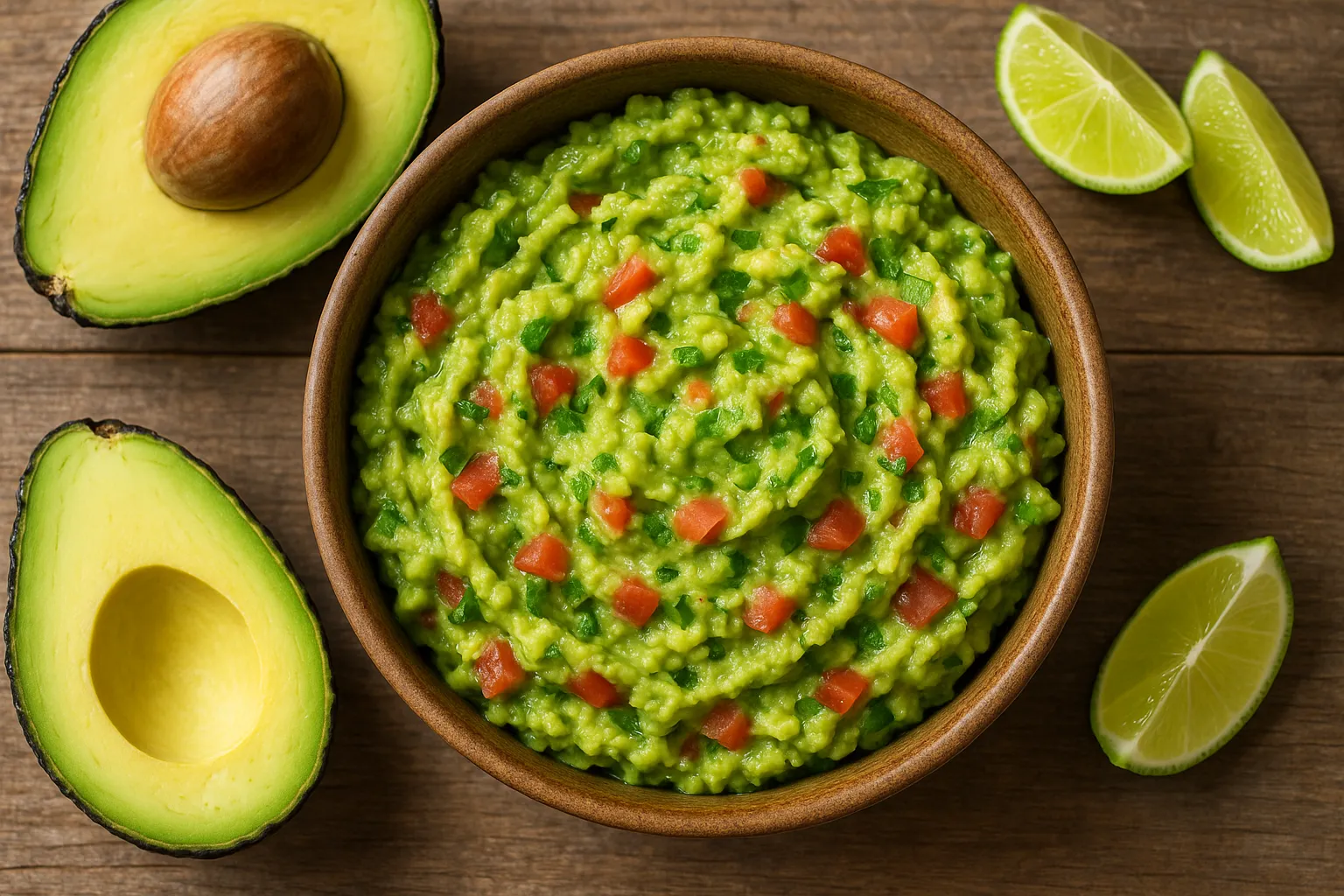
Quick Nutrition Facts
Per 1/2 Cup (120g serving)
| Nutrient | Amount |
|---|---|
| Calories | 192 kcal |
| Protein | 2.4g |
| Carbohydrates | 11g |
| Fiber | 8.4g |
| Sugars | 1.2g |
| Fat | 18g |
| Saturated Fat | 2.6g |
| Potassium | 582mg |
| Vitamin E | 2.5mg |
| Folate | 97mcg |
| Vitamin K | 25mcg |
Macronutrient Breakdown
 ChatGPT
  Claude
  AI Mode
  Perplexity
NUTRITIONIST INSIGHT
Guacamole's monounsaturated fats (13g per serving) actively lower LDL cholesterol while raising HDL. The 8.4g fiber aids digestion and promotes fullness. Avocado's carotenoids are better absorbed with the healthy fats present in this dish.
Myth Busters
MYTH #1: Guacamole Is Too High in Calories for Weight Loss
TRUTH: While calorie-dense (160 kcal per 100g), guacamole's healthy fats and fiber increase satiety and reduce overall calorie intake. Studies show avocado consumers have lower BMI despite higher fat intake. The key is portion control: 1/4 to 1/2 cup servings work perfectly for weight management.
MYTH #2: The Fat in Guacamole Is Bad for Your Heart
TRUTH: Guacamole contains primarily monounsaturated fats (oleic acid), the same heart-healthy fat in olive oil. These fats lower LDL cholesterol and reduce cardiovascular disease risk. The American Heart Association recommends replacing saturated fats with foods like avocados.
MYTH #3: Guacamole Spikes Blood Sugar
TRUTH: Guacamole has an extremely low glycemic index (under 15). The healthy fats and fiber actually help stabilize blood sugar and improve insulin sensitivity. Diabetics benefit from pairing guacamole with whole grains or vegetables for balanced meals.
MYTH #4: Store-Bought Guacamole Is Just as Healthy
TRUTH: Most commercial guacamole contains preservatives, excess sodium (300-400mg per serving vs 150mg homemade), sour cream, and as little as 2% avocado. Fresh homemade provides maximum nutrition without additives. Always check labels for avocado percentage and sodium content.
MYTH #5: Guacamole Isn't a Good Protein Source
TRUTH: Correct - guacamole provides only 2g protein per 100g. However, it's exceptional for healthy fats, fiber, and micronutrients. Pair with protein-rich foods like eggs, beans, grilled chicken, or serve with whole grain chips for complete nutrition.
MYTH #6: You Shouldn't Eat Guacamole Daily
TRUTH: Eating guacamole daily is perfectly healthy in appropriate portions. Daily avocado consumption improves diet quality and cardiovascular health markers. The key is portion awareness: 1/4 to 1/2 cup daily fits most nutrition goals, providing sustained energy and essential nutrients.
NutriScore by Health Goals
| Health Goal | NutriScore | Why This Score? |
|---|---|---|
| Weight Loss |  | High fiber (8.4g per serving) promotes fullness; healthy fats reduce cravings. Limit to 1/4 cup (96 kcal) servings. |
| Muscle Gain |  | Provides healthy fats for hormone production but low protein (2.4g). Pair with protein-rich foods like eggs or chicken. |
| Diabetes Management |  | Very low GI (<15), monounsaturated fats improve insulin sensitivity, fiber slows glucose absorption. |
| PCOS Management | | Healthy fats balance hormones, low sugar content, anti-inflammatory properties support PCOS management. |
| Pregnancy Nutrition | | Rich in folate (97mcg per serving) essential for fetal development, healthy fats support baby's brain development. |
| Viral/Flu Recovery | | Vitamin E and antioxidants support immunity; easy to digest; provides sustained energy during recovery. |
PERSONALIZED NUTRITION
Track your meals with NutriScan for personalized NutriScores based on your specific health goals!
Blood Sugar Response to Guacamole
Understanding how guacamole affects blood glucose helps you incorporate this superfood into any diet plan.
Typical Glucose Response Curve
This chart shows minimal blood glucose response typical for healthy individuals consuming guacamole. Individual responses may vary. Not medical advice.
How to Enjoy Guacamole for Optimal Blood Sugar
Guacamole naturally provides excellent blood sugar control due to healthy fats and fiber slowing carbohydrate absorption. Pair with these foods for balanced meals:
- 🥕 Vegetables (carrots, bell peppers, cucumber) - Adds fiber and micronutrients
- 🌮 Whole grain tortillas or chips - Provides complex carbs with fiber
- 🥚 Eggs - Complete protein for sustained energy
- 🍗 Grilled chicken or fish - Lean protein balances the meal
This combination provides steady energy without blood sugar spikes, keeping you fuller for longer.
Cultural Significance
Guacamole originates from the Aztecs of Mexico over 500 years ago. The name derives from the Nahuatl word "āhuacamolli" meaning "avocado sauce."
In Mexico:
- Traditional preparation in molcajete (stone mortar and pestle)
- Essential component of Mexican cuisine alongside tacos, tostadas, and enchiladas
- Regional variations include Guacamole Norteño (with pomegranate) and Guacamole Verde (with tomatillos)
- Served at celebrations, festivals, and everyday meals
Global Impact:
- Over 2 billion pounds of avocados consumed annually in the US alone
- Super Bowl Sunday sees Americans consume 140 million pounds of avocados
- International variations: added mango in Thailand, feta cheese in Greece
- Sustainable farming practices increasingly adopted worldwide
Compare & Substitute
Guacamole vs Similar Healthy Dips (Per 100g)
| Nutrient | 🥑 Guacamole | 🫘 Hummus | 🥄 Greek Yogurt Dip | 🧀 Tzatziki |
|---|---|---|---|---|
| Calories | 160 kcal | 166 kcal | 59 kcal | 72 kcal |
| Carbs | 9g | 14g | 3.6g | 4.3g |
| Fiber | 7g | 6g | 0g | 0.4g |
| Protein | 2g | 8g | 10g | 4g |
| Fat | 15g | 10g | 0.4g | 5g |
| Potassium | 485mg | 228mg | 141mg | 175mg |
| Vitamin E | 2.1mg | 0.5mg | 0.01mg | 0.2mg |
| Folate | 81mcg | 59mcg | 7mcg | 9mcg |
| Best For | Keto, heart health, low-carb | Protein, vegetarian, Mediterranean | High-protein, weight loss | Low-calorie, Mediterranean |
Frequently Asked Questions
Is guacamole good for weight loss?
Yes, guacamole supports weight loss despite being calorie-dense. The 7g fiber per 100g and healthy monounsaturated fats promote fullness and reduce overall calorie intake.
Best practices: Limit to 1/4 cup servings (60g, 96 calories) once daily; pair with raw vegetables instead of chips; avoid store-bought versions with added sour cream; make fresh at home to control ingredients.
Research shows avocado consumers have lower BMI and reduced belly fat despite higher calorie intake.
Can diabetics eat guacamole?
Absolutely. Guacamole has an extremely low glycemic index (under 15) and won't spike blood sugar. The monounsaturated fats improve insulin sensitivity while fiber slows carbohydrate absorption.
Tips for diabetics: Pair with whole grain crackers or vegetables; use as a spread instead of mayonnaise; add to salads for blood sugar stability; avoid sugary store-bought versions; check labels for added ingredients.
Always monitor your individual blood sugar response and consult your healthcare provider.
Is guacamole keto-friendly?
Yes, guacamole is excellent for ketogenic diets. With only 9g net carbs per 100g (after subtracting 7g fiber) and 15g healthy fats, it fits keto macros perfectly.
Keto serving ideas: Use cucumber slices or celery as dippers; add to keto tacos with lettuce wraps; top eggs or grilled meats; blend into smoothies for healthy fats; make avocado boats filled with guacamole and protein.
The high fat content supports ketosis and provides sustained energy without carb cravings.
What are the main health benefits of guacamole?
Key Benefits:
- Heart Health: Monounsaturated fats lower LDL cholesterol and reduce cardiovascular disease risk by up to 22%
- Blood Sugar Control: Low GI and healthy fats improve insulin sensitivity
- Eye Health: Lutein and zeaxanthin protect against age-related macular degeneration
- Pregnancy Nutrition: 81mcg folate per 100g supports fetal neural tube development
- Digestive Health: 7g fiber promotes regular bowel movements and gut health
- Anti-inflammatory: Antioxidants reduce chronic inflammation
How much guacamole should I eat per day?
Depends on your goal:
- Weight Loss: 1/4 cup (60g, 96 kcal) once daily, paired with vegetables
- Weight Maintenance: 1/2 cup (120g, 192 kcal) daily with balanced meals
- Muscle Gain: 1/2 cup (120g) twice daily, combined with protein sources
- Keto Diet: Up to 3/4 cup (180g, 288 kcal) daily as primary fat source
- Diabetes: 1/3 cup (80g, 128 kcal) with meals to stabilize blood sugar
IMPORTANT NOTE
While guacamole is healthy, excessive consumption (over 1 cup daily) may provide too many calories for weight loss goals. Balance with other nutrient-dense foods.
Is store-bought or homemade guacamole healthier?
Homemade is significantly healthier. Store-bought often contains preservatives (like citric acid, ascorbic acid), excess sodium (300-400mg vs 150mg homemade), sour cream, artificial flavors, and as little as 2% actual avocado content.
Homemade guacamole benefits:
- Maximum avocado content (90-100%)
- No preservatives or additives
- Control over sodium and ingredients
- Fresher taste and better texture
- Higher nutrient density
- Customizable to dietary needs
Simple recipe: Mash 2 ripe avocados; add juice of 1 lime; mix in diced tomato, onion, cilantro; season with salt to taste. Ready in 5 minutes.
Always check store-bought labels for avocado percentage, sodium content, and added ingredients.
How do I keep guacamole from turning brown?
Guacamole browns due to oxidation when exposed to air. Use these proven methods:
Prevention tips: Leave avocado pit in the guacamole; add lime or lemon juice (vitamin C prevents oxidation); press plastic wrap directly on surface to eliminate air; store in airtight container; add thin layer of water on top before sealing.
Storage: Fresh guacamole lasts 1-2 days refrigerated. Brown surface layer is safe to eat but can be scraped off. For longer storage, freeze in ice cube trays for up to 3 months.


Similar Nutritious Foods
4505 Chicharrones Classic Chili Salt
7 Eleven Japan Crispy Corn Cheese
Explore More Nutrition Tools & Resources
AI Calorie Counter App - Snap a Photo, Get Macros
AI Nutritionist App That Reads Your Logged Meals
Best Protein Supplements for Women
Bulking Meal Plan App That Sets Your Surplus
ChatGPT Calorie Counter Alternative That Keeps the Total
ChatGPT Diet Plan Alternative That Tracks What You Eat
ChatGPT Weight Loss Coach Alternative With a Food Log
Fast Food Calorie Counter App That Reads the Tray
Free Calorie Tracker App with AI Photo Scans | NutriScan
Indian Diet Plan App With Veg and Non Veg Meals
Indian Food Calorie Calculator - Get Instant Nutrition Facts for Desi Meals — 2026
Intermittent Fasting for Women, Timer and Meal Log App
Intermittent Fasting Tracker App - Free Fasting Timer
Macro Tracker App That Fills the Numbers From a Photo
Mediterranean Diet Meal Plan App That Counts the Oil
Micronutrient Tracker App for Vitamins and Minerals
MyFitnessPal Alternative That Stays Free | NutriScan
NutriScore App: A Free Grade on Every Meal | NutriScan
Nutrition Label Scanner App for the Amount You Ate
Second Trimester Protein Guide
Vegetarian Meal Plan App With a Protein Target
Voice Calorie Counter - Speak to Track Meals Hands-Free
Water and Calorie Tracker App - Free Water Log