Gyoza: Calories, Nutrition and Health Benefits
Crispy-bottomed Japanese pan-fried dumplings with a savory pork filling, delivering balanced protein and carbs in every satisfying bite.
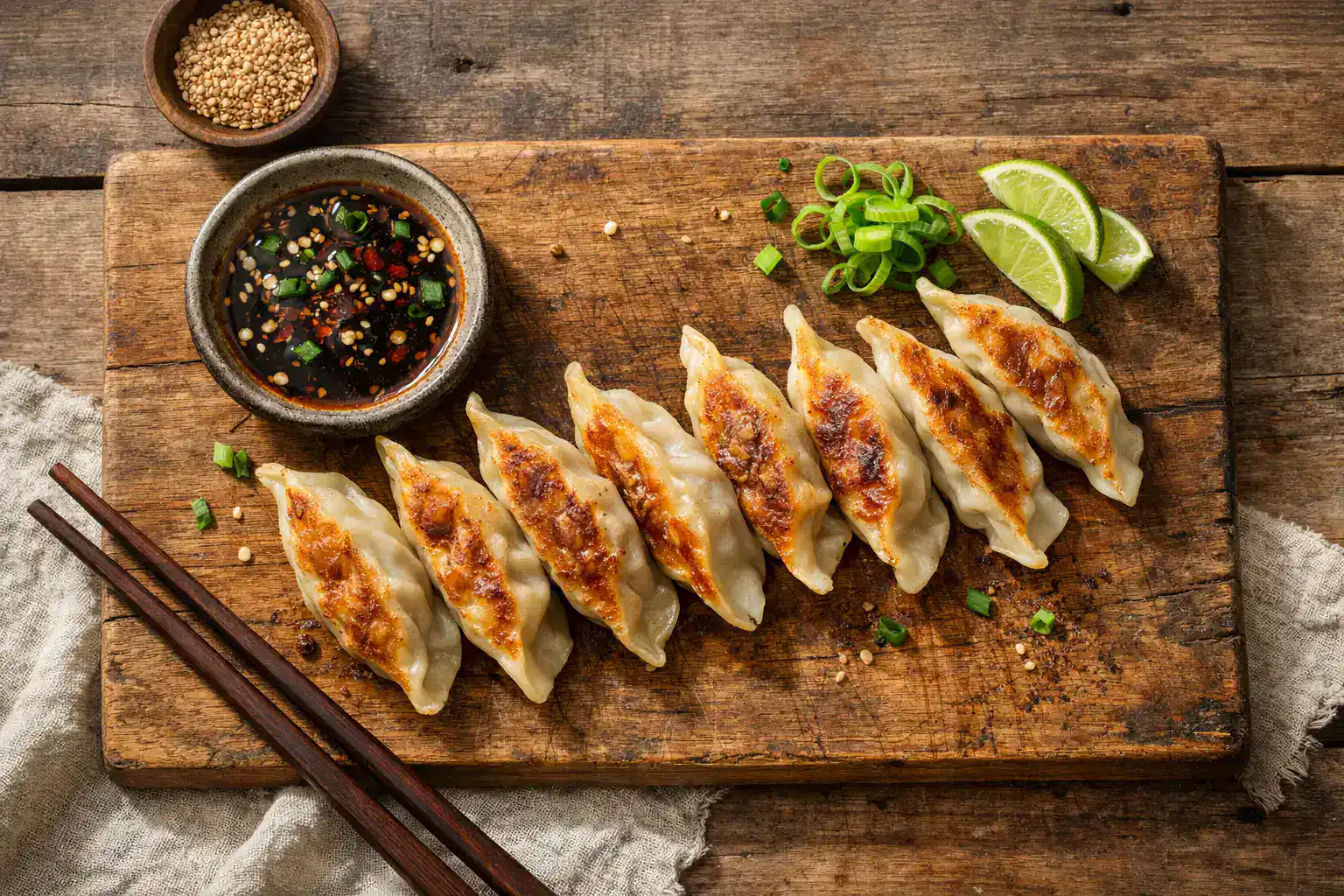
Quick Nutrition Facts
Per 6 Pieces (140g)
| Nutrient | Amount |
|---|---|
| Calories | 230 kcal |
| Protein | 10g |
| Carbohydrates | 24g |
| Fiber | 1.5g |
| Sugars | 2g |
| Fat | 10g |
| Saturated Fat | 2.5g |
| Sodium | 420mg |
| Iron | 1.8mg |
| Vitamin B1 | 0.2mg |
Macronutrient Breakdown
 ChatGPT
  Claude
  AI Mode
  Perplexity
NUTRITIONIST INSIGHT
Gyoza offer a balanced macro profile with 10g protein per serving. The combination of protein from pork and carbs from the wrapper makes them a satisfying option. Choose steamed gyoza to cut calories by 20% while keeping the protein intact.
Myth Busters
MYTH #1: Gyoza Are Junk Food
TRUTH: Gyoza contain real ingredients - pork, cabbage, ginger, garlic - wrapped in a thin wheat wrapper. With 10g protein and balanced macros per serving, they're more nutritious than many processed snacks. The key is portion control and cooking method.
MYTH #2: All Dumplings Have the Same Calories
TRUTH: Cooking method matters significantly. Pan-fried gyoza have ~230 calories per 6 pieces, while steamed versions have about 180 calories due to less oil absorption.
MYTH #3: Gyoza Are Too High in Sodium
TRUTH: While gyoza do contain sodium (~420mg per serving), this is manageable within WHO's recommended 2,000mg daily limit. Skip the soy sauce dip or use low-sodium alternatives to reduce intake.
MYTH #4: Diabetics Cannot Eat Gyoza
TRUTH: Diabetics can enjoy gyoza in moderation. The protein content helps moderate blood sugar response. Limit to 3-4 pieces, pair with vegetables, and monitor glucose levels as with any carb-containing food.
MYTH #5: Frozen Gyoza Are Unhealthy
TRUTH: Quality frozen gyoza can be as nutritious as fresh. Flash-freezing preserves nutrients effectively. Check ingredient labels for minimal additives and reasonable sodium content.
NutriScore by Health Goals
| Health Goal | NutriScore | Why This Score? |
|---|---|---|
| Weight Loss |  | 230 calories for 6 pieces is moderate. Limit to 4-5 pieces, choose steamed, and pair with salad for volume. |
| Muscle Gain |  | 10g protein per serving supports muscle recovery. Good post-workout option with balanced carbs for glycogen. |
| Diabetes Management | | Moderate GI due to wheat wrapper. Protein helps buffer glucose response. Limit to 3-4 pieces with vegetables. |
| PCOS Management | | Refined carbs in wrapper affect insulin. Choose smaller portions, pair with fiber-rich sides. |
| Pregnancy Nutrition | | Protein and iron support fetal development. Monitor sodium intake during pregnancy - use minimal dipping sauce. |
| Viral/Flu Recovery | | Easily digestible, provides protein for immune function. Ginger and garlic in filling have traditional immune benefits. |
PERSONALIZED NUTRITION
Track your meals with NutriScan for personalized NutriScores based on your specific health goals!
Blood Sugar Response to Gyoza
Understanding how gyoza affect your blood glucose helps you make informed decisions about portions and pairings.
Typical Glucose Response Curve
This chart shows typical blood glucose response for general healthy individuals. Individual responses may vary. Not medical advice.
How to Flatten the Spike
Pairing carb-rich foods with protein and fiber slows glucose absorption:
- Edamame - Fiber and protein appetizer before gyoza
- Miso soup - Light, low-calorie starter adds satiety
- Cucumber salad - Vinegar dressing further moderates glucose
- Green tea - Antioxidants support metabolic health
This combination extends energy release and keeps you fuller longer.
Cultural Significance
Gyoza originated in China as jiaozi and were adapted in Japan after World War II, becoming a beloved comfort food.
In Japan:
- Signature dish of Utsunomiya and Hamamatsu cities (gyoza capitals)
- Izakaya staple served with beer
- Yaki-gyoza (pan-fried) most popular; sui-gyoza (boiled) and age-gyoza (deep-fried) also common
- New Year's tradition in some regions
Global Spread:
- Korean mandu, Nepali momo, and Polish pierogi share dumpling heritage
- Japanese-style gyoza now popular worldwide in izakaya and ramen shops
- Fusion versions incorporate local flavors (cheese, curry, kimchi)
Compare & Substitute
Gyoza vs Similar Foods (Per 100g)
| Nutrient | Gyoza | Steamed Dumplings | Spring Rolls | Shumai |
|---|---|---|---|---|
| Calories | 164 kcal | 113 kcal | 195 kcal | 152 kcal |
| Carbs | 17g | 11g | 23g | 14g |
| Fiber | 1.1g | 1.4g | 1.8g | 0.8g |
| Protein | 7g | 7g | 5g | 8g |
| Fat | 7g | 4.5g | 10g | 6g |
| Sodium | 300mg | 270mg | 380mg | 350mg |
| Best For | Balanced meal, izakaya | Low-calorie option | Appetizer, crunch texture | Dim sum, protein focus |
Frequently Asked Questions
How many calories are in gyoza?
A serving of 6 pan-fried gyoza (140g) contains approximately 230 calories, with 10g fat, 24g carbohydrates, and 10g protein. Per piece, that's about 38 calories.
Calorie comparison by cooking method:
- Pan-fried (yaki-gyoza): 230 calories/6 pieces
- Steamed (sui-gyoza): 180 calories/6 pieces
- Deep-fried (age-gyoza): 290 calories/6 pieces
Are gyoza healthy?
Gyoza can be part of a healthy diet when eaten in moderation. They provide:
- 10g protein for muscle maintenance
- Iron and B vitamins from pork filling
- Ginger and garlic with anti-inflammatory properties
Tips for healthier gyoza:
- Choose steamed over fried
- Use ponzu instead of soy sauce (less sodium)
- Pair with vegetable sides
- Limit to 6-8 pieces per meal
Can diabetics eat gyoza?
Diabetics can enjoy gyoza with these strategies:
- Limit to 3-4 pieces (15-16g carbs)
- Always pair with protein or vegetables
- Choose steamed versions
- Monitor blood glucose 2 hours after eating
The protein content helps moderate blood sugar response compared to pure carbohydrate foods.
How much protein is in gyoza?
A serving of 6 gyoza provides 10g of protein, primarily from:
- Pork (most common filling)
- Chicken or shrimp (leaner alternatives)
- Vegetables contribute minimal protein
For muscle building, combine gyoza with additional protein sources like edamame or grilled meat.
Are steamed or fried gyoza healthier?
Steamed gyoza are healthier with:
- 20% fewer calories (180 vs 230)
- 30-40% less fat
- Same protein content
- Better nutrient preservation
Pan-fried gyoza have the signature crispy bottom but absorb cooking oil. If you prefer fried, use minimal oil and blot excess.
How many gyoza should I eat?
Recommended portions:
- Weight loss: 4-5 pieces with vegetables
- Maintenance: 6-8 pieces as part of balanced meal
- Athletes/active: 8-10 pieces for higher calorie needs
Always consider the sodium from dipping sauce - it can add 300-500mg per tablespoon of soy sauce.
What's in gyoza filling?
Traditional pork gyoza contain:
- Ground pork
- Napa cabbage
- Garlic and ginger
- Green onions
- Sesame oil
- Soy sauce
Vegetarian versions use mushrooms, tofu, or additional vegetables.


Similar Nutritious Foods
4505 Chicharrones Classic Chili Salt
7 Eleven Japan Crispy Corn Cheese
Explore More Nutrition Tools & Resources
AI Calorie Counter App - Snap a Photo, Get Macros
AI Nutritionist App That Reads Your Logged Meals
Best Protein Supplements for Women
Bulking Meal Plan App That Sets Your Surplus
ChatGPT Calorie Counter Alternative That Keeps the Total
ChatGPT Diet Plan Alternative That Tracks What You Eat
ChatGPT Weight Loss Coach Alternative With a Food Log
Fast Food Calorie Counter App That Reads the Tray
Free Calorie Tracker App with AI Photo Scans | NutriScan
Indian Diet Plan App With Veg and Non Veg Meals
Indian Food Calorie Calculator - Get Instant Nutrition Facts for Desi Meals — 2026
Intermittent Fasting for Women, Timer and Meal Log App
Intermittent Fasting Tracker App - Free Fasting Timer
Macro Tracker App That Fills the Numbers From a Photo
Mediterranean Diet Meal Plan App That Counts the Oil
Micronutrient Tracker App for Vitamins and Minerals
MyFitnessPal Alternative That Stays Free | NutriScan
NutriScore App: A Free Grade on Every Meal | NutriScan
Nutrition Label Scanner App for the Amount You Ate
Second Trimester Protein Guide
Vegetarian Meal Plan App With a Protein Target
Voice Calorie Counter - Speak to Track Meals Hands-Free
Water and Calorie Tracker App - Free Water Log