Haldiram's Aloo Bhujia: Calories, Nutrition and Health Facts
Crispy potato-based Indian namkeen with authentic masala flavor, lighter than regular bhujia but equally calorie-dense.
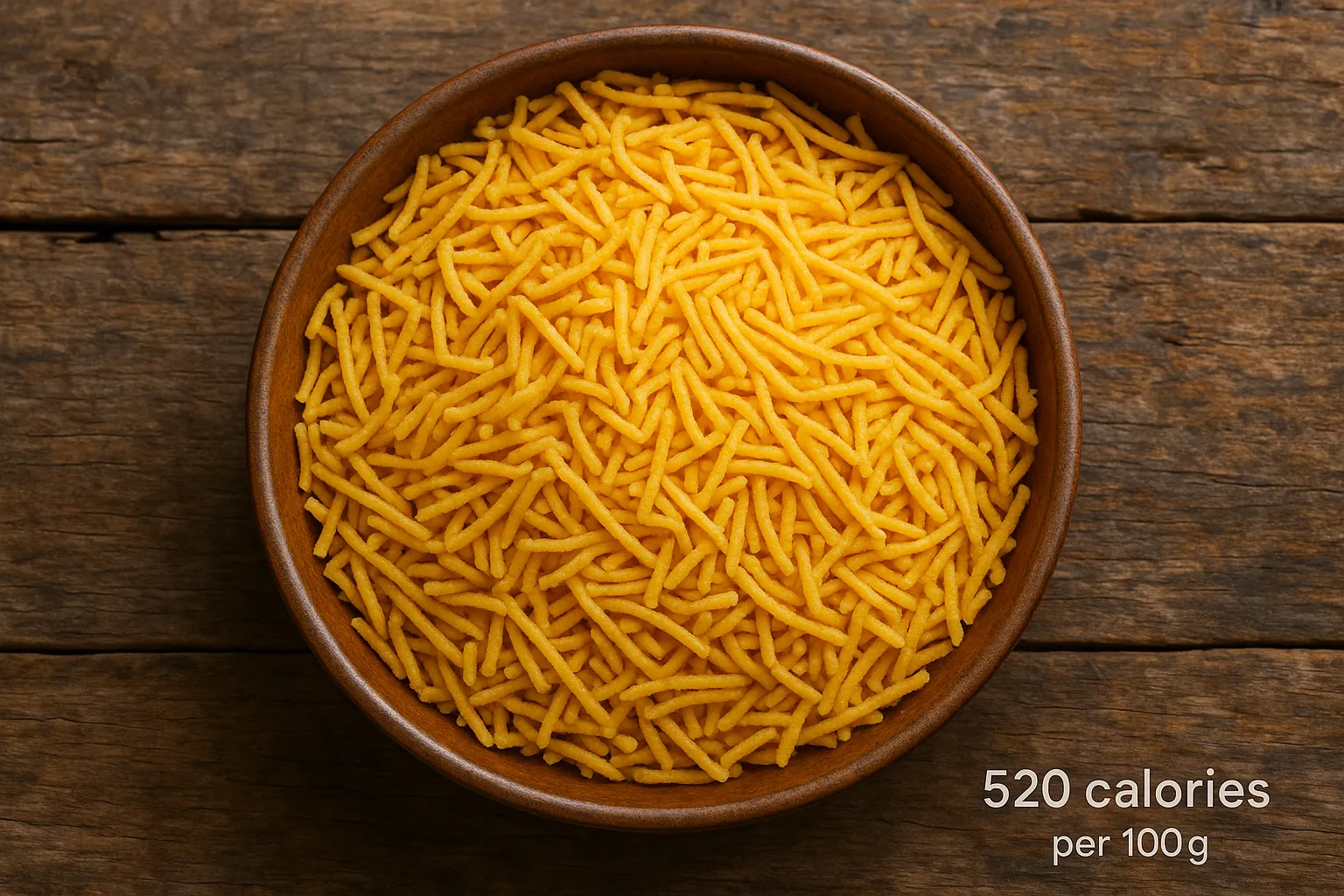
Quick Nutrition Facts
Per 100g Serving
| Nutrient | Amount |
|---|---|
| Calories | 520 kcal |
| Protein | 12g |
| Carbohydrates | 48g |
| Fiber | 3.5g |
| Sugars | 2.5g |
| Fat | 29g |
| Sodium | 780mg |
| Potassium | 420mg |
| Iron | 2.8mg |
| Calcium | 75mg |
Macronutrient Breakdown
 ChatGPT
  Claude
  AI Mode
  Perplexity
NUTRITIONIST INSIGHT
Aloo bhujia combines potato starch with gram flour, creating a lighter texture than regular bhujia but similar calorie density (520 kcal). Potatoes' high glycemic index (75-85) causes rapid blood sugar spikes, especially when deep-fried. Portion control is critical—pre-measure to 20g maximum.
Myth Busters
MYTH #1: Aloo Bhujia is Lighter, So It's Lower in Calories
TRUTH: "Lighter" refers to texture, not calories. Aloo bhujia (520 kcal) has only 16 fewer calories than regular bhujia sev (536 kcal). The perception of lightness often leads to overconsumption, resulting in higher total calorie intake. Both are equally calorie-dense.
MYTH #2: Potatoes Are Healthy, So Aloo Bhujia is Better
TRUTH: While potatoes provide vitamin C and potassium, deep-frying destroys most vitamins and creates acrylamide, a potential carcinogen. The beneficial nutrients in potatoes are lost during high-heat processing. Fresh boiled potatoes (77 kcal per 100g) are healthy; aloo bhujia (520 kcal) is not.
MYTH #3: It Has Less Protein, So It's Lower in Fat Too
TRUTH: Lower protein (12g vs 15g) doesn't mean lower fat. Aloo bhujia still contains 29g fat per 100g—only 2g less than regular bhujia. The potato content replaces some protein with refined carbs, worsening the glycemic impact without reducing fat significantly.
MYTH #4: The Potassium in Potatoes Makes It Heart-Healthy
TRUTH: While potatoes naturally have 420mg potassium per 100g, this is offset by excessive sodium (780mg = 33% daily limit). High sodium-to-potassium ratio increases cardiovascular disease risk, especially with regular consumption.
MYTH #5: Aloo Bhujia is a Good Snack for Active People
TRUTH: Active people need nutrient-dense foods, not empty calories. While aloo bhujia provides quick energy from carbs (48g), the refined potato starch lacks the complex carbohydrates and micronutrients needed for sustained performance. Better options: roasted chana, trail mix, whole grain crackers with nut butter.
MYTH #6: Homemade Aloo Bhujia is Significantly Healthier
TRUTH: Homemade versions may use better oil quality but remain calorie-dense due to deep-frying. You can control sodium, but the frying process still creates trans fats and acrylamide. Baked alternatives reduce fat to 10-15g but require careful preparation. Commercial or homemade, aloo bhujia is an occasional treat.
NutriScore by Health Goals
| Health Goal | NutriScore | Why This Score? |
|---|---|---|
| Weight Loss |  | 520 calories per 100g with minimal satiety. A 30g serving = 156 kcal from refined carbs and oil. The lighter texture encourages overconsumption. Avoid during weight loss or limit to 15g monthly. |
| Muscle Gain |  | 12g protein per 100g is lower than regular bhujia (15g). Calorie-to-protein ratio (520:12 = 43:1) is extremely poor. Better protein sources: paneer (18g, 265 kcal), eggs (13g, 155 kcal per 2 eggs). |
| Diabetes Management | | Potatoes have GI 75-85; fried potato products spike blood sugar rapidly. High carbs (48g) worsen glycemic control. Strictly avoid or limit to 10g. |
| PCOS Management | | High GI worsens insulin resistance. Deep-fried foods increase inflammation. Excessive sodium promotes water retention and bloating. Completely avoid during PCOS management. |
| Pregnancy Nutrition | | High sodium (780mg per 100g) increases gestational hypertension risk. Limit to 20g once weekly; better alternatives: baked chips. |
| Viral/Flu Recovery | | High fat slows digestion when body needs easy-to-digest foods. Spices may irritate throat. Better recovery snacks: khichdi, vegetable soup, boiled potatoes with light salt. |
PERSONALIZED NUTRITION
Track your snacks with NutriScan to understand how calorie-dense foods like aloo bhujia impact your daily nutrition goals!
Blood Sugar Response to Aloo Bhujia
Understanding how potato-based snacks affect blood glucose helps you make smarter snacking choices.
Typical Glucose Response Curve
This chart shows typical blood glucose response for general healthy individuals. Individual responses may vary. Not medical advice.
How to Reduce the Spike
Pairing high-GI snacks with protein and fiber moderates glucose absorption:
- 🥛 Low-fat paneer cubes - High protein slows carb digestion
- 🥒 Cucumber and tomato salad - Fiber and water increase satiety
- 🥜 Handful of roasted peanuts - Protein and healthy fats balance carbs
- 🌱 Sprouted moong salad - Fiber and protein without excess calories
Better approach: Skip aloo bhujia entirely. Choose roasted makhana (347 kcal, GI 50), air-popped popcorn (375 kcal, GI 55), or roasted chana (364 kcal, GI 28) for satisfying crunch with better nutrition.
Cultural Significance
Aloo bhujia emerged as a regional variation of traditional bhujia, catering to preferences for milder spice and softer texture.
In India:
- Popular in North India, especially Punjab and Delhi regions
- Often used as topping for aloo chaat and papdi chaat
- Lighter alternative to regular bhujia for those preferring less spice
- Haldiram's aloo bhujia available nationwide since 1970s
- Common prasad offering in some regional temples
Commercial Evolution:
- Introduced to balance spice levels for broader appeal
- Lower production cost than pure moth dal bhujia
- Shelf life extended to 6 months through nitrogen packaging
- Now exported globally with Indian snack variety packs
- Popular among second-generation diaspora preferring milder flavors
Compare & Substitute
Aloo Bhujia vs Similar Snacks (Per 100g)
| Nutrient | 🥔 Aloo Bhujia | 🥨 Regular Bhujia Sev | 🥔 Potato Chips | 🌰 Baked Makhana |
|---|---|---|---|---|
| Calories | 520 kcal | 536 kcal | 540 kcal | 347 kcal |
| Carbs | 48g | 45g | 52g | 77g |
| Fiber | 3.5g | 4g | 3.1g | 14g |
| Protein | 12g | 15g | 6g | 10g |
| Fat | 29g | 31g | 35g | 1g |
| Sodium | 780mg | 820mg | 380mg | 180mg |
| Potassium | 420mg | 290mg | 1200mg | 350mg |
| Best For | Occasional treat, chaat topping | Spice lovers, occasional treat | Occasional treat | Daily low-calorie snacking |
Frequently Asked Questions
Is Haldiram's Aloo Bhujia good for weight loss?
No, aloo bhujia is unsuitable for weight loss. At 520 calories per 100g with 29g fat, it's calorie-dense with minimal satiety. A 30g serving provides 156 calories from refined carbs and oil.
Weight loss challenges: The lighter texture creates false perception of being "diet-friendly"; easy to overeat due to low satiety; high sodium (780mg per 100g) causes water retention; refined potato starch spikes insulin, promoting fat storage.
Better alternatives for crunchy cravings: Roasted chana (364 kcal, 19g protein, high satiety); air-popped popcorn (375 kcal, high volume); roasted makhana (347 kcal, 14g fiber); vegetable chips baked with minimal oil (180-250 kcal). Limit aloo bhujia to 15g once monthly if absolutely craving.
Can diabetics eat Haldiram's Aloo Bhujia?
Diabetics should strictly avoid aloo bhujia. Potatoes have a glycemic index of 75-85; when fried, they cause rapid blood sugar spikes. The 48g carbs per 100g are primarily refined starches that convert quickly to glucose.
Diabetes risks: Fried potatoes have higher GI than boiled (GI 50-70); minimal fiber (3.5g) doesn't slow glucose absorption; high fat (29g) increases cardiovascular disease risk in diabetics; excessive sodium worsens hypertension.
If absolutely must consume: Maximum 10g portion; pair with high-protein food (paneer, Greek yogurt); eat only mid-afternoon, never on empty stomach; monitor blood sugar 2 hours after eating; skip if HbA1c above 7%. Better diabetic snacks: roasted chana (GI 28), nuts, vegetable sticks with hummus, plain roasted makhana.
How much protein is in Haldiram's Aloo Bhujia?
Haldiram's Aloo Bhujia contains 12g protein per 100g from gram flour coating. A typical 30g serving provides only 3.6g protein.
Protein comparison: Lower than regular bhujia sev (15g) due to potato content replacing dal flour; similar to potato chips (6g) but still minimal; far inferior to roasted chana (19g), paneer (18g), or eggs (13g per 2 eggs).
Why it's inefficient for protein: Calorie-to-protein ratio is 520:12 (43:1)—meaning you consume 43 calories per gram of protein; for muscle gain or high-protein diets, you'd need 250g of aloo bhujia (1,300 kcal) to get 30g protein; same 30g protein comes from 150g paneer (398 kcal) or 5 eggs (387 kcal). Aloo bhujia is a snack food, not a protein source.
What's the difference between aloo bhujia and regular bhujia?
Primary difference: Aloo bhujia contains potato flour/starch mixed with gram flour; regular bhujia sev uses only moth dal and gram flour.
Texture: Aloo bhujia is lighter, softer, and slightly thicker strands; regular bhujia is thinner, crispier, and denser. Flavor: Aloo bhujia is milder with subtle potato taste; regular bhujia has intense spice from moth dal and higher chili content. Nutrition per 100g: Aloo bhujia has 520 kcal, 12g protein, 48g carbs, 29g fat; regular bhujia has 536 kcal, 15g protein, 45g carbs, 31g fat.
Which is "better"? Neither for daily consumption. Regular bhujia has slightly more protein and fiber; aloo bhujia has marginally fewer calories but higher glycemic impact from potatoes. Both are occasional treats with similar nutritional drawbacks.
How many calories in one handful of aloo bhujia?
One handful (approximately 30g) of Haldiram's Aloo Bhujia contains about 156 calories, 8.7g fat, 14.4g carbs, and 3.6g protein.
Portion reality check: Most people underestimate handful size—the lighter texture makes aloo bhujia "fluffier," leading to 40-50g actual portions (208-260 kcal); while eating, handfuls increase as palatability stimulates appetite; a "few handfuls" while watching TV can easily reach 100g (520 kcal).
Calorie equivalents: 30g aloo bhujia (156 kcal) = 2 medium chapatis (240 kcal total) minus nutrition or 3 boiled eggs (233 kcal) minus protein or 200g cooked rice (260 kcal) minus satiety. The eggs, chapatis, or rice provide far more nutrition and fullness. Pre-portioning is essential—never eat directly from the packet.
Is aloo bhujia healthier than regular potato chips?
Marginally, but not significantly enough to matter. Both are deep-fried, calorie-dense snacks with minimal nutritional value.
Advantages of aloo bhujia: Higher protein (12g vs 6g) from gram flour coating; slightly fewer calories (520 vs 540 kcal); some iron and calcium from besan.
Advantages of potato chips: Much lower sodium (380mg vs 780mg)—less than half; simpler ingredients in plain varieties; higher potassium (1200mg vs 420mg) if using potatoes with skin.
Disadvantages both share: High fat (29-35g); low fiber (3-4g); refined carbs causing blood sugar spikes; acrylamide formation during high-heat frying; minimal micronutrients after processing.
Verdict: Aloo bhujia has slightly better protein but dangerously high sodium—double that of potato chips. For people with high blood pressure or heart disease, potato chips are actually safer in moderation. Both should be rare treats (20-30g weekly maximum), not regular snacks. For daily crunchy snacking, choose air-popped popcorn, roasted makhana, or baked vegetable chips with controlled oil.


Similar Nutritious Snacks
4505 Chicharrones Classic Chili Salt
7 Eleven Japan Crispy Corn Cheese
Explore More Nutrition Tools & Resources
AI Calorie Counter App - Snap a Photo, Get Macros
AI Nutritionist App That Reads Your Logged Meals
Best Protein Supplements for Women
Bulking Meal Plan App That Sets Your Surplus
ChatGPT Calorie Counter Alternative That Keeps the Total
ChatGPT Diet Plan Alternative That Tracks What You Eat
ChatGPT Weight Loss Coach Alternative With a Food Log
Fast Food Calorie Counter App That Reads the Tray
Free Calorie Tracker App with AI Photo Scans | NutriScan
Indian Diet Plan App With Veg and Non Veg Meals
Indian Food Calorie Calculator - Get Instant Nutrition Facts for Desi Meals — 2026
Intermittent Fasting for Women, Timer and Meal Log App
Intermittent Fasting Tracker App - Free Fasting Timer
Macro Tracker App That Fills the Numbers From a Photo
Mediterranean Diet Meal Plan App That Counts the Oil
Micronutrient Tracker App for Vitamins and Minerals
MyFitnessPal Alternative That Stays Free | NutriScan
NutriScore App: A Free Grade on Every Meal | NutriScan
Nutrition Label Scanner App for the Amount You Ate
Second Trimester Protein Guide
Vegetarian Meal Plan App With a Protein Target
Voice Calorie Counter - Speak to Track Meals Hands-Free
Water and Calorie Tracker App - Free Water Log