Haldiram's Bhujia Sev: Calories, Nutrition and Health Facts
India's beloved crispy snack made from moth dal and gram flour, delivering authentic flavors but requiring mindful portion control.
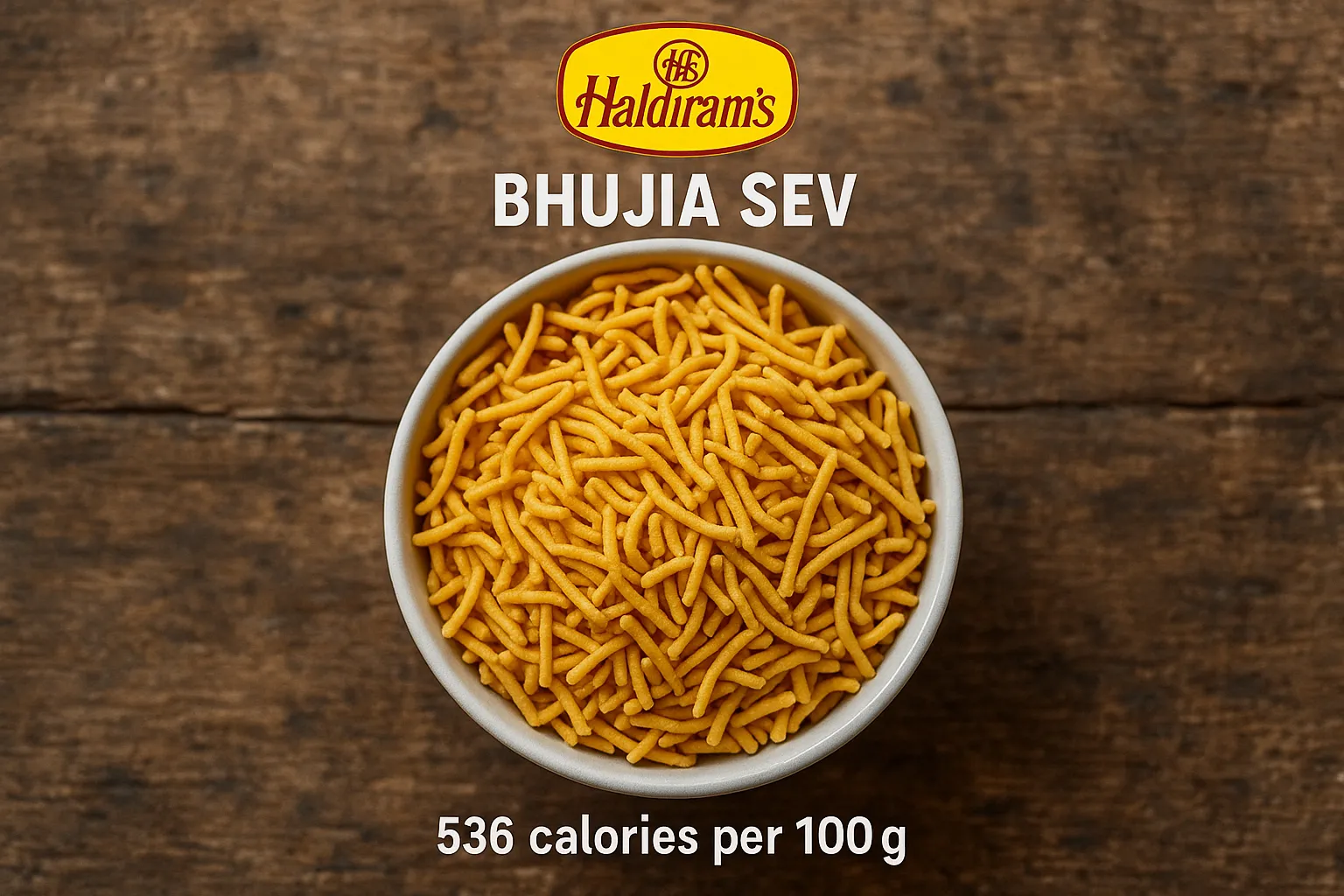
Quick Nutrition Facts
Per 100g Serving
| Nutrient | Amount |
|---|---|
| Calories | 536 kcal |
| Protein | 15g |
| Carbohydrates | 45g |
| Fiber | 4g |
| Sugars | 2g |
| Fat | 31g |
| Sodium | 820mg |
| Iron | 3.2mg |
| Calcium | 85mg |
| Potassium | 290mg |
Macronutrient Breakdown
 ChatGPT
  Claude
  AI Mode
  Perplexity
NUTRITIONIST INSIGHT
Bhujia sev is protein-rich (15g per 100g) from gram flour but extremely calorie-dense at 536 calories. The deep-frying process adds significant fat (31g) while reducing nutritional value. Best enjoyed as an occasional 20-30g treat, not daily snack.
Myth Busters
MYTH #1: Bhujia Sev is a Healthy Protein Snack
TRUTH: While it has 15g protein per 100g, it also contains 31g fat and 536 calories. Protein quality from dal is good, but the calorie-to-protein ratio is poor compared to boiled chickpeas (364 kcal, 19g protein) or paneer (265 kcal, 18g protein). Not a smart protein choice.
MYTH #2: It's Made from Healthy Ingredients, So It's Safe Daily
TRUTH: Base ingredients (moth dal, besan) are nutritious, but deep-frying in vegetable oil creates trans fats and reduces nutrient bioavailability. Daily consumption adds excessive sodium (820mg per 100g = 35% daily limit) and saturated fats.
MYTH #3: A Small Serving Won't Impact My Diet
TRUTH: A "small handful" (30g) has 160 calories and 9g fat—equivalent to eating 2 tablespoons of oil. Mindless snacking on calorie-dense foods is a primary driver of weight gain, even in small portions. Pre-portion to 20g (107 kcal) maximum.
MYTH #4: Bhujia Sev is Better Than Potato Chips
TRUTH: Both are deep-fried with similar calorie density (536 vs 540 kcal). Bhujia has more protein (15g vs 6g) but triple the sodium. Neither should be considered a "better" choice—both are occasional treats, not regular snacks.
MYTH #5: The Spices Make It Metabolism-Boosting
TRUTH: While spices like black pepper contain piperine that may slightly enhance metabolism, the amounts in bhujia sev are negligible. The 536 calories and high fat content overwhelm any minor metabolic boost from spices.
MYTH #6: It's Traditional Indian Food, So It Must Be Healthy
TRUTH: Traditional doesn't equal healthy. Commercial namkeen snacks are modern processed foods, not ancient traditional recipes. Authentic dal preparations (boiled, steamed) are healthy; deep-fried commercial versions are not.
NutriScore by Health Goals
| Health Goal | NutriScore | Why This Score? |
|---|---|---|
| Weight Loss |  | 536 calories per 100g, 31g fat makes this extremely calorie-dense. A 30g serving = 160 kcal with minimal satiety. Best avoided or limited to 20g once weekly. |
| Muscle Gain |  | 15g protein per 100g is decent but comes with 31g fat. Calorie-to-protein ratio (35:1) is poor compared to eggs (12:1) or chicken (4:1). Not efficient for muscle building. |
| Diabetes Management | | High glycemic index (70+) from refined gram flour causes blood sugar spikes. High sodium worsens hypertension risk in diabetics. |
| PCOS Management | | Deep-fried foods worsen insulin resistance and inflammation. High sodium promotes water retention and bloating. Avoid or limit to 15g monthly. |
| Pregnancy Nutrition | | Excessive sodium (820mg per 100g) increases gestational hypertension risk. Safe in 20g portions once weekly. |
| Viral/Flu Recovery | | High fat content slows digestion during illness. Excessive sodium dehydrates. Spices may irritate throat. Better options: khichdi, boiled dal, vegetable soup. |
PERSONALIZED NUTRITION
Track your snacks with NutriScan to see how calorie-dense foods like bhujia sev impact your daily goals!
Blood Sugar Response to Bhujia Sev
Understanding how bhujia sev affects your blood glucose helps you make informed snacking decisions.
Typical Glucose Response Curve
This chart shows typical blood glucose response for general healthy individuals. Individual responses may vary. Not medical advice.
How to Minimize the Spike
Pairing calorie-dense snacks with protein or fiber slows glucose absorption:
- 🥛 Buttermilk (chaas) - Adds protein and probiotics; aids digestion
- 🥒 Cucumber raita - Provides fiber and water content; cooling effect
- 🥜 Small handful of roasted chickpeas - Adds fiber and protein without excess calories
- 🥗 Vegetable salad - Fiber slows carb absorption; increases satiety
Better strategy: Replace bhujia sev entirely with roasted makhana, roasted chana, or air-fried lotus seeds for crunchy satisfaction with fewer calories.
Cultural Significance
Bhujia and sev have been staples of Indian snacking culture for over a century, with Bikaner's Haldiram's popularizing it nationwide.
In India:
- Originated in Bikaner, Rajasthan as traditional namkeen
- Essential prasad offering in many temples and festivals
- Popular tea-time snack across all regions and communities
- Haldiram's founded in 1937, now India's largest snack brand
- Bhujia sev used as topping for chaat, poha, and upma
Global Impact:
- Exported to 80+ countries with Indian diaspora
- Annual Indian namkeen market exceeds $3 billion
- Haldiram's alone produces 500+ tons bhujia daily
- Fusion recipes incorporate sev in tacos, salads, burgers
Compare & Substitute
Bhujia Sev vs Similar Snacks (Per 100g)
| Nutrient | 🥨 Bhujia Sev | 🥔 Potato Chips | 🥜 Roasted Chana | 🌰 Roasted Makhana |
|---|---|---|---|---|
| Calories | 536 kcal | 540 kcal | 364 kcal | 347 kcal |
| Carbs | 45g | 52g | 61g | 77g |
| Fiber | 4g | 3.1g | 12g | 14g |
| Protein | 15g | 6g | 19g | 10g |
| Fat | 31g | 35g | 6g | 1g |
| Sodium | 820mg | 380mg | 240mg | 180mg |
| Iron | 3.2mg | 1.6mg | 6mg | 1.4mg |
| Best For | Occasional treat, chaat topping | Occasional treat | Daily protein snack, weight loss | Low-calorie crunchy snack |
Frequently Asked Questions
Is Haldiram's Bhujia Sev good for weight loss?
No, bhujia sev is calorie-dense with 536 calories per 100g and high in fat (31g). A small 30g serving has 160 calories—roughly equal to one roti or two boiled eggs. The high sodium content (820mg per 100g) causes water retention and bloating.
For weight loss: Limit to 20g once weekly; pre-portion to avoid mindless eating; pair with vegetable salad to increase satiety; better alternatives include roasted chana (364 kcal), air-popped popcorn (375 kcal), or roasted makhana (347 kcal) for satisfying crunch with fewer calories.
Can diabetics eat Haldiram's Bhujia Sev?
Diabetics should strictly limit bhujia sev. The refined gram flour has a high glycemic index (70+), causing rapid blood sugar spikes. While the fat content slows digestion, it doesn't offset the carb impact and adds cardiovascular risk.
Tips for diabetics: Limit to 15g portions; always pair with protein (paneer, Greek yogurt); eat only mid-afternoon, never on empty stomach; monitor blood sugar 2 hours after eating; avoid if HbA1c is uncontrolled (above 7%); better alternatives include roasted chana, dry fruits, or vegetable sticks with hummus.
How much protein is in Haldiram's Bhujia Sev?
Haldiram's Bhujia Sev contains 15g protein per 100g from moth dal and gram flour (besan). A 30g serving provides 4.5g protein.
While this seems substantial, the calorie-to-protein ratio (536:15 = 35:1) is inefficient. For muscle gain or high-protein diets, better options include boiled chickpeas (19g protein, 364 kcal), paneer (18g protein, 265 kcal), or Greek yogurt (10g protein, 59 kcal). These provide more protein with fewer calories and less fat.
What are the main ingredients in bhujia sev?
Primary ingredients: Moth dal flour (matki), gram flour (besan), edible vegetable oil, salt, red chilli powder, black pepper powder, cloves powder, asafoetida (hing).
Preparation: Flours are mixed with spices and water to form dough; dough is pressed through fine-hole sieves directly into hot oil; fried until crispy golden; drained and cooled; packaged to maintain freshness.
The crispy texture comes from deep-frying at 170-180°C. Oil quality varies by manufacturer—premium brands use palm oil or refined vegetable oil; some may contain partially hydrogenated oils with trans fats.
How many calories in one handful of bhujia sev?
One handful (approximately 30g) of Haldiram's Bhujia Sev contains about 160 calories, 9g fat, 13.5g carbs, and 4.5g protein.
Portion awareness: Most people underestimate handful size—actual portions often reach 40-50g (214-268 kcal). The calorie density makes accurate portioning crucial.
Calorie comparison: 30g bhujia sev (160 kcal) = 1 medium chapati (120 kcal) + 1 tsp oil (40 kcal) or 2 boiled eggs (155 kcal) or 1 cup cooked rice (200 kcal). The eggs or rice provide far more satiety and nutrition.
Is bhujia sev healthier than potato chips?
Both are deep-fried and calorie-dense with minimal nutritional value. Neither is "healthy," but bhujia sev offers slightly better nutrition per calorie.
Advantages of bhujia sev: Higher protein (15g vs 6g); more fiber (4g vs 3.1g); higher iron (3.2mg vs 1.6mg); gram flour provides B vitamins and minerals.
Disadvantages of bhujia sev: Much higher sodium (820mg vs 380mg—more than double); similar fat content (31g vs 35g); similar total calories (536 vs 540 kcal).
Verdict: Bhujia sev is marginally better nutritionally but substantially worse for blood pressure due to excessive sodium. Both should be occasional treats (20-30g weekly maximum), not regular snacks. For daily crunchy snacking, choose roasted chana, makhana, or air-popped popcorn.
Can I eat bhujia sev during pregnancy?
Pregnant women can eat bhujia sev in very limited amounts (20g maximum, once weekly). The excessive sodium content (820mg per 100g) is the primary concern.
Pregnancy risks: High sodium increases gestational hypertension and preeclampsia risk; deep-fried foods may worsen pregnancy heartburn; excess calories contribute to unhealthy weight gain.
Safer alternatives: Roasted chana (protein, fiber, low sodium); dry fruits and nuts (healthy fats, minerals); homemade baked mathri (controlled oil, lower sodium); fresh fruit chaat with minimal spices. If craving salty crunch, choose lightly salted roasted makhana (347 kcal, 180mg sodium) instead.


Similar Nutritious Snacks
4505 Chicharrones Classic Chili Salt
7 Eleven Japan Crispy Corn Cheese
Explore More Nutrition Tools & Resources
AI Calorie Counter App - Snap a Photo, Get Macros
AI Nutritionist App That Reads Your Logged Meals
Best Protein Supplements for Women
Bulking Meal Plan App That Sets Your Surplus
ChatGPT Calorie Counter Alternative That Keeps the Total
ChatGPT Diet Plan Alternative That Tracks What You Eat
ChatGPT Weight Loss Coach Alternative With a Food Log
Fast Food Calorie Counter App That Reads the Tray
Free Calorie Tracker App with AI Photo Scans | NutriScan
Indian Diet Plan App With Veg and Non Veg Meals
Indian Food Calorie Calculator - Get Instant Nutrition Facts for Desi Meals — 2026
Intermittent Fasting for Women, Timer and Meal Log App
Intermittent Fasting Tracker App - Free Fasting Timer
Macro Tracker App That Fills the Numbers From a Photo
Mediterranean Diet Meal Plan App That Counts the Oil
Micronutrient Tracker App for Vitamins and Minerals
MyFitnessPal Alternative That Stays Free | NutriScan
NutriScore App: A Free Grade on Every Meal | NutriScan
Nutrition Label Scanner App for the Amount You Ate
Second Trimester Protein Guide
Vegetarian Meal Plan App With a Protein Target
Voice Calorie Counter - Speak to Track Meals Hands-Free
Water and Calorie Tracker App - Free Water Log