Haldiram's Bikaneri Bhujiya: Calories, Nutrition and Health Facts
Rajasthan's iconic spicy gram flour noodle snack with 18g protein per 100g, but 560 calories and 35g fat demand strict portion control.
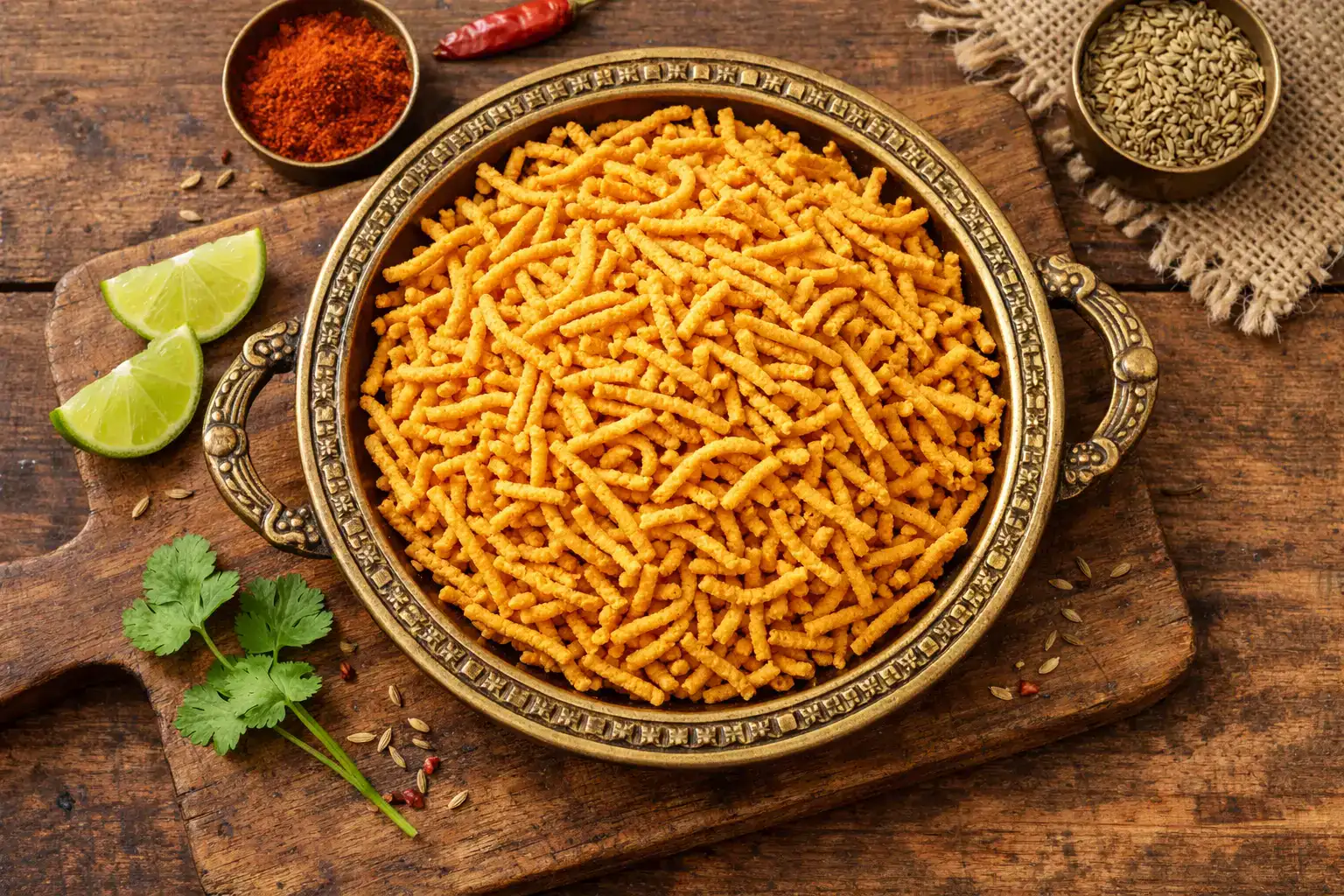
Quick Nutrition Facts
Per 30g Serving (1 handful)
| Nutrient | Amount |
|---|---|
| Calories | 168 kcal |
| Protein | 5.4g |
| Carbohydrates | 13.5g |
| Fiber | 1.5g |
| Sugars | 1.2g |
| Fat | 10.5g |
| Saturated Fat | 4.5g |
| Sodium | 246mg |
| Iron | 1.2mg |
| Potassium | 85mg |
Macronutrient Breakdown
 ChatGPT
  Claude
  AI Mode
  Perplexity
NUTRITIONIST INSIGHT
Bikaneri Bhujiya delivers 18g protein per 100g from moth dal and gram flour, making it one of the higher-protein traditional snacks. However, the deep-frying adds 35g fat per 100g. Stick to a 20-30g portion to enjoy the flavor while keeping calories in check.
Myth Busters
MYTH #1: Bhujiya Is a Healthy Protein Snack
TRUTH: While Bikaneri Bhujiya has 18g protein per 100g from its dal flour base, it also packs 35g fat and 560 calories per 100g. The deep-frying process adds significant calories and trans fatty acids that outweigh the protein benefit. A 30g portion gives you just 5.4g protein but 168 calories.
MYTH #2: Traditional Namkeen Is Better Than Processed Chips
TRUTH: Bikaneri Bhujiya and potato chips have similar calorie density (560 vs 536 cal/100g). The bhujiya advantage is higher protein (18g vs 6g) from dal flour. However, both are deep-fried and carry similar cardiovascular risks when consumed in excess.
MYTH #3: Small Portions Don't Matter Because It's Just Namkeen
TRUTH: Even 50g of Bikaneri Bhujiya delivers 280 calories and 820mg sodium (41% of WHO's recommended daily limit of 2000mg). Mindless snacking from the packet can easily lead to consuming 100-150g in one sitting.
MYTH #4: Bikaneri Bhujiya Is Safe for Daily Consumption
TRUTH: Regular consumption of deep-fried snacks increases type 2 diabetes risk by 39-55% depending on frequency. The high sodium content also raises blood pressure risk. Reserve for occasional enjoyment, not daily snacking.
MYTH #5: Homemade Bhujiya Is Completely Healthy
TRUTH: Homemade versions use less oil and no preservatives, which is better. But the base remains deep-fried gram flour, still calorie-dense at 450-500 cal/100g. Baking or air-frying reduces fat content by 40-60% compared to traditional deep-frying.
NutriScore by Health Goals
| Health Goal | NutriScore | Why This Score? |
|---|---|---|
| Weight Loss |  | 560 cal/100g makes this a calorie bomb. Limit to 15g portions (84 cal) or avoid entirely during active weight loss phases. |
| Muscle Gain |  | 18g protein/100g from dal flour is decent, but the fat-to-protein ratio is poor. Better protein sources exist for muscle building. |
| Diabetes Management | | Deep-fried foods increase type 2 diabetes risk. High sodium and fat content worsen insulin sensitivity. Limit to 15g if consumed. |
| PCOS Management | | High-fat, high-calorie fried foods can worsen insulin resistance and inflammation associated with PCOS. Avoid or limit strictly. |
| Pregnancy Nutrition | | Gram flour provides folate beneficial during pregnancy, but high sodium and fat make this a poor regular choice. Occasional small portions only. |
| Viral/Flu Recovery | | Heavy, fried foods are hard to digest during illness. The spices may irritate a sore throat. Choose lighter, easily digestible foods instead. |
PERSONALIZED NUTRITION
Track your meals with NutriScan for personalized NutriScores based on your specific health goals!
Blood Sugar Response to Bikaneri Bhujiya
Understanding how Bikaneri Bhujiya affects your blood glucose helps guide portion decisions and snack timing.
Typical Glucose Response Curve
This chart shows typical blood glucose response for general healthy individuals. Individual responses may vary. Not medical advice.
How to Flatten the Spike
Pairing high-fat fried snacks with fiber-rich foods slows glucose absorption and reduces the peak blood sugar level:
- 🥒 Fresh cucumber or carrot sticks - Adds fiber and water content to slow absorption
- 🥛 Plain curd (dahi) or buttermilk - Protein and probiotics buffer the glucose response
- 🥗 Green salad with lemon - Fiber and vitamin C aid digestion
- 🍋 Lemon water or green tea - Helps with fat metabolism and reduces glycemic impact
Keep portions to 20-30g and avoid eating bhujiya on an empty stomach for better blood sugar control.
Cultural Significance
Bikaneri Bhujiya originated in Bikaner, Rajasthan, and has been a beloved Indian snack for over a century.
In India:
- Named after Bikaner city, the snack capital of Rajasthan
- Haldiram's began in 1937 as a small namkeen shop in Bikaner, founded by Ganga Bishan Agarwal (Haldiram)
- An essential part of Diwali gift boxes, wedding celebrations, and festive gatherings
- The distinctive thin, crispy noodle shape comes from moth dal flour pushed through a sev press (nazli)
Global Impact:
- Haldiram's exports Bikaneri Bhujiya to 80+ countries worldwide
- India's namkeen industry is valued at over 40,000 crore rupees
- Bhujiya has become a symbol of Rajasthani culinary heritage recognized globally
Compare & Substitute
Bikaneri Bhujiya vs Similar Snacks (Per 100g)
| Nutrient | Bikaneri Bhujiya | Aloo Bhujia | Roasted Chana | Makhana (Fox Nuts) |
|---|---|---|---|---|
| Calories | 560 kcal | 536 kcal | 364 kcal | 332 kcal |
| Carbs | 45g | 48g | 58g | 77g |
| Fiber | 5g | 3g | 17g | 14g |
| Protein | 18g | 15g | 22g | 10g |
| Fat | 35g | 31g | 5g | 1.5g |
| Sodium | 820mg | 750mg | 24mg | 6mg |
| Iron | 4mg | 3.5mg | 5mg | 1.2mg |
| Best For | Occasional treat, festivals | Milder taste alternative | High protein, low fat snack | Weight loss, low cal snack |
Frequently Asked Questions
How many calories are in Haldiram's Bikaneri Bhujiya?
560 calories per 100g. A typical 30g serving (one handful) contains about 168 calories, with 10.5g fat, 13.5g carbs, and 5.4g protein. The high calorie density comes from deep-frying in vegetable oil.
Is Bikaneri Bhujiya good for weight loss?
No, Bikaneri Bhujiya is not suitable for active weight loss due to its 560 cal/100g density and 35g fat content. If you must indulge, limit to 15-20g (84-112 calories) and pair with fresh vegetables. Better alternatives include roasted chana (364 cal/100g, 5g fat) or roasted makhana (332 cal/100g, 1.5g fat).
Can diabetics eat Bikaneri Bhujiya?
Diabetics should limit or avoid Bikaneri Bhujiya. Deep-fried food consumption increases type 2 diabetes risk significantly. If consumed, keep to 15g portions, pair with fiber-rich vegetables, and monitor blood sugar 2 hours after eating.
What is the difference between Bikaneri Bhujiya and regular Bhujia Sev?
Bikaneri Bhujiya uses moth dal (matki) flour as the primary ingredient, giving it a distinct earthy flavor and slightly higher protein content (18g vs 15g per 100g). Regular Bhujia Sev uses mainly gram flour (besan). Bikaneri Bhujiya also has a coarser texture and spicier flavor profile.
How much Bikaneri Bhujiya can I eat per day?
20-30g per day (168 calories maximum) as an occasional snack. For weight loss or diabetes, limit to 15g or less. The WHO recommends less than 2000mg sodium daily, and 100g of bhujiya alone provides 820mg (41% of this limit).
Is homemade bhujiya healthier than packaged?
Homemade bhujiya allows control over oil quality, salt, and freshness. You can reduce oil by 30-40% using air-frying or shallow frying. However, the base remains calorie-dense gram and moth dal flour. Homemade versions typically have 450-500 cal/100g vs 560 for packaged.


Similar Nutritious Foods
4505 Chicharrones Classic Chili Salt
7 Eleven Japan Crispy Corn Cheese
Explore More Nutrition Tools & Resources
AI Calorie Counter App - Snap a Photo, Get Macros
AI Nutritionist App That Reads Your Logged Meals
Best Protein Supplements for Women
Bulking Meal Plan App That Sets Your Surplus
ChatGPT Calorie Counter Alternative That Keeps the Total
ChatGPT Diet Plan Alternative That Tracks What You Eat
ChatGPT Weight Loss Coach Alternative With a Food Log
Fast Food Calorie Counter App That Reads the Tray
Free Calorie Tracker App with AI Photo Scans | NutriScan
Indian Diet Plan App With Veg and Non Veg Meals
Indian Food Calorie Calculator - Get Instant Nutrition Facts for Desi Meals — 2026
Intermittent Fasting for Women, Timer and Meal Log App
Intermittent Fasting Tracker App - Free Fasting Timer
Macro Tracker App That Fills the Numbers From a Photo
Mediterranean Diet Meal Plan App That Counts the Oil
Micronutrient Tracker App for Vitamins and Minerals
MyFitnessPal Alternative That Stays Free | NutriScan
NutriScore App: A Free Grade on Every Meal | NutriScan
Nutrition Label Scanner App for the Amount You Ate
Second Trimester Protein Guide
Vegetarian Meal Plan App With a Protein Target
Voice Calorie Counter - Speak to Track Meals Hands-Free
Water and Calorie Tracker App - Free Water Log