Haldiram's Boondi: Calories, Nutrition and Health Benefits
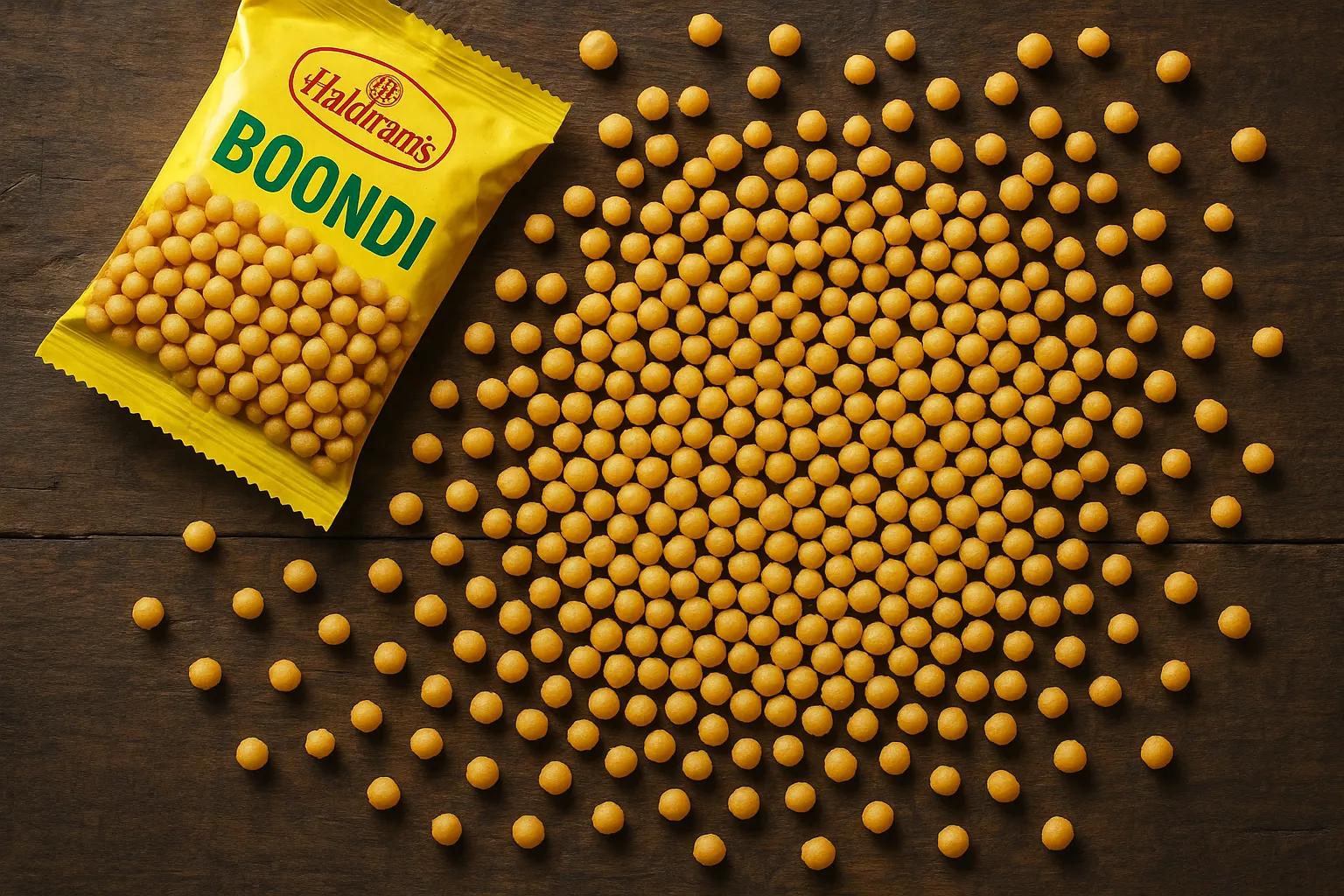
Traditional Indian snack made from crispy gram flour pearls, lightly salted and packed with protein from besan.
Quick Nutrition Facts
Per 100g Serving
| Nutrient | Amount |
|---|---|
| Calories | 497 kcal |
| Protein | 20g |
| Carbohydrates | 55g |
| Fiber | 3g |
| Sugars | 2g |
| Fat | 20g |
| Sodium | 800mg |
| Iron | 4.5mg |
| Calcium | 120mg |
Macronutrient Breakdown
 ChatGPT
  Claude
  AI Mode
  Perplexity
NUTRITIONIST INSIGHT
Haldiram's Boondi provides 20g protein per 100g from gram flour, making it a moderate protein snack. However, the deep-fried preparation and high sodium (800mg) mean portion control is essential for health-conscious consumers.
Myth Busters
MYTH #1: Namkeen Like Boondi Is Healthy Because It's Made from Lentils
TRUTH: While gram flour provides protein, deep-frying significantly increases calorie density and reduces nutritional value. The 20g fat per 100g comes mostly from frying oil, not the lentil flour itself.
MYTH #2: All Protein Sources Are Equal
TRUTH: Boondi's protein (20g per 100g) comes with 20g fat and 497 calories, unlike lean sources like chicken breast (31g protein, 3.6g fat, 165 calories per 100g). Choose protein sources based on your overall macronutrient needs.
MYTH #3: Salty Snacks Help With Hydration
TRUTH: High sodium intake (800mg per 100g boondi) can increase thirst but doesn't improve hydration. Excess sodium may contribute to water retention and blood pressure issues in sensitive individuals.
MYTH #4: Traditional Indian Snacks Are Always Healthier Than Western Snacks
TRUTH: Both traditional namkeen and Western chips can be calorie-dense and high in fat when deep-fried. Compare nutrition labels; boondi (497 kcal/100g) is similar in calories to potato chips (536 kcal/100g).
MYTH #5: You Can Eat Unlimited Snacks if They're Vegetarian
TRUTH: Vegetarian doesn't automatically mean low-calorie or nutritious. A 100g serving of boondi contains nearly 500 calories, equivalent to a full meal for many people on weight loss diets.
MYTH #6: Namkeen Is Fine for Daily Consumption
TRUTH: Daily consumption of fried namkeen contributes excess calories, unhealthy fats, and sodium. Reserve boondi and similar snacks for occasional treats rather than daily habits to maintain balanced nutrition.
NutriScore by Health Goals
| Health Goal | NutriScore | Why This Score? |
|---|---|---|
| Weight Loss |  | High calorie density (497 kcal/100g) and 20g fat make portion control difficult. Limit to 20-30g servings. |
| Muscle Gain |  | Provides 20g protein per 100g but comes with high fat and calories. Better protein sources exist with leaner profiles. |
| Diabetes Management | | High refined carbs (55g) and deep-fried preparation cause rapid blood sugar spikes. Limit to 20g portions paired with protein. |
| PCOS Management | | High-GI refined carbs and excess calories worsen insulin resistance. Choose nuts or roasted chickpeas instead. |
| Pregnancy Nutrition | | Provides iron (4.5mg) and protein, but excess sodium and fried fats are concerns during pregnancy. Limit. |
| Viral/Flu Recovery | | Moderate protein aids recovery but high sodium may increase dehydration. Prefer lighter, easily digestible snacks. |
PERSONALIZED NUTRITION
Track your meals with NutriScan for personalized NutriScores based on your specific health goals!
Blood Sugar Response to Boondi
Understanding how boondi affects your blood glucose can help you make informed snacking decisions, especially for diabetes or PCOS management.
Typical Glucose Response Curve
This chart shows typical blood glucose response for general healthy individuals. Individual responses may vary. Not medical advice.
How to Flatten the Spike
Pairing boondi with protein or fiber slows carbohydrate absorption and reduces blood sugar peaks:
- 🥛 Buttermilk (chaas) or lassi - Provides protein and probiotics for digestion
- 🥒 Vegetable sticks with hummus - Adds fiber and healthy fats
- 🥜 A handful of almonds or walnuts - Slows glucose absorption with healthy fats
- ☕ Unsweetened tea or coffee - No added sugars, aids digestion
This combination not only moderates the glucose spike but also increases satiety, preventing overeating.
Cultural Significance
Boondi has been a staple of Indian cuisine for centuries, with roots in North Indian culinary traditions.
In India:
- Essential ingredient in Boondi Raita, a yogurt-based side dish served with biryani and pulao
- Sweet Boondi (Boondi Ladoo) prepared during festivals like Diwali and weddings, symbolizing prosperity
- Boondi Chaat popular street food combining crispy boondi with tangy chutneys and yogurt
- Haldiram's, founded in 1937 in Bikaner, Rajasthan, popularized packaged boondi across India
Global Impact:
- Available in Indian grocery stores worldwide, especially in UK, USA, Canada, Australia
- Haldiram's exports to 80+ countries, making traditional Indian snacks globally accessible
- Often served at Indian restaurants as a crunchy accompaniment to chutneys
Compare & Substitute
Haldiram's Boondi vs Similar Snacks (Per 100g)
| Nutrient | 🥨 Boondi | 🥨 Aloo Bhujia | 🥜 Roasted Chana | 🥔 Potato Chips |
|---|---|---|---|---|
| Calories | 497 kcal | 530 kcal | 360 kcal | 536 kcal |
| Carbs | 55g | 48g | 58g | 53g |
| Fiber | 3g | 4g | 12g | 3g |
| Protein | 20g | 15g | 20g | 7g |
| Fat | 20g | 30g | 6g | 34g |
| Sodium | 800mg | 950mg | 200mg | 380mg |
| Iron | 4.5mg | 3mg | 5mg | 0.8mg |
| Best For | Moderate protein, festive | High-fat indulgence | Weight loss, high fiber | Occasional treat, low Na |
Frequently Asked Questions
Is Haldiram's Boondi good for weight loss?
Boondi is calorie-dense (497 kcal per 100g) with 20g fat, making it challenging for weight loss. A typical 100g pack provides about 25% of a 2,000-calorie diet. If consuming, limit to 20-30g portions (99-149 calories) as an occasional treat, not a daily snack.
Better alternatives: Roasted chickpeas (360 kcal/100g), air-popped popcorn (387 kcal/100g), or raw almonds (579 kcal/100g but with healthy fats).
Can diabetics eat Haldiram's Boondi?
Diabetics should limit boondi due to high refined carbohydrates (55g per 100g) from processed gram flour and deep-fried preparation that increases glycemic load. If eating, stick to 20g portions, pair with buttermilk or yogurt for protein, and monitor blood sugar response carefully.
Diabetes-friendly alternative: Roasted moong dal (lower GI, similar protein).
How much protein is in Haldiram's Boondi?
Haldiram's Boondi contains 20g of protein per 100g, derived from gram flour (besan). A typical 30g serving provides 6g protein, making it a moderate protein snack comparable to Greek yogurt (10g per 100g) but with significantly more calories and fat.
For muscle gain or high-protein diets, combine boondi sparingly with lean protein sources like paneer, tofu, or dal.
What are the main health benefits of Haldiram's Boondi?
Key Benefits:
- Moderate Protein Source: 20g per 100g from gram flour supports muscle maintenance
- Iron Content: 4.5mg per 100g aids hemoglobin production and prevents anemia
- Quick Energy: 55g carbs provide immediate energy for physical activity
- Calcium: 120mg supports bone health
- Traditional Flavor: Satisfies cultural cravings without added sugars
Cautions: High calories, fat, and sodium limit daily consumption.
When is the best time to eat Haldiram's Boondi?
Depends on your goal:
- General Snacking: Afternoon with tea (20-30g portion), paired with buttermilk to balance sodium
- Weight Loss: Occasional treat only (1-2 times per month in 20g portions)
- Diabetes: Mid-morning with protein source; avoid evening to prevent overnight blood sugar elevation
- Muscle Gain: Post-workout in small amounts (30g) combined with protein shake
IMPORTANT NOTE
Avoid boondi late at night due to high calorie content and sodium, which can disrupt sleep and cause morning bloating.
Is Haldiram's Boondi healthier than other namkeen?
Boondi has moderate protein (20g per 100g) but is high in calories (497 kcal) and fat (20g) like most deep-fried namkeen. Compared to aloo bhujia (530 kcal, 30g fat), boondi is slightly lower in fat; compared to roasted chana (360 kcal, 6g fat), boondi is much higher in calories and fat.
Healthiest namkeen options: Roasted moong dal, baked sev, or air-fried murukku.
Recommendation: All namkeen should be consumed sparingly (1-2 times per week in 30g portions) regardless of type. Choose baked or roasted varieties when available.
How many servings of boondi should I eat per day?
General Guidelines:
- Most people: 20-30g per serving (99-149 calories), 2-3 times per week maximum
- Weight loss: 20g per serving, once per week as an occasional treat
- Diabetes/PCOS: 20g per serving, 1-2 times per month, paired with protein
Avoid excess: More than 50g daily can contribute excess calories (248+ kcal), unhealthy fats, and sodium that strain kidneys and cardiovascular health.
Track your meals with NutriScan app to see how boondi fits your personal nutrition goals.
Can I eat boondi every day?
Not recommended for daily consumption. Daily intake of deep-fried namkeen like boondi adds 497 calories, 20g fat, and 800mg sodium per 100g, increasing risk of weight gain, elevated cholesterol, and hypertension over time.
Healthier habit: Reserve boondi for special occasions (festivals, gatherings) and choose air-popped snacks, roasted nuts, or vegetable sticks for daily snacking.


Similar Nutritious Snacks
4505 Chicharrones Classic Chili Salt
7 Eleven Japan Crispy Corn Cheese
Explore More Nutrition Tools & Resources
AI Calorie Counter App - Snap a Photo, Get Macros
AI Nutritionist App That Reads Your Logged Meals
Best Protein Supplements for Women
Bulking Meal Plan App That Sets Your Surplus
ChatGPT Calorie Counter Alternative That Keeps the Total
ChatGPT Diet Plan Alternative That Tracks What You Eat
ChatGPT Weight Loss Coach Alternative With a Food Log
Fast Food Calorie Counter App That Reads the Tray
Free Calorie Tracker App with AI Photo Scans | NutriScan
Indian Diet Plan App With Veg and Non Veg Meals
Indian Food Calorie Calculator - Get Instant Nutrition Facts for Desi Meals — 2026
Intermittent Fasting for Women, Timer and Meal Log App
Intermittent Fasting Tracker App - Free Fasting Timer
Macro Tracker App That Fills the Numbers From a Photo
Mediterranean Diet Meal Plan App That Counts the Oil
Micronutrient Tracker App for Vitamins and Minerals
MyFitnessPal Alternative That Stays Free | NutriScan
NutriScore App: A Free Grade on Every Meal | NutriScan
Nutrition Label Scanner App for the Amount You Ate
Second Trimester Protein Guide
Vegetarian Meal Plan App With a Protein Target
Voice Calorie Counter - Speak to Track Meals Hands-Free
Water and Calorie Tracker App - Free Water Log