Haldiram's Chakli: Calories, Nutrition and Health Benefits
Traditional spiral-shaped Indian snack made from rice and lentil flour, beloved for its crispy texture and authentic flavors.
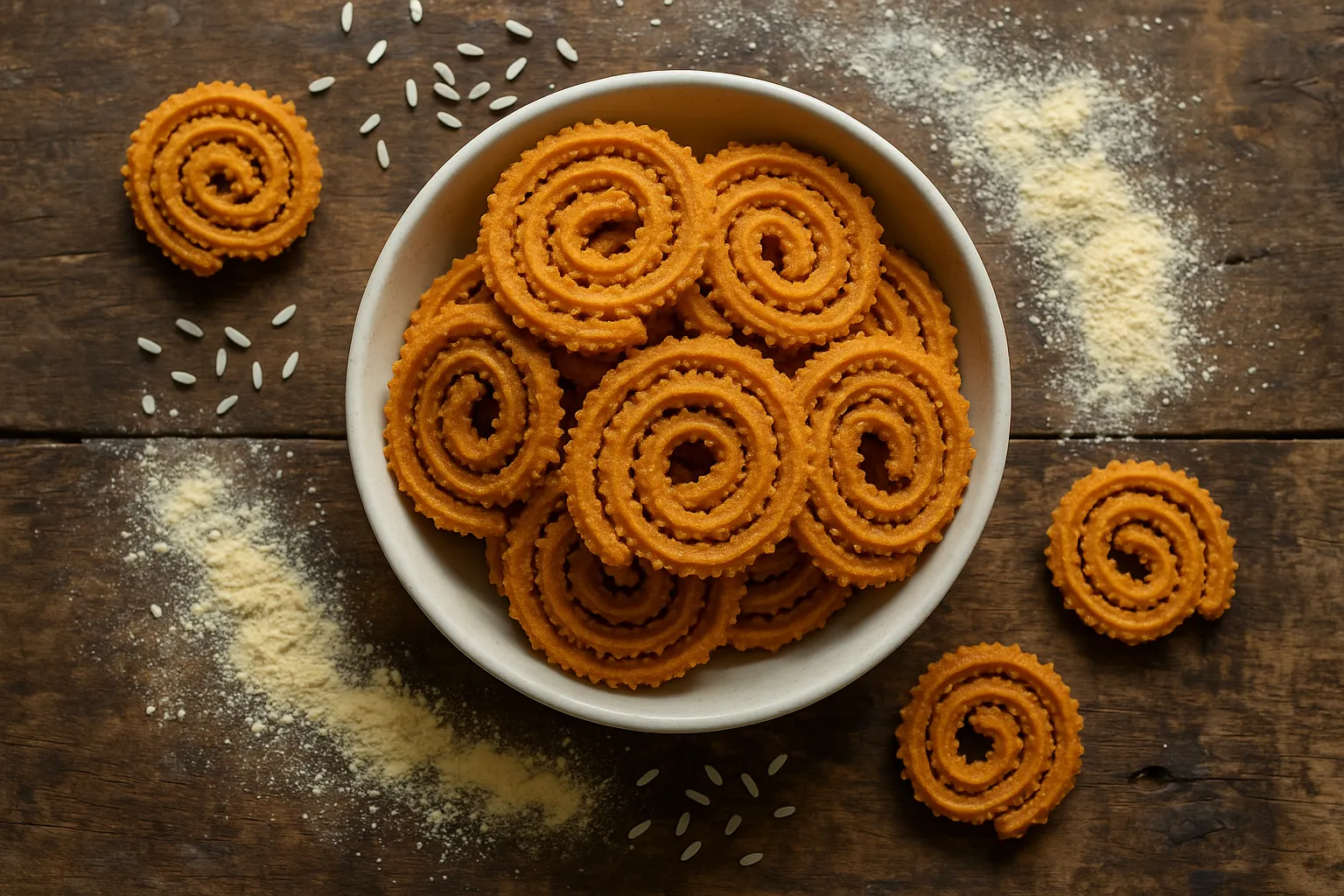
Quick Nutrition Facts
Per 100g Serving
| Nutrient | Amount |
|---|---|
| Calories | 460 kcal |
| Protein | 9g |
| Carbohydrates | 58g |
| Fiber | 3.5g |
| Sugars | 1.8g |
| Fat | 20g |
| Saturated Fat | 7g |
| Sodium | 620mg |
| Iron | 2.8mg |
| Calcium | 50mg |
Macronutrient Breakdown
 ChatGPT
  Claude
  AI Mode
  Perplexity
NUTRITIONIST INSIGHT
Chakli combines rice flour with lentil flour for enhanced protein content (9g per 100g). The traditional deep-frying method creates signature crispiness but adds calories; opt for baked or air-fried versions to reduce fat by 35-45% while preserving flavor.
Myth Busters
MYTH #1: Chakli is Pure Junk Food
TRUTH: Chakli provides 9g protein per 100g from rice and lentil flours, iron (2.8mg), and calcium (50mg). The combination of flours offers better nutritional value than single-grain snacks, though portion control remains crucial for calorie management.
MYTH #2: Diabetics Should Completely Avoid Chakli
TRUTH: Diabetics can enjoy Chakli in limited portions (15-20g). The rice flour has a high glycemic index (70-75), so pair with protein (nuts, yogurt), fiber (vegetables), and monitor blood sugar response carefully.
MYTH #3: All Frying Oils Are the Same
TRUTH: Oil quality significantly impacts health. Chakli fried in rice bran oil or sunflower oil provides healthier unsaturated fats compared to palm oil or reused cooking oil. Always check ingredient labels for oil type.
MYTH #4: Chakli Has No Place in Healthy Diets
TRUTH: Small portions (20-25g = 92-115 calories) fit into balanced eating patterns when combined with vegetables, lean protein, and whole grains. The key is portion awareness and frequency control; track intake with NutriScan app for personalized guidance.
MYTH #5: Homemade Chakli Is Too Difficult to Make
TRUTH: Homemade Chakli is straightforward with a chakli press and allows full control over ingredients, oil quality, and salt levels. Baking instead of frying reduces calories by 30-40% while maintaining texture and taste.
NutriScore by Health Goals
| Health Goal | NutriScore | Why This Score? |
|---|---|---|
| Weight Loss |  | High calorie density (460 kcal per 100g) from deep frying. Limit to 20-25g portions; choose baked versions. |
| Muscle Gain |  | Provides quick energy (58g carbs) and moderate protein (9g). Best post-workout when paired with protein shake or Greek yogurt. |
| Diabetes Management | | High GI from rice flour (70-75); saturated fats affect insulin sensitivity. Limit to 15-20g, pair with vegetables and protein. |
| PCOS Management | | Refined carbs and saturated fats worsen insulin resistance. Reserve for occasional treats in 20g portions. |
| Pregnancy Nutrition | | Iron (2.8mg) and calcium (50mg) support fetal development, but high sodium requires moderation. Limit to 30g portions. |
| Viral/Flu Recovery | | Quick energy from carbs aids recovery, but high sodium may cause water retention. Choose low-sodium versions; limit portions. |
PERSONALIZED NUTRITION
Track your meals with NutriScan for personalized NutriScores based on your specific health goals!
Blood Sugar Response to Chakli
Understanding how Chakli affects blood glucose helps with portion control and meal pairing strategies.
Typical Glucose Response Curve
This chart shows typical blood glucose response for general healthy individuals. Individual responses may vary. Not medical advice.
How to Flatten the Spike
Pairing Chakli with protein or fiber slows glucose absorption and reduces the peak blood sugar level:
- 🥛 Greek yogurt or curd (dahi) - Provides protein and gut-friendly probiotics
- 🥜 Roasted chickpeas or nuts - Adds healthy fats, protein, and fiber
- 🥗 Mixed vegetable salad - Fiber slows carbohydrate absorption
- 🫘 Hummus or dal - Protein-rich pairing that enhances satiety
This combination extends energy release, improves fullness, and minimizes blood sugar fluctuations.
Cultural Significance
Chakli is a beloved Indian snack with rich cultural traditions, enjoyed across regions during festivals and celebrations.
In Western India:
- Essential Diwali snack in Maharashtra, Gujarat, Karnataka
- Traditional offering during festivals, pujas, and religious ceremonies
- Symbol of hospitality served to guests with tea
- Regional variations: Nippattu (Karnataka), Murukku (South India), Chakri (Maharashtra)
Across India:
- Haldiram's brought traditional recipes to mass market
- Available in multiple flavors: plain, spicy, sesame, butter
- Popular office snack and travel companion
- Integral part of Indian festive gifting culture
Global Presence:
- Exported worldwide to Indian diaspora communities
- Featured in international Indian grocery stores
- Introduced to global audiences through cultural festivals
- Symbol of Indian culinary heritage and craftsmanship
Compare & Substitute
Chakli vs Similar Indian Snacks (Per 100g)
| Nutrient | 🌀 Chakli | 🌀 Murukku | 🥨 Sev | 🌾 Mathri |
|---|---|---|---|---|
| Calories | 460 kcal | 450 kcal | 500 kcal | 480 kcal |
| Carbs | 58g | 60g | 52g | 55g |
| Fiber | 3.5g | 3g | 4g | 3.2g |
| Protein | 9g | 8g | 10g | 8.5g |
| Fat | 20g | 18g | 26g | 22g |
| Sodium | 620mg | 580mg | 720mg | 590mg |
| Iron | 2.8mg | 2.5mg | 3.2mg | 2.6mg |
| Best For | Festive occasions, gifting | Tea-time snack, festivals | High protein needs, variety | Special occasions, travel |
Frequently Asked Questions
Is Haldiram's Chakli good for weight loss?
Chakli is calorie-dense (460 kcal per 100g) due to deep frying, making it challenging for weight loss. However, small portions (20-25g = 92-115 calories) can fit into calorie-controlled eating plans.
Best practices: Use a kitchen scale to measure portions; pair with vegetables and lean protein; choose air-fried or baked versions (reduces calories by 30-40%); limit to 2-3 times weekly; track total daily calories with NutriScan app.
Can diabetics eat Chakli?
Diabetics can consume Chakli in very limited portions (15-20g) with careful blood sugar monitoring. Rice flour has a high glycemic index (70-75), causing rapid blood sugar spikes.
Tips for diabetics:
- Eat maximum 15-20g per serving (69-92 calories)
- Always pair with protein (Greek yogurt, paneer, nuts) and fiber (salad, vegetables)
- Best timing: mid-afternoon snack, never on empty stomach
- Monitor blood sugar 2 hours after eating
- Choose whole grain or multigrain varieties when available
Consult your healthcare provider for personalized dietary guidance.
How much protein is in Chakli?
Haldiram's Chakli contains 9g of protein per 100g, derived from rice flour and lentil flour. The lentil component provides slightly more protein than plain rice-based snacks.
While not a high-protein food, Chakli offers more protein than potato chips (2-3g per 100g) or pretzels (6g per 100g). For higher protein snacking, combine with Greek yogurt, roasted chickpeas, or mixed nuts.
What are the main health benefits of Chakli?
Key Benefits:
- Quick Energy: 58g carbs per 100g provide rapid energy for physical activities
- Moderate Protein: 9g protein from rice and lentil flours supports muscle maintenance
- Iron Content: 2.8mg iron (16% DV) helps prevent anemia
- Calcium: 50mg calcium supports bone health
- Dietary Fiber: 3.5g fiber aids digestive health
- Cultural Connection: Traditional snack celebrating Indian heritage
Consume in moderation as part of a balanced diet emphasizing whole foods, vegetables, and lean proteins.
When is the best time to eat Chakli?
Depends on your goal:
- Weight Management: Mid-morning or afternoon snack in controlled portions (20-25g), not close to main meals
- Energy Boost: 45-60 minutes before physical activity or sports
- Diabetes: Mid-afternoon paired with protein and vegetables; avoid on empty stomach
- General Health: Tea-time snack in measured portions; avoid late-night eating
IMPORTANT NOTE
Avoid excessive Chakli consumption late at night as high sodium may disrupt sleep quality and cause morning water retention.
Are homemade or packaged Chakli healthier?
Both have advantages; choose based on your priorities:
Homemade Chakli:
- Control oil quality (use rice bran oil, sunflower oil, or sesame oil)
- Adjust salt, spice, and sesame seed levels
- Incorporate whole grain flours (brown rice flour, ragi, jowar)
- Bake or air-fry instead of deep-fry (reduces calories by 30-40%)
- No preservatives or artificial additives
Packaged Chakli (Haldiram's):
- Consistent quality, taste, and texture
- Convenient and shelf-stable for months
- Standardized portion sizes for easy tracking
- May contain preservatives for longer shelf life
- Less control over oil quality and sodium content
Recommendation: Homemade baked or air-fried Chakli for regular consumption; packaged varieties for convenience, travel, and gifting. Always check ingredient labels for oil type and sodium levels.
How many grams of Chakli should I eat per day?
General Guidelines:
- 20-25g daily - Weight management, diabetes, PCOS (92-115 calories)
- 30-35g daily - General health, pregnancy (138-161 calories)
- 40-50g daily - Athletes, muscle gain, high activity levels (184-230 calories)
Avoid excess: More than 50g per day provides excessive calories (230+ kcal), saturated fats (3.5g+), and sodium (310mg+), potentially causing weight gain, high blood pressure, and insulin resistance.
Track your meals with NutriScan app to see how Chakli fits your personal nutrition goals.
Can I eat Chakli on an empty stomach?
Generally not recommended for most people, especially those with diabetes, acid reflux, or digestive sensitivity.
May cause issues if you have:
- Diabetes: Rapid blood sugar spike without protein or fiber to buffer absorption
- Acid Reflux/GERD: High fat content from deep frying triggers acid production
- Digestive Sensitivity: Fried foods may cause bloating or discomfort
Better approach: Pair with protein (yogurt, nuts, paneer) or have after a balanced meal with vegetables and whole grains for better digestion, sustained energy, and stable blood sugar.


Similar Nutritious Snacks
4505 Chicharrones Classic Chili Salt
7 Eleven Japan Crispy Corn Cheese
Explore More Nutrition Tools & Resources
AI Calorie Counter App - Snap a Photo, Get Macros
AI Nutritionist App That Reads Your Logged Meals
Best Protein Supplements for Women
Bulking Meal Plan App That Sets Your Surplus
ChatGPT Calorie Counter Alternative That Keeps the Total
ChatGPT Diet Plan Alternative That Tracks What You Eat
ChatGPT Weight Loss Coach Alternative With a Food Log
Fast Food Calorie Counter App That Reads the Tray
Free Calorie Tracker App with AI Photo Scans | NutriScan
Indian Diet Plan App With Veg and Non Veg Meals
Indian Food Calorie Calculator - Get Instant Nutrition Facts for Desi Meals — 2026
Intermittent Fasting for Women, Timer and Meal Log App
Intermittent Fasting Tracker App - Free Fasting Timer
Macro Tracker App That Fills the Numbers From a Photo
Mediterranean Diet Meal Plan App That Counts the Oil
Micronutrient Tracker App for Vitamins and Minerals
MyFitnessPal Alternative That Stays Free | NutriScan
NutriScore App: A Free Grade on Every Meal | NutriScan
Nutrition Label Scanner App for the Amount You Ate
Second Trimester Protein Guide
Vegetarian Meal Plan App With a Protein Target
Voice Calorie Counter - Speak to Track Meals Hands-Free
Water and Calorie Tracker App - Free Water Log