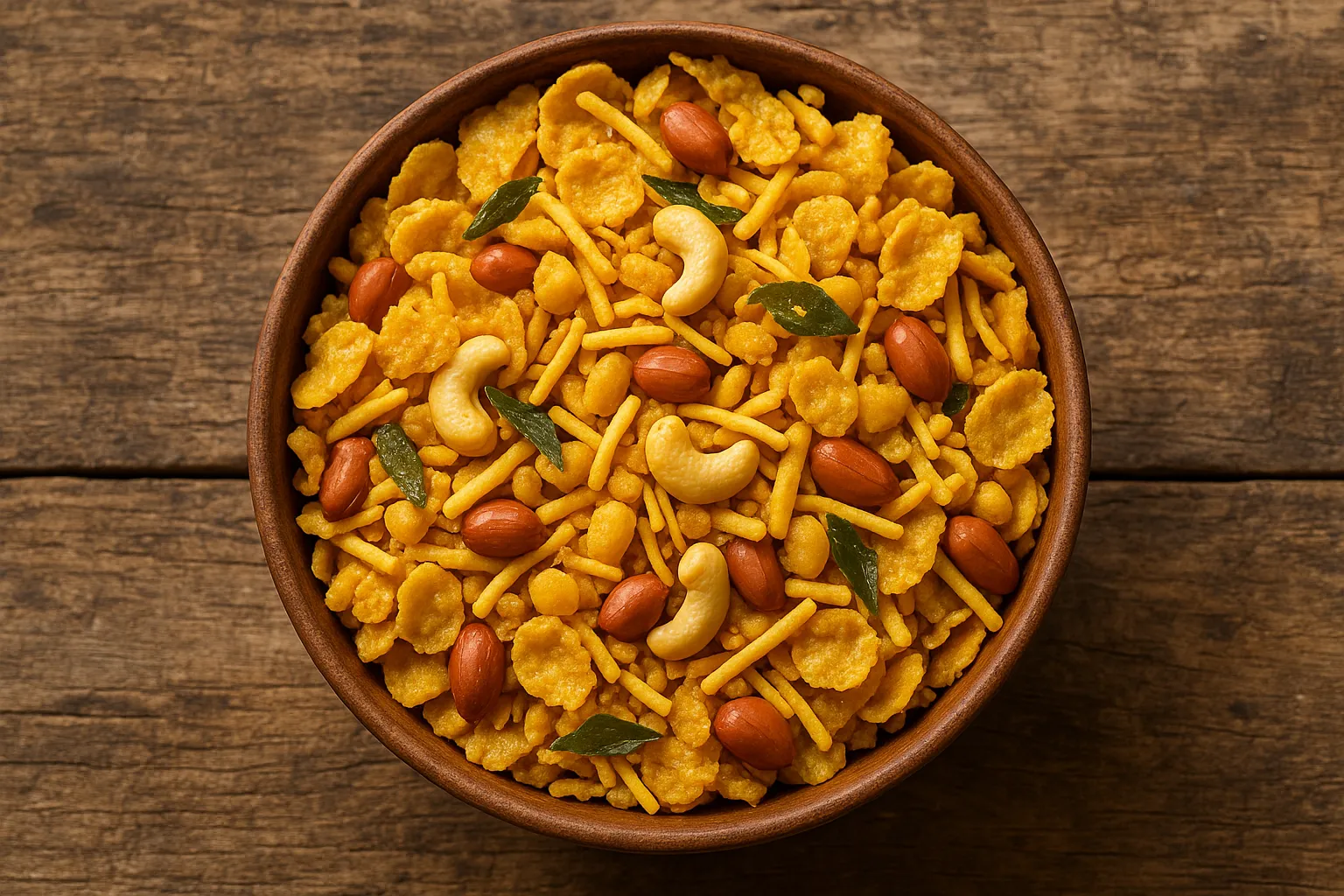
Haldiram's Cornflakes Mixture: Calories, Nutrition and Health Facts
Popular Indian namkeen combining crispy cornflakes with nuts, sev, and spices—delicious but calorie-dense with high fat and sodium.
Quick Nutrition Facts
Per 100g Serving
| Nutrient | Amount |
|---|---|
| Calories | 533 kcal |
| Protein | 10.79g |
| Carbohydrates | 52.17g |
| Fiber | 3.2g |
| Sugars | 5.71g |
| Fat | 31.27g |
| Saturated Fat | 9.37g |
| Sodium | 235mg |
| Potassium | 168mg |
Macronutrient Breakdown
 ChatGPT
  Claude
  AI Mode
  Perplexity
NUTRITIONIST INSIGHT
Cornflakes mixture is a calorie-dense snack with 53% calories from fat. A small 30g serving packs 160 calories—practice strict portion control. The high sodium (235mg/100g) and saturated fat (9.37g) make this an occasional treat, not a daily snack.
Myth Busters
MYTH #1: Cornflakes Mixture is Healthy Because It Contains Cornflakes
TRUTH: Despite cornflakes base, this is a fried namkeen with 31g fat per 100g. The deep-frying process adds significant calories and saturated fat, eliminating any health benefits of plain cornflakes. Choose plain roasted cornflakes for actual health benefits.
MYTH #2: Namkeen is a Light Snack for Tea Time
TRUTH: At 533 calories per 100g, cornflakes mixture has more calories than most desserts. A typical tea-time serving (50g) provides 267 calories—equivalent to a full meal. High-fat fried snacks contribute to weight gain and metabolic issues when consumed regularly.
MYTH #3: Homemade Versions Are Much Healthier
TRUTH: While homemade allows oil control, the frying process still makes it high-calorie. Homemade versions typically have 450-500 kcal per 100g vs commercial 533 kcal—still too calorie-dense for regular consumption. Baking instead of frying reduces calories by 40%.
MYTH #4: It's Fine to Eat Namkeen Daily in Small Portions
TRUTH: Daily consumption of fried snacks increases saturated fat and sodium intake, raising heart disease risk. Even 30g daily adds 160 calories and 280mg sodium. Limit to once weekly maximum; choose roasted alternatives like roasted chana, makhana, or nuts for daily snacking.
MYTH #5: Cornflakes Mixture Provides Good Protein
TRUTH: While 10.79g protein per 100g seems high, it comes packaged with 31g fat (287 calories from fat alone). The protein-to-fat ratio (1:3) is unfavorable. Better protein sources: Greek yogurt (10g protein, 0-5g fat), roasted chana (20g protein, 6g fat), or paneer (18g protein, 20g fat).
MYTH #6: Low Sugar Means Diabetic-Friendly
TRUTH: Sugar content (5.71g) is low, but 52g refined carbs and 31g fat cause blood sugar spikes in diabetics. The high-fat content delays glucose absorption but increases insulin resistance over time. Diabetics should avoid fried namkeen completely.
NutriScore by Health Goals
| Health Goal | NutriScore | Why This Score? |
|---|---|---|
| Weight Loss |  | 533 calories and 31g fat per 100g makes weight loss nearly impossible. Even small portions (30g = 160 cal) hinder calorie deficits. Avoid completely during fat loss phases. |
| Muscle Gain |  | Provides 10.79g protein but with excessive fat (31g). Poor protein-to-calorie ratio. Better muscle-building snacks: Greek yogurt, boiled eggs, protein bars, or roasted chickpeas. |
| Diabetes Management | | High refined carbs (52g) and fat (31g) cause blood sugar spikes and insulin resistance. Fried foods worsen diabetes control. Avoid. |
| PCOS Management | | Refined carbs and saturated fat (9.37g) worsen insulin resistance—core PCOS issue. High sodium increases bloating. Choose anti-inflammatory snacks like nuts, seeds, or roasted chana. |
| Pregnancy Nutrition | | High sodium (235mg) and saturated fat increase pregnancy complications risk (hypertension, gestational diabetes). Occasional treat only (30g max, once weekly). Prioritize nutrient-dense snacks. |
| Viral/Flu Recovery | | High fat content (31g) is hard to digest during illness. Sodium may dehydrate. Choose easy-to-digest snacks: khichdi, fruit, soups, or plain crackers instead. |
PERSONALIZED NUTRITION
Track your meals with NutriScan for personalized NutriScores based on your specific health goals!
Blood Sugar Response to Cornflakes Mixture
Understanding how this fried namkeen affects blood glucose helps you make informed snacking decisions.
Typical Glucose Response Curve
This chart shows typical blood glucose response for healthy individuals. Diabetics and PCOS patients may experience higher and longer spikes. Not medical advice.
How to Minimize the Spike
High fat content delays but prolongs glucose absorption. Better to avoid, but if consuming:
- 🥛 Pair with protein - Greek yogurt, paneer, or boiled eggs slow absorption
- 🥒 Add vegetables - Cucumber, tomato, or carrot sticks provide fiber
- 🚶 Walk after eating - 10-minute walk reduces blood sugar peak by 15-20%
- 💧 Drink water - Helps dilute sodium and improve digestion
Better alternative: Replace with roasted makhana (fox nuts), roasted chana, or air-popped popcorn for crunchy satisfaction with 70% fewer calories.
Cultural Significance
Cornflakes mixture represents modern fusion in Indian snacking, combining Western breakfast cereal with traditional namkeen spices.
In India:
- Popular tea-time snack across urban households since 1990s
- Haldiram's pioneered the category, now a market leader
- Often served during festivals like Diwali alongside traditional swaps
- Featured in party platters and corporate gift hampers
- Regional variations include Kerala's banana chips mix and Mumbai's chivda
Modern Evolution:
- Reflects India's post-liberalization food culture (1990s onward)
- Combines convenience (packaged) with traditional flavors (masala, sev)
- Now exported globally to Indian diaspora communities
- Spawned healthier alternatives: baked versions, multigrain variants, air-fried options
Compare & Substitute
Cornflakes Mixture vs Similar Snacks (Per 100g)
| Nutrient | 🥨 Cornflakes Mixture | 🥜 Roasted Chana | 🌰 Mixed Nuts (roasted) | 🍿 Popcorn (air-popped) |
|---|---|---|---|---|
| Calories | 533 kcal | 378 kcal | 607 kcal | 387 kcal |
| Carbs | 52.17g | 63g | 21g | 78g |
| Fiber | 3.2g | 12.5g | 7g | 15g |
| Protein | 10.79g | 20.5g | 20g | 13g |
| Fat | 31.27g | 5.6g | 50g | 4.5g |
| Sodium | 235mg | 5mg | 15mg | 8mg |
| Fiber | 3.2g | 12.5g | 7g | 15g |
| Best For | Occasional indulgence | Weight loss, diabetes, high-protein | Muscle gain, heart health | Low-calorie snacking, fiber |
Frequently Asked Questions
Is Haldiram's Cornflakes Mixture healthy?
No, it's a high-calorie fried snack (533 kcal per 100g) with 31g fat and should be occasional only. The high sodium (235mg) and saturated fat (9.37g) make it unsuitable for regular consumption, especially for weight loss, diabetes, or PCOS management.
Healthier alternatives: Roasted chana (378 kcal, 20g protein, 5.6g fat); air-popped popcorn (387 kcal, 15g fiber); roasted makhana (347 kcal, low fat); mixed nuts (607 kcal but heart-healthy fats).
How many calories are in Haldiram's Cornflakes Mixture?
Per 100g: 533 calories with 31.27g fat, 52.17g carbs, and 10.79g protein. Calorie breakdown: 53% from fat, 39% from carbs, 8% from protein.
Common servings: Small handful (30g) = 160 calories; Medium bowl (50g) = 267 calories; Large serving (100g) = 533 calories (equivalent to a full meal).
Can I eat cornflakes mixture while losing weight?
Not recommended for weight loss. The calorie density (533 kcal/100g) and high fat content (53% of calories) make it extremely difficult to fit into a calorie deficit. A typical 50g serving (267 calories) is nearly 20% of a 1,500-calorie diet.
If consuming: Limit to 20-30g once weekly maximum (160 calories); count every calorie; pair with vegetables or protein; walk afterward. Better option: eliminate completely during active weight loss phases.
Is Haldiram's Cornflakes Mixture good for diabetics?
No, not recommended for diabetics. The combination of refined carbs (52g), high fat (31g), and fried preparation causes prolonged blood sugar elevation. The saturated fat (9.37g) also worsens insulin resistance over time.
Diabetic-friendly alternatives: Roasted chana (low GI, high protein, 5.6g fat); roasted peanuts (healthy fats, protein); cucumber with hummus; plain roasted makhana (fox nuts); vegetable sticks with Greek yogurt dip.
What is the serving size for cornflakes mixture?
Recommended serving: 20-30g (2-3 tablespoons) providing 107-160 calories. Most people consume 50-100g per sitting, adding 267-533 calories.
Portion control tips: Use small bowls (not bags); pre-portion into 30g containers; set timer after first handful; pair with filling foods like yogurt or vegetables; drink water before snacking to reduce quantity consumed.
Does cornflakes mixture contain trans fats?
May contain trace trans fats depending on oil quality and frying temperature, though not usually listed. Check ingredient labels for "partially hydrogenated oils."
Saturated fat: 9.37g per 100g—about 47% of daily limit (20g). A 50g serving provides 4.69g saturated fat, still 23% of daily allowance. High saturated fat intake increases heart disease risk.
How often can I safely eat cornflakes mixture?
Maximum frequency: Once weekly, 20-30g serving for healthy adults. Those with diabetes, PCOS, heart disease, or obesity should avoid completely or limit to once monthly.
Daily alternatives: Roasted chana, roasted makhana, air-popped popcorn, mixed nuts (unsalted), vegetable sticks, fresh fruit, Greek yogurt.
Track your meals with NutriScan app to see how cornflakes mixture fits your personal nutrition goals and get healthier snack suggestions.
Can I make a healthier version at home?
Yes, with modifications: Use baking instead of frying (reduces calories by 40%); control oil quality and quantity; reduce salt; add more nuts and seeds for nutrition; use whole grain cornflakes.
Homemade baked version (approximate per 100g): 320-380 calories, 15-18g fat, higher fiber. Still calorie-dense—limit to small portions (30g). Roasting method is healthiest, though texture differs from fried version.


Similar Nutritious Snacks
4505 Chicharrones Classic Chili Salt
7 Eleven Japan Crispy Corn Cheese
Explore More Nutrition Tools & Resources
AI Calorie Counter App - Snap a Photo, Get Macros
AI Nutritionist App That Reads Your Logged Meals
Best Protein Supplements for Women
Bulking Meal Plan App That Sets Your Surplus
ChatGPT Calorie Counter Alternative That Keeps the Total
ChatGPT Diet Plan Alternative That Tracks What You Eat
ChatGPT Weight Loss Coach Alternative With a Food Log
Fast Food Calorie Counter App That Reads the Tray
Free Calorie Tracker App with AI Photo Scans | NutriScan
Indian Diet Plan App With Veg and Non Veg Meals
Indian Food Calorie Calculator - Get Instant Nutrition Facts for Desi Meals — 2026
Intermittent Fasting for Women, Timer and Meal Log App
Intermittent Fasting Tracker App - Free Fasting Timer
Macro Tracker App That Fills the Numbers From a Photo
Mediterranean Diet Meal Plan App That Counts the Oil
Micronutrient Tracker App for Vitamins and Minerals
MyFitnessPal Alternative That Stays Free | NutriScan
NutriScore App: A Free Grade on Every Meal | NutriScan
Nutrition Label Scanner App for the Amount You Ate
Second Trimester Protein Guide
Vegetarian Meal Plan App With a Protein Target
Voice Calorie Counter - Speak to Track Meals Hands-Free
Water and Calorie Tracker App - Free Water Log