Haldiram's Magic Makhana Salt & Pepper: Calories, Nutrition and Health Benefits
Crispy roasted foxnuts seasoned with bold salt and pepper, delivering traditional Indian nutrition in a modern snack format.
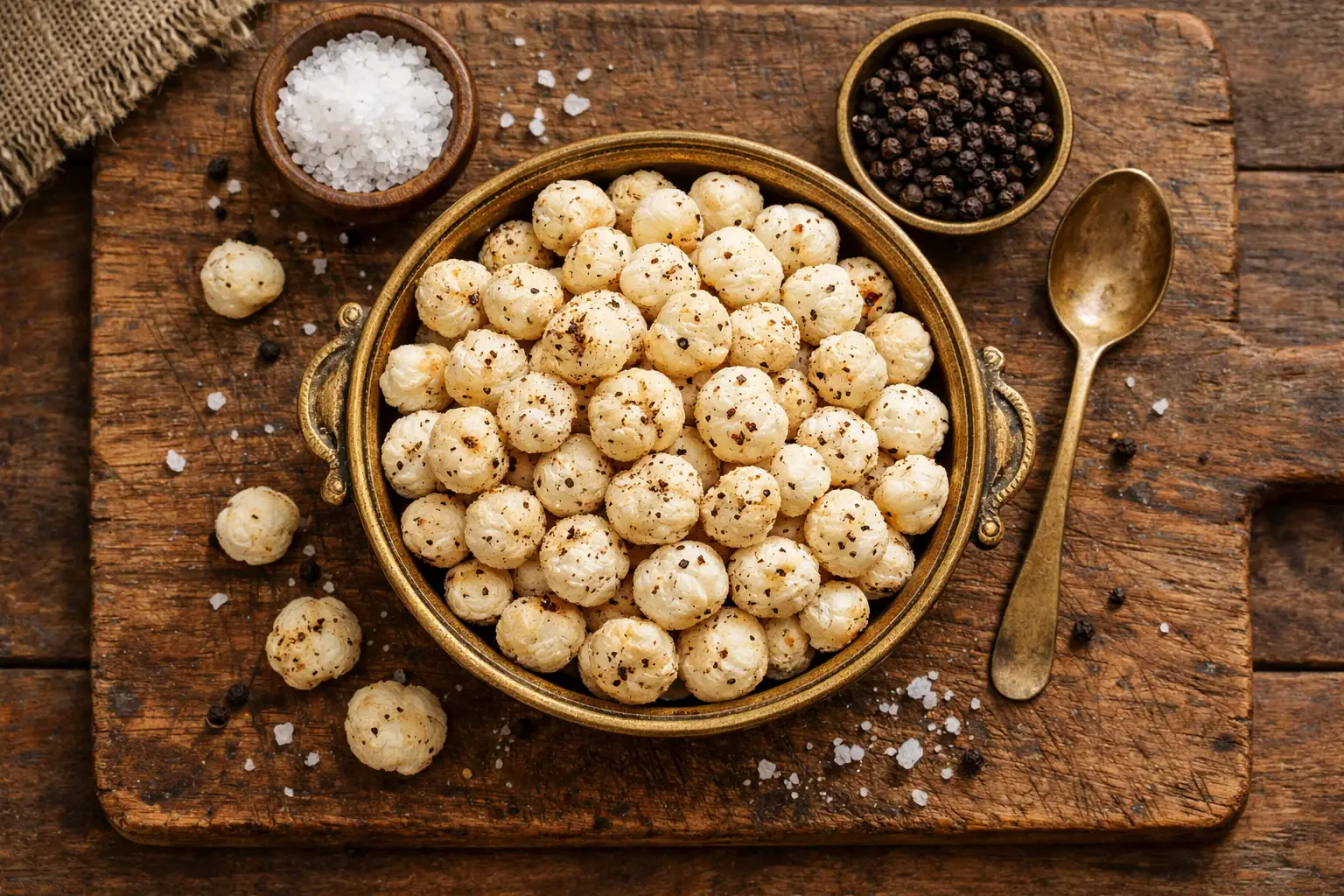
Quick Nutrition Facts
Per 1 Cup Serving (30g)
| Nutrient | Amount |
|---|---|
| Calories | 160 kcal |
| Protein | 2.7g |
| Carbohydrates | 15.6g |
| Fiber | 0.6g |
| Sugars | 1.2g |
| Fat | 10g |
| Sodium | 255mg |
| Calcium | 18mg |
| Iron | 0.5mg |
| Magnesium | 15mg |
Macronutrient Breakdown
 ChatGPT
  Claude
  AI Mode
  Perplexity
NUTRITIONIST INSIGHT
Makhana (foxnuts) are one of the few snacks that combine low glycemic index (GI ~37) with meaningful calcium and magnesium. The roasted version retains most nutrients while the salt and pepper seasoning adds negligible calories but watch sodium intake at 850mg per 100g.
Myth Busters
MYTH #1: Makhana Is Just Empty Calories Like Other Snacks
TRUTH: Unlike chips or fried namkeen, makhana provides antioxidant, anti-inflammatory, and cardioprotective benefits. Foxnuts contain quality plant protein (9g/100g) and are classified as a superfood with antidiabetic and hepatoprotective properties.
MYTH #2: Packaged Makhana Is as Healthy as Home-Roasted
TRUTH: Haldiram's version adds oil during roasting, raising fat content to 33g/100g vs ~2g for plain dry-roasted makhana. The processing adds significant calories but retains the core nutritional benefits of foxnuts.
MYTH #3: Makhana Has No Protein
TRUTH: Makhana provides 9g protein per 100g, comparable to many cereals. Research confirms foxnuts are rich in essential amino acids and unsaturated fatty acids, making them nutritionally dense for a plant-based snack.
MYTH #4: Diabetics Should Avoid Makhana Because It's a Carb
TRUTH: With a low glycemic index of approximately 37, makhana releases sugar slowly into the bloodstream. Studies show foxnuts have antidiabetic properties that can help improve insulin sensitivity when consumed in moderation.
MYTH #5: Makhana Is Unsafe During Pregnancy
TRUTH: Makhana is considered safe and beneficial during pregnancy, providing calcium, magnesium, iron, and phosphorus crucial for fetal development. Limit seasoned varieties to 25-30g daily due to sodium content.
NutriScore by Health Goals
| Health Goal | NutriScore | Why This Score? |
|---|---|---|
| Weight Loss |  | 533 cal/100g is calorie-dense due to added oil. Stick to 30g portion (160 cal). High volume-to-calorie ratio helps with fullness compared to chips. |
| Muscle Gain |  | 9g protein/100g with quality amino acids. Good post-workout snack paired with a protein shake. Carbs support glycogen replenishment. |
| Diabetes Management | | Low GI (~37) prevents blood sugar spikes. Limit to 25-30g, pair with protein. Monitor if on metformin. |
| PCOS Management | | Low GI is favorable, but added oil raises omega-6 intake. Prefer plain roasted makhana. Limit to 20-25g daily. |
| Pregnancy Nutrition | | Rich in calcium, magnesium, iron, and phosphorus for fetal development. Watch sodium (850mg/100g). |
| Viral/Flu Recovery | | Easy to digest, provides sustained energy. Anti-inflammatory properties support recovery. Light on stomach during illness. |
PERSONALIZED NUTRITION
Track your meals with NutriScan for personalized NutriScores based on your specific health goals!
Blood Sugar Response to Makhana
Understanding how makhana affects your blood glucose helps you make informed snacking decisions, especially if managing diabetes or PCOS.
Typical Glucose Response Curve
*This chart shows typical blood glucose response for general healthy individuals. Individual responses may vary. Not medical advice.*
How to Flatten the Spike
Pairing high-carb snacks with protein or healthy fat slows glucose absorption and reduces the peak blood sugar level:
- 🥛 Greek yogurt or curd (dahi) - Adds protein and probiotics for better digestion
- 🫘 A handful of roasted chana - Boosts protein and fiber content
- 🥒 Cucumber or carrot sticks - Adds fiber and volume with minimal calories
- 🍵 Green tea - Catechins may further support blood sugar regulation
This combination not only reduces the glucose spike but also extends energy release, keeping you fuller for longer.
Cultural Significance
Makhana (Euryale ferox), also called foxnuts or lotus seeds, has been cultivated in India for over 3,000 years, primarily in Bihar's wetlands which produce 80% of the world's supply.
In India:
- Central to fasting traditions during Navratri, Ekadashi, and Chhath Puja
- Ayurveda classifies makhana as "light and dry" (laghu and ruksha), beneficial for Kapha balance
- Bihar's Mithila region considers makhana cultivation a sacred livelihood
- Used in kheer, curries, and roasted snacks across North Indian households
Global Impact:
- Growing popularity as a "superfood" alternative to popcorn and chips in Western markets
- Recognized in TCM (Traditional Chinese Medicine) for kidney and spleen health
- Sustainable aquatic crop requiring minimal pesticides and fertilizers
Compare & Substitute
Makhana vs Similar Snacks (Per 100g)
| Nutrient | Makhana (Haldiram's) | Plain Roasted Makhana | Roasted Chana | Potato Chips |
|---|---|---|---|---|
| Calories | 533 kcal | 350 kcal | 369 kcal | 536 kcal |
| Carbs | 52g | 65g | 58g | 50g |
| Fiber | 2g | 3.5g | 17g | 4.4g |
| Protein | 9g | 9.7g | 22g | 7g |
| Fat | 33g | 2g | 5g | 35g |
| Sodium | 850mg | 10mg | 25mg | 525mg |
| GI | ~37 | ~37 | ~30 | ~70 |
| Best For | Tasty low-GI snack | Weight loss, fasting | High protein | Avoid if dieting |
Frequently Asked Questions
How many calories are in Haldiram's Magic Makhana?
533 calories per 100g. A typical 30g serving (about 1 cup) provides 160 calories. The added oil during roasting increases calories compared to plain makhana (350 cal/100g).
Is makhana good for weight loss?
Plain roasted makhana is excellent for weight loss at 350 cal/100g with high volume. Haldiram's version at 533 cal/100g is higher due to added oil. Limit to 30g portions and pair with protein for satiety.
Can diabetics eat Haldiram's Magic Makhana?
Yes, makhana has a low glycemic index (~37) that prevents blood sugar spikes. Limit portions to 25-30g, monitor blood sugar response, and consult your doctor if taking metformin or insulin as makhana may enhance their blood-sugar-lowering effects.
Is makhana safe during pregnancy?
Makhana is safe and beneficial during pregnancy, providing calcium, magnesium, iron, and phosphorus for fetal development. Choose the seasoned variety in moderation (25-30g daily) due to its 850mg sodium per 100g content.
What are the main health benefits of makhana?
- Blood Sugar Control: Low GI (~37) prevents glucose spikes
- Bone Health: Rich in calcium and magnesium
- Heart Protection: Cardioprotective and anti-inflammatory properties
- Digestive Health: Light and easy to digest, gentle on stomach
- Antioxidant Rich: Fights oxidative stress and supports immunity
- Kidney Support: Traditional use for kidney health in Ayurveda and TCM
How much makhana should I eat per day?
25-30g daily (about 1 cup) is the recommended intake. This provides approximately 160 calories with beneficial nutrients. Exceeding this amount increases sodium and calorie intake unnecessarily, especially with seasoned varieties.




Similar Nutritious Foods
4505 Chicharrones Classic Chili Salt
7 Eleven Japan Crispy Corn Cheese
Explore More Nutrition Tools & Resources
AI Calorie Counter App - Snap a Photo, Get Macros
AI Nutritionist App That Reads Your Logged Meals
Best Protein Supplements for Women
Bulking Meal Plan App That Sets Your Surplus
ChatGPT Calorie Counter Alternative That Keeps the Total
ChatGPT Diet Plan Alternative That Tracks What You Eat
ChatGPT Weight Loss Coach Alternative With a Food Log
Fast Food Calorie Counter App That Reads the Tray
Free Calorie Tracker App with AI Photo Scans | NutriScan
Indian Diet Plan App With Veg and Non Veg Meals
Indian Food Calorie Calculator - Get Instant Nutrition Facts for Desi Meals — 2026
Intermittent Fasting for Women, Timer and Meal Log App
Intermittent Fasting Tracker App - Free Fasting Timer
Macro Tracker App That Fills the Numbers From a Photo
Mediterranean Diet Meal Plan App That Counts the Oil
Micronutrient Tracker App for Vitamins and Minerals
MyFitnessPal Alternative That Stays Free | NutriScan
NutriScore App: A Free Grade on Every Meal | NutriScan
Nutrition Label Scanner App for the Amount You Ate
Second Trimester Protein Guide
Vegetarian Meal Plan App With a Protein Target
Voice Calorie Counter - Speak to Track Meals Hands-Free
Water and Calorie Tracker App - Free Water Log