Haldiram's Minute Khana: Calories, Nutrition and Health Facts
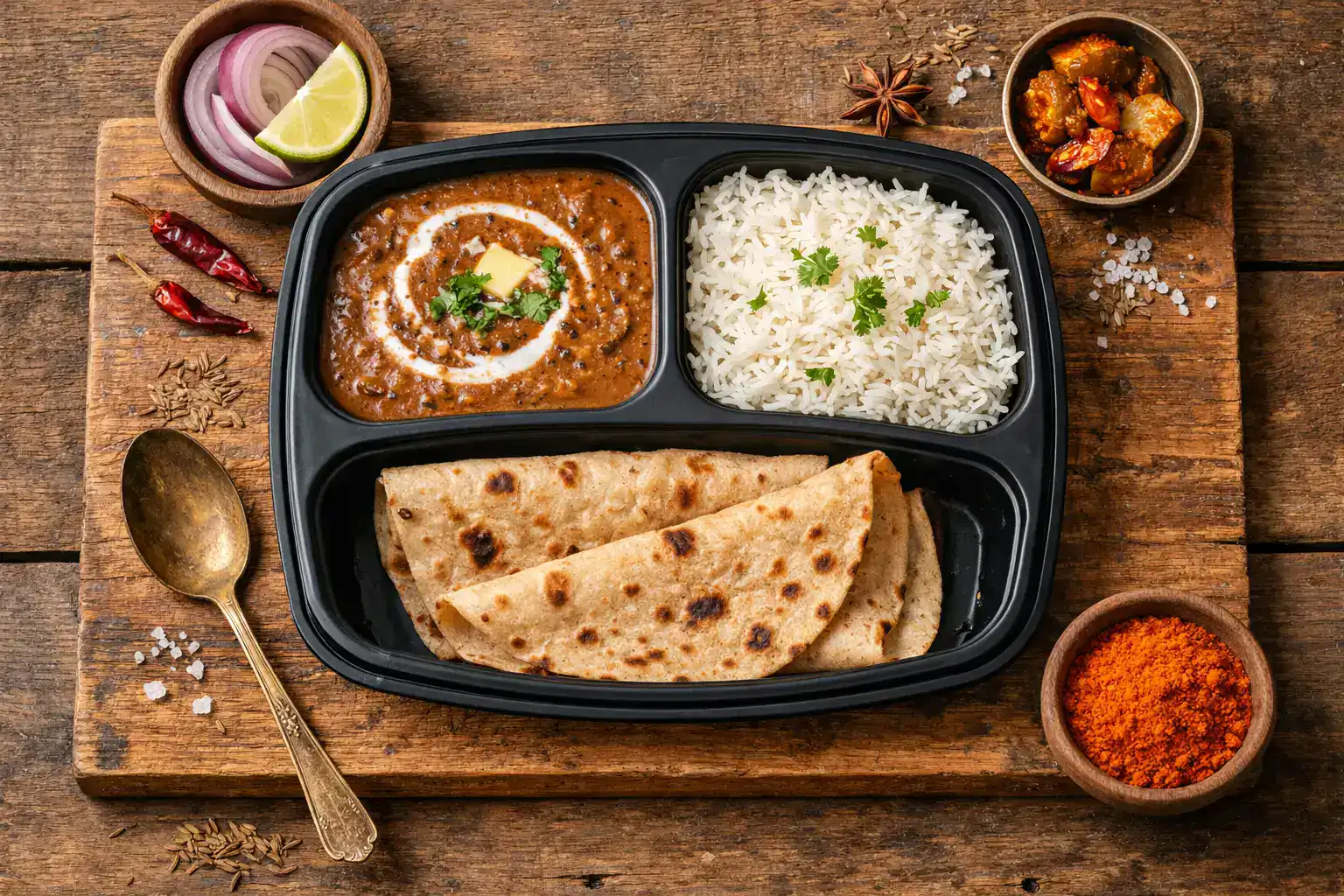
India's popular ready-to-eat meal brand offering convenient dal, rice, biryani, and paratha combos with 155-210 calories per 100g.
Quick Nutrition Facts
Per 100g (Dal Makhani variant)
| Nutrient | Amount |
|---|---|
| Calories | 155 kcal |
| Protein | 2.7g |
| Carbohydrates | 15g |
| Fiber | 2.1g |
| Sugars | 1.8g |
| Fat | 9.4g |
| Saturated Fat | 4.5g |
| Sodium | 620mg |
| Iron | 1.2mg |
| Calcium | 35mg |
Macronutrient Breakdown
 ChatGPT
  Claude
  AI Mode
  Perplexity
NUTRITIONIST INSIGHT
Haldiram's Minute Khana delivers a quick Indian meal but packs 620mg sodium per 100g, about 27% of the daily limit in just one serving. Dal-based variants offer the best macro balance with 2.1g fiber from lentils. Always pair with fresh vegetables or raita to offset the high sodium and boost nutrient density.
Myth Busters
MYTH #1: Ready-to-Eat Meals Are as Nutritious as Home-Cooked Food
TRUTH: Ready-to-eat meals like Minute Khana contain significantly more sodium and saturated fat than typical home-cooked dal. Ultra-processed foods tend to have lower fiber, vitamin, and mineral content compared to freshly prepared meals. They serve as convenient backups, not daily staples.
MYTH #2: Minute Khana Has No Preservatives
TRUTH: While Haldiram's uses retort packaging (heat sterilization) which reduces the need for chemical preservatives, packaged Indian foods often contain elevated sodium levels that act as a natural preservative. Always check the label for the full ingredient list.
MYTH #3: All Minute Khana Variants Have the Same Calories
TRUTH: Calorie content varies dramatically across variants. Dal Makhani has about 155 kcal/100g, while Biryani variants can exceed 200 kcal/100g. Paratha options are the highest at 200+ kcal per piece due to refined flour and added fat. Meal composition significantly affects glycemic response.
MYTH #4: Eating a Full Pack Is One Serving
TRUTH: A single 300g pack contains 465+ calories and over 1800mg sodium. That is nearly 80% of your daily sodium limit. For weight management, treat half a pack as one serving and supplement with fresh salad or vegetables.
MYTH #5: Ready Meals Are Always Bad for You
TRUTH: In moderation, ready meals provide convenience without major harm. Dal-based Minute Khana variants supply lentil protein and fiber. The key is frequency: occasional consumption of processed foods is acceptable within a balanced diet, but daily reliance increases sodium and saturated fat intake.
NutriScore by Health Goals
| Health Goal | NutriScore | Why This Score? |
|---|---|---|
| Weight Loss |  | 155 kcal/100g is moderate but high fat (9.4g) and sodium (620mg) make it calorie-dense. A full pack exceeds 465 cal. Eat half portions with salad. |
| Muscle Gain | | Only 2.7g protein per 100g is very low for muscle building. Would need supplemental protein sources like paneer, eggs, or dal on the side. |
| Diabetes Management | | Refined carbs and moderate glycemic load affect blood sugar control. Choose dal variants, eat half portions, pair with fiber-rich salad. |
| PCOS Management | | High sodium promotes water retention; refined carbs affect insulin sensitivity. Limit to once a week maximum. |
| Pregnancy Nutrition | | High sodium intake during pregnancy increases risk of complications. Low protein and micronutrient content. Prefer fresh home-cooked meals. |
| Viral/Flu Recovery |  | Warm dal-rice provides comfort and easy-to-digest carbs during illness. Sodium helps with electrolyte replenishment. Acceptable as a recovery convenience meal. |
PERSONALIZED NUTRITION
Track your meals with NutriScan for personalized NutriScores based on your specific health goals!
Blood Sugar Response to Minute Khana
Understanding how Haldiram's Minute Khana affects your blood glucose helps you time meals and choose pairings wisely.
Typical Glucose Response Curve
This chart shows typical blood glucose response for general healthy individuals. Individual responses may vary. Not medical advice.
How to Flatten the Spike
Adding protein, fat, and fiber to a carb-rich meal slows glucose absorption and reduces peak blood sugar:
- 🥗 Fresh cucumber-tomato salad - Fiber from raw vegetables slows digestion
- 🥛 Plain curd (dahi) or raita - Protein and probiotics improve glycemic response
- 🥬 Steamed or sauteed greens - Extra fiber and micronutrients
- 🫘 Extra dal or sprouts on the side - Plant protein boosts satiety
Eating vegetables and protein before carbohydrates can reduce postprandial glucose spikes by up to 73%.
Cultural Significance
Haldiram's Minute Khana represents the modern evolution of India's rich culinary tradition, bringing home-style flavors into convenient ready-to-eat packaging.
In India:
- Haldiram's was founded in 1937 in Bikaner, Rajasthan, originally as a sweet and namkeen shop
- Minute Khana launched as a response to India's growing urban workforce needing quick, affordable meals
- Variants cover major regional cuisines: Punjabi (Dal Makhani), Hyderabadi (Biryani), South Indian (Sambar Rice)
- Uses retort technology for shelf stability without refrigeration, ideal for India's supply chain
Global Impact:
- Haldiram's is one of India's largest food companies, exported to 80+ countries
- Ready-to-eat Indian meals are the fastest-growing segment in the Indian packaged food market
- NRI communities worldwide rely on Minute Khana for convenient access to authentic Indian flavors
- The brand competes with MTR, ITC Kitchens of India, and Gits in the RTE segment
Compare & Substitute
Minute Khana vs Other Ready Meals (Per 100g)
| Nutrient | Minute Khana (Dal Makhani) | MTR Dal Makhani | Home-Cooked Dal Makhani | ITC Kitchens Dal Makhani |
|---|---|---|---|---|
| Calories | 155 kcal | 130 kcal | 110 kcal | 145 kcal |
| Carbs | 15g | 12g | 14g | 13g |
| Fiber | 2.1g | 2.5g | 3.5g | 2.3g |
| Protein | 2.7g | 3.2g | 4.5g | 3.0g |
| Fat | 9.4g | 7.5g | 5.0g | 8.5g |
| Sodium | 620mg | 550mg | 350mg | 580mg |
| Best For | Quick convenience meal | Lower-cal option | Best nutrition overall | Moderate convenience |
Frequently Asked Questions
How many calories are in Haldiram's Minute Khana?
Calorie content varies by variant. Dal Makhani has about 155 kcal per 100g (465 kcal per 300g pack). Biryani variants range from 180-210 kcal per 100g. Paratha options are the highest at about 330 kcal per piece.
Per full pack (300g): 465-630 calories depending on variant. Always check the nutrition label on your specific product.
Is Haldiram's Minute Khana healthy?
Minute Khana provides convenient Indian meals but is not ideal for daily consumption. Key concerns are high sodium (620mg/100g), moderate saturated fat (4.5g/100g), and low protein (2.7g/100g).
Best practices: Limit to 2-3 times per week, choose dal-based variants, eat half-pack portions, and always supplement with fresh vegetables or salad.
Can diabetics eat Haldiram's Minute Khana?
Diabetics should exercise caution. The refined carbohydrates and moderate glycemic load can cause blood sugar spikes.
Tips for diabetics:
- Choose Dal Makhani over biryani or paratha variants
- Eat only half a pack at a time
- Always pair with fiber-rich salad or raita
- Avoid eating late at night when glucose tolerance is lower
- Monitor blood sugar 2 hours after eating
Which Minute Khana variant is healthiest?
Dal Makhani is the healthiest option with more lentil-based protein and fiber. Biryani and paratha variants have more refined carbs and fat.
Ranking (healthiest to least healthy):
- Dal Makhani / Dal Tadka (lentil protein + fiber)
- Rajma Chawal (kidney bean protein)
- Sambar Rice (mixed vegetable fiber)
- Biryani variants (higher calories, less fiber)
- Paratha variants (highest fat and refined flour)
What is the sodium content in Minute Khana?
Sodium is the biggest nutritional concern. A typical 100g serving contains 500-800mg sodium. A full 300g pack can deliver 1500-2400mg, which is 65-100% of the daily recommended limit of 2300mg.
To reduce sodium impact: Drink plenty of water, pair with potassium-rich foods (banana, coconut water), and limit other high-sodium foods on the same day.
Is Minute Khana safe during pregnancy?
Not recommended as a regular meal during pregnancy. High sodium content and low nutrient density make it a poor choice for prenatal nutrition. Home-cooked meals provide better protein, iron, folate, and calcium needed during pregnancy.
If consuming occasionally: Choose dal variants for lentil iron, supplement with fresh fruits and vegetables, and do not exceed half a pack per sitting.


Similar Nutritious Foods
4505 Chicharrones Classic Chili Salt
7 Eleven Japan Crispy Corn Cheese
Explore More Nutrition Tools & Resources
AI Calorie Counter App - Snap a Photo, Get Macros
AI Nutritionist App That Reads Your Logged Meals
Best Protein Supplements for Women
Bulking Meal Plan App That Sets Your Surplus
ChatGPT Calorie Counter Alternative That Keeps the Total
ChatGPT Diet Plan Alternative That Tracks What You Eat
ChatGPT Weight Loss Coach Alternative With a Food Log
Fast Food Calorie Counter App That Reads the Tray
Free Calorie Tracker App with AI Photo Scans | NutriScan
Indian Diet Plan App With Veg and Non Veg Meals
Indian Food Calorie Calculator - Get Instant Nutrition Facts for Desi Meals — 2026
Intermittent Fasting for Women, Timer and Meal Log App
Intermittent Fasting Tracker App - Free Fasting Timer
Macro Tracker App That Fills the Numbers From a Photo
Mediterranean Diet Meal Plan App That Counts the Oil
Micronutrient Tracker App for Vitamins and Minerals
MyFitnessPal Alternative That Stays Free | NutriScan
NutriScore App: A Free Grade on Every Meal | NutriScan
Nutrition Label Scanner App for the Amount You Ate
Second Trimester Protein Guide
Vegetarian Meal Plan App With a Protein Target
Voice Calorie Counter - Speak to Track Meals Hands-Free
Water and Calorie Tracker App - Free Water Log