Haldiram's Moorukulu: Calories, Nutrition and Health Benefits
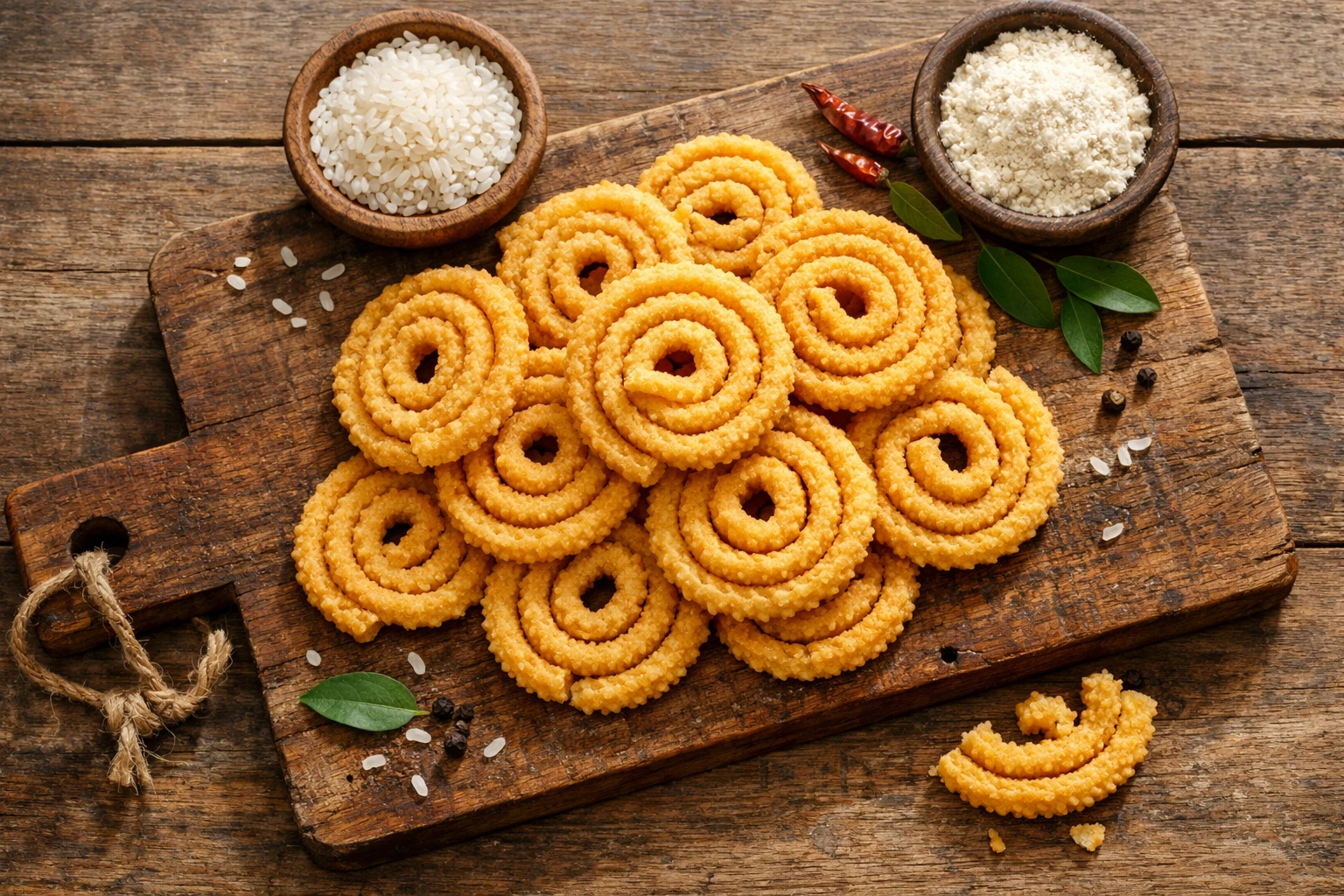
Crispy South Indian rice spiral snack with traditional spices and urad dal, perfect for occasional indulgence.
Quick Nutrition Facts
Per 50g Serving
| Nutrient | Amount |
|---|---|
| Calories | 260 kcal |
| Protein | 4g |
| Carbohydrates | 26g |
| Fiber | 1.5g |
| Sugars | 0.5g |
| Fat | 16g |
| Saturated Fat | 4g |
| Sodium | 380mg |
| Iron | 1.2mg |
| Calcium | 25mg |
Macronutrient Breakdown
 ChatGPT
  Claude
  AI Mode
  Perplexity
NUTRITIONIST INSIGHT
Moorukulu is calorie-dense at 520 kcal per 100g due to deep-frying. Best enjoyed as occasional treat; limit portions to 20-25g for snacking within balanced diet.
Myth Busters
MYTH #1: Rice-Based Snacks Are Always Healthy
TRUTH: While rice is naturally gluten-free, Moorukulu is deep-fried in oil, making it high in calories and fat. A 50g serving contains 16g fat (31% of calories from fat). Fried snacks increase calorie density significantly compared to baked alternatives.
MYTH #2: Traditional Snacks Are Better Than Packaged Chips
TRUTH: Moorukulu and potato chips have similar calorie density (520 vs 536 kcal/100g). Both are fried and calorie-dense. Choose based on portion control, not perceived health benefits. Track intake with apps like NutriScan for accuracy.
MYTH #3: Moorukulu Is High in Protein
TRUTH: While urad dal adds some protein, 50g Moorukulu provides only 4g protein (8% of daily needs). Protein needs range 46-56g daily for most adults; rely on dal, legumes, or lean meats for primary protein sources.
MYTH #4: It's Safe to Eat Unlimited Namkeen
TRUTH: Moorukulu contains 380mg sodium per 50g (16% daily limit). Excess sodium increases blood pressure risk. Limit packaged snacks to 1-2 servings weekly; choose low-sodium alternatives.
MYTH #5: Vegetable Oil Frying Makes It Healthy
TRUTH: While vegetable oil is plant-based, deep-frying creates oxidized fats and reduces nutritional value. Baked or air-fried versions retain more nutrients with 50-70% less oil.
NutriScore by Health Goals
| Health Goal | NutriScore | Why This Score? |
|---|---|---|
| Weight Loss |  | 260 cal per 50g, high fat content makes portion control critical. Limit to 20-25g max; choose baked alternatives. |
| Muscle Gain |  | Provides quick energy (26g carbs) but minimal protein (4g). Better post-workout snacks: protein bars, Greek yogurt with nuts. |
| Diabetes Management | | High GI (~70-75) from refined rice flour; fried fat slows digestion slightly but adds calories. Limit to 20g, pair with fiber-rich vegetables. |
| PCOS Management | | High carbs and fat affect insulin sensitivity. Choose roasted chickpeas or makhana for better hormonal balance. |
| Pregnancy Nutrition | | Safe in moderation (25-30g) for occasional cravings. Prioritize nutrient-dense snacks like nuts, fruits for fetal development. |
| Viral/Flu Recovery | | Provides quick energy but lacks immune-boosting vitamins. Better options: citrus fruits, dal, turmeric-spiced soups. |
PERSONALIZED NUTRITION
Track your snacks with NutriScan for personalized NutriScores based on your specific health goals!
Blood Sugar Response to Moorukulu
Moorukulu has moderate-high glycemic impact due to refined rice flour and deep-frying.
Typical Glucose Response Curve
*This chart shows typical blood glucose response for general healthy individuals. Individual responses may vary. Not medical advice.*
How to Flatten the Spike
Pairing snacks with protein or fiber reduces glucose spikes and extends satiety:
- 🥛 Buttermilk or lassi - Probiotics and protein slow sugar absorption
- 🥗 Cucumber raita or salad - Fiber and water content reduce glycemic load
- 🥜 Roasted peanuts or almonds - Healthy fats and protein balance blood sugar
- 🍵 Herbal tea (unsweetened) - Hydration without added sugars
This combination reduces peak glucose and provides sustained energy.
Cultural Significance
Moorukulu (also called murukku, chakli, or muruku) is a traditional South Indian snack originating over 500 years ago in Tamil Nadu and Andhra Pradesh.
In India:
- Essential during Diwali, Krishna Jayanthi, and harvest festivals
- Traditionally hand-pressed through brass molds into spiral shapes
- Variations across regions: Tamil thenkuzhal (star shape), Telugu janthikalu (ring shape), Kannada kadboli (ribbon)
- Home preparation symbolizes family bonding during festive seasons
Global Impact:
- Popular in Malaysia, Singapore, Sri Lanka as "murukku"
- Haldiram's and other brands modernized production while preserving traditional taste
- Growing demand in Middle East and Western markets among Indian diaspora
Compare & Substitute
Moorukulu vs Similar Indian Snacks (Per 100g)
| Nutrient | 🥨 Moorukulu | 🥔 Potato Chips | 🥜 Roasted Chana | 🌾 Khakhra |
|---|---|---|---|---|
| Calories | 520 kcal | 536 kcal | 360 kcal | 380 kcal |
| Carbs | 52g | 53g | 60g | 70g |
| Fiber | 3g | 4.5g | 12g | 8g |
| Protein | 8g | 6g | 20g | 12g |
| Fat | 32g | 34g | 6g | 6g |
| Sodium | 760mg | 480mg | 8mg | 650mg |
| Iron | 2.4mg | 1.2mg | 5mg | 4mg |
| Best For | Occasional treat | Portion-controlled snack | High protein | Low-fat crispy option |
Frequently Asked Questions
Is Moorukulu good for weight loss?
No, Moorukulu is not ideal for weight loss at 520 calories per 100g with 32g fat. If consumed, limit to 20-25g portion (104-130 cal); pair with protein or fiber; choose baked alternatives when available. Better weight-loss snacks: roasted chana (360 cal, 12g fiber per 100g), makhana (347 cal, 60% fewer calories from fat).
Can diabetics eat Moorukulu?
Diabetics should minimize Moorukulu intake due to high GI (~70-75) from refined rice flour. If consumed, eat maximum 20g portion; pair with high-fiber vegetables or curd to slow glucose absorption; monitor blood sugar 2 hours post-consumption. Better alternatives: roasted moong dal (low GI ~45), whole-grain khakhra with fiber.
How much protein is in Moorukulu?
A 50g serving contains 4g protein (8% daily needs). While urad dal adds plant protein, Moorukulu is primarily a carb and fat source. For muscle building or high-protein diets, combine with dal (7g protein per 100g cooked), paneer, or Greek yogurt.
What are the main ingredients in Moorukulu?
Moorukulu contains rice flour (primary), urad dal flour (protein source), cumin seeds, sesame seeds, asafoetida (hing), salt, chili powder, and vegetable oil for deep-frying. Traditional South Indian recipe uses hand-pressed brass molds to create signature spiral shape.
Is Moorukulu healthy?
Moorukulu is a calorie-dense, high-fat snack (520 cal, 32g fat per 100g) best enjoyed occasionally. Provides some protein from urad dal; iron and calcium from spices; but deep-frying reduces nutritional value and increases oxidized fats. Limit to 1-2 servings weekly as treat, not daily snack.
What is the shelf life of packaged Moorukulu?
Unopened Haldiram's Moorukulu lasts 3-6 months stored in cool, dry place away from sunlight. After opening, transfer to airtight container and consume within 2-3 weeks for optimal crispness. Exposure to moisture causes sogginess; check for rancid oil smell before consuming older packages.
How many calories are in a handful of Moorukulu?
A small handful (~25g) contains approximately 130 calories, 8g fat, 13g carbs, and 2g protein. For portion control, weigh servings or use measuring cups (1/4 cup ≈ 20g, 104 cal). Track portions with NutriScan app to avoid overconsumption.




Similar Nutritious Snacks
4505 Chicharrones Classic Chili Salt
7 Eleven Japan Crispy Corn Cheese
Explore More Nutrition Tools & Resources
AI Calorie Counter App - Snap a Photo, Get Macros
AI Nutritionist App That Reads Your Logged Meals
Best Protein Supplements for Women
Bulking Meal Plan App That Sets Your Surplus
ChatGPT Calorie Counter Alternative That Keeps the Total
ChatGPT Diet Plan Alternative That Tracks What You Eat
ChatGPT Weight Loss Coach Alternative With a Food Log
Fast Food Calorie Counter App That Reads the Tray
Free Calorie Tracker App with AI Photo Scans | NutriScan
Indian Diet Plan App With Veg and Non Veg Meals
Indian Food Calorie Calculator - Get Instant Nutrition Facts for Desi Meals — 2026
Intermittent Fasting for Women, Timer and Meal Log App
Intermittent Fasting Tracker App - Free Fasting Timer
Macro Tracker App That Fills the Numbers From a Photo
Mediterranean Diet Meal Plan App That Counts the Oil
Micronutrient Tracker App for Vitamins and Minerals
MyFitnessPal Alternative That Stays Free | NutriScan
NutriScore App: A Free Grade on Every Meal | NutriScan
Nutrition Label Scanner App for the Amount You Ate
Second Trimester Protein Guide
Vegetarian Meal Plan App With a Protein Target
Voice Calorie Counter - Speak to Track Meals Hands-Free
Water and Calorie Tracker App - Free Water Log