Haldiram's Ratlami Sev: Calories, Nutrition and Health Benefits
Ultra-thin, extra spicy sev from Ratlam with intense heat and addictive crunch, a legendary Madhya Pradesh specialty.
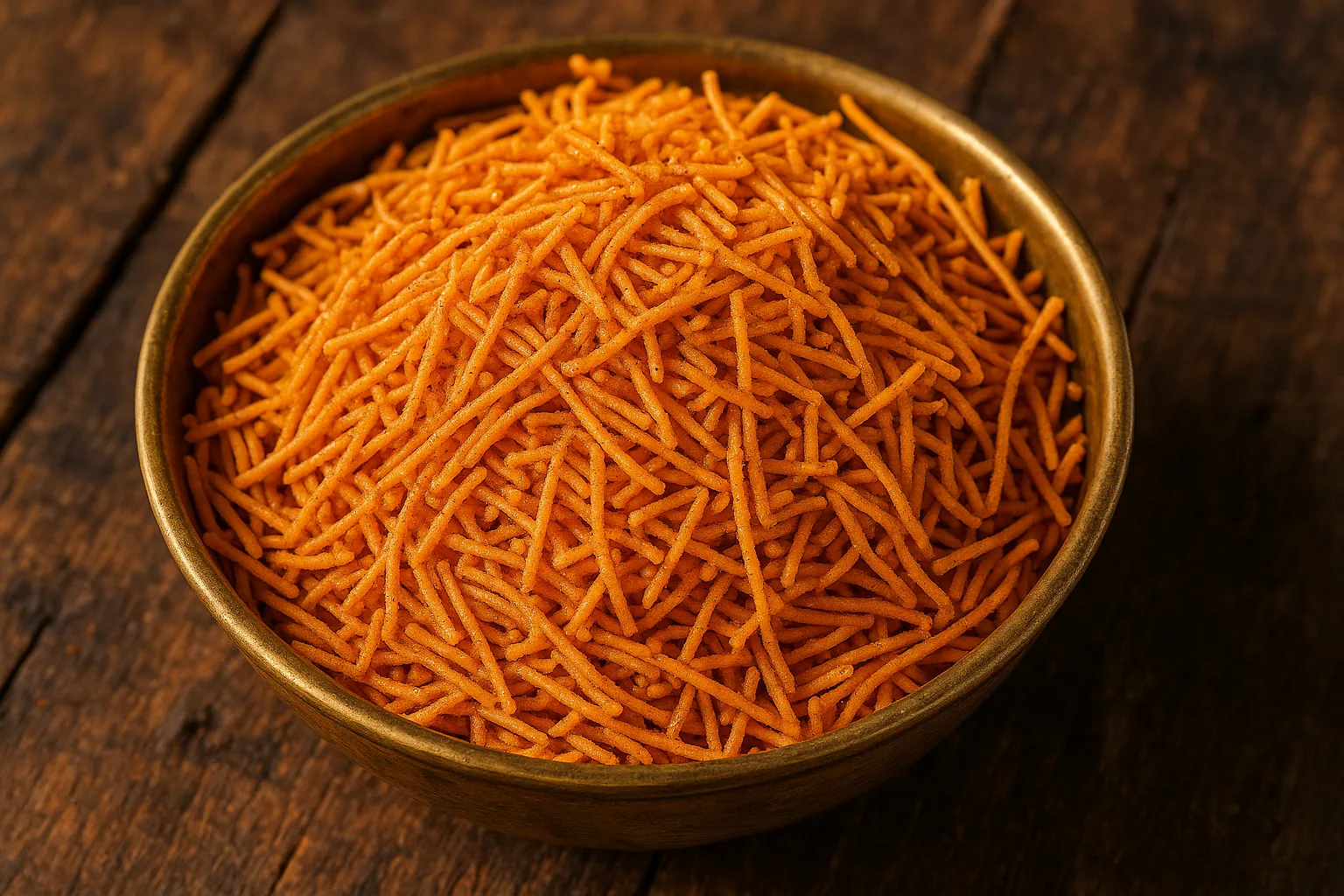
Quick Nutrition Facts
Per 100g Serving
| Nutrient | Amount |
|---|---|
| Calories | 540 kcal |
| Protein | 16g |
| Carbohydrates | 48g |
| Fiber | 5.2g |
| Sugars | 2.8g |
| Fat | 30g |
| Sodium | 920mg |
| Iron | 4.2mg |
| Calcium | 38mg |
| Potassium | 280mg |
Macronutrient Breakdown
 ChatGPT
  Claude
  AI Mode
  Perplexity
NUTRITIONIST INSIGHT
Ratlami Sev provides 16g protein per 100g from gram flour, the highest among sev varieties. However, the 30g fat content, high sodium (920mg), and intense spiciness require strict moderation. Limit to 15-20g servings to enjoy authentic Ratlami flavor without digestive distress.
Myth Busters
MYTH #1: Spicy Foods Burn More Calories
TRUTH: While capsaicin in chili may slightly boost metabolism (5-10% for 30 minutes), Ratlami Sev's 540 calories per 100g far outweigh any metabolic benefit. The spice doesn't compensate for calorie density and high fat content.
MYTH #2: Gram Flour Makes It Healthy
TRUTH: While gram flour (besan) offers more protein and fiber than white flour, the deep-frying process adds significant fat and calories. Ratlami Sev loses many of gram flour's health benefits during processing.
MYTH #3: You Can Eat More Because It's So Spicy
TRUTH: The intense heat makes small portions feel sufficient, but doesn't reduce calorie content. Many people actually drink more sugary beverages to counter spiciness, adding extra calories beyond the sev itself.
MYTH #4: Traditional Foods Are Always Better
TRUTH: While Ratlami Sev has cultural heritage, traditional doesn't equal healthy. Like many regional specialties, it's designed for occasional enjoyment, not daily consumption. Modern nutrition awareness allows us to honor traditions while making informed choices.
MYTH #5: All Protein Sources Are Equal
TRUTH: Though Ratlami Sev contains 16g protein per 100g, fried protein is less bioavailable than steamed or roasted sources. The high fat ratio (30g fat to 16g protein) makes it inefficient compared to dal, paneer, or chickpeas.
MYTH #6: Sodium Only Affects Blood Pressure
TRUTH: The 920mg sodium per 100g also causes water retention, bloating, and increased thirst. High sodium paired with intense spices can irritate digestive lining in sensitive individuals, especially with regular consumption.
NutriScore by Health Goals
| Health Goal | NutriScore | Why This Score? |
|---|---|---|
| Weight Loss |  | Very high calorie density (540 kcal/100g) and fat make it unsuitable. Limit to 15-20g portions monthly as rare treat only. |
| Muscle Gain |  | Higher protein (16g/100g) than most namkeen, but high fat reduces efficiency. Better protein sources: roasted chana, eggs, paneer. |
| Diabetes Management | | Refined gram flour with 48g carbs causes rapid glucose spikes. Maximum 10-15g portions, pair with protein, monitor carefully. |
| PCOS Management | | Very high sodium (920mg) and refined carbs worsen insulin resistance and inflammation. Avoid or choose roasted chickpeas instead. |
| Pregnancy Nutrition | | Extreme spiciness may trigger heartburn during pregnancy; high sodium increases edema risk. Avoid completely. |
| Viral/Flu Recovery | | Intense spices irritate inflamed throat; high sodium worsens dehydration during illness. Choose bland, nourishing foods instead. |
PERSONALIZED NUTRITION
Track your meals with NutriScan for personalized NutriScores based on your specific health goals!
Blood Sugar Response to Ratlami Sev
Understanding how this refined, fried snack affects blood glucose is crucial for metabolic health.
Typical Glucose Response Curve
This chart shows typical blood glucose response for general healthy individuals. Individual responses may vary. Not medical advice.
How to Flatten the Spike
Pairing Ratlami Sev with protein or fiber significantly reduces glucose spike and digestive discomfort:
- 🥛 Plain yogurt or raita - Probiotics and protein slow carb absorption; cooling effect counters spiciness
- 🥒 Cucumber and carrot sticks - High water content and fiber; helps neutralize heat
- 🥜 Roasted makhana or fox nuts - Low-calorie, high-fiber pairing balances intensity
- 🧀 Paneer cubes or cottage cheese - Protein-rich, mild flavor offsets extreme spice
These combinations reduce glucose peak, prevent overconsumption due to spice intensity, and protect digestive lining.
Cultural Significance
Ratlami Sev is a culinary icon from Ratlam city in Madhya Pradesh, renowned for its distinctively thin strands and fiery spice profile.
In Ratlam, Madhya Pradesh:
- Originated in early 20th century as specialty of local namkeen makers
- Traditional preparation involves 12+ spices including cloves, black pepper, and extra red chili
- Ratlam's unique water quality and local spice blends create authentic flavor impossible to replicate exactly
- Small family businesses still hand-make batches using century-old recipes passed through generations
In Indian Snack Culture:
- Considered the "king of spicy sev" varieties across India
- Essential topping for poha, sev puri, bhel puri, and chaat preparations
- Regional pride symbol; Ratlam locals fiercely defend authenticity of preparation methods
- Packaged versions by Haldiram's and other brands introduced this regional specialty nationwide
Beyond Madhya Pradesh:
- Indian diaspora worldwide seeks authentic Ratlami Sev to recreate traditional chaat recipes
- Modern fusion uses include salad toppings, soup garnish, and cocktail rim seasoning
- The intense spice level has cult following among heat-seeking snack enthusiasts
- Social media challenges feature people attempting to eat large quantities (not recommended)
Compare & Substitute
Ratlami Sev vs Similar Snacks (Per 100g)
| Nutrient | 🥨 Ratlami Sev | 🥨 Regular Bhujia Sev | 🥜 Roasted Chana Dal | 🥔 Potato Chips |
|---|---|---|---|---|
| Calories | 540 kcal | 515 kcal | 360 kcal | 536 kcal |
| Carbs | 48g | 50g | 58g | 50g |
| Fiber | 5.2g | 4.8g | 12g | 3.1g |
| Protein | 16g | 12g | 20g | 6.5g |
| Fat | 30g | 27g | 5g | 35g |
| Sodium | 920mg | 850mg | 380mg | 525mg |
| Iron | 4.2mg | 3.8mg | 5.5mg | 1.2mg |
| Best For | Extreme spice lovers | Moderate spice preference | High-protein, lower-calorie | Quick salty cravings |
Frequently Asked Questions
Is Haldiram's Ratlami Sev good for weight loss?
No, Ratlami Sev is unsuitable for weight loss due to very high calorie density (540 kcal/100g) and fat content (30g). The intense spiciness doesn't reduce calories—it may even trigger overeating when paired with cooling beverages.
Best practices: Avoid during active weight loss phase; if craving hits, maximum 15-20g portion (81-108 calories) monthly as planned treat; choose roasted makhana, air-popped popcorn, or roasted chickpeas for regular snacking.
Can diabetics eat Ratlami Sev?
Diabetics should avoid Ratlami Sev due to high refined carbohydrates (48g/100g) and rapid blood sugar impact from deep-frying.
Diabetic guidelines:
- Maximum portion if consumed: 10-15g (54-81 calories)
- Must pair with high-protein food like paneer or Greek yogurt
- Best timing: mid-afternoon, never on empty stomach or before bed
- Monitor blood glucose at 1 and 2 hours post-consumption
- Better alternatives: roasted chana dal, plain roasted peanuts, or cucumber with hummus
Always consult healthcare provider before adding high-carb, high-sodium snacks to diabetic meal plan.
How much protein is in Ratlami Sev?
Haldiram's Ratlami Sev contains 16g protein per 100g from gram flour (besan), making it one of the higher-protein namkeen varieties. However, with 30g fat per 100g, the protein-to-fat ratio is unfavorable (1:1.9).
For muscle building or protein needs, far better sources include roasted chana dal (20g protein, 5g fat), boiled eggs (13g protein, 11g fat), or paneer (18g protein, 20g fat) with superior bioavailability.
What makes Ratlami Sev different from regular sev?
Key Differences:
- Thickness: Ratlami Sev is significantly thinner (hair-like strands vs thick noodles)
- Spice Level: Extremely spicy with 2-3x chili content of regular sev; includes cloves and black pepper
- Texture: Ultra-crispy and delicate; shatters easily vs regular sev's sturdier structure
- Origin: Authentic recipe from Ratlam, Madhya Pradesh with unique local spice blend
- Usage: Primarily topping for chaat and poha vs regular sev for standalone snacking
- Protein: Higher protein content (16g vs 12g per 100g) due to pure gram flour
The intense spiciness is Ratlami Sev's signature characteristic, designed to add heat and texture to dishes rather than be eaten in large quantities alone.
How many calories in a small packet of Ratlami Sev?
Typical Packet Sizes:
- 35g packet - 189 calories (smallest individual serve)
- 40g packet - 216 calories (common single-serve)
- 150g packet - 810 calories (sharing size)
- 400g pack - 2,160 calories (bulk family pack)
Portion Tips: The extreme spiciness naturally limits consumption for most people; use as topping ingredient rather than standalone snack; pre-portion into 15-20g servings to avoid overeating; always have cooling beverage ready.
Is Ratlami Sev healthier than potato chips?
Ratlami Sev offers more protein (16g vs 6.5g) and fiber (5.2g vs 3.1g) than potato chips due to gram flour base. Both are calorie-dense fried snacks unsuitable for daily consumption.
Detailed Comparison:
- Protein & Fiber: Ratlami Sev superior (gram flour benefits)
- Sodium: Both very high; Ratlami higher (920mg vs 525mg)
- Spice Level: Ratlami significantly spicier; may cause digestive issues
- Fat Content: Comparable; both use deep-frying (30g vs 35g)
- Digestibility: Chips easier on stomach; Ratlami intense for sensitive digestion
Recommendation: Neither suitable for frequent consumption. If choosing between them, consider your spice tolerance and sodium sensitivity. Better options for regular snacking include baked veggie chips, roasted nuts, or air-popped makhana.
Can I eat Ratlami Sev on an empty stomach?
Strongly not recommended - the combination of high fat (30g/100g), intense spices, and sodium makes Ratlami Sev particularly harsh on empty stomach.
Likely consequences:
- Severe Heartburn: Extra chili and cloves trigger intense acid production
- Gastric Irritation: Spices irritate unprotected stomach lining
- Nausea: High fat content without food buffer causes discomfort
- Bloating: Sodium and spices slow digestion, cause gas
Safe approach: Only consume after substantial meal; pair with cooling dairy like yogurt or milk; have cucumber or watermelon ready to counter heat; never exceed 15-20g portions; avoid if you have GERD, gastritis, or IBS.
How spicy is Ratlami Sev compared to other snacks?
Ratlami Sev ranks among the spiciest packaged Indian namkeen due to concentrated chili powder, black pepper, and cloves.
Spice Scale (1-10):
- Regular Sev: 3-4/10 (mild to moderate)
- Punjabi Tadka: 5-6/10 (moderate to spicy)
- Ratlami Sev: 8-9/10 (very spicy to extremely spicy)
- Hot Peri Peri Chips: 6-7/10 (spicy)
Heat Profile: Initial tongue burn from chili powder; delayed throat heat from black pepper; lingering warmth from cloves; cumulative intensity that builds with each bite.
For Sensitive Palates: Start with 5-10g maximum portion; keep dairy or sweet beverage ready; mix with plain ingredients like puffed rice or cucumber to dilute heat.


Similar Nutritious Snacks
4505 Chicharrones Classic Chili Salt
7 Eleven Japan Crispy Corn Cheese
Explore More Nutrition Tools & Resources
AI Calorie Counter App - Snap a Photo, Get Macros
AI Nutritionist App That Reads Your Logged Meals
Best Protein Supplements for Women
Bulking Meal Plan App That Sets Your Surplus
ChatGPT Calorie Counter Alternative That Keeps the Total
ChatGPT Diet Plan Alternative That Tracks What You Eat
ChatGPT Weight Loss Coach Alternative With a Food Log
Fast Food Calorie Counter App That Reads the Tray
Free Calorie Tracker App with AI Photo Scans | NutriScan
Indian Diet Plan App With Veg and Non Veg Meals
Indian Food Calorie Calculator - Get Instant Nutrition Facts for Desi Meals — 2026
Intermittent Fasting for Women, Timer and Meal Log App
Intermittent Fasting Tracker App - Free Fasting Timer
Macro Tracker App That Fills the Numbers From a Photo
Mediterranean Diet Meal Plan App That Counts the Oil
Micronutrient Tracker App for Vitamins and Minerals
MyFitnessPal Alternative That Stays Free | NutriScan
NutriScore App: A Free Grade on Every Meal | NutriScan
Nutrition Label Scanner App for the Amount You Ate
Second Trimester Protein Guide
Vegetarian Meal Plan App With a Protein Target
Voice Calorie Counter - Speak to Track Meals Hands-Free
Water and Calorie Tracker App - Free Water Log