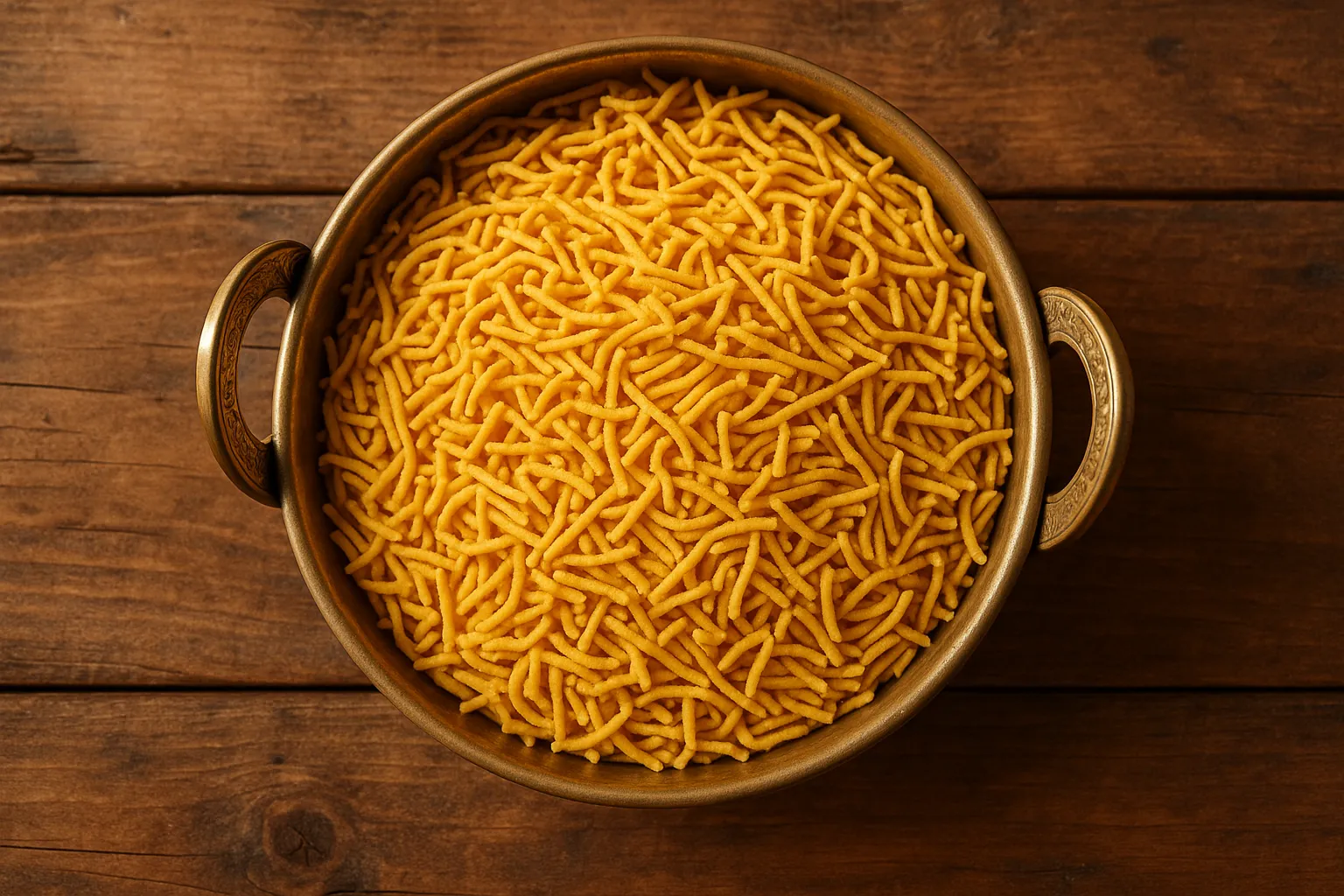
Haldiram's Sev Bhujia: Calories, Nutrition and Health Benefits
Fine gram flour noodles with aromatic Indian spices, a beloved crispy snack across India.
Quick Nutrition Facts
Per 100g Serving
| Nutrient | Amount |
|---|---|
| Calories | 525 kcal |
| Protein | 13g |
| Carbohydrates | 50g |
| Fiber | 5g |
| Sugars | 1.5g |
| Fat | 30g |
| Sodium | 920mg |
| Iron | 3.5mg |
| Calcium | 50mg |
Macronutrient Breakdown
 ChatGPT
  Claude
  AI Mode
  Perplexity
NUTRITIONIST INSIGHT
Sev Bhujia delivers 13g protein and 5g fiber per 100g from gram flour—higher than most snacks. However, deep-frying adds 30g fat and 525 calories; limit portions to 20-25g for mindful snacking.
Myth Busters
MYTH #1: Gram Flour Snacks Are Low-Calorie
TRUTH: While gram flour (besan) is nutritious, deep-frying makes it calorie-dense. Sev Bhujia contains 525 calories per 100g—more than most potato chips—due to oil absorption during frying.
MYTH #2: Sev Bhujia Is Just Empty Calories
TRUTH: Sev Bhujia provides 13g protein, 5g fiber, and 3.5mg iron per 100g from gram flour. While not a health food, it offers more nutrients than refined snacks when consumed in strict moderation.
MYTH #3: The Thin Strands Make It Lower in Fat
TRUTH: Thinner strands have greater surface area for oil absorption during frying. This can result in higher fat content per serving compared to thicker bhujia varieties—30g fat per 100g is significant.
MYTH #4: You Can Eat More Because It's Made From Lentils
TRUTH: Despite the gram flour base, portion control matters. One 100g serving equals 525 calories—requiring 60 minutes of jogging to burn. Track portions regardless of the base ingredient.
MYTH #5: Sev Bhujia Doesn't Affect Blood Sugar Like Rice
TRUTH: With 50g carbs per 100g, Sev Bhujia significantly impacts blood glucose. Gram flour has a moderate glycemic index; diabetics must limit portions and pair with protein to minimize spikes.
NutriScore by Health Goals
| Health Goal | NutriScore | Why This Score? |
|---|---|---|
| Weight Loss |  | 525 calories and 30g fat per 100g make this highly calorie-dense. Limit to 15-20g portions as rare indulgence only. |
| Muscle Gain |  | Provides 13g protein per 100g but with excessive fat (30g). Better protein sources available for muscle building goals. |
| Diabetes Management | | High carbs (50g) and refined processing affect blood sugar. Limit to 10-15g portions paired with protein if consumed. |
| PCOS Management | | High-calorie, high-carb profile can worsen insulin resistance. Choose baked chickpea alternatives or eliminate entirely. |
| Pregnancy Nutrition | | Provides iron (3.5mg) and protein but very high sodium (920mg) may contribute to swelling during pregnancy. Consume rarely in small amounts. |
| Viral/Flu Recovery | | Provides quick calories and protein but excessive sodium may cause dehydration. Better choices: dal, khichdi, fresh fruits. |
PERSONALIZED NUTRITION
Track your meals with NutriScan for personalized NutriScores based on your specific health goals!
Blood Sugar Response to Sev Bhujia
Understanding glucose impact helps diabetics and PCOS patients manage portions effectively.
Typical Glucose Response Curve
*This chart shows typical blood glucose response for general healthy individuals. Individual responses may vary. Not medical advice.*
How to Minimize Blood Sugar Spikes
Pairing Sev Bhujia with protein or fiber slows carbohydrate absorption and reduces glucose peaks:
- 🥛 Low-fat curd (dahi) or Greek yogurt - Adds protein and probiotics
- 🥗 Cucumber and tomato salad - Provides fiber and water content
- 🥜 Roasted chana (chickpeas) - Additional protein without extra oil
- 🍵 Unsweetened green tea - Antioxidants without calories
This combination creates better nutritional balance and extends satiety between meals.
Cultural Significance
Sev Bhujia has been an iconic Indian snack since Haldiram's began operations in Bikaner, Rajasthan in 1937.
In India:
- Traditional tea-time accompaniment across all regions
- Essential festival food during Diwali, Navratri, and Holi
- Popular topping for chaat dishes (bhel puri, sev puri)
- Cultural symbol of Indian hospitality and celebration
Manufacturing & Heritage:
- Originally hand-made using manual press machines
- Modern production uses automated extruders for consistent thickness
- Each brand has proprietary spice blends guarded for generations
- Bikaner remains the traditional sev bhujia capital of India
Compare & Substitute
Sev Bhujia vs Similar Snacks (Per 100g)
| Nutrient | 🥨 Sev Bhujia | 🥨 Aloo Bhujia | 🥨 Moong Dal | 🥔 Baked Chickpeas |
|---|---|---|---|---|
| Calories | 525 kcal | 520 kcal | 480 kcal | 360 kcal |
| Carbs | 50g | 48g | 52g | 58g |
| Fiber | 5g | 3.5g | 6g | 12g |
| Protein | 13g | 11g | 14g | 19g |
| Fat | 30g | 32g | 24g | 6g |
| Sodium | 920mg | 920mg | 850mg | 450mg |
| Iron | 3.5mg | 2.5mg | 4mg | 4.5mg |
| Best For | Special occasions | Traditional taste | Slightly healthier | Weight management protein snack |
Frequently Asked Questions
Is Haldiram's Sev Bhujia good for weight loss?
Sev Bhujia is not suitable for weight loss with 525 calories and 30g fat per 100g. If consumed, limit to 15-20g portions (about 1-2 tablespoons); pair with raw vegetables for volume; track all calories; increase daily steps by 2000-3000 to compensate.
Better alternatives: Baked chickpeas, roasted chana, or air-popped masala popcorn provide similar crunch with 40-50% fewer calories.
Can diabetics eat Sev Bhujia?
Diabetics should minimize Sev Bhujia consumption due to 50g carbs per 100g. If consumed: limit to 10-15g portions once monthly; always pair with protein (paneer, boiled egg) and fiber (salad); avoid on empty stomach; monitor blood glucose 2 hours after eating.
The refined gram flour and deep-frying process increase glycemic impact. Always consult your diabetes educator for personalized advice.
How much protein is in Sev Bhujia?
Haldiram's Sev Bhujia contains 13g protein per 100g from gram flour (besan). While higher than many snacks, the protein comes with 30g fat and 525 calories—making it inefficient for protein goals.
For muscle building or protein supplementation, choose Greek yogurt (10g protein, 60 calories per 100g), paneer (18g protein, 265 calories per 100g), or protein powder instead.
What makes Sev Bhujia different from regular bhujia?
Key differences: Sev Bhujia uses finer strands (thinner diameter); made primarily from pure gram flour with minimal potato; slightly higher protein content (13g vs 11g); different texture—more delicate and crisper.
Aloo Bhujia contains potato, has thicker strands, and slightly different spice profiles. Both are calorie-dense deep-fried snacks.
Is Sev Bhujia healthier than potato chips?
Sev Bhujia offers better nutrition: more protein (13g vs 6-7g), fiber (5g vs 3g), and iron (3.5mg vs 1mg) than potato chips. However, calories (525 vs 536) and fat (30g vs 34g) are comparable. Both are deep-fried.
Key advantage: Gram flour provides better micronutrients, but portion control is equally critical for both snacks.
How long does Sev Bhujia stay fresh?
Storage tips: Store in airtight container at room temperature; keeps crispy for 2-3 weeks when properly sealed; avoid humidity and direct sunlight; don't refrigerate as moisture ruins texture; always check package expiry dates.
If it loses crispiness, spread on baking sheet and warm in oven at 150°C for 3-5 minutes to restore crunch.
Can I add Sev Bhujia to salads for crunch?
Yes, but limit to 10-15g as a garnish. Adds crunch and protein but also significant calories (50-80 calories per tablespoon). Better alternatives for salad toppings: roasted chickpeas, sunflower seeds, or crushed nuts provide similar texture with better nutrition profiles.
If using Sev Bhujia, skip heavy dressings and use lemon juice or vinegar to balance overall calories.




Similar Nutritious Foods
4505 Chicharrones Classic Chili Salt
7 Eleven Japan Crispy Corn Cheese
Explore More Nutrition Tools & Resources
AI Calorie Counter App - Snap a Photo, Get Macros
AI Nutritionist App That Reads Your Logged Meals
Best Protein Supplements for Women
Bulking Meal Plan App That Sets Your Surplus
ChatGPT Calorie Counter Alternative That Keeps the Total
ChatGPT Diet Plan Alternative That Tracks What You Eat
ChatGPT Weight Loss Coach Alternative With a Food Log
Fast Food Calorie Counter App That Reads the Tray
Free Calorie Tracker App with AI Photo Scans | NutriScan
Indian Diet Plan App With Veg and Non Veg Meals
Indian Food Calorie Calculator - Get Instant Nutrition Facts for Desi Meals — 2026
Intermittent Fasting for Women, Timer and Meal Log App
Intermittent Fasting Tracker App - Free Fasting Timer
Macro Tracker App That Fills the Numbers From a Photo
Mediterranean Diet Meal Plan App That Counts the Oil
Micronutrient Tracker App for Vitamins and Minerals
MyFitnessPal Alternative That Stays Free | NutriScan
NutriScore App: A Free Grade on Every Meal | NutriScan
Nutrition Label Scanner App for the Amount You Ate
Second Trimester Protein Guide
Vegetarian Meal Plan App With a Protein Target
Voice Calorie Counter - Speak to Track Meals Hands-Free
Water and Calorie Tracker App - Free Water Log