Haleem: Calories, Nutrition and Health Benefits
A hearty slow-cooked porridge of wheat, lentils, and meat that delivers complete protein, high fiber, and sustained energy in every bowl.
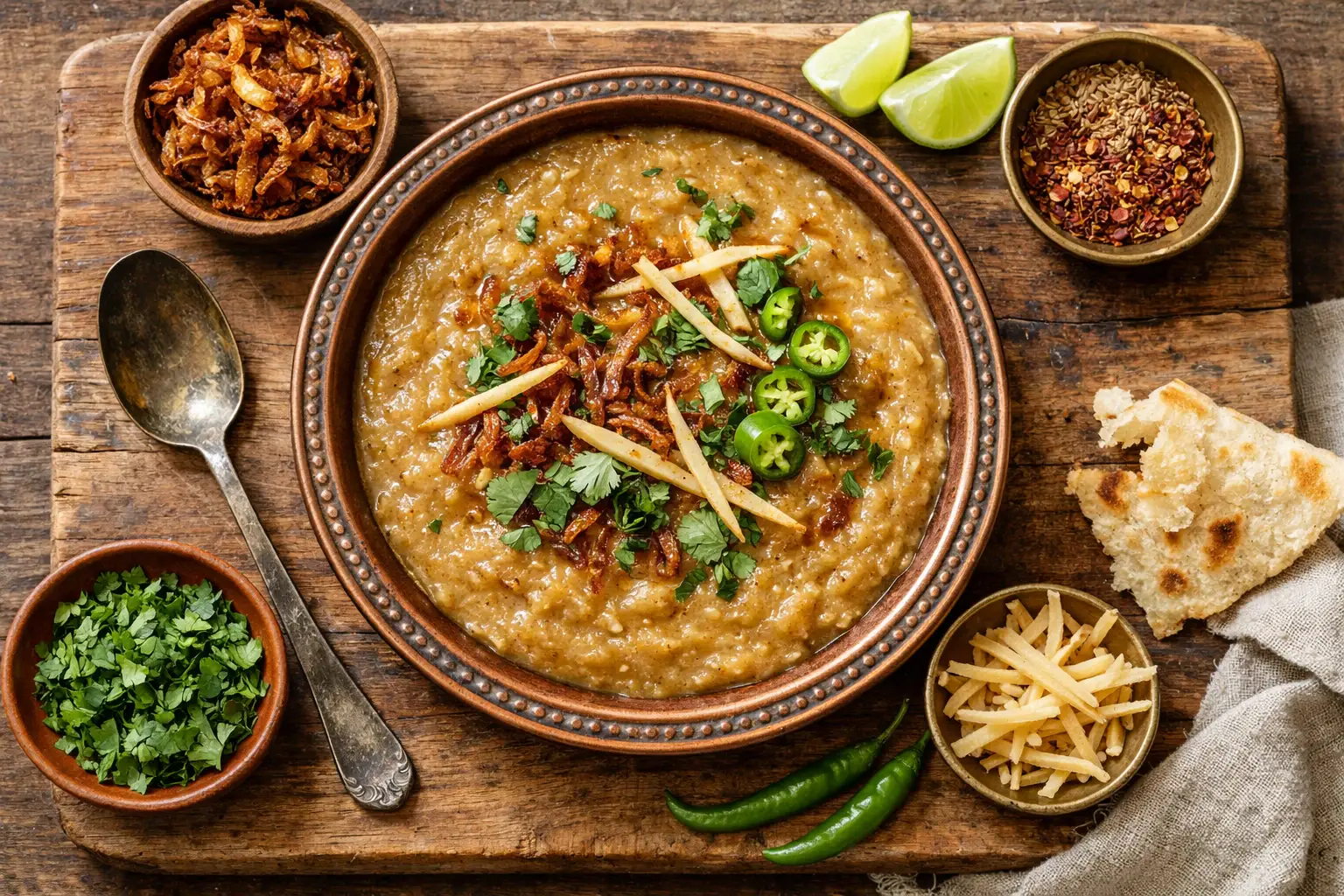
Quick Nutrition Facts
Per 1 Bowl Haleem (240g)
| Nutrient | Amount |
|---|---|
| Calories | 376 kcal |
| Protein | 23g |
| Carbohydrates | 36g |
| Fiber | 15g |
| Sugars | 2.5g |
| Fat | 16g |
| Saturated Fat | 6.3g |
| Iron | 10.2mg |
| Potassium | 907mg |
| Sodium | 290mg |
Macronutrient Breakdown
 ChatGPT
  Claude
  AI Mode
  Perplexity
NUTRITIONIST INSIGHT
Haleem provides 24% of daily iron needs and 22% of daily fiber in one bowl. The combination of wheat, lentils, and meat creates a complete amino acid profile, making it an excellent recovery meal.
Myth Busters
MYTH #1: Haleem Is Too Heavy to Be Healthy
TRUTH: While calorie-dense, haleem's 15g fiber per bowl promotes fullness and prevents overeating. The protein-fiber combination supports sustained energy rather than quick spikes.
MYTH #2: Haleem Causes Blood Sugar Spikes
TRUTH: Despite containing wheat, haleem has a moderate glycemic response. Lentils lower acute blood glucose response compared to starchy foods alone, and the high fiber slows carbohydrate absorption.
MYTH #3: Vegetarians Miss Out on Haleem's Benefits
TRUTH: Vegetarian haleem (made with extra lentils and nuts) still provides complete protein when wheat and lentils are combined. The amino acids from grains and legumes complement each other.
MYTH #4: Haleem Is Only for Ramadan
TRUTH: While popular during Ramadan, haleem is a year-round nutritious meal. Its high protein and fiber content makes it suitable for post-workout recovery, winter nutrition, or whenever sustained energy is needed.
MYTH #5: All Haleem Recipes Are Equally Unhealthy
TRUTH: Traditional recipes vary significantly. Reducing ghee and using lean meat can cut saturated fat by 50% while maintaining flavor. Homemade versions allow full control over ingredients.
NutriScore by Health Goals
| Health Goal | NutriScore | Why This Score? |
|---|---|---|
| Weight Loss |  | High in calories (376/bowl) but very filling due to fiber and protein. Limit to half portion. |
| Muscle Gain |  | Excellent 23g complete protein per bowl with complex carbs for recovery and muscle synthesis. |
| Diabetes Management |  | Lentils aid glycemic control with low GI. High fiber slows glucose absorption. Avoid extra ghee. |
| PCOS Management | | Moderate GI but calorie-dense. Choose lean meat version, limit to half portion. |
| Pregnancy Nutrition | | Rich in iron (24% DV), folate, and protein essential for fetal development. Excellent for meeting increased needs. |
| Viral/Flu Recovery | | Easy to digest when cooked soft, provides sustained energy and immune-supporting nutrients. |
PERSONALIZED NUTRITION
Track your meals with NutriScan for personalized NutriScores based on your specific health goals!
Blood Sugar Response to Haleem
Understanding how haleem affects your blood glucose can help you make informed decisions about portions and pairings.
Typical Glucose Response Curve
This chart shows typical blood glucose response for general healthy individuals. Individual responses may vary. Not medical advice.
How to Flatten the Spike
Adding fiber-rich vegetables and protein helps moderate the glucose response:
- Fresh salad (kachumber) - Fiber from cucumbers and tomatoes
- Plain yogurt (raita) - Protein and probiotics
- Smaller portion - Half bowl instead of full
- Avoid naan - Skip refined carb additions
This combination extends energy release and keeps you fuller longer.
Cultural Significance
Haleem originated from the Arabic dish harees, evolving through Persian and Mughal influences into the beloved South Asian comfort food.
In Pakistan and India:
- Essential iftar dish during Ramadan for breaking fast
- Hyderabad declared haleem a heritage food in 2010
- Each region has distinct variations: Hyderabadi, Lucknowi, Karachi-style
- Slow-cooked for 8-12 hours, traditionally stirred continuously
Global Spread:
- Popular in Middle East as harees (simpler wheat-meat porridge)
- Found in Persian cuisine as halim
- Adopted by South Asian diaspora worldwide
- Modern versions include instant pot and pressure cooker adaptations
Compare & Substitute
Haleem vs Similar High-Protein Dishes (Per 100g)
| Nutrient | Haleem | Nihari | Dal Makhani | Khichdi |
|---|---|---|---|---|
| Calories | 157 kcal | 145 kcal | 130 kcal | 125 kcal |
| Carbs | 15g | 5g | 14g | 22g |
| Fiber | 6.2g | 0.5g | 4g | 2g |
| Protein | 10g | 12g | 6g | 4g |
| Fat | 7g | 9g | 7g | 2g |
| Iron | 4.3mg | 2.5mg | 2mg | 1.5mg |
| Best For | Muscle gain, fasting recovery | Rich meat flavor, keto-friendly | Vegetarian protein, comfort food | Light meals, digestion |
Frequently Asked Questions
Is haleem good for muscle gain?
Yes, haleem is excellent for muscle building. One bowl provides 23g complete protein from the combination of meat, wheat, and lentils. The complex carbohydrates support glycogen replenishment after workouts.
Best practices: Consume 1-2 hours post-workout, choose chicken or lean beef versions, and pair with a side salad for micronutrients.
Can diabetics eat haleem?
Diabetics can enjoy haleem in moderation. The high fiber content (15g per bowl) and lentils help slow glucose absorption.
Tips for diabetics:
- Limit to half bowl (120g) per serving
- Choose versions with less ghee
- Skip naan or roti accompaniments
- Monitor blood sugar 2 hours after eating
- Pair with cucumber raita for added fiber
How many calories are in a bowl of haleem?
A standard bowl of haleem (240g) contains approximately 376 calories, with 23g protein, 36g carbohydrates, and 16g fat. Per 100g, haleem has 157 calories.
Calories vary based on:
- Meat type (beef vs chicken)
- Amount of ghee used
- Serving size and toppings
What are the main health benefits of haleem?
Key Benefits:
- Complete Protein: 23g from meat + lentil combination for muscle health
- High Fiber: 15g supports digestive health and fullness
- Iron-Rich: 10.2mg (24% DV) for blood health
- Sustained Energy: Complex carbs provide steady energy release
- B Vitamins: Support energy metabolism
- Potassium: 907mg for heart and muscle function
When is the best time to eat haleem?
Depends on your goal:
- Muscle Gain: Post-workout lunch (1-2 hours after exercise)
- Weight Management: Lunch portion (avoid dinner to allow digestion)
- Ramadan: At iftar for nutrient-dense fast-breaking
- Recovery: When recovering from illness for sustained energy
IMPORTANT NOTE
Avoid eating haleem late at night as it's calorie-dense and takes time to digest.
How is haleem different from harees?
Haleem is more complex than its ancestor harees:
Harees (Middle Eastern):
- Simple wheat + meat porridge
- Minimal spices
- Smooth texture
Haleem (South Asian):
- Wheat + multiple lentils + meat
- Complex spice blend (garam masala)
- Garnished with fried onions, ginger, lime
- Richer, more textured
Both are nutritious slow-cooked comfort foods.
Is homemade haleem healthier than restaurant haleem?
Generally yes. Homemade versions allow you to:
- Control ghee/oil quantity (reduce saturated fat)
- Choose lean meat cuts
- Reduce salt content
- Skip artificial flavor enhancers
- Ensure food safety standards
Restaurant haleem often uses more ghee for richness and may contain higher sodium.


Similar Nutritious Foods
4505 Chicharrones Classic Chili Salt
7 Eleven Japan Crispy Corn Cheese
Explore More Nutrition Tools & Resources
AI Calorie Counter App - Snap a Photo, Get Macros
AI Nutritionist App That Reads Your Logged Meals
Best Protein Supplements for Women
Bulking Meal Plan App That Sets Your Surplus
ChatGPT Calorie Counter Alternative That Keeps the Total
ChatGPT Diet Plan Alternative That Tracks What You Eat
ChatGPT Weight Loss Coach Alternative With a Food Log
Fast Food Calorie Counter App That Reads the Tray
Free Calorie Tracker App with AI Photo Scans | NutriScan
Indian Diet Plan App With Veg and Non Veg Meals
Indian Food Calorie Calculator - Get Instant Nutrition Facts for Desi Meals — 2026
Intermittent Fasting for Women, Timer and Meal Log App
Intermittent Fasting Tracker App - Free Fasting Timer
Macro Tracker App That Fills the Numbers From a Photo
Mediterranean Diet Meal Plan App That Counts the Oil
Micronutrient Tracker App for Vitamins and Minerals
MyFitnessPal Alternative That Stays Free | NutriScan
NutriScore App: A Free Grade on Every Meal | NutriScan
Nutrition Label Scanner App for the Amount You Ate
Second Trimester Protein Guide
Vegetarian Meal Plan App With a Protein Target
Voice Calorie Counter - Speak to Track Meals Hands-Free
Water and Calorie Tracker App - Free Water Log