Hibiscus Tea (Bissap): Calories, Nutrition and Health Benefits
West Africa's antioxidant-rich herbal tea with clinically proven blood pressure benefits, zero calories, and refreshing tart flavor.
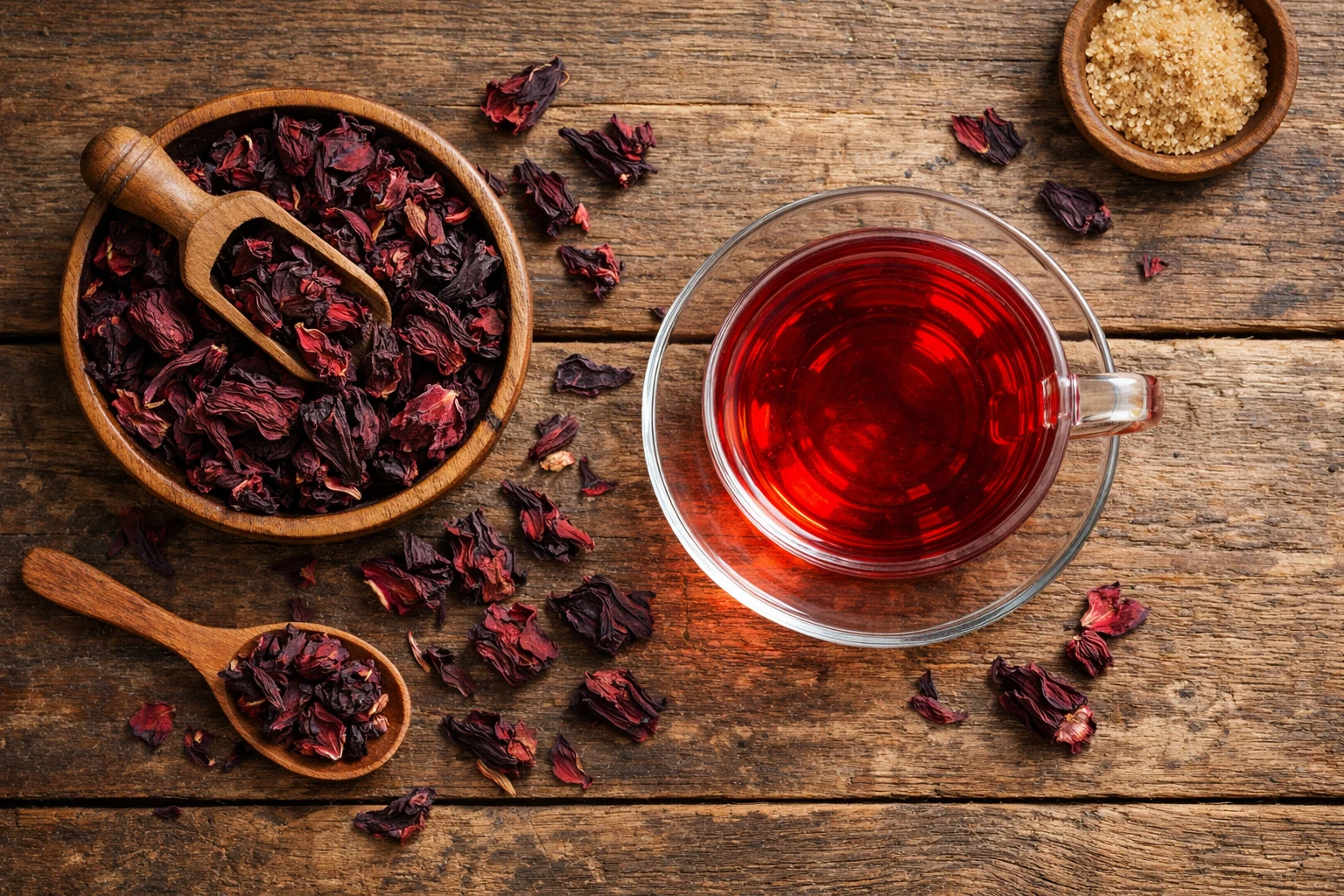
Quick Nutrition Facts
Per 1 Cup (240ml) Unsweetened
| Nutrient | Amount |
|---|---|
| Calories | 5 kcal |
| Protein | 0g |
| Carbohydrates | 1g |
| Fiber | 0g |
| Sugars | 0g |
| Fat | 0g |
| Vitamin C | 8mg |
| Anthocyanins | 250mg |
| Polyphenols | 150mg |
| Potassium | 25mg |
Macronutrient Breakdown
 ChatGPT
  Claude
  AI Mode
  Perplexity
NUTRITIONIST INSIGHT
Hibiscus tea contains 250mg anthocyanins per cup, powerful antioxidants that give it the deep red color. Daily consumption has been shown to lower systolic blood pressure by 7-8 mmHg in stage 1 hypertension.
Myth Busters
MYTH #1: Hibiscus Tea Is Just Flavored Water
TRUTH: Hibiscus tea is a medicinal beverage with clinically proven blood pressure-lowering effects. Studies show 2-3 cups daily reduce systolic BP by 7-8 mmHg. Contains 250mg anthocyanins, 150mg polyphenols, and vitamin C for heart health and immunity.
MYTH #2: All Herbal Teas Are the Same
TRUTH: Hibiscus has unique properties: naturally caffeine-free unlike green/black tea; rich in anthocyanins (not found in chamomile or peppermint); clinically studied for blood pressure unlike most herbal teas; tart cranberry-like flavor from organic acids.
MYTH #3: You Need to Add Sugar for Taste
TRUTH: Hibiscus tea has a naturally tart, cranberry-like flavor that's refreshing unsweetened. Adding sugar negates health benefits (weight loss, blood pressure control). Better alternatives: steep with cinnamon stick for natural sweetness; add fresh mint; serve iced with lemon; sweeten with stevia if needed.
MYTH #4: Hibiscus Tea Isn't Safe for Daily Use
TRUTH: Research supports 2-3 cups daily as safe and effective for adults. Used traditionally in West Africa for centuries. Only contraindications: pregnancy (may stimulate menstruation); low blood pressure (monitor levels); certain medications (consult doctor).
MYTH #5: Cold Hibiscus Tea Loses Benefits
TRUTH: Both hot and cold hibiscus tea retain anthocyanins and antioxidants. Cold-brewing (overnight steeping) actually preserves more delicate compounds and reduces acidity. Iced hibiscus is equally effective for blood pressure as hot tea.
MYTH #6: Hibiscus Tea Dehydrates You
TRUTH: Hibiscus has mild diuretic properties but doesn't cause dehydration when consumed at normal levels (2-3 cups daily). It's 99% water and contributes to daily hydration. The diuretic effect helps reduce water retention, beneficial for weight loss.
NutriScore by Health Goals
| Health Goal | NutriScore | Why This Score? |
|---|---|---|
| Weight Loss |  | Only 5 calories per cup, natural diuretic reduces water retention, anthocyanins boost metabolism. Drink 2-3 cups daily before meals for appetite control. |
| Muscle Gain |  | Provides hydration and antioxidants but zero protein or carbs. Use as hydration beverage, not for muscle building. Pair with protein-rich foods. |
| Diabetes Management | | Zero sugar, anthocyanins improve insulin sensitivity, helps regulate blood glucose. Drink 2 cups daily between meals. |
| PCOS Management | | Zero sugar supports insulin regulation, antioxidants reduce inflammation, diuretic effect helps bloating. Safe 2 cups daily. |
| Pregnancy Nutrition |  | Avoid during pregnancy - may stimulate menstruation and uterine contractions. Safe after delivery for hydration and vitamin C (consult doctor if breastfeeding). |
| Blood Pressure | | Clinically proven to lower systolic BP by 7-8 mmHg. Consume 2-3 cups daily, effects visible in 2-6 weeks. |
PERSONALIZED NUTRITION
Track your meals with NutriScan for personalized NutriScores based on your specific health goals!
Blood Pressure Response to Hibiscus Tea
Understanding how hibiscus tea affects blood pressure helps you optimize consumption timing and dosage.
Typical Blood Pressure Reduction Over Time
This chart shows average systolic blood pressure reduction with daily hibiscus tea consumption (2-3 cups). Individual responses vary. Not medical advice.
Maximizing Blood Pressure Benefits
To optimize hibiscus tea's blood pressure-lowering effects:
- ⏰ Consistent timing - Drink 2-3 cups daily at same times (morning and evening)
- 🍵 Proper brewing - Steep 1-2 tsp dried flowers in 8oz boiling water for 5-10 minutes
- 🚫 Avoid sugar - Sweeteners negate cardiovascular benefits
- 💊 Monitor levels - Track BP weekly; consult doctor if on medication (may need dosage adjustment)
Effects typically appear after 2 weeks of consistent use; maximum benefits at 6 weeks.
Cultural Significance
Hibiscus tea (Hibiscus sabdariffa) has been consumed in Africa, Asia, and the Caribbean for centuries with different regional names.
In West Africa:
- Known as Bissap in Senegal, Mali, Guinea
- Called Zobo in Nigeria
- Traditional beverage served at celebrations, weddings, and daily meals
- Often flavored with fresh ginger, mint, or vanilla
- Used in traditional medicine for digestive health and fever reduction
Global Names:
- Sorrel - Caribbean (popular Christmas drink in Jamaica)
- Karkadé - Egypt and Sudan
- Agua de Jamaica - Mexico and Latin America
- Roselle - International botanical name
Cultural Impact:
- National drink of Senegal
- Important export crop for West African farmers
- Growing popularity in Western health food markets as wellness beverage
Compare & Substitute
Hibiscus vs Similar Wellness Beverages (Per 1 Cup/240ml Unsweetened)
| Nutrient | 🌺 Hibiscus | 🍵 Green Tea | 🌿 Rooibos | 🫖 Black Tea |
|---|---|---|---|---|
| Calories | 5 kcal | 2 kcal | 2 kcal | 2 kcal |
| Caffeine | 0mg | 25-50mg | 0mg | 40-70mg |
| Anthocyanins | 250mg | 0mg | 0mg | 0mg |
| Polyphenols | 150mg | 200mg | 100mg | 150mg |
| Vitamin C | 8mg | 0mg | 0mg | 0mg |
| BP Benefits | High | Moderate | Low | Moderate |
| Antioxidant Type | Anthocyanins | Catechins | Aspalathin | Theaflavins |
| Flavor | Tart/tangy | Grassy | Sweet/mild | Bold/malty |
| Best For | Blood pressure | Metabolism | Sleep-friendly | Energy boost |
Frequently Asked Questions
Does hibiscus tea lower blood pressure?
Yes, hibiscus tea effectively lowers blood pressure. Studies show consuming 2-3 cups daily (450mg extract with 250mg anthocyanins) reduces systolic blood pressure by 7-8 mmHg in stage 1 hypertension patients.
Mechanism: Anthocyanins and polyphenols relax blood vessels; high potassium content promotes sodium excretion; natural ACE-inhibitor effect.
Best practices: 2-3 cups daily at consistent times; steep 5-10 minutes for maximum extraction; drink unsweetened; effects appear after 2-6 weeks; consult doctor if on BP medication (may need dosage adjustment).
Is hibiscus tea good for weight loss?
Yes, hibiscus tea supports weight loss. Only 5 calories per cup unsweetened; anthocyanins boost metabolism and fat oxidation; natural diuretic reduces water retention; zero caffeine prevents sleep disruption affecting cortisol.
Best practices: 2-3 cups daily 30 minutes before meals for appetite control; always drink unsweetened (no sugar or honey); combine with balanced diet and exercise; stay hydrated with water alongside tea.
Expected results: 1-2 lbs water weight reduction in first week; supports 0.5-1 lb fat loss weekly when combined with calorie deficit.
Can diabetics drink hibiscus tea?
Diabetics can safely drink hibiscus tea. Research shows anthocyanins improve insulin sensitivity and reduce fasting blood sugar. Zero sugar naturally; helps regulate blood glucose when consumed unsweetened.
Tips for diabetics:
- Drink 2 cups daily between meals (not with food)
- Always unsweetened (no sugar, honey, or artificial sweeteners)
- Monitor blood sugar response first week
- May enhance diabetes medication effects - consult doctor for monitoring
Safe for both Type 1 and Type 2 diabetes; avoid sweetened commercial versions.
What are the antioxidants in hibiscus tea?
Primary Antioxidants:
- Anthocyanins (250mg/cup): Red pigments; reduce inflammation; protect heart health
- Polyphenols (150mg/cup): Neutralize free radicals; support immune function
- Flavonoids: Quercetin and kaempferol for cellular protection
- Vitamin C (8mg/cup): Immune support; collagen synthesis
- Organic acids: Citric and malic acid for tart flavor and pH balance
These compounds work synergistically to provide cardiovascular benefits, anti-inflammatory effects, and metabolic support.
When is the best time to drink hibiscus tea?
Depends on your goal:
- Blood Pressure: Morning (after breakfast) and evening (before dinner) at consistent times for steady BP control
- Weight Loss: 30 minutes before meals (appetite suppression; metabolism boost)
- Diabetes: Between meals (blood sugar regulation without interfering with food absorption)
- General Wellness: Any time; caffeine-free so safe before bed
Avoid: On empty stomach if prone to acid reflux; during pregnancy at any time.
Optimal frequency: 2-3 cups daily spread throughout day for cumulative antioxidant benefits.
Are there side effects of hibiscus tea?
Hibiscus tea is generally safe at 2-3 cups daily. Possible side effects:
Mild Effects:
- Diuretic effect (increased urination) - stay hydrated
- Mild laxative effect in some people
- Tart flavor may irritate sensitive stomachs
Interactions:
- May lower blood pressure too much if on antihypertensive medication
- Can interact with diabetes medication (monitor glucose levels)
- Avoid with diuretic medications (additive effect)
Contraindications:
- Pregnancy: Avoid completely - may stimulate menstruation and uterine contractions
- Low blood pressure: Monitor levels; may drop too low
- Surgery: Stop 2 weeks before (affects blood pressure)
Consult doctor if on medication; safe for most adults at moderate intake.
How do you make hibiscus tea?
Traditional Hot Brewing:
- Boil 8oz (240ml) water
- Add 1-2 tsp dried hibiscus flowers
- Steep covered 5-10 minutes (longer = stronger flavor and more antioxidants)
- Strain and serve hot or iced
- Optional: add cinnamon stick, fresh mint, or ginger
Cold Brew (Maximum Antioxidants):
- Add 2 tbsp dried hibiscus to 4 cups cold water
- Refrigerate 8-12 hours or overnight
- Strain and serve over ice
Pro tips: Use filtered water for best taste; don't add sugar (use stevia if needed); brew stronger for iced tea (ice dilutes flavor); store brewed tea refrigerated up to 3 days.
Dosage for health benefits: 2-3 cups daily using 1-2 tsp dried flowers per cup.


Similar Wellness Beverages
4505 Chicharrones Classic Chili Salt
7 Eleven Japan Crispy Corn Cheese
Explore More Nutrition Tools & Resources
AI Calorie Counter App - Snap a Photo, Get Macros
AI Nutritionist App That Reads Your Logged Meals
Best Protein Supplements for Women
Bulking Meal Plan App That Sets Your Surplus
ChatGPT Calorie Counter Alternative That Keeps the Total
ChatGPT Diet Plan Alternative That Tracks What You Eat
ChatGPT Weight Loss Coach Alternative With a Food Log
Fast Food Calorie Counter App That Reads the Tray
Free Calorie Tracker App with AI Photo Scans | NutriScan
Indian Diet Plan App With Veg and Non Veg Meals
Indian Food Calorie Calculator - Get Instant Nutrition Facts for Desi Meals — 2026
Intermittent Fasting for Women, Timer and Meal Log App
Intermittent Fasting Tracker App - Free Fasting Timer
Macro Tracker App That Fills the Numbers From a Photo
Mediterranean Diet Meal Plan App That Counts the Oil
Micronutrient Tracker App for Vitamins and Minerals
MyFitnessPal Alternative That Stays Free | NutriScan
NutriScore App: A Free Grade on Every Meal | NutriScan
Nutrition Label Scanner App for the Amount You Ate
Second Trimester Protein Guide
Vegetarian Meal Plan App With a Protein Target
Voice Calorie Counter - Speak to Track Meals Hands-Free
Water and Calorie Tracker App - Free Water Log