High-Fiber Prebiotic Brownie: Calories, Nutrition and Health Benefits
A fiber-packed guilt-free dessert with 7g prebiotic fiber per bar, designed to satisfy chocolate cravings while feeding your gut microbiome.
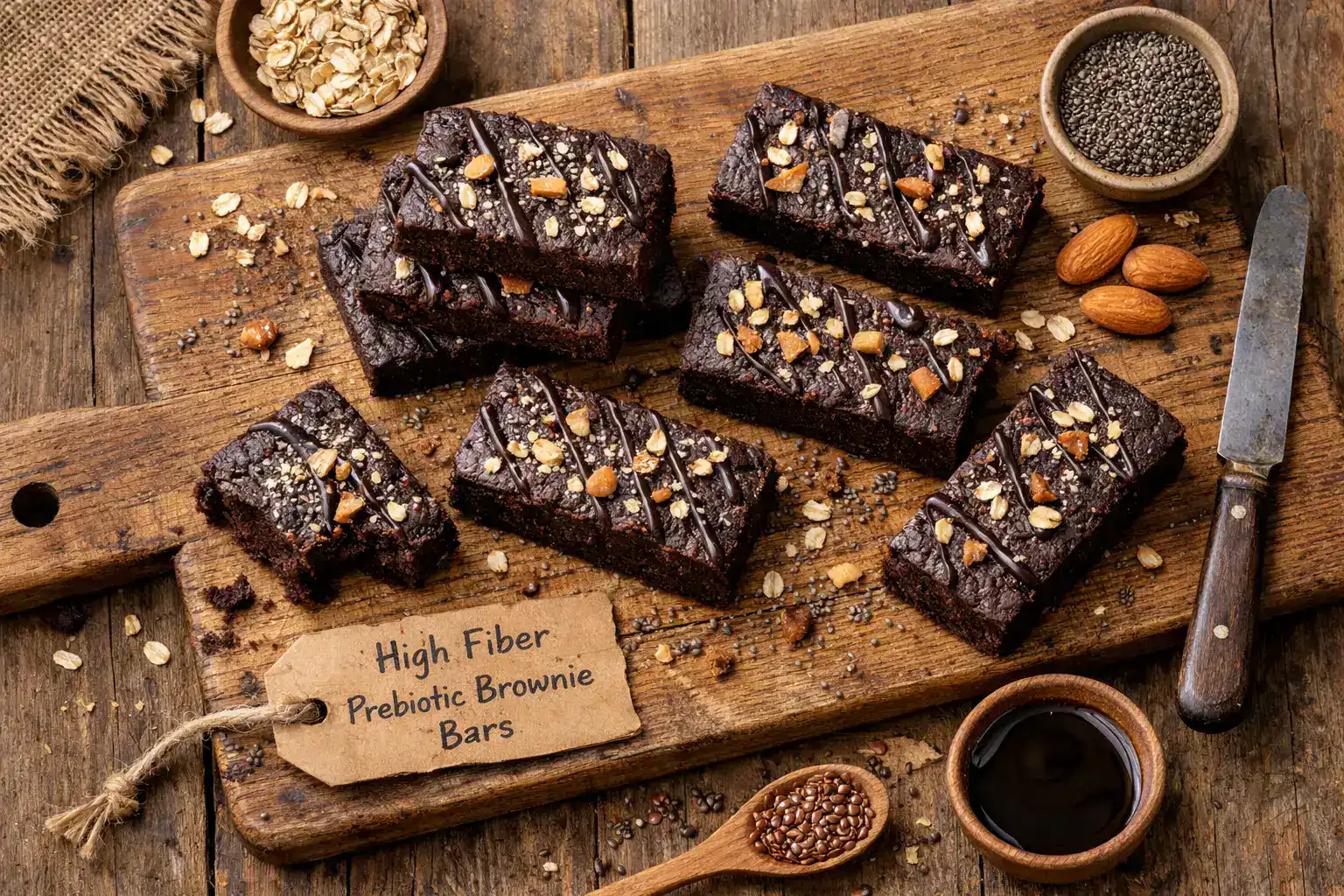
Quick Nutrition Facts
Per 1 Bar (25g)
| Nutrient | Amount |
|---|---|
| Calories | 70 kcal |
| Protein | 2g |
| Carbohydrates | 17g |
| Fiber | 7g |
| Sugars | 2g |
| Fat | 3g |
| Saturated Fat | 1g |
| Sodium | 90mg |
| Cholesterol | 0mg |
| Sugar Alcohols | 6g |
Macronutrient Breakdown
 ChatGPT
  Claude
  AI Mode
  Perplexity
NUTRITIONIST INSIGHT
At only 70 calories with 7g of prebiotic fiber, this brownie delivers 28% of your daily fiber needs in a single bar. The inulin from chicory root feeds beneficial gut bacteria and promotes fullness far beyond what you'd expect from a dessert.
Myth Busters
MYTH #1: High-Fiber Brownies Are Just Marketing Hype
TRUTH: The 7g of fiber per bar is primarily chicory root inulin, a clinically validated prebiotic. Systematic reviews confirm inulin significantly increases Bifidobacterium and Lactobacillus populations in the gut, with measurable health benefits.
MYTH #2: Prebiotic Fiber Causes Uncomfortable Bloating
TRUTH: While some people experience initial gas when increasing fiber intake, starting with smaller portions allows gut bacteria to adapt. Most people tolerate 7g of inulin per serving without issues after a brief adjustment period.
MYTH #3: Sugar Alcohols in Fiber Brownies Are Unhealthy
TRUTH: The 6g of sugar alcohols used as sweeteners have a minimal glycemic impact. Unlike refined sugar, they don't cause significant blood sugar spikes. High-fiber, low-sugar desserts show reduced glycemic and insulinemic responses compared to conventional treats.
MYTH #4: You Can't Get Real Nutrition From a Brownie
TRUTH: Prebiotic brownies provide functional nutrition beyond basic macros. The inulin fiber produces short-chain fatty acids (butyrate, propionate) during fermentation, which strengthen gut barrier function and support immune health.
MYTH #5: Fiber Brownies Taste Like Cardboard
TRUTH: Modern prebiotic brownies use cocoa, sugar alcohols, and natural sweeteners to deliver genuine chocolate flavor. The chicory root fiber actually has a slightly sweet taste, complementing the brownie base without sacrificing texture.
NutriScore by Health Goals
| Health Goal | NutriScore | Why This Score? |
|---|---|---|
| Weight Loss |  | Only 70 calories with 7g fiber for exceptional satiety. Prebiotic fiber enhances fullness and reduces hunger. |
| Muscle Gain |  | Low protein (2g) and low calories limit muscle-building potential. Use as a fiber supplement alongside protein-rich foods. |
| Diabetes Management |  | High fiber slows glucose absorption. Dietary fiber in desserts reduces postprandial glucose peaks in T2D patients. Monitor blood sugar with medications. |
| PCOS Management | | Low sugar (2g) and high fiber support insulin sensitivity. Limit to 1-2 bars daily. |
| Pregnancy Nutrition | | Clinical trials show prebiotic fiber is safe during pregnancy with no significant adverse events. Start with half a bar to assess tolerance. Consult your doctor. |
| Viral/Flu Recovery | | Gentle on stomach but low in vitamins and electrolytes. Better as a comfort snack than a recovery food. |
PERSONALIZED NUTRITION
Track your meals with NutriScan for personalized NutriScores based on your specific health goals!
Blood Sugar Response to Prebiotic Brownie
Understanding how prebiotic brownies affect blood glucose helps you make informed snacking decisions. The high fiber content significantly flattens the glucose curve compared to standard brownies.
Typical Glucose Response Curve
*This chart shows typical blood glucose response for general healthy individuals. Individual responses may vary. Not medical advice.*
How to Flatten the Spike
Soluble dietary fibers like inulin slow gastric emptying and glucose absorption, reducing peak blood sugar levels:
- 🥛 Glass of milk or Greek yogurt - Adds protein to further slow absorption
- 🥜 Handful of almonds or walnuts - Healthy fats extend energy release
- 🫖 Green tea or black coffee - Polyphenols may improve glucose metabolism
- 🚶 Light walk after eating - 10-minute walk reduces postprandial glucose by up to 22%
This combination keeps blood sugar steady and extends the feeling of fullness from the prebiotic fiber.
Cultural Significance
The brownie has been an American dessert staple since the late 1800s, with the first known recipe appearing in the 1896 Boston Cooking-School Cook Book.
The Fiber Revolution:
- High-fiber desserts emerged in the 2000s as gut health science advanced
- Chicory root (the primary inulin source) has been cultivated since ancient Egypt
- European bakers used chicory as a coffee substitute during wartime rationing
- Modern food science now extracts its prebiotic fiber for functional foods
Global Gut Health Movement:
- Prebiotics are central to traditional fermented diets worldwide (kimchi, kefir, miso)
- India's Ayurvedic tradition emphasizes digestive fire (agni) and fiber-rich foods
- The global prebiotic market reflects growing awareness of the gut-brain connection
- Fiber-enriched desserts bridge the gap between indulgence and nutrition
Compare & Substitute
Prebiotic Brownie vs Similar Snacks (Per 100g)
| Nutrient | 🟫 Prebiotic Brownie | 🍫 Standard Brownie | 🍪 Protein Cookie | 🥜 Granola Bar |
|---|---|---|---|---|
| Calories | 280 kcal | 466 kcal | 400 kcal | 450 kcal |
| Carbs | 68g | 54g | 50g | 64g |
| Fiber | 28g | 2.2g | 10g | 4g |
| Protein | 8g | 5.5g | 20g | 8g |
| Fat | 12g | 26g | 15g | 18g |
| Sugar | 8g | 35g | 12g | 28g |
| Best For | Gut health, weight loss | Indulgent treat | Muscle gain, protein needs | Quick energy, hiking |
Frequently Asked Questions
Are prebiotic brownies good for weight loss?
Yes, prebiotic brownies are excellent for weight management. At only 70 calories per bar with 7g of fiber, they provide remarkable satiety for minimal caloric intake. Studies show prebiotic fiber enhances feelings of fullness and reduces overall calorie consumption.
Best practices: Limit to 1-2 bars per day, eat as a mid-afternoon snack to curb sugar cravings, pair with water for maximum fiber expansion.
Can diabetics eat prebiotic brownies?
Prebiotic brownies can be a smarter dessert choice for diabetics. The 7g of fiber significantly slows glucose absorption, and the low sugar content (2g) minimizes blood sugar impact.
Tips for diabetics:
- Start with half a bar to gauge your response
- Pair with protein (nuts, cheese) for further glucose control
- Monitor blood sugar 2 hours after eating
- Caution if taking diabetes medications, as inulin may lower blood sugar further
Always consult your healthcare provider before adding new foods to your diabetes management plan.
How much fiber is in a prebiotic brownie?
A typical prebiotic brownie bar contains 7g of dietary fiber per 25g serving. This is primarily chicory root inulin (a soluble prebiotic fiber) plus sugarcane fiber. This provides about 25-28% of the recommended daily intake of 25-30g fiber.
What are the main health benefits of prebiotic brownies?
Key Benefits:
- Gut Microbiome Support: Inulin feeds Bifidobacterium and Lactobacillus, strengthening digestive health
- Satiety and Weight Control: 7g fiber promotes fullness on only 70 calories
- Blood Sugar Management: High fiber slows glucose absorption, reducing postprandial spikes
- Mineral Absorption: Inulin-type fructans improve calcium absorption and bone mineral density
- Immune Support: Short-chain fatty acids from fiber fermentation strengthen gut barrier and mucosal immunity
Are prebiotic brownies safe during pregnancy?
Prebiotic fiber from food sources is generally considered safe during pregnancy. A 2024 randomized controlled trial with 652 participants found no significant adverse events with daily prebiotic fiber intake.
Recommendations:
- Start with half a bar to assess digestive tolerance
- GI symptoms (mild bloating, gas) are the most common side effects
- Avoid if you have IBS, as inulin may trigger symptoms
- Always consult your healthcare provider
What is inulin and why is it in prebiotic brownies?
Inulin is a soluble prebiotic fiber extracted from chicory root. It passes through the upper digestive tract undigested, then serves as food for beneficial bacteria in the colon.
Why it matters: Inulin fermentation produces short-chain fatty acids (butyrate, propionate, acetate) that strengthen gut lining integrity, reduce inflammation, and support immune function. Studies show 10g of inulin daily can reduce fasting blood sugar by 8.5% in people with type 2 diabetes.
Track your fiber intake with NutriScan app to ensure you're meeting your daily prebiotic goals.




Similar Nutritious Foods
4505 Chicharrones Classic Chili Salt
7 Eleven Japan Crispy Corn Cheese
Explore More Nutrition Tools & Resources
AI Calorie Counter App - Snap a Photo, Get Macros
AI Nutritionist App That Reads Your Logged Meals
Best Protein Supplements for Women
Bulking Meal Plan App That Sets Your Surplus
ChatGPT Calorie Counter Alternative That Keeps the Total
ChatGPT Diet Plan Alternative That Tracks What You Eat
ChatGPT Weight Loss Coach Alternative With a Food Log
Fast Food Calorie Counter App That Reads the Tray
Free Calorie Tracker App with AI Photo Scans | NutriScan
Indian Diet Plan App With Veg and Non Veg Meals
Indian Food Calorie Calculator - Get Instant Nutrition Facts for Desi Meals — 2026
Intermittent Fasting for Women, Timer and Meal Log App
Intermittent Fasting Tracker App - Free Fasting Timer
Macro Tracker App That Fills the Numbers From a Photo
Mediterranean Diet Meal Plan App That Counts the Oil
Micronutrient Tracker App for Vitamins and Minerals
MyFitnessPal Alternative That Stays Free | NutriScan
NutriScore App: A Free Grade on Every Meal | NutriScan
Nutrition Label Scanner App for the Amount You Ate
Second Trimester Protein Guide
Vegetarian Meal Plan App With a Protein Target
Voice Calorie Counter - Speak to Track Meals Hands-Free
Water and Calorie Tracker App - Free Water Log