Hoppers: Calories, Nutrition and Health Benefits
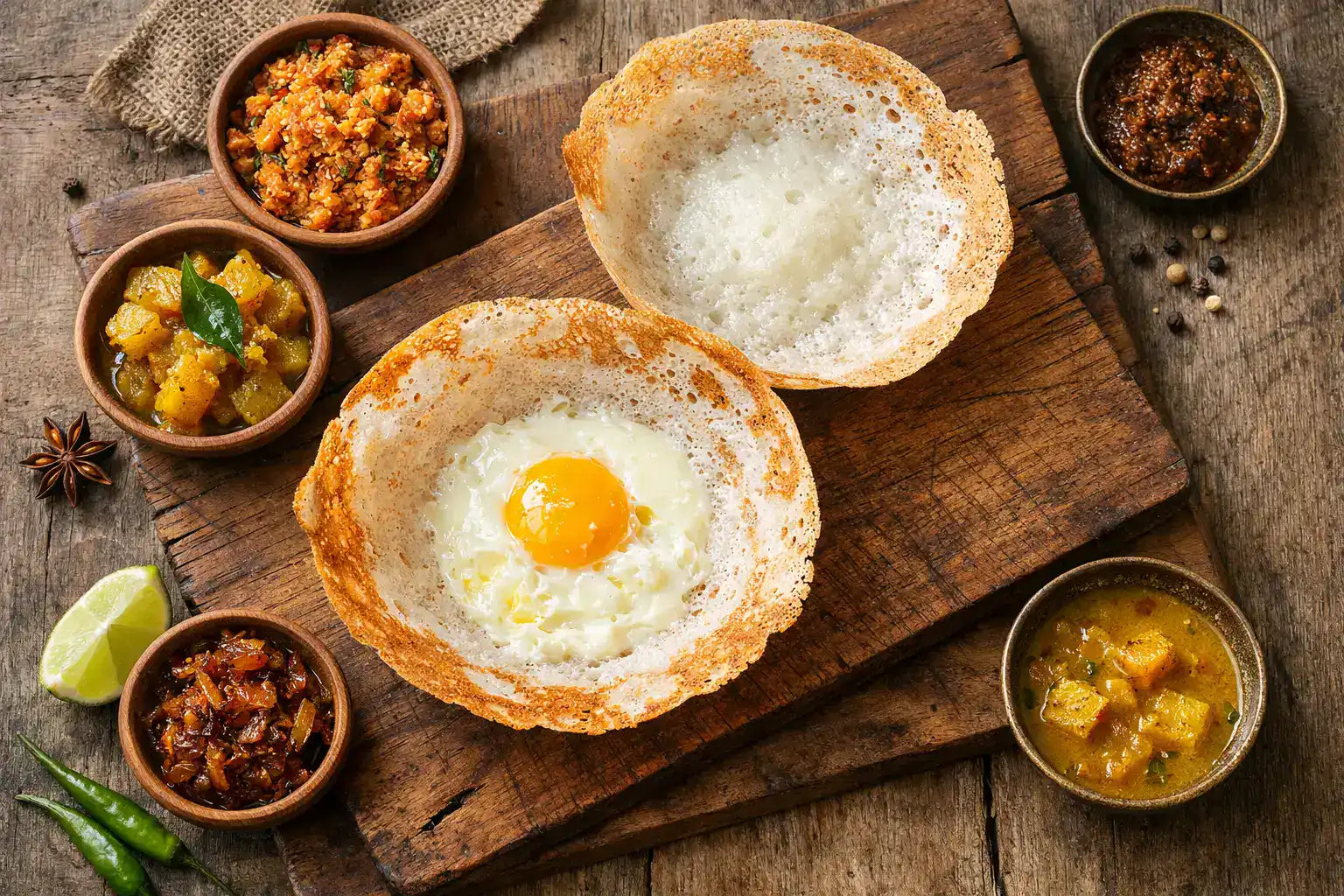
Sri Lanka's beloved bowl-shaped fermented rice pancake with crispy lacy edges and a soft spongy center - perfect for breakfast or dinner.
Quick Nutrition Facts
Per 1 Plain Hopper (40g)
| Nutrient | Amount |
|---|---|
| Calories | 100 kcal |
| Protein | 2.5g |
| Carbohydrates | 20g |
| Fiber | 0.5g |
| Sugars | 0.5g |
| Fat | 1.5g |
| Sodium | 85mg |
| Iron | 0.8mg |
| Calcium | 12mg |
| Vitamin B1 | 0.05mg |
Macronutrient Breakdown
 ChatGPT
  Claude
  AI Mode
  Perplexity
NUTRITIONIST INSIGHT
Hoppers' fermentation process creates beneficial probiotics that support gut health and improve nutrient absorption. The bowl shape makes them perfect vessels for eggs, curries, or sambol while keeping portions naturally controlled.
Myth Busters
MYTH #1: Hoppers Are Unhealthy Because They're Fried
TRUTH: Hoppers are not fried - they're cooked in a special curved pan with minimal oil. A plain hopper contains only 1.5g fat. The fermentation process actually improves nutritional value by creating probiotics and enhancing mineral absorption.
MYTH #2: Diabetics Should Completely Avoid Hoppers
TRUTH: Diabetics can eat hoppers in moderation. The fermentation process may lower glycemic impact compared to regular rice. Pair with protein-rich curries, limit to 1-2 pieces, and choose plain over egg hoppers to manage blood sugar.
MYTH #3: Hoppers Have No Nutritional Value
TRUTH: Hoppers provide easily digestible carbohydrates, probiotics from fermentation, and when paired with traditional accompaniments like dhal or fish curry, create a complete meal with protein, fiber, and essential nutrients.
MYTH #4: All Hoppers Are the Same Calories
TRUTH: Plain hoppers have ~100 calories, but egg hoppers jump to ~170 calories. Sweet hoppers (pani appa) made with jaggery can reach 150+ calories. String hoppers (idiappam) are different at ~80 calories per serving. Choose based on your goals.
MYTH #5: Fermented Foods Like Hoppers Cause Bloating
TRUTH: Properly fermented hoppers actually improve digestion due to probiotic content. Bloating may occur from eating too many or pairing with heavy coconut-based curries. Start with 1-2 hoppers to assess tolerance.
NutriScore by Health Goals
| Health Goal | NutriScore | Why This Score? |
|---|---|---|
| Weight Loss |  | 100 calories per plain hopper, low fat, naturally portion-controlled. Avoid egg hoppers and coconut milk sides. |
| Muscle Gain | | Good carbs (20g) for energy. Pair with egg hoppers (8g protein) or chicken curry for complete meal. |
| Diabetes Management |  | Medium GI from rice base. Fermentation may improve glucose response. Limit to 1-2, pair with protein. |
| PCOS Management | | Rice-based carbs affect insulin. Choose plain hoppers, limit to 2, pair with fiber-rich vegetable curry. |
| Pregnancy Nutrition | | Easy to digest, good energy source. Egg hoppers add protein and choline. Fermented foods support gut health during pregnancy. |
| Viral/Flu Recovery |  | Easily digestible, gentle on stomach, provides quick energy. Plain hoppers with light curry ideal during recovery. |
PERSONALIZED NUTRITION
Track your meals with NutriScan for personalized NutriScores based on your specific health goals!
Blood Sugar Response to Hoppers
Understanding how hoppers affect your blood glucose can help you make informed decisions about when and how to eat them.
Typical Glucose Response Curve
This chart shows typical blood glucose response for general healthy individuals. Individual responses may vary. Not medical advice.
How to Flatten the Spike
Pairing hoppers with protein or healthy fat slows glucose absorption and reduces the peak blood sugar level:
- 🐟 Fish curry or pol sambol - Traditional pairing with protein and healthy fats
- 🥚 Egg hopper - Built-in protein from the egg center
- 🫘 Dhal curry (parippu) - Plant-based protein and fiber
- 🥥 Coconut sambol in moderation - Healthy fats slow absorption
This combination not only reduces the glucose spike but also extends energy release, keeping you fuller for longer.
Cultural Significance
Hoppers (appa or appam in Sinhala/Tamil) are a cornerstone of Sri Lankan cuisine with roots going back over 2,000 years, believed to have evolved from South Indian appam with Portuguese and Dutch influences.
In Sri Lanka:
- Essential breakfast food served with kiri hodi (coconut milk gravy)
- Egg hoppers are the most popular variant - egg cracked into center while cooking
- String hoppers (idiappam) served at breakfast and dinner
- Hopper stations at weddings and special occasions are a cultural tradition
- Every region has subtle variations in batter and cooking technique
Traditional Accompaniments:
- Kiri hodi (coconut milk curry)
- Lunu miris (onion and chili sambol)
- Pol sambol (spiced coconut)
- Seeni sambol (caramelized onion relish)
- Fish, chicken, or vegetable curries
Global Spread:
- Popular in Tamil Nadu, Kerala (as appam), and Malaysia
- Growing presence in UK, Australia, and North America with Sri Lankan diaspora
- Featured in international food festivals and fusion cuisine
Compare & Substitute
Hoppers vs Similar Dishes (Per Serving)
| Nutrient | 🥣 Hoppers (1 pc) | 🍚 String Hoppers (1 serving) | 🥞 Appam (1 pc) | 🫓 Dosa (1 pc) |
|---|---|---|---|---|
| Calories | 100 kcal | 80 kcal | 100 kcal | 120 kcal |
| Carbs | 20g | 18g | 22g | 20g |
| Fiber | 0.5g | 0.3g | 0.5g | 1g |
| Protein | 2.5g | 2g | 2g | 3g |
| Fat | 1.5g | 0.5g | 0.5g | 3g |
| Sodium | 85mg | 50mg | 80mg | 150mg |
| GI Level | Medium | Medium | Medium | Medium-Low |
| Best For | Portion control, versatile | Lowest calorie, steamed | Soft center, traditional | Higher protein, crispier |
Frequently Asked Questions
Are hoppers good for weight loss?
Plain hoppers support weight loss when eaten in moderation. One hopper has only 100 calories, is low in fat (1.5g), and the bowl shape naturally controls portions.
Best practices: Stick to 2-3 plain hoppers, avoid egg hoppers (add 70 calories), skip coconut milk curries, pair with vegetable curry or sambol, and eat slowly.
Can diabetics eat hoppers?
Diabetics can eat hoppers in moderation. The fermentation process may improve glucose response compared to plain rice.
Tips for diabetics:
- Limit to 1-2 plain hoppers per meal
- Always pair with protein (dhal, fish curry, egg)
- Avoid sweet hoppers (pani appa)
- Monitor blood sugar 2 hours after eating
- Choose string hoppers for lower glycemic option
What is the difference between hoppers and appam?
Both are fermented rice pancakes but with key differences:
Hoppers (Sri Lankan):
- More bowl-shaped with deeper center
- Crispier, lacier edges
- Often served with egg cooked inside
- Traditional with coconut milk gravy
Appam (South Indian):
- Flatter shape with soft pillowy center
- Uses more coconut in batter
- Traditionally paired with vegetable stew
- Common in Kerala and Tamil Nadu
Both use fermented rice and coconut, share similar nutrition profiles, and offer probiotic benefits.
How many calories are in an egg hopper?
An egg hopper contains approximately 170 calories:
- Plain hopper base: ~100 calories
- Whole egg: ~70 calories
Egg hoppers provide 8g protein, making them more filling. For weight loss, opt for plain hoppers with protein curry instead.
What are the health benefits of hoppers?
Key Benefits:
- Gut Health: Fermentation creates probiotics that support digestion
- Easy Digestion: Fermented batter is gentler on the stomach
- Gluten-Free: Made from rice, suitable for celiac disease
- Portion Control: Bowl shape naturally limits serving size
- Versatile: Can be made healthier with egg or vegetable additions
- Energy Source: Quick-digesting carbs for morning energy
When is the best time to eat hoppers?
Depends on your goal:
- Weight Loss: Breakfast or early lunch, limit to 2-3 plain hoppers
- Muscle Gain: Post-workout breakfast with egg hoppers and protein curry
- Diabetes: Mid-morning with protein, never on empty stomach alone
- Energy: Breakfast before active days
IMPORTANT NOTE
Avoid eating multiple hoppers late at night as the carbs may disrupt sleep and digestion.
Are string hoppers healthier than regular hoppers?
String hoppers (idiappam) are slightly different:
String Hoppers:
- Steamed (no oil) vs pan-cooked
- ~80 calories per serving vs 100
- Lighter texture, less filling
- Lower fat (0.5g vs 1.5g)
Regular Hoppers:
- More satisfying due to texture variety
- Better portion control (bowl shape)
- Can add egg for protein
Recommendation: String hoppers for lowest calories, regular hoppers for better satiety and versatility.
How many hoppers should I eat per meal?
General Guidelines:
- 2-3 plain hoppers - Most adults (200-300 calories)
- 1-2 hoppers - Diabetes, weight loss, or low-carb diets
- 3-4 hoppers or 2 egg hoppers - Athletes, muscle gain, active individuals
Avoid excess: More than 4-5 hoppers per meal provides excess carbohydrates and may cause blood sugar spikes.
Track your meals with NutriScan app to see how hoppers fit your personal nutrition goals.


Similar Nutritious Foods
4505 Chicharrones Classic Chili Salt
7 Eleven Japan Crispy Corn Cheese
Explore More Nutrition Tools & Resources
AI Calorie Counter App - Snap a Photo, Get Macros
AI Nutritionist App That Reads Your Logged Meals
Best Protein Supplements for Women
Bulking Meal Plan App That Sets Your Surplus
ChatGPT Calorie Counter Alternative That Keeps the Total
ChatGPT Diet Plan Alternative That Tracks What You Eat
ChatGPT Weight Loss Coach Alternative With a Food Log
Fast Food Calorie Counter App That Reads the Tray
Free Calorie Tracker App with AI Photo Scans | NutriScan
Indian Diet Plan App With Veg and Non Veg Meals
Indian Food Calorie Calculator - Get Instant Nutrition Facts for Desi Meals — 2026
Intermittent Fasting for Women, Timer and Meal Log App
Intermittent Fasting Tracker App - Free Fasting Timer
Macro Tracker App That Fills the Numbers From a Photo
Mediterranean Diet Meal Plan App That Counts the Oil
Micronutrient Tracker App for Vitamins and Minerals
MyFitnessPal Alternative That Stays Free | NutriScan
NutriScore App: A Free Grade on Every Meal | NutriScan
Nutrition Label Scanner App for the Amount You Ate
Second Trimester Protein Guide
Vegetarian Meal Plan App With a Protein Target
Voice Calorie Counter - Speak to Track Meals Hands-Free
Water and Calorie Tracker App - Free Water Log