Hot Honey: Calories, Nutrition and Health Benefits
The sweet-heat condiment revolution—31% of consumers call it "on trend." Discover why this functional food is more than just a flavor bomb.
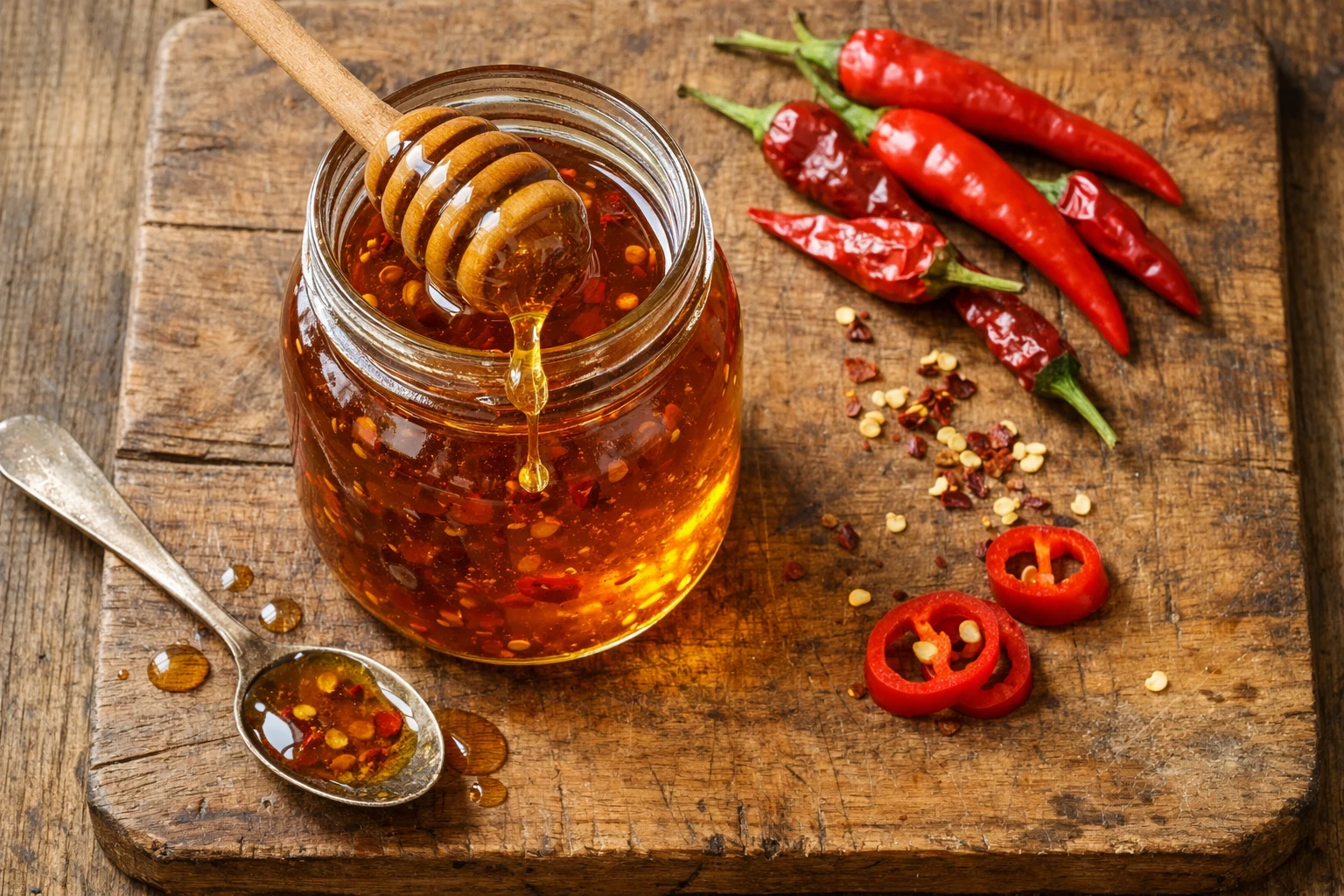
Quick Nutrition Facts
Per 1 Tablespoon (21g)
| Nutrient | Amount |
|---|---|
| Calories | 70 kcal |
| Protein | 0g |
| Carbohydrates | 17g |
| Fiber | 0g |
| Sugars | 16g |
| Fat | 0g |
| Sodium | 0mg |
| Capsaicin | 2-6mg |
| Antioxidants | Present |
| Enzymes | Active |
Macronutrient Breakdown
 ChatGPT
  Claude
  AI Mode
  Perplexity
NUTRITIONIST INSIGHT
Hot honey combines honey's 100+ bioactive compounds with capsaicin's metabolism-boosting properties. The synergy may enhance anti-inflammatory effects beyond either ingredient alone—but watch portion sizes due to sugar content.
Myth Busters
MYTH #1: Hot Honey Is Just Sugar with No Health Benefits
TRUTH: Honey contains over 100 bioactive compounds including flavonoids and phenolic acids. Studies show honey reduces total cholesterol by ~15 mg/dL and increases HDL. Capsaicin adds metabolism and anti-inflammatory benefits that pure sugar lacks.
MYTH #2: The Heat Burns Calories Significantly
TRUTH: Capsaicin does boost metabolism, but modestly. Research shows 2-6mg daily capsaicin increases energy expenditure, but not enough to offset hot honey's 70 calories per tablespoon. Benefits are cumulative with regular consumption.
MYTH #3: Raw Hot Honey Is Always Better
TRUTH: Raw honey retains more enzymes and antioxidants, but pasteurized honey is safer for immunocompromised individuals. Both provide capsaicin benefits. Never give any honey to infants under 12 months due to botulism risk.
MYTH #4: Hot Honey Causes Stomach Ulcers
TRUTH: Capsaicin doesn't cause ulcers—it may actually prevent them. Studies show capsaicin inhibits acid-secreting bacteria and protects gastric lining. However, those with existing GERD or acid reflux should use caution.
MYTH #5: All Hot Honeys Have the Same Heat Level
TRUTH: Capsaicin content varies dramatically—from mild (2mg/tbsp) to extra hot (10mg+/tbsp). Commercial brands like Mike's Hot Honey standardize heat, but homemade versions vary based on pepper type and infusion time.
NutriScore by Health Goals
| Health Goal | NutriScore | Why This Score? |
|---|---|---|
| Weight Loss |  | Capsaicin activates brown fat and increases energy expenditure, but 70 cal/tbsp adds up. Limit to 1 tsp as flavor enhancer. |
| Muscle Gain | | Zero protein content. Use as post-workout flavor boost on chicken or yogurt. Capsaicin's anti-inflammatory effects may aid recovery. |
| Diabetes Management |  | 17g sugar per tablespoon causes blood sugar rise. Capsaicin improves insulin sensitivity but doesn't offset sugar impact. Use sparingly. |
| PCOS Management | | High sugar content affects insulin sensitivity. Limit to 1 tsp max; capsaicin benefits don't compensate for glycemic load. |
| Pregnancy Nutrition |  | Pasteurized honey is safe during pregnancy; provides quick energy. Avoid raw honey; limit if experiencing heartburn from spicy foods. |
| Viral/Flu Recovery |  | Honey's antimicrobial properties and capsaicin's decongestant effects make this excellent for sore throats and congestion relief. |
PERSONALIZED NUTRITION
Track your meals with NutriScan for personalized NutriScores based on your specific health goals!
Blood Sugar Response to Hot Honey
Understanding how hot honey affects your blood glucose helps you enjoy it wisely, especially if managing blood sugar levels.
Typical Glucose Response Curve
This chart shows typical blood glucose response for general healthy individuals. Capsaicin may modestly slow absorption. Individual responses vary. Not medical advice.
How to Flatten the Spike
Pairing sugar with protein or fat slows glucose absorption and reduces the peak blood sugar level:
- 🧀 Cheese - Classic pairing; fat slows sugar absorption
- 🥜 Nut butter - Protein and healthy fats buffer glucose
- 🍗 Grilled chicken - Protein-rich main pairs well with hot honey glaze
- 🥛 Greek yogurt - Protein and probiotics with a drizzle of hot honey
Consuming 1 teaspoon instead of 1 tablespoon reduces sugar impact by 66%.
Cultural Significance
Hot honey bridges ancient traditions with modern culinary innovation, combining two of humanity's oldest functional foods.
Historical Roots:
- Honey has been used medicinally for 8,000+ years across Egyptian, Greek, and Ayurvedic traditions
- Chili peppers originated in the Americas 6,000+ years ago; Aztecs used them medicinally
- The combination emerged in Italian cuisine (honey with pecorino and chili)
- Modern hot honey was popularized by Mike Kurtz (Mike's Hot Honey) starting in 2010 Brooklyn pizzerias
Current Trends:
- Appears on 5% of US quick-service restaurant menus (2024)
- 31% of consumers consider hot honey "on trend"
- Global food manufacturers creating hot honey products
- Used on pizza, fried chicken, ice cream, cheese boards, and cocktails
Compare & Substitute
Hot Honey vs Similar Sweeteners (Per 1 Tablespoon)
| Nutrient | 🌶️ Hot Honey | 🍯 Regular Honey | 🍁 Maple Syrup | 🟤 Agave Nectar |
|---|---|---|---|---|
| Calories | 70 kcal | 64 kcal | 52 kcal | 60 kcal |
| Carbs | 17g | 17g | 13g | 16g |
| Sugars | 16g | 17g | 12g | 15g |
| GI | 55-58 | 55-58 | 54 | 15-30 |
| Capsaicin | 2-6mg | 0mg | 0mg | 0mg |
| Antioxidants | High | High | Medium | Low |
| Antimicrobial | Yes (honey + capsaicin) | Yes | Minimal | No |
| Best For | Immune support, flavor, metabolism | Sore throats, wound care, energy | Pancakes, baking, minerals | Low-GI option, vegan alternative |
Frequently Asked Questions
How many calories are in hot honey?
One tablespoon (21g) of hot honey contains 70 calories with 17g carbohydrates from natural sugars. It has 0g fat and 0g protein. A teaspoon contains approximately 23 calories—a more manageable portion for calorie-conscious use.
Is hot honey good for you?
Hot honey offers synergistic benefits from both ingredients: honey provides over 100 bioactive compounds with antimicrobial and antioxidant properties; capsaicin adds metabolism-boosting, anti-inflammatory, and pain-relieving effects. However, it's still high in natural sugars—use as a functional condiment, not a health supplement.
Does hot honey help with weight loss?
Capsaicin may modestly boost metabolism by activating brown adipose tissue and increasing energy expenditure. Studies show regular capsaicin consumption can enhance fat oxidation. However, hot honey's sugar content (70 cal/tbsp) means portion control is essential—use 1 teaspoon as a flavor enhancer rather than liberal drizzling.
Can diabetics eat hot honey?
Diabetics should limit hot honey due to its 17g sugar per tablespoon. Capsaicin may improve insulin sensitivity, but this doesn't offset the immediate glucose impact.
If using: Limit to 1 teaspoon; pair with protein or fat; avoid on empty stomach; monitor blood glucose response.
What are the health benefits of capsaicin?
Key capsaicin benefits:
- Metabolism boost through brown fat activation and increased thermogenesis
- Anti-inflammatory effects via NF-κB pathway inhibition
- Improved insulin sensitivity and glucose metabolism
- Pain relief through TRPV1 receptor desensitization
- Antimicrobial properties against certain bacteria and fungi
Is hot honey safe during pregnancy?
Pasteurized hot honey is safe during pregnancy in moderation. Avoid raw honey due to potential botulism spore risk. Limit spicy foods if experiencing heartburn or acid reflux. Never give any honey to infants under 12 months old.
How much hot honey should I eat daily?
For health benefits without excess sugar: 1-2 teaspoons daily (approximately 15-30 calories). This provides meaningful capsaicin exposure while limiting sugar intake. Use as a condiment on protein-rich foods rather than consuming straight.
Can hot honey help with sore throats?
Yes, this is one of hot honey's best applications. Honey's antimicrobial properties coat and soothe irritated throats while capsaicin provides decongestant effects. Mix 1 teaspoon in warm (not hot) water or tea for maximum benefit.


Similar Nutritious Foods
4505 Chicharrones Classic Chili Salt
7 Eleven Japan Crispy Corn Cheese
Explore More Nutrition Tools & Resources
AI Calorie Counter App - Snap a Photo, Get Macros
AI Nutritionist App That Reads Your Logged Meals
Best Protein Supplements for Women
Bulking Meal Plan App That Sets Your Surplus
ChatGPT Calorie Counter Alternative That Keeps the Total
ChatGPT Diet Plan Alternative That Tracks What You Eat
ChatGPT Weight Loss Coach Alternative With a Food Log
Fast Food Calorie Counter App That Reads the Tray
Free Calorie Tracker App with AI Photo Scans | NutriScan
Indian Diet Plan App With Veg and Non Veg Meals
Indian Food Calorie Calculator - Get Instant Nutrition Facts for Desi Meals — 2026
Intermittent Fasting for Women, Timer and Meal Log App
Intermittent Fasting Tracker App - Free Fasting Timer
Macro Tracker App That Fills the Numbers From a Photo
Mediterranean Diet Meal Plan App That Counts the Oil
Micronutrient Tracker App for Vitamins and Minerals
MyFitnessPal Alternative That Stays Free | NutriScan
NutriScore App: A Free Grade on Every Meal | NutriScan
Nutrition Label Scanner App for the Amount You Ate
Second Trimester Protein Guide
Vegetarian Meal Plan App With a Protein Target
Voice Calorie Counter - Speak to Track Meals Hands-Free
Water and Calorie Tracker App - Free Water Log