Hot Pot: Calories, Nutrition and Health Benefits
Interactive communal dining with fully customizable nutrition—load vegetables and lean protein for a satisfying, social meal that promotes mindful eating and connection.
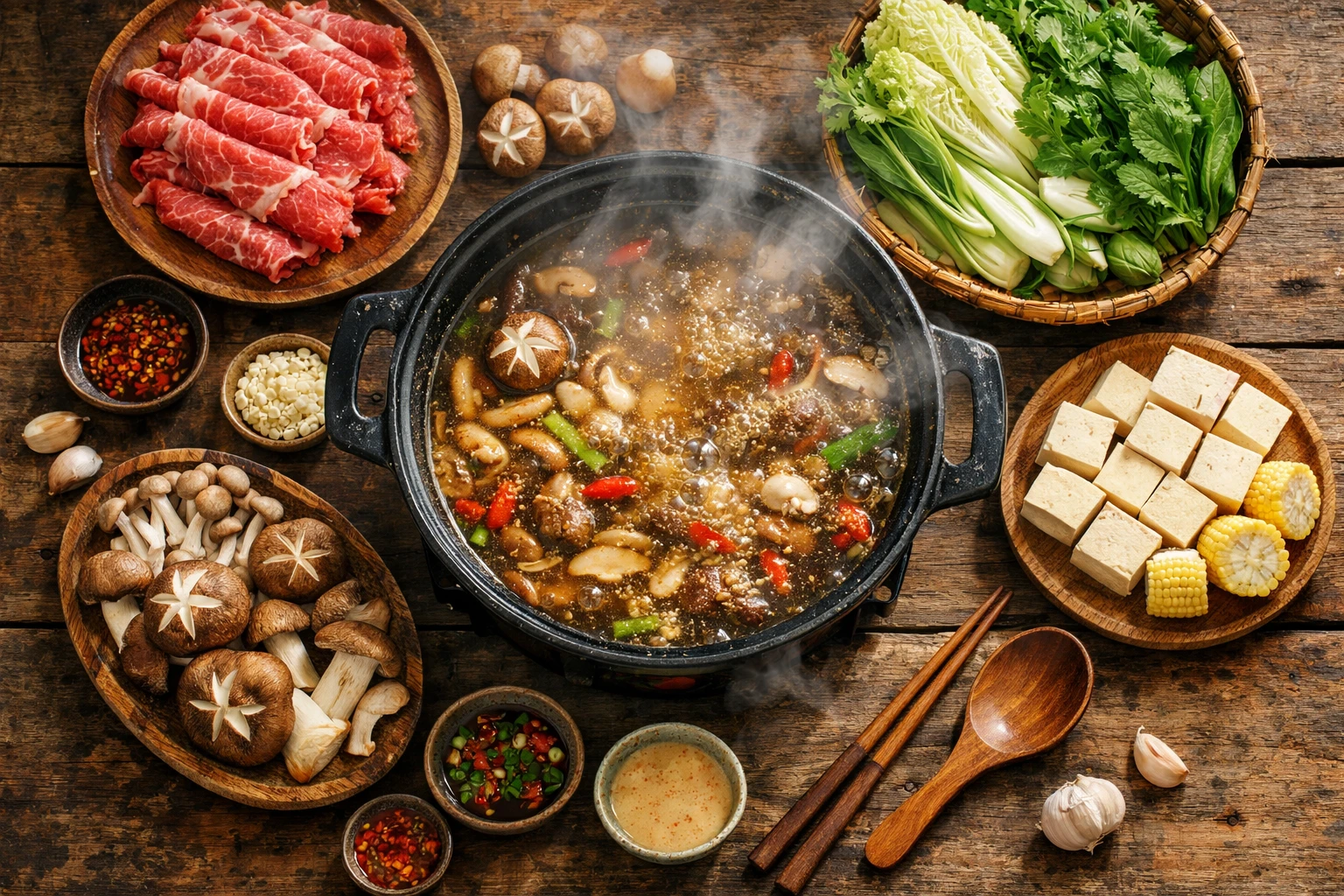
Quick Nutrition Facts
Per 1 Balanced Serving (450g, clear broth with lean protein & vegetables)
| Nutrient | Amount |
|---|---|
| Calories | 470 kcal |
| Protein | 22g |
| Carbohydrates | 41g |
| Fiber | 5g |
| Sugars | 8g |
| Fat | 22g |
| Sodium | 1200mg |
| Iron | 3.2mg |
| Vitamin A | 420mcg |
| Vitamin C | 35mg |
Macronutrient Breakdown
 ChatGPT
  Claude
  AI Mode
  Perplexity
NUTRITIONIST INSIGHT
Hot pot's interactive format promotes mindful eating and social bonding, reducing stress while you cook. Vegetables provide fiber that regulates blood sugar and promotes fullness. Choose clear mushroom or tomato broth to save 200-400 calories versus spicy chili oil bases.
Myth Busters
MYTH #1: Hot Pot Is Always High-Calorie
TRUTH: Calories depend entirely on your choices. A vegetable-heavy hot pot with clear broth, tofu, and shrimp can be 300-400 calories. Spicy chili oil broth alone adds 300+ calories before ingredients; switch to mushroom or tomato broth at 50-100 calories.
MYTH #2: You Can't Control Sodium in Hot Pot
TRUTH: Restaurant hot pot broths contain 2800-7000mg sodium, but you can reduce intake by diluting broth with water, using low-sodium dipping sauces, choosing fresh ingredients over processed options, and making homemade broth with controlled salt content.
MYTH #3: Hot Pot Has No Fiber
TRUTH: Vegetables and mushrooms provide 3-5g fiber per serving when loaded properly. Add leafy greens, bok choy, mushrooms, cabbage, and seaweed to reach 8-12g fiber total—supporting digestion and blood sugar regulation.
MYTH #4: All Hot Pot Broths Are the Same
TRUTH: Clear chicken or mushroom broth has 50-100 calories; Sichuan mala (spicy) broth with beef tallow can exceed 600 calories before ingredients. Tomato broth provides lycopene antioxidants at moderate calories. Broth choice dramatically affects nutrition.
MYTH #5: Hot Pot Isn't Filling Without Noodles
TRUTH: Protein (22g from lean meats, seafood, tofu) and fiber from vegetables promote satiety without heavy noodles. If you want noodles, limit to half portion or use shirataki nooles (konjac) at 10 calories per serving versus 200 calories for wheat noodles.
MYTH #6: Hot Pot Is Just a Winter Food
TRUTH: While originating as Mongolian winter sustenance over 800 years ago, hot pot is now enjoyed year-round across Asia and globally. Modern restaurants offer cooling broths and lighter ingredients suitable for warm weather. The communal dining experience transcends seasons.
NutriScore by Health Goals
| Health Goal | NutriScore | Why This Score? |
|---|---|---|
| Weight Loss |  | Vegetable-heavy hot pot promotes satiety at 300-400 calories. Choose clear broth, lean protein, no noodles. |
| Muscle Gain | | Customizable protein (22-35g) from beef, shrimp, tofu supports recovery. Add extra meat portions for 40-50g protein total. |
| Diabetes Management |  | Fiber from vegetables regulates blood sugar. Start with veggies first; limit noodles; monitor sodium. |
| PCOS Management | | High vegetable content provides antioxidants; lean protein supports hormones. Avoid high-fat broths; choose anti-inflammatory mushroom broth. |
| Pregnancy Nutrition | | Customizable protein, iron from beef (3.2mg), folate from leafy greens. Ensure meat is fully cooked; moderate sodium intake; avoid raw eggs in dipping sauce. |
| Viral/Flu Recovery | | Warm broth hydrates; ginger reduces nausea; protein supports immunity. Easy to digest, nutrient-dense, comforting. Choose mild broth if stomach is sensitive. |
PERSONALIZED NUTRITION
Track your meals with NutriScan for personalized NutriScores based on your specific health goals!
Blood Sugar Response to Hot Pot
Understanding how hot pot ingredients affect blood glucose helps you customize your bowl for stable energy.
Typical Glucose Response Curve
This chart shows typical blood glucose response for balanced hot pot with vegetables, protein, and moderate noodles. Individual responses vary. Not medical advice.
How to Flatten the Spike
Load vegetables and protein first to slow glucose absorption through fiber and delayed gastric emptying:
- 🥬 Leafy greens first - Bok choy, napa cabbage, spinach provide fiber bulk
- 🍄 Mushrooms early - Enoki, shiitake, oyster mushrooms add umami and fiber
- 🥩 Protein before noodles - Beef, shrimp, chicken establish satiety baseline
- 🍜 Limit noodles last - Half portion or shirataki noodles (10 calories, zero net carbs)
This sequencing reduces glucose spikes by distributing carbohydrate absorption across extended time.
Cultural Significance
Hot pot represents one of Asia's oldest and most beloved communal dining traditions, emphasizing social connection over individual consumption.
Origins & Evolution:
- Originated in Mongolia over 800-1,000 years ago among nomadic herders
- Warriors boiled mutton in helmets over campfires for quick winter meals
- Spread to China via Mongol Empire and Yuan Dynasty (1271-1368 AD)
- Became imperial favorite during Qing Dynasty (1644-1912); Emperor Qianlong hosted 550-guest hot pot banquets
Regional Chinese Variations:
- Beijing/Mongolian: Mild broth with lamb, goji berries; uses distinctive chimney pot
- Sichuan/Chongqing: Fiery mala (numbing-spicy) broth with Sichuan peppercorns, chili oil, beef tallow
- Cantonese: Seafood-focused with milder flavors and fresh ingredients
- Yunnan: Mushroom broth with wild fungi and herbs
Asian Adaptations:
- Japanese Shabu-Shabu: Thinly sliced meats swished in light kombu broth; named for swishing sound
- Korean Jeongol: Hearty stews with kimchi, tofu, seafood in spicy broth
- Thai Suki: Glass noodles, seafood, vegetables in tangy broth with sesame dipping sauce
- Vietnamese Lẩu: Aromatic broths with lemongrass, tamarind; served with fresh herbs
Social & Psychological Benefits:
- Promotes conversation and connection during interactive cooking
- Reduces stress through shared experience and mindful eating
- Encourages trying new ingredients in supportive group setting
- Builds memories through multi-sensory experience
Compare & Substitute
Hot Pot vs Similar Interactive Asian Dishes (Per 100g)
| Nutrient | 🍲 Hot Pot (Clear broth) | 🍜 Ramen (Tonkotsu) | 🥘 Korean Stew (Jjigae) | 🍛 Japanese Curry |
|---|---|---|---|---|
| Calories | 104 kcal | 140 kcal | 90 kcal | 130 kcal |
| Carbs | 9g | 18g | 8g | 15g |
| Fiber | 1.1g | 1.5g | 2.1g | 1.8g |
| Protein | 4.9g | 6.2g | 5.8g | 4.5g |
| Fat | 4.9g | 6.8g | 4.2g | 6.1g |
| Sodium | 267mg | 420mg | 380mg | 340mg |
| Iron | 0.7mg | 0.9mg | 1.2mg | 0.6mg |
| Vitamin A | 93mcg | 45mcg | 120mcg | 180mcg |
| Best For | Customization, weight loss | Quick comfort meal | Fermented probiotic | Turmeric anti-inflammatory |
Frequently Asked Questions
Is hot pot good for weight loss?
Hot pot can be excellent for weight loss when prepared strategically. The key is maximizing vegetables and lean protein while minimizing calorie-dense broths and noodles.
Best practices: Choose clear mushroom or tomato broth (50-100 calories) instead of spicy chili oil broth (300+ calories); load 60-70% of your bowl with leafy greens like bok choy, napa cabbage, spinach, and watercress; select lean proteins like shrimp (24g protein per 4oz, 120 calories), chicken breast, or tofu; limit noodles to half portion or substitute shirataki noodles (10 calories); use vinegar or lemon-based dipping sauces instead of sesame oil or peanut sauce. A vegetable-heavy hot pot can deliver just 300-400 calories while providing 5-8g fiber for satiety.
Can diabetics eat hot pot?
Diabetics can enjoy hot pot with modifications that prioritize fiber, protein, and portion control of carbohydrates.
Tips for diabetics:
- Choose clear broth to avoid hidden sugars in spicy oil bases
- Start with vegetables and protein for meal sequencing benefits (load greens, mushrooms, lean meat first)
- Limit noodles to half portion (20g carbs) or use shirataki konjac noodles (zero net carbs)
- Avoid sugary dipping sauces; use soy sauce with vinegar and chili
- Monitor sodium as broths can contain 2800-7000mg
- Test blood sugar 90-120 minutes after eating to understand your response
The fiber from vegetables helps regulate blood sugar; a balanced hot pot has moderate glycemic impact when noodles are controlled.
How much protein is in hot pot?
Hot pot protein varies dramatically based on ingredients; you control the amount entirely.
Protein by common ingredients:
- Beef (4oz thinly sliced): 21g protein, 217 calories
- Shrimp (4oz): 24g protein, 120 calories (leanest option)
- Chicken breast (4oz): 26g protein, 140 calories
- Tofu (100g): 8g protein, 80 calories (plant-based)
- Fish balls (3 pieces, 75g): 7g protein, 110 calories
- Eggs (1 large): 6g protein, 70 calories
A balanced hot pot serving with mixed proteins typically contains 22-35g protein. For muscle gain, add extra protein portions to reach 40-50g total.
What are the main health benefits of hot pot?
Key Benefits:
- Customizable Nutrition: Control exact ingredients; adjust for any dietary need or health goal
- Vegetable Intake: Promotes 5-8g fiber from greens, mushrooms, seaweed supporting digestion and blood sugar
- Lean Protein: Supports muscle maintenance, immunity, satiety without heavy preparation methods
- Antioxidants: Mushrooms provide selenium; leafy greens offer vitamins A, C, K, folate
- Social Connection: Interactive dining reduces stress, improves mood through bonding
- Mindful Eating: Slow cooking promotes awareness of portion sizes and satiety signals
How can I reduce sodium in hot pot?
Restaurant hot pot broths can contain 2800-7000mg sodium—exceeding the 2300mg daily limit in one meal.
Reduction strategies:
- Make homemade broth controlling salt (use mushrooms, ginger, garlic for flavor)
- Request diluted broth at restaurants (add hot water to existing broth)
- Limit soy sauce-based dipping sauces (879mg per tablespoon); use citrus, vinegar, chili oil instead
- Choose fresh ingredients over processed (fish balls, frozen dumplings add hidden sodium)
- Skip or minimize pickled vegetables
- Use low-sodium soy sauce (440mg per tablespoon versus 879mg regular)
These modifications can reduce sodium from 7000mg to under 1500mg per serving while maintaining flavor.
Is hot pot healthier than other Chinese dishes?
Hot pot can be significantly healthier than fried Chinese restaurant dishes because you control ingredients and avoid deep-frying.
Hot Pot Advantages:
- Cooking method: Boiling versus frying eliminates breading and excess oil
- Vegetable ratio: Easy to achieve 60-70% vegetables versus 20-30% in stir-fries
- Portion awareness: Interactive cooking promotes mindfulness versus pre-plated portions
- Customization: Accommodate any dietary restriction instantly
Comparison examples:
- Hot pot (vegetable-heavy, clear broth): 300-400 calories, 10g fat
- General Tso's Chicken: 1300 calories, 60g fat, 3200mg sodium
- Kung Pao Chicken: 700 calories, 45g fat
- Egg Foo Young: 900 calories, 65g fat
Trade-offs: Hot pot requires active participation; pre-made dishes offer convenience. Some hot pot broths rival fried foods for sodium and fat content; choose wisely.
What are the best ingredients for healthy hot pot?
Prioritize these for maximum nutrition:
Vegetables (load these first):
- Leafy greens: bok choy, napa cabbage, spinach, watercress
- Mushrooms: shiitake, enoki, oyster, wood ear (antioxidants, fiber)
- Cruciferous: broccoli, cauliflower (cancer-protective compounds)
- Seaweed: wakame, kelp (iodine for thyroid)
Lean Proteins:
- Shrimp (24g protein per 4oz, 120 calories—highest protein-to-calorie ratio)
- Chicken breast (26g protein per 4oz, 140 calories)
- Tofu (8g protein per 100g, 80 calories, plant-based)
- White fish like cod (22g protein per 4oz, 100 calories)
Smart Carbs (limit portions):
- Shirataki konjac noodles (10 calories, zero net carbs)
- Sweet potato (complex carbs, vitamin A)
- Glass noodles in moderation (190 calories per 2oz dry)
Avoid or minimize: Fatty beef, processed fish balls, fried dough, instant ramen noodles, heavy sesame or peanut dipping sauces.


Similar Interactive Asian Dishes
4505 Chicharrones Classic Chili Salt
7 Eleven Japan Crispy Corn Cheese
Explore More Nutrition Tools & Resources
AI Calorie Counter App - Snap a Photo, Get Macros
AI Nutritionist App That Reads Your Logged Meals
Best Protein Supplements for Women
Bulking Meal Plan App That Sets Your Surplus
ChatGPT Calorie Counter Alternative That Keeps the Total
ChatGPT Diet Plan Alternative That Tracks What You Eat
ChatGPT Weight Loss Coach Alternative With a Food Log
Fast Food Calorie Counter App That Reads the Tray
Free Calorie Tracker App with AI Photo Scans | NutriScan
Indian Diet Plan App With Veg and Non Veg Meals
Indian Food Calorie Calculator - Get Instant Nutrition Facts for Desi Meals — 2026
Intermittent Fasting for Women, Timer and Meal Log App
Intermittent Fasting Tracker App - Free Fasting Timer
Macro Tracker App That Fills the Numbers From a Photo
Mediterranean Diet Meal Plan App That Counts the Oil
Micronutrient Tracker App for Vitamins and Minerals
MyFitnessPal Alternative That Stays Free | NutriScan
NutriScore App: A Free Grade on Every Meal | NutriScan
Nutrition Label Scanner App for the Amount You Ate
Second Trimester Protein Guide
Vegetarian Meal Plan App With a Protein Target
Voice Calorie Counter - Speak to Track Meals Hands-Free
Water and Calorie Tracker App - Free Water Log