Injera (Ethiopian Flatbread): Calories, Nutrition and Health Benefits
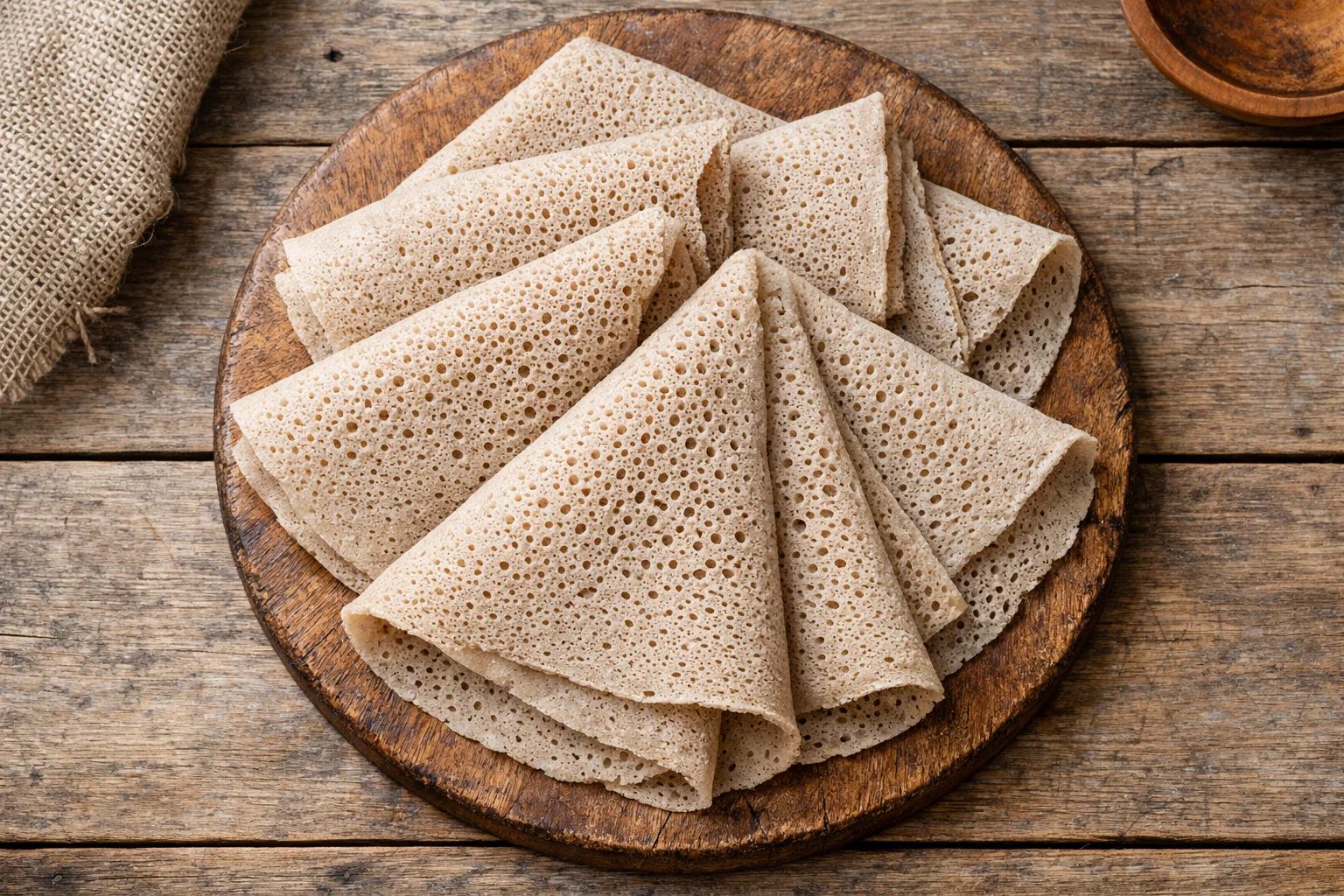
Ethiopia's ancient fermented flatbread with probiotic benefits, spongy texture, and traditional serving as both plate and utensil.
Quick Nutrition Facts
Per 1 Piece Injera (100g)
| Nutrient | Amount |
|---|---|
| Calories | 130 kcal |
| Protein | 5g |
| Carbohydrates | 25g |
| Fiber | 2.5g |
| Sugars | 0.5g |
| Fat | 1g |
| Calcium | 60mg |
| Iron | 2.5mg |
| Magnesium | 45mg |
| Zinc | 1.2mg |
Macronutrient Breakdown
 ChatGPT
  Claude
  AI Mode
  Perplexity
NUTRITIONIST INSIGHT
Injera's 2-3 day fermentation creates beneficial probiotics and reduces phytic acid, improving mineral absorption. The spongy texture comes from natural yeast and bacteria, making nutrients more bioavailable than unfermented breads.
Myth Busters
MYTH #1: Injera Is Too High in Carbs for Healthy Eating
TRUTH: At 25g carbs per piece, injera provides moderate energy. The fermentation creates resistant starch that acts like fiber, feeding gut bacteria and improving insulin sensitivity - unlike refined breads.
MYTH #2: Fermented Foods Are Unsafe or Spoiled
TRUTH: Controlled fermentation creates beneficial probiotics, not harmful bacteria. Traditional injera fermentation produces lactic acid bacteria that preserve the bread and support digestive health, similar to yogurt or kimchi.
MYTH #3: You Can Only Eat Injera at Ethiopian Restaurants
TRUTH: Injera is simple to make at home with teff flour and water. The 2-3 day fermentation requires patience but minimal effort. Pre-made injera is increasingly available at health food stores and online.
MYTH #4: All Injera Is Gluten-Free
TRUTH: Traditional 100% teff injera is gluten-free. However, many commercial versions mix wheat or barley flour to reduce cost. Always verify ingredients if you have celiac disease or gluten sensitivity.
MYTH #5: Injera Lacks Nutritional Value
TRUTH: Injera provides 5g protein, 60mg calcium, 2.5mg iron, and beneficial probiotics per piece. The fermentation increases B vitamin content and makes minerals more absorbable than regular flatbreads.
MYTH #6: Injera Is Just a Bland Accompaniment
TRUTH: Injera's distinctive sour-tangy flavor from fermentation complements Ethiopian stews perfectly. The spongy texture absorbs sauces while maintaining structure, serving as both plate and utensil in traditional meals.
NutriScore by Health Goals
| Health Goal | NutriScore | Why This Score? |
|---|---|---|
| Weight Loss |  | 130 calories per piece with 2.5g fiber. Resistant starch promotes fullness. Limit to 1-2 pieces per meal with vegetable stews. |
| Muscle Gain | | 5g protein per piece provides base carbs for energy. Pair with protein-rich Ethiopian lentils (misir wot) or meat stews for muscle recovery. |
| Diabetes Management | | Fermentation lowers GI (~55) compared to regular flatbreads. Use 1 piece, pair with protein, monitor blood sugar. |
| PCOS Management |  | Moderate carbs; resistant starch may help insulin sensitivity. Use 1 piece maximum, choose toppings wisely (lentils over fatty meats). |
| Pregnancy Nutrition |  | Iron (2.5mg) supports increased blood volume; probiotics aid digestion; calcium supports bone health; easy to digest. |
| Viral/Flu Recovery | | Easy to digest, gentle on stomach. Probiotics support immune function. Pairs well with nutrient-rich vegetable stews for recovery nutrition. |
PERSONALIZED NUTRITION
Track your meals with NutriScan for personalized NutriScores based on your specific health goals!
Blood Sugar Response to Injera
Understanding how injera affects your blood glucose helps you enjoy this traditional bread optimally.
Typical Glucose Response Curve
*This chart shows typical blood glucose response for general healthy individuals. Individual responses may vary. Not medical advice.*
How to Flatten the Spike
Pairing injera with protein and fiber-rich toppings creates balanced traditional meals:
- 🥘 Misir Wot (red lentil stew) - High protein and fiber
- 🥬 Gomen (collard greens) - Fiber and nutrients
- 🍗 Doro Wot (chicken stew) - Complete protein source
- 🫘 Shiro (chickpea stew) - Plant protein and fiber
Traditional Ethiopian meals naturally combine these for balanced nutrition and stable energy.
Cultural Significance
Injera has been Ethiopia's dietary foundation for over 3,000 years, deeply woven into the nation's cultural identity.
In Ethiopia:
- Serves as both plate and utensil in traditional dining
- Communal eating from shared injera promotes social bonds
- Making injera is a respected skill passed through generations
- Different regions prefer varying fermentation times (2-5 days)
- Essential at celebrations, weddings, religious holidays
- The mitad (clay cooking griddle) is treasured kitchen centerpiece
Traditional Serving:
- Large injera base covers entire platter
- Various stews (wots) arranged on top in colorful portions
- Diners tear injera pieces to scoop stews
- Additional rolled injera served on the side
- Eating with hands considered proper and hygienic
Global Recognition:
- Ethiopian restaurants worldwide introduce injera to new audiences
- Health food movement embraces fermented, gluten-free properties
- Culinary tourism highlighting Ethiopian coffee ceremony and injera meals
- Growing availability in health food stores as superfood bread
Compare & Substitute
Injera vs Similar Flatbreads (Per 100g)
| Nutrient | 🫓 Injera | 🫓 Whole Wheat Roti | 🫓 Naan Bread | 🌮 Corn Tortilla |
|---|---|---|---|---|
| Calories | 130 kcal | 260 kcal | 290 kcal | 218 kcal |
| Carbs | 25g | 48g | 52g | 46g |
| Fiber | 2.5g | 4g | 2g | 5g |
| Protein | 5g | 9g | 8g | 6g |
| Fat | 1g | 4g | 7g | 3g |
| Calcium | 60mg | 25mg | 80mg | 159mg |
| Iron | 2.5mg | 2mg | 2.5mg | 2.5mg |
| Probiotics | Yes (fermented) | No | No (unless sourdough) | No |
| Best For | Gut health, gluten-free | Fiber, everyday flatbread | Special occasions, flavor | Gluten-free, versatile |
Frequently Asked Questions
Is injera good for weight loss?
Yes, injera can support weight loss when eaten in moderation. At 130 calories per 100g piece with 2.5g fiber, it provides filling carbs without excess calories. The fermentation creates resistant starch that aids appetite control and fat burning.
Best practices: Limit to 1-2 pieces per meal; pair with vegetable-based stews (gomen, misir wot); avoid fatty meat stews; use as plate to control portions naturally.
Can diabetics eat injera?
Yes, diabetics can eat injera. The fermentation process lowers the glycemic index to approximately 55 (medium), making it better than many flatbreads.
Tips for diabetics:
- Use 1 piece maximum per meal (25g carbs)
- Always pair with protein-rich lentil or bean stews
- Choose vegetable toppings over starchy ones
- Monitor blood sugar 2 hours after eating
- Fermented injera has better glucose response than fresh
The resistant starch from fermentation may improve long-term insulin sensitivity.
How much protein is in injera?
Injera contains 5g protein per 100g piece. While moderate, it provides more protein than white bread (3g) or rice (2.7g).
For complete nutrition, pair with protein-rich Ethiopian dishes: misir wot (lentils - 9g protein per 100g); shiro (chickpeas - 8g protein); doro wot (chicken - 25g protein). This traditional combination creates balanced meals.
Is injera gluten-free?
Traditional injera made from 100% teff flour is naturally gluten-free and safe for celiac disease and gluten sensitivity.
Important cautions:
- Many commercial injera mix wheat, barley, or other grains
- Ethiopian restaurants often use mixed flours to reduce cost
- Always ask: "Is this 100% teff injera?"
- Check ingredient labels on store-bought versions
- Cross-contamination can occur in shared kitchens
If highly sensitive, verify with restaurant or make at home with certified gluten-free teff.
What are the probiotic benefits of injera?
Injera fermentation (2-3 days) creates beneficial lactic acid bacteria similar to yogurt and kimchi.
Probiotic benefits:
- Gut Health: Beneficial bacteria colonize digestive system
- Improved Digestion: Enzymes break down complex nutrients
- Enhanced Nutrient Absorption: Fermentation reduces phytic acid blockers
- Immune Support: 70% of immunity starts in the gut
- B Vitamin Production: Fermentation increases B vitamin content
- Better Mineral Absorption: Calcium, iron, zinc become more bioavailable
Regular consumption supports microbiome diversity and digestive wellness.
How is injera made?
Traditional Method:
Mix teff flour with water (1:2 ratio) in large bowl. Cover with cloth, ferment at room temperature 2-3 days until bubbly and sour-smelling. Heat clay griddle (mitad) or non-stick pan to medium-high. Pour thin layer batter in circular motion, cover, cook one side only 2-3 minutes until holes form and edges lift. Do not flip.
Tips: Batter should pour like thin pancake mix; fermentation creates signature sour taste; cooking one side creates spongy texture; stack cooked injera with cloth between layers; refrigerate up to 5 days.
Quick Method: Use store-bought injera starter culture to reduce fermentation to 12-24 hours.
What does injera taste like?
Injera has a distinctive sour-tangy flavor from fermentation, similar to sourdough bread but more pronounced. The taste is slightly acidic with earthy undertones from teff.
Texture: Spongy and soft with thousands of tiny holes (eyes) on the surface. The underside has slight crisp from griddle. Pliable enough to tear easily but sturdy enough to hold stews without breaking.
Pairing: The sour flavor balances rich, spicy Ethiopian stews perfectly. New eaters may need 2-3 experiences to appreciate the unique taste, but it becomes addictive once acquired.
Can I make injera without teff?
Yes, though it won't be traditional injera. Alternatives include:
Gluten-free: Buckwheat flour (similar sour flavor), sorghum flour, or brown rice flour. With gluten: Whole wheat flour (shorter fermentation), all-purpose flour mixed with yogurt.
Important: These substitutes change flavor, texture, and nutrition profile significantly. Traditional 100% teff injera offers unique probiotic benefits and authentic taste. If teff is unavailable, try online Ethiopian specialty stores or Bob's Red Mill teff flour.




Similar Nutritious Flatbreads
4505 Chicharrones Classic Chili Salt
7 Eleven Japan Crispy Corn Cheese
Explore More Nutrition Tools & Resources
AI Calorie Counter App - Snap a Photo, Get Macros
AI Nutritionist App That Reads Your Logged Meals
Best Protein Supplements for Women
Bulking Meal Plan App That Sets Your Surplus
ChatGPT Calorie Counter Alternative That Keeps the Total
ChatGPT Diet Plan Alternative That Tracks What You Eat
ChatGPT Weight Loss Coach Alternative With a Food Log
Fast Food Calorie Counter App That Reads the Tray
Free Calorie Tracker App with AI Photo Scans | NutriScan
Indian Diet Plan App With Veg and Non Veg Meals
Indian Food Calorie Calculator - Get Instant Nutrition Facts for Desi Meals — 2026
Intermittent Fasting for Women, Timer and Meal Log App
Intermittent Fasting Tracker App - Free Fasting Timer
Macro Tracker App That Fills the Numbers From a Photo
Mediterranean Diet Meal Plan App That Counts the Oil
Micronutrient Tracker App for Vitamins and Minerals
MyFitnessPal Alternative That Stays Free | NutriScan
NutriScore App: A Free Grade on Every Meal | NutriScan
Nutrition Label Scanner App for the Amount You Ate
Second Trimester Protein Guide
Vegetarian Meal Plan App With a Protein Target
Voice Calorie Counter - Speak to Track Meals Hands-Free
Water and Calorie Tracker App - Free Water Log