Jackfruit: Calories, Nutrition and Health Benefits
The ultimate plant-based meat substitute with pulled-pork texture, surprising digestive benefits, and minimal calories that works in savory and sweet applications.
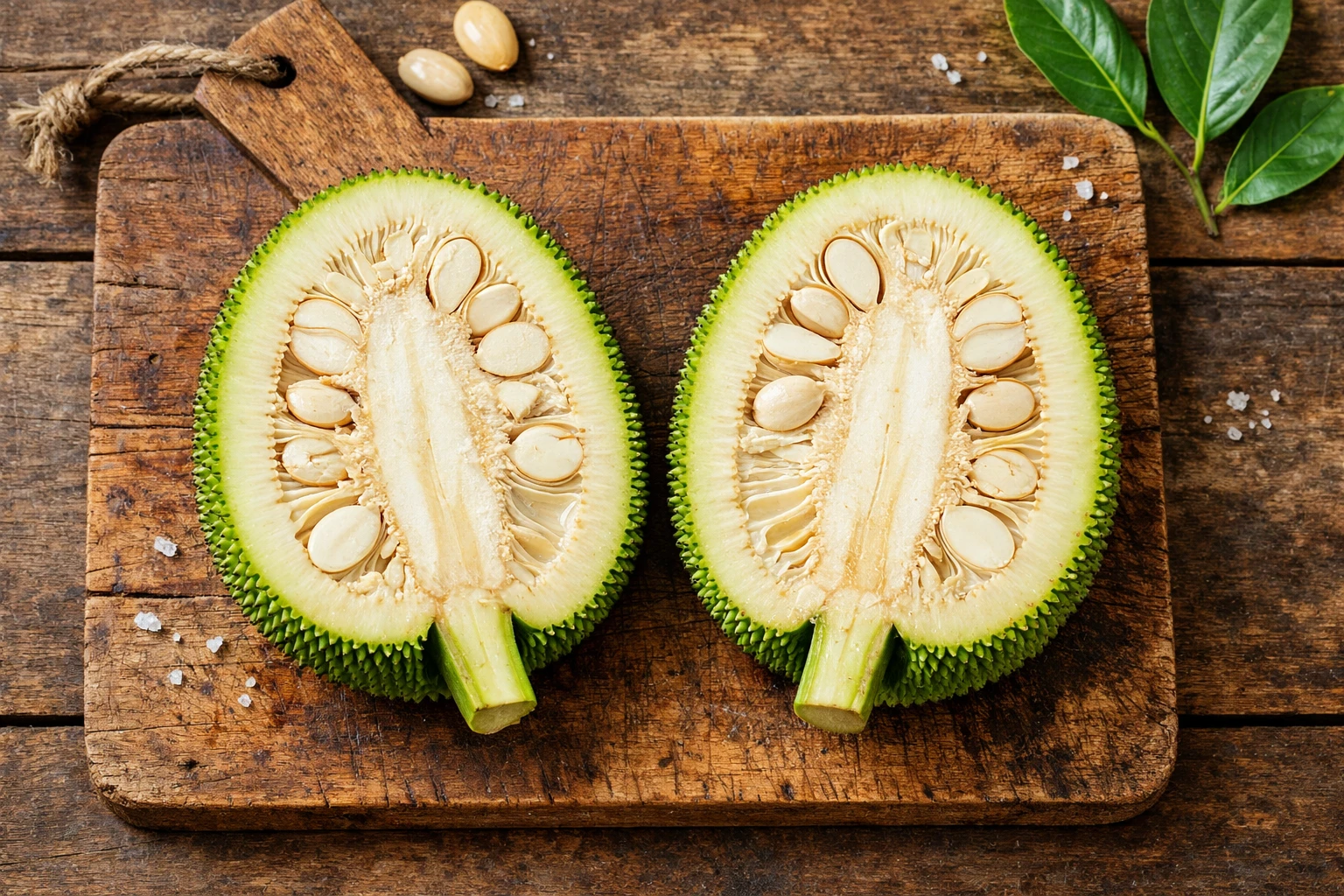
Quick Nutrition Facts
Per 100g (1 Cup Sliced Young Jackfruit)
| Nutrient | Amount |
|---|---|
| Calories | 95 kcal |
| Protein | 1.5g |
| Carbohydrates | 23g |
| Fiber | 1.5g |
| Sugars | 9g |
| Fat | 0.3g |
| Potassium | 303mg |
| Vitamin C | 8.7mg |
| Vitamin B6 | 0.1mg |
| Magnesium | 29mg |
Macronutrient Breakdown
 ChatGPT
  Claude
  AI Mode
  Perplexity
NUTRITIONIST INSIGHT
Young green jackfruit is nature's plant-based pulled meat. Its fibrous texture and mild flavor absorb seasonings while staying low in calories (95 per 100g). The high water content (80%) makes it filling without caloric density, ideal for flexitarians and plant-based eaters.
Myth Busters
MYTH #1: Jackfruit Has Too Much Sugar
TRUTH: Young/green jackfruit contains only 9g sugar per 100g with 1.5g fiber, giving a net carb of 21.5g. Ripe jackfruit (19g sugar) is sweeter and better for desserts. Choose young jackfruit for savory meals to minimize sugar intake.
MYTH #2: Jackfruit Doesn't Taste Like Meat
TRUTH: Young unripe jackfruit has a neutral, slightly sweet flavor and fibrous pulled-meat texture when cooked. Marinated and slow-cooked with spices, it absorbs flavors intensely, making it indistinguishable from pulled pork in tacos and sandwiches. Seasoning is key.
MYTH #3: Jackfruit Has No Nutritional Value
TRUTH: Jackfruit provides 303mg potassium (9% DV) for heart health, 8.7mg vitamin C for immunity, 1.5g fiber for digestive health, and polyphenols (lignans, flavonoids) with antioxidant and anti-inflammatory properties.
MYTH #4: Canned Jackfruit is Unhealthy
TRUTH: Canned jackfruit in brine or water is nutritionally equivalent to fresh, with added convenience. Avoid versions in syrup or heavy sugar solutions. Drain and rinse canned jackfruit before use; nutrition remains intact and shreds easily for cooking.
MYTH #5: Jackfruit Causes Weight Gain
TRUTH: At only 95 calories per 100g with high water content, jackfruit supports weight loss. Unlike calorie-dense meats (250+ calories per 100g), jackfruit allows larger portions with fewer calories, promoting satiety without excess energy intake.
NutriScore by Health Goals
| Health Goal | NutriScore | Why This Score? |
|---|---|---|
| Weight Loss |  | Only 95 calories, 1.5g fiber, high water content promotes fullness. Larger portions possible without excess calories. Perfect plant-based swap for calorie-dense meats. |
| Plant-Based Diets |  | Excellent meat texture substitute, low calorie, provides potassium and vitamin C. Pair with legumes or tofu for complete protein. |
| Diabetes Management | | Young jackfruit has GI ~30 with 1.5g fiber per 100g. Lower sugar (9g) than ripe fruit. Pair with protein/fat to further reduce glycemic response. |
| PCOS Management | | Low glycemic index, minimal sugar, high satiety from fiber and water. Portion: 150-200g as main dish component. Supports stable blood sugar. |
| Digestive Health | | 1.5g fiber per 100g, prebiotic compounds, high water content supports bowel regularity and feeds beneficial gut bacteria. |
| Viral/Flu Recovery | | Easily digestible, mild flavor, vitamin C for immune recovery, potassium for electrolyte balance. Bland preparation suitable for sensitive digestion. |
PERSONALIZED NUTRITION
Track your meals with NutriScan for personalized NutriScores based on your specific health goals!
Blood Sugar Response to Jackfruit
Young green jackfruit has a low glycemic index, making it safe for diabetics when prepared without added sugars.
Typical Glucose Response Curve
This chart shows typical blood glucose response for general healthy individuals. Individual responses may vary. Not medical advice.
How to Flatten the Spike
Pairing jackfruit with protein or healthy fat slows glucose absorption:
- 🫘 Beans or legumes - Add black beans or chickpeas for complete protein
- 🥚 Scrambled eggs - Combine in breakfast bowls for protein and fat
- 🥜 Nut butters - Drizzle tahini or almond butter for healthy fats
- 🧀 Cheese or nutritional yeast - Adds umami and fat-soluble nutrients
This combination extends energy release and increases meal satiety.
Cultural Significance
Jackfruit is native to South and Southeast Asia, cultivated for over 4,000 years in India and Bangladesh.
In India:
- Called "jack" fruit in English; "kathal" or "phanas" in regional languages
- Sacred in some Hindu traditions; offered at temples
- Largest tree-borne fruit in the world (up to 80 lbs)
- Dual use: young unripe (curry, substitute), ripe (desserts, jams)
- Sustainable crop: leaves used as animal feed, wood for furniture
Global Impact:
- Growing in tropical regions as climate-resilient, sustainable food
- Gaining popularity as plant-based meat alternative in Western markets
- Supports smallholder farmers in India, Bangladesh, and Southeast Asia
- Less water-intensive than beef; requires minimal pesticides
Compare & Substitute
Jackfruit vs Similar Plant-Based Proteins (Per 100g)
| Nutrient | 🍌 Jackfruit | 🥬 Tofu | 🫘 Chickpeas | 🍄 Mushrooms |
|---|---|---|---|---|
| Calories | 95 kcal | 76 kcal | 164 kcal | 22 kcal |
| Carbs | 23g | 1.9g | 27g | 3.3g |
| Fiber | 1.5g | 0.6g | 8g | 0.7g |
| Protein | 1.5g | 8g | 9g | 3.1g |
| Fat | 0.3g | 4.8g | 4.3g | 0.4g |
| Potassium | 303mg | 150mg | 718mg | 318mg |
| Best For | Meat texture | Protein boost, stir-fries | Complete protein, curries | Low-calorie, umami |
Frequently Asked Questions
Is jackfruit a good meat substitute?
Yes, young green jackfruit has a pulled-meat texture and mild, neutral flavor that absorbs seasonings intensely. It shreds easily when cooked and works in tacos, sandwiches, curries, and BBQ. Unlike meat, it's low in fat (0.3g per 100g), cholesterol-free, and provides fiber. For protein-focused diets, pair with legumes, tofu, or nuts.
Is jackfruit good for weight loss?
Yes; jackfruit is extremely low in calories (95 per 100g) with high water content (80%) promoting fullness. Its 1.5g fiber per 100g supports digestive health. You can eat larger portions (200-300g) without exceeding typical meal calorie targets, unlike meat-based options (250+ kcal per 100g). Best results: use as primary dish component with added legumes for protein.
What are the main health benefits of jackfruit?
Jackfruit provides potassium (303mg per 100g) for heart health, vitamin C (8.7mg) for immunity, fiber (1.5g) for digestive regularity, and polyphenols (lignans, flavonoids) with anti-inflammatory and antioxidant properties. Young jackfruit's low glycemic index makes it suitable for diabetes management.
Can I eat jackfruit if I have diabetes?
Young green jackfruit is suitable for diabetes; it has a low glycemic index (~30), 9g sugar, and 1.5g fiber per 100g. Pair with protein or healthy fat to further reduce glycemic response. Avoid ripe jackfruit (19g sugar) or jackfruit in syrup. Always monitor individual blood sugar response and consult your healthcare provider.
How much protein does jackfruit have?
Jackfruit provides only 1.5g protein per 100g, making it insufficient as a primary protein source. Combine with legumes (8-9g per 100g), tofu (8g per 100g), or nuts (5-6g per ounce) for complete plant-based protein meals. Jackfruit's value lies in its texture and low-calorie profile, not protein content.
How should I prepare jackfruit?
Canned young jackfruit in brine is easiest: drain, rinse, and shred with two forks. Cook low-and-slow with spices, BBQ sauce, curry paste, or taco seasoning for 15-20 minutes. Fresh jackfruit requires cutting away the large core and fibrous parts; more labor-intensive. Cooked jackfruit keeps refrigerated 3-4 days or freezes 2-3 months. No special equipment needed; forks and a cutting board suffice.
Is canned jackfruit healthy?
Canned jackfruit in brine or water is nutritionally equivalent to fresh with added convenience. Drain and rinse to reduce sodium (if desired). Avoid versions packed in heavy syrup or sweetened solutions; nutrition remains intact but sugar load increases. Unsweetened canned jackfruit is ideal for meal prep and cooking.
How many servings of jackfruit should I eat per day?
For weight loss/general health, 100-200g (1-2 cups) per serving is typical. As a meat substitute main, 150-250g works well. For diabetes, start with 100g portions and monitor blood sugar response. Combine with legumes/tofu for protein balance. No strict daily limit; treat like vegetables (multiple servings possible without overconsumption).


Similar Nutritious Foods
4505 Chicharrones Classic Chili Salt
7 Eleven Japan Crispy Corn Cheese
Explore More Nutrition Tools & Resources
AI Calorie Counter App - Snap a Photo, Get Macros
AI Nutritionist App That Reads Your Logged Meals
Best Protein Supplements for Women
Bulking Meal Plan App That Sets Your Surplus
ChatGPT Calorie Counter Alternative That Keeps the Total
ChatGPT Diet Plan Alternative That Tracks What You Eat
ChatGPT Weight Loss Coach Alternative With a Food Log
Fast Food Calorie Counter App That Reads the Tray
Free Calorie Tracker App with AI Photo Scans | NutriScan
Indian Diet Plan App With Veg and Non Veg Meals
Indian Food Calorie Calculator - Get Instant Nutrition Facts for Desi Meals — 2026
Intermittent Fasting for Women, Timer and Meal Log App
Intermittent Fasting Tracker App - Free Fasting Timer
Macro Tracker App That Fills the Numbers From a Photo
Mediterranean Diet Meal Plan App That Counts the Oil
Micronutrient Tracker App for Vitamins and Minerals
MyFitnessPal Alternative That Stays Free | NutriScan
NutriScore App: A Free Grade on Every Meal | NutriScan
Nutrition Label Scanner App for the Amount You Ate
Second Trimester Protein Guide
Vegetarian Meal Plan App With a Protein Target
Voice Calorie Counter - Speak to Track Meals Hands-Free
Water and Calorie Tracker App - Free Water Log