Jagariko Potato Sticks: Calories, Nutrition and Health Facts
Japan's iconic crunchy potato stick snack in a convenient cup, delivering satisfying texture with 260 calories and 410mg sodium per serving.
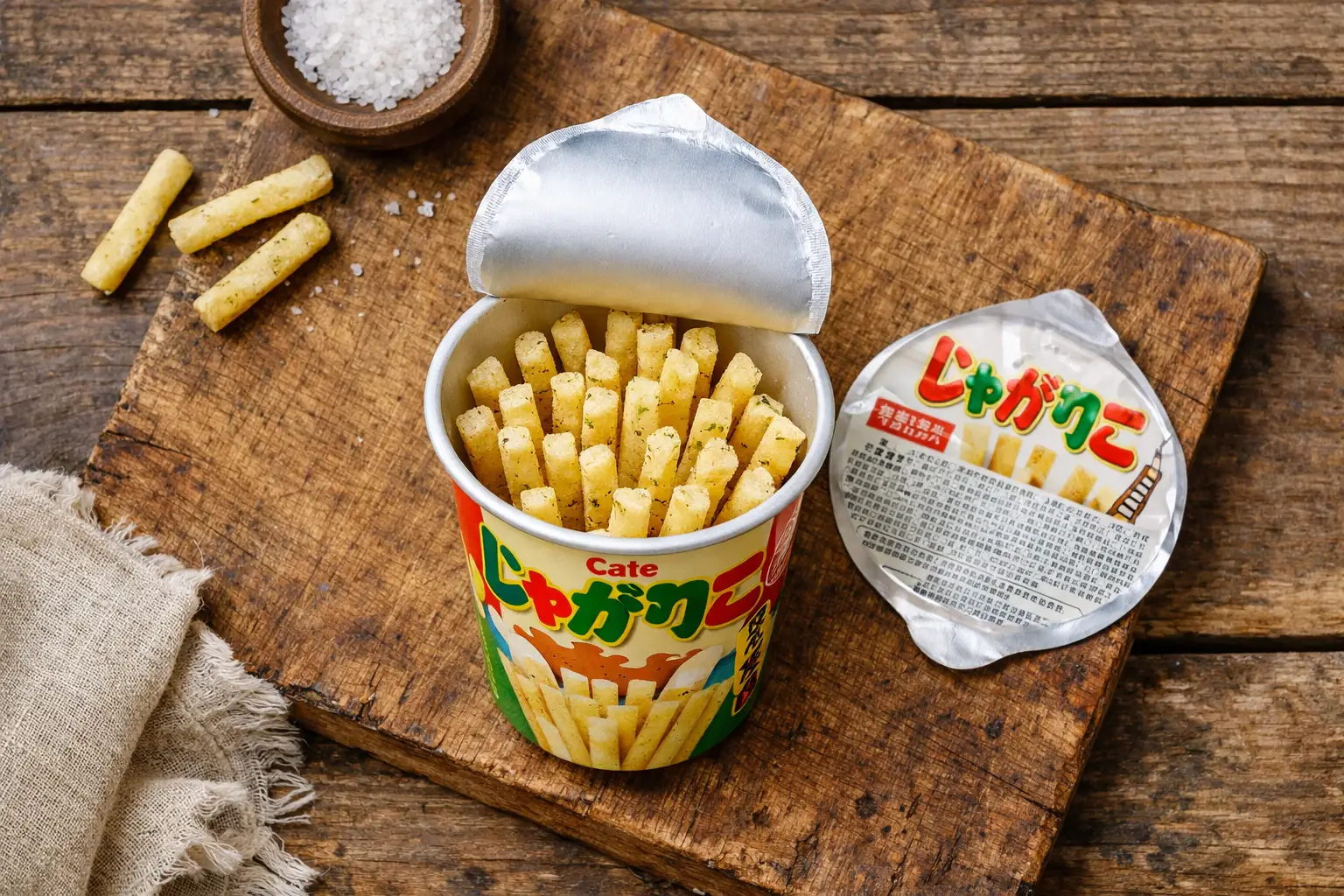
Quick Nutrition Facts
Per 1 Cup Jagariko (60g)
| Nutrient | Amount |
|---|---|
| Calories | 260 kcal |
| Protein | 3g |
| Carbohydrates | 31g |
| Fiber | 2g |
| Sugars | 2g |
| Fat | 13g |
| Saturated Fat | 5g |
| Sodium | 410mg |
| Potassium | 440mg |
| Calcium | 60mg |
Macronutrient Breakdown
 ChatGPT
  Claude
  AI Mode
  Perplexity
NUTRITIONIST INSIGHT
Jagariko's stick shape means less oil absorption than flat chips (7g vs 10g fat per ounce). However, 410mg sodium per cup is 18% of your daily limit. Enjoy occasionally as a treat, not a regular snack.
Myth Busters
MYTH #1: Jagariko Is Healthier Than Regular Chips Because It's Baked
TRUTH: Jagariko is fried, not baked. While it has slightly less fat per serving than traditional chips due to its stick shape, it's still an ultra-processed snack with significant sodium and saturated fat content.
MYTH #2: Japanese Snacks Are Lower in Calories
TRUTH: Jagariko contains 433 calories per 100g, comparable to American potato chips (536 cal/100g). The smaller serving sizes in Japan create an illusion of fewer calories. Always check per-100g values for accurate comparison.
MYTH #3: Potato Sticks Provide Good Nutrition From Potatoes
TRUTH: While potatoes are nutritious, processing removes most benefits. Fried potato products lose vitamins and gain unhealthy fats and sodium. Fresh potatoes are far healthier than any potato snack.
MYTH #4: The Fiber in Jagariko Aids Digestion
TRUTH: With only 2g fiber per cup (7% DV), Jagariko provides minimal digestive benefit. Compare to an apple with 4.4g fiber. Don't rely on processed snacks for your fiber needs.
MYTH #5: Jagariko's High Potassium Makes It Heart-Healthy
TRUTH: While 440mg potassium sounds good, the 410mg sodium negates cardiovascular benefits. Excess sodium raises blood pressure and heart disease risk. The sodium-to-potassium ratio matters more than potassium alone.
NutriScore by Health Goals
| Health Goal | NutriScore | Why This Score? |
|---|---|---|
| Weight Loss |  | 260 calories per cup is calorie-dense for a snack. High fat (13g) and low satiety make overeating easy. Avoid or limit to small portions. |
| Muscle Gain | | Only 3g protein per cup provides minimal muscle-building support. Poor protein-to-calorie ratio compared to better post-workout options. |
| Diabetes Management |  | High glycemic index from processed potato starch causes rapid blood sugar spikes. 31g carbs per serving. Avoid or strictly limit. |
| PCOS Management | | Refined carbs and high glycemic load can worsen insulin resistance. Choose whole food snacks instead. |
| Pregnancy Nutrition | | High sodium (410mg) can contribute to fluid retention. Lacks folate and essential pregnancy nutrients. Occasional treat only. |
| Viral/Flu Recovery |  | Easy to eat with mild flavor, provides quick energy. Potassium content may help with electrolytes, but lacks immune-boosting vitamins. |
PERSONALIZED NUTRITION
Track your meals with NutriScan for personalized NutriScores based on your specific health goals!
Blood Sugar Response to Jagariko
Understanding how Jagariko affects your blood glucose helps you make informed snacking decisions.
Typical Glucose Response Curve
This chart shows typical blood glucose response for general healthy individuals. Individual responses may vary. Not medical advice.
How to Flatten the Spike
Pairing high-GI snacks with protein or fat can reduce blood sugar impact:
- Edamame - Plant protein to slow glucose absorption
- Greek yogurt - Protein and probiotics combination
- Cheese cubes - Fat and protein buffer the carbs
- Almonds or walnuts - Healthy fats and fiber
Eating Jagariko as an afternoon snack (not on empty stomach) also reduces glucose spike intensity.
Cultural Significance
Jagariko (じゃがりこ) was launched by Calbee in 1995 and quickly became one of Japan's most beloved snacks.
In Japan:
- Name combines "jaga" (potato) + "riko" (from a friend named Rikako who loved snacks)
- Cup format was revolutionary - convenient for eating anywhere without greasy fingers
- Over 50 limited-edition flavors released including regional specialties
- Popular konbini (convenience store) staple and omiyage (souvenir) gift
Global Expansion:
- Available in Asian grocery stores worldwide
- Popular on social media for ASMR-style eating videos
- Part of Japan's "kawaii" food culture with cute packaging
- Introduced Americans to the cup snack format
Compare & Substitute
Jagariko vs Similar Snacks (Per 100g)
| Nutrient | Jagariko | Lay's Chips | Pringles | Veggie Straws |
|---|---|---|---|---|
| Calories | 433 kcal | 536 kcal | 518 kcal | 464 kcal |
| Carbs | 52g | 52g | 54g | 68g |
| Fiber | 3.3g | 4.4g | 3.3g | 0g |
| Protein | 5g | 7g | 4g | 1g |
| Fat | 22g | 35g | 30g | 21g |
| Sodium | 683mg | 525mg | 500mg | 357mg |
| Best For | Occasional treat | Indulgence | Uniform texture | Lower fat option |
Frequently Asked Questions
How many calories are in Jagariko?
One cup (60g) of Jagariko contains 260 calories. Per 100g, that's 433 calories. The cheese flavor has slightly more at 270 calories per cup due to added cheese powder.
Serving tip: Split a cup with a friend to cut calories in half while still enjoying the crunch.
Is Jagariko healthier than regular potato chips?
Jagariko has marginally less fat (22g vs 35g per 100g) than regular chips due to its stick shape absorbing less oil during frying. However, it has more sodium (683mg vs 525mg per 100g).
Bottom line: Neither is "healthy." Both are ultra-processed snacks best enjoyed occasionally in small portions.
Can diabetics eat Jagariko?
Diabetics should avoid or strictly limit Jagariko. With 31g carbs per cup and a high glycemic index from processed potato starch, it causes rapid blood sugar spikes.
If you must indulge:
- Limit to 1/4 cup (65 calories, 8g carbs)
- Pair with protein (cheese, edamame)
- Eat as part of a meal, not alone
- Monitor blood sugar 2 hours after
What are the healthiest Jagariko flavors?
The Salad (original) flavor is lowest in fat and sodium. Cheese and butter flavors have higher fat content. Seasonal flavors with added seasonings typically have more sodium.
Ranking (healthiest to least):
- Salad (original)
- Light Salt versions (if available)
- Tarako (cod roe)
- Cheese
- Butter
Is Jagariko safe during pregnancy?
Occasional Jagariko is generally safe during pregnancy, but limit intake due to:
- High sodium (410mg per cup) can worsen swelling and blood pressure
- Acrylamide forms when potatoes are fried at high temperatures
- Low nutrients - doesn't provide folate, iron, or calcium needed for pregnancy
Choose nutrient-dense snacks like fruits, nuts, or yogurt instead.
How should I store Jagariko?
Once opened, Jagariko loses its signature crunch quickly. Store in an airtight container and consume within 2-3 days. Unopened cups last 6-9 months. Keep away from heat and humidity.


Similar Nutritious Foods
4505 Chicharrones Classic Chili Salt
7 Eleven Japan Crispy Corn Cheese
Explore More Nutrition Tools & Resources
AI Calorie Counter App - Snap a Photo, Get Macros
AI Nutritionist App That Reads Your Logged Meals
Best Protein Supplements for Women
Bulking Meal Plan App That Sets Your Surplus
ChatGPT Calorie Counter Alternative That Keeps the Total
ChatGPT Diet Plan Alternative That Tracks What You Eat
ChatGPT Weight Loss Coach Alternative With a Food Log
Fast Food Calorie Counter App That Reads the Tray
Free Calorie Tracker App with AI Photo Scans | NutriScan
Indian Diet Plan App With Veg and Non Veg Meals
Indian Food Calorie Calculator - Get Instant Nutrition Facts for Desi Meals — 2026
Intermittent Fasting for Women, Timer and Meal Log App
Intermittent Fasting Tracker App - Free Fasting Timer
Macro Tracker App That Fills the Numbers From a Photo
Mediterranean Diet Meal Plan App That Counts the Oil
Micronutrient Tracker App for Vitamins and Minerals
MyFitnessPal Alternative That Stays Free | NutriScan
NutriScore App: A Free Grade on Every Meal | NutriScan
Nutrition Label Scanner App for the Amount You Ate
Second Trimester Protein Guide
Vegetarian Meal Plan App With a Protein Target
Voice Calorie Counter - Speak to Track Meals Hands-Free
Water and Calorie Tracker App - Free Water Log