Jajangmyeon: Calories, Nutrition and Health Benefits
Korea's beloved comfort noodle dish featuring savory fermented black bean sauce, wheat noodles, and vegetables.
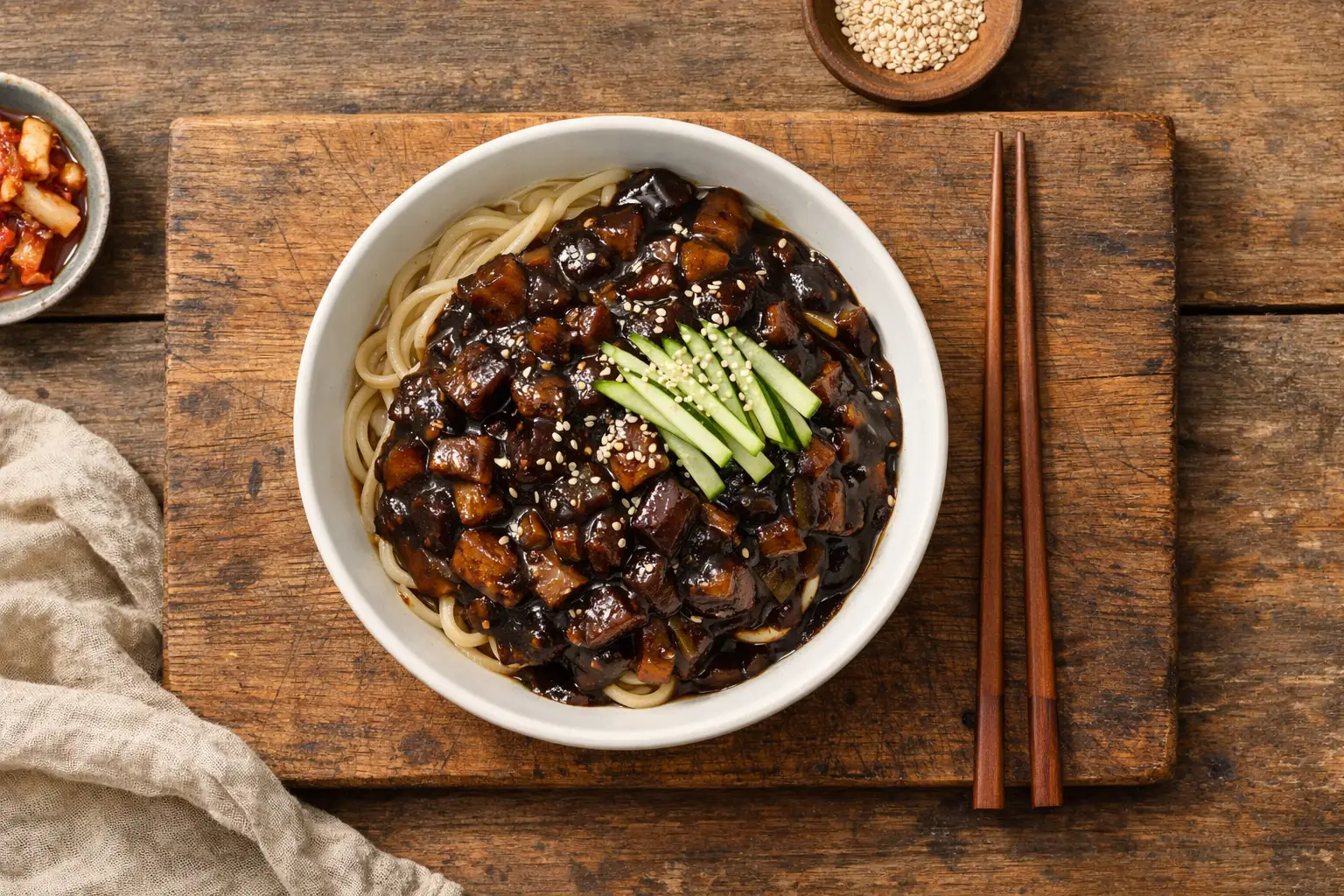
Quick Nutrition Facts
Per 1 Bowl (450g)
| Nutrient | Amount |
|---|---|
| Calories | 550 kcal |
| Protein | 18g |
| Carbohydrates | 85g |
| Fiber | 5g |
| Sugars | 8g |
| Fat | 14g |
| Saturated Fat | 3g |
| Sodium | 1200mg |
| Iron | 4.5mg |
| Calcium | 45mg |
Macronutrient Breakdown
 ChatGPT
  Claude
  AI Mode
  Perplexity
NUTRITIONIST INSIGHT
Jajangmyeon's fermented black bean paste (chunjang) contains beneficial isoflavones and probiotics from fermentation. Pair with cucumber or radish side dishes to add fiber and reduce the meal's glycemic impact.
Myth Busters
MYTH #1: Jajangmyeon Is Just Empty Calories
TRUTH: While high in carbs, jajangmyeon provides 18g protein, 5g fiber, and minerals like iron (4.5mg, 25% DV). The fermented black bean paste contains isoflavones with antioxidant properties.
MYTH #2: Black Bean Sauce Is Unhealthy
TRUTH: Chunjang is made from fermented soybeans and caramel, not just sugar. Fermented soy products have been associated with reduced chronic disease risk including cardiovascular benefits and anti-inflammatory effects.
MYTH #3: You Can't Eat Jajangmyeon on a Diet
TRUTH: Portion control is key. A half portion (275g, ~325 calories) with extra vegetables makes a satisfying meal. The protein and fiber content helps with satiety when eaten mindfully.
MYTH #4: Jajangmyeon Has No Nutritional Value
TRUTH: Beyond macros, jajangmyeon provides iron (25% DV), B vitamins from wheat noodles, and beneficial compounds from fermented legumes that support gut health.
MYTH #5: All Jajangmyeon Is The Same
TRUTH: Restaurant versions often use more oil and larger portions (700+ calories). Homemade or lighter versions can reduce calories by 30-40% while maintaining flavor.
NutriScore by Health Goals
| Health Goal | NutriScore | Why This Score? |
|---|---|---|
| Weight Loss |  | High calories (550) and carbs (85g). Limit to half portions, add vegetables, choose as occasional treat. |
| Muscle Gain |  | Good carb-to-protein ratio for post-workout recovery. 18g protein + 85g carbs replenish glycogen and support muscle repair. |
| Diabetes Management | | High glycemic load from refined wheat noodles. Pairing with protein and fiber can help moderate blood sugar response. Limit portions. |
| PCOS Management | | Refined carbs may affect insulin levels. Choose small portions rarely, pair with protein-rich sides. |
| Pregnancy Nutrition |  | Provides iron (25% DV) and protein. High sodium (1200mg) requires balance with low-sodium foods throughout the day. Monitor sodium intake during pregnancy. |
| Viral/Flu Recovery | | Easy to digest, provides quick energy and protein. The warm broth-like sauce is soothing during illness. |
PERSONALIZED NUTRITION
Track your meals with NutriScan for personalized NutriScores based on your specific health goals!
Blood Sugar Response to Jajangmyeon
Understanding how jajangmyeon affects your blood glucose can help you make informed decisions about when and how to eat it.
Typical Glucose Response Curve
*This chart shows typical blood glucose response for general healthy individuals. Individual responses may vary. Not medical advice.*
How to Flatten the Spike
Pairing high-carb meals with protein, fiber, and fat slows glucose absorption and reduces the peak blood sugar level:
- 🥒 Cucumber or radish kimchi - Adds fiber and probiotics
- 🥚 Boiled egg or steamed egg - Provides protein buffer
- 🥗 Fresh vegetable salad - Increases fiber content
- 🍖 Extra lean pork or tofu in sauce - Boosts protein to carb ratio
This combination not only reduces the glucose spike but also extends energy release, keeping you fuller for longer.
Cultural Significance
Jajangmyeon is one of Korea's most iconic comfort foods, with roots tracing back to Chinese-Korean fusion cuisine.
In Korea:
- Originated in Incheon's Chinatown in the early 1900s
- Traditional meal for "Black Day" (April 14) for singles
- Symbol of convenience and comfort food culture
- Delivery culture icon - one of the most ordered dishes in Korea
Historical Context:
- Adapted from Chinese zhajiangmian (fried sauce noodles)
- Korean version uses caramelized chunjang paste for sweeter, milder flavor
- Post-Korean War affordable comfort food
- Now a 2 trillion won annual market in South Korea
Global Spread:
- Popular in Korean restaurants worldwide
- Featured in Korean dramas, boosting international interest
- Instant jajangmyeon varieties available globally
Compare & Substitute
Jajangmyeon vs Similar Noodle Dishes (Per Serving)
| Nutrient | Jajangmyeon (450g) | Zhajiangmian (400g) | Pad Thai (350g) | Spaghetti Bolognese (400g) |
|---|---|---|---|---|
| Calories | 550 kcal | 480 kcal | 450 kcal | 520 kcal |
| Carbs | 85g | 68g | 55g | 65g |
| Fiber | 5g | 4g | 3g | 6g |
| Protein | 18g | 20g | 16g | 25g |
| Fat | 14g | 16g | 18g | 18g |
| Sodium | 1200mg | 1100mg | 900mg | 800mg |
| Best For | Comfort food, carb loading | Higher protein | Lower carbs | Higher protein, fiber |
Frequently Asked Questions
How many calories are in jajangmyeon?
A typical restaurant bowl of jajangmyeon (450g) contains 550-650 calories. Per 100g, it provides approximately 122 calories. Instant versions may vary from 450-600 calories depending on brand and preparation.
Calorie breakdown by portion:
- Half bowl (225g): ~275 calories
- Full bowl (450g): ~550 calories
- Large restaurant portion (550g): ~670 calories
Is jajangmyeon healthy?
Jajangmyeon offers both benefits and drawbacks:
Benefits:
- 18g protein per bowl supports muscle health
- 5g fiber aids digestion
- Iron content (25% DV) supports blood health
- Fermented black bean paste provides probiotics
Drawbacks:
- High sodium (1200mg, 50% DV)
- Refined wheat noodles spike blood sugar
- Moderate fat content (14g)
Best enjoyed occasionally as part of a balanced diet with vegetable sides.
Can diabetics eat jajangmyeon?
Diabetics should exercise caution with jajangmyeon due to its high carbohydrate content (85g per bowl).
Tips for diabetics:
- Choose half portions (42g carbs)
- Add protein-rich toppings (egg, extra meat)
- Include fiber-rich vegetable sides
- Avoid eating on an empty stomach
- Monitor blood sugar 2 hours after eating
What makes jajangmyeon high in sodium?
The sodium primarily comes from chunjang (fermented black bean paste) and added salt during cooking. A single bowl contains 1200mg sodium (50% of daily recommended intake).
To reduce sodium:
- Make at home with reduced-sodium soy sauce
- Request less sauce at restaurants
- Balance with low-sodium meals for rest of day
Is jajangmyeon good for muscle gain?
Yes, jajangmyeon can support muscle gain when timed correctly:
- 18g protein supports muscle protein synthesis
- 85g carbs replenish muscle glycogen post-workout
- Best consumed within 2 hours after intense training
For optimal results, add extra protein (egg, tofu, or meat) to boost the protein-to-carb ratio.
How does jajangmyeon compare to instant ramen?
| Aspect | Jajangmyeon | Instant Ramen |
|---|---|---|
| Calories | 550 kcal | 380-450 kcal |
| Protein | 18g | 8-10g |
| Sodium | 1200mg | 1500-2000mg |
| Fiber | 5g | 1-2g |
Jajangmyeon is generally more nutritious with higher protein and fiber, but both should be occasional treats.




Similar Nutritious Foods
4505 Chicharrones Classic Chili Salt
7 Eleven Japan Crispy Corn Cheese
Explore More Nutrition Tools & Resources
AI Calorie Counter App - Snap a Photo, Get Macros
AI Nutritionist App That Reads Your Logged Meals
Best Protein Supplements for Women
Bulking Meal Plan App That Sets Your Surplus
ChatGPT Calorie Counter Alternative That Keeps the Total
ChatGPT Diet Plan Alternative That Tracks What You Eat
ChatGPT Weight Loss Coach Alternative With a Food Log
Fast Food Calorie Counter App That Reads the Tray
Free Calorie Tracker App with AI Photo Scans | NutriScan
Indian Diet Plan App With Veg and Non Veg Meals
Indian Food Calorie Calculator - Get Instant Nutrition Facts for Desi Meals — 2026
Intermittent Fasting for Women, Timer and Meal Log App
Intermittent Fasting Tracker App - Free Fasting Timer
Macro Tracker App That Fills the Numbers From a Photo
Mediterranean Diet Meal Plan App That Counts the Oil
Micronutrient Tracker App for Vitamins and Minerals
MyFitnessPal Alternative That Stays Free | NutriScan
NutriScore App: A Free Grade on Every Meal | NutriScan
Nutrition Label Scanner App for the Amount You Ate
Second Trimester Protein Guide
Vegetarian Meal Plan App With a Protein Target
Voice Calorie Counter - Speak to Track Meals Hands-Free
Water and Calorie Tracker App - Free Water Log