Japchae: Calories, Nutrition and Health Benefits
Korea's beloved stir-fried glass noodles with colorful vegetables, offering a naturally gluten-free dish with low glycemic impact and balanced nutrition.
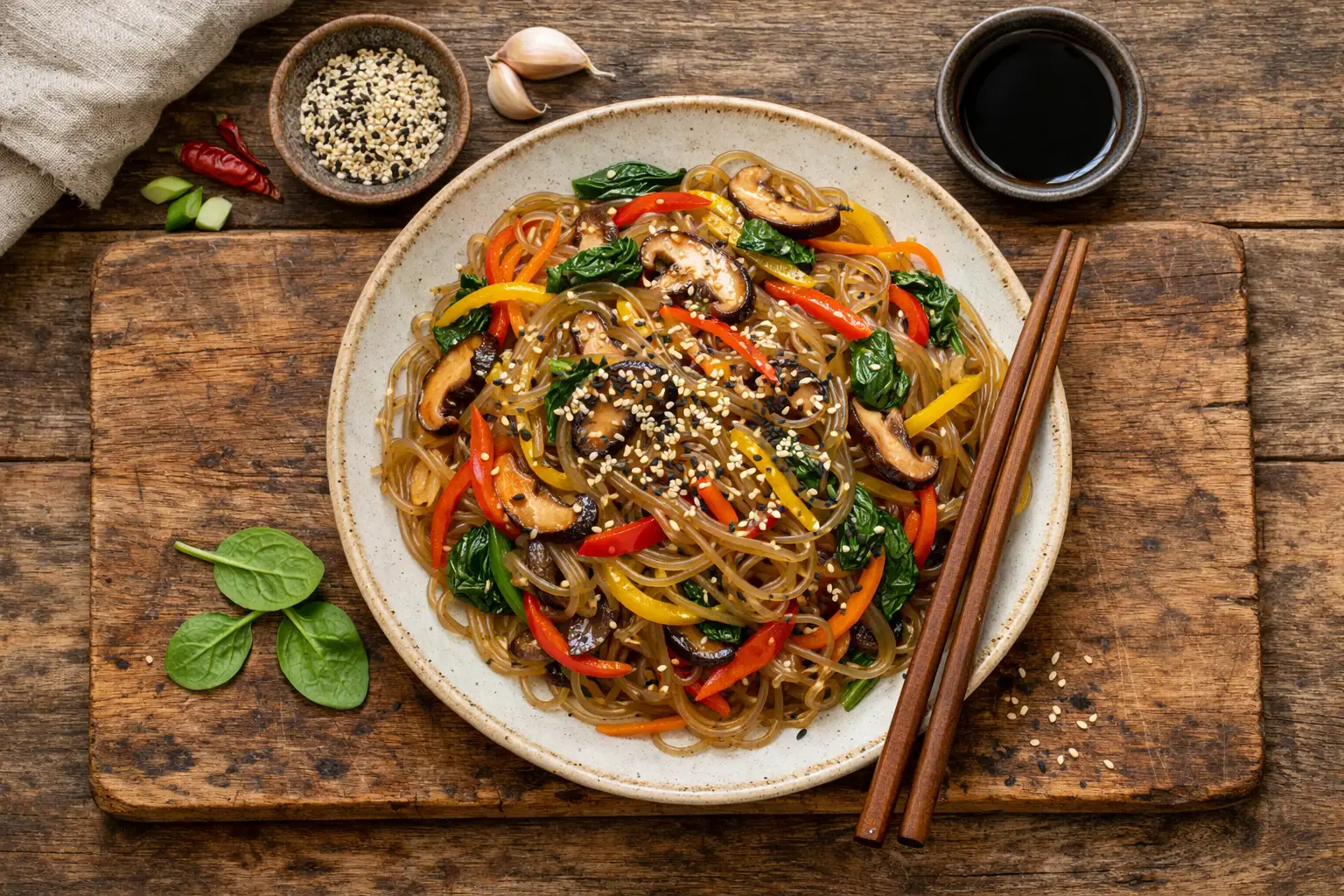
Quick Nutrition Facts
Per 1 Serving (200g)
| Nutrient | Amount |
|---|---|
| Calories | 320 kcal |
| Protein | 8g |
| Carbohydrates | 50g |
| Fiber | 3g |
| Sugars | 8g |
| Fat | 10g |
| Sodium | 680mg |
| Iron | 2.5mg |
| Vitamin A | 180mcg |
| Potassium | 320mg |
Macronutrient Breakdown
 ChatGPT
  Claude
  AI Mode
  Perplexity
NUTRITIONIST INSIGHT
Japchae's sweet potato noodles (dangmyeon) have one of the lowest glycemic indices among Asian noodles at just 28, making them an excellent choice for blood sugar management. The colorful vegetables add antioxidants and fiber without significant calories.
Myth Busters
MYTH #1: Glass Noodles Are Empty Calories
TRUTH: While dangmyeon noodles are primarily starch, japchae as a dish includes spinach (iron), carrots (vitamin A), mushrooms (B vitamins), and sesame oil (healthy fats). The low glycemic index means sustained energy release rather than blood sugar spikes.
MYTH #2: Japchae Is Too High in Carbs for Diabetics
TRUTH: Sweet potato starch noodles have a remarkably low GI of 28 and GL of 7, the lowest among tested starchy foods. This means slower glucose absorption and more stable blood sugar compared to rice or wheat noodles.
MYTH #3: Japchae Is Unhealthy Because It's Fried
TRUTH: Japchae is stir-fried briefly in sesame oil, not deep-fried. A typical serving contains only 10g fat, mostly from heart-healthy sesame oil rich in polyunsaturated fatty acids and antioxidants like sesamin.
MYTH #4: All Glass Noodles Are the Same
TRUTH: Korean dangmyeon (sweet potato starch) differs from mung bean vermicelli or rice noodles. Sweet potato noodles have a chewier texture and contain more resistant starch, which benefits gut health and blood sugar control.
MYTH #5: Japchae Is Not Filling
TRUTH: The combination of complex carbs, protein (from meat/tofu), fiber (from vegetables), and fat (from sesame oil) creates a satisfying meal. The low GI ensures you stay fuller longer without energy crashes.
NutriScore by Health Goals
| Health Goal | NutriScore | Why This Score? |
|---|---|---|
| Weight Loss |  | 320 calories per serving with 3g fiber. Low GI prevents overeating. Control portions and increase vegetable ratio. |
| Muscle Gain | | Good post-workout carbs (50g) for glycogen replenishment. Add extra beef or tofu for protein boost. |
| Diabetes Management | | Excellent choice - GI 28 is among the lowest for noodle dishes. Monitor sodium if hypertensive. |
| PCOS Management | | Low glycemic impact supports insulin sensitivity. Reduce added sugar in sauce for best results. |
| Pregnancy Nutrition | | Iron from spinach supports blood production. Folate from vegetables aids fetal development. Watch sodium intake. |
| Viral/Flu Recovery |  | Easy to digest, provides quick energy, vegetables offer immune-supporting nutrients. Warm and comforting. |
PERSONALIZED NUTRITION
Track your meals with NutriScan for personalized NutriScores based on your specific health goals!
Blood Sugar Response to Japchae
Understanding how japchae affects your blood glucose helps you make informed decisions about when and how to enjoy this Korean classic.
Typical Glucose Response Curve
This chart shows typical blood glucose response for general healthy individuals. Individual responses may vary. Not medical advice.
How to Flatten the Spike
Pairing carbohydrates with protein or healthy fat slows glucose absorption and reduces the peak blood sugar level:
- 🥩 Add lean beef or chicken - Increases protein content significantly
- 🥚 Top with a fried egg - Adds protein and healthy fats
- 🌰 Extra sesame seeds - Provides fiber and healthy fats
- 🥬 Double the spinach and vegetables - Increases fiber, reduces carb density
This combination not only reduces the glucose spike but also extends energy release, keeping you fuller for longer.
Cultural Significance
Japchae has been a cherished dish in Korean cuisine for over 400 years, originally created for royal court banquets.
In Korea:
- Served at celebrations, weddings, and holidays like Chuseok and Seollal
- Symbol of prosperity and festivity - the long noodles represent longevity
- Originally a vegetable dish; noodles were added later in the 20th century
- Each region has variations with local vegetables and proteins
Global Recognition:
- Recognized as one of Korea's representative dishes by Korean government
- Popular banchan (side dish) in Korean restaurants worldwide
- Growing interest from health-conscious consumers for its gluten-free base
- Featured in Korean dramas and K-pop culture, increasing global popularity
Compare & Substitute
Japchae vs Similar Noodle Dishes (Per Serving)
| Nutrient | 🍜 Japchae | 🍜 Pad Thai | 🍜 Lo Mein | 🍜 Pho |
|---|---|---|---|---|
| Calories | 320 kcal | 450 kcal | 400 kcal | 350 kcal |
| Carbs | 50g | 55g | 52g | 45g |
| Fiber | 3g | 2g | 2g | 1g |
| Protein | 8g | 15g | 12g | 25g |
| Fat | 10g | 18g | 15g | 8g |
| Sodium | 680mg | 850mg | 1200mg | 1500mg |
| GI | Low (28) | Medium (46) | High (62) | Medium (52) |
| Best For | Blood sugar control, gluten-free | Higher protein needs | Quick energy | Low-fat, high-protein |
Frequently Asked Questions
Is japchae good for weight loss?
Yes, japchae can support weight loss when eaten mindfully. At 320 calories per serving with a low glycemic index of 28, it provides sustained energy without blood sugar spikes that trigger hunger.
Best practices: Limit to 1 serving, double the vegetables, choose lean protein (chicken or tofu over beef), and reduce oil/sugar in the sauce.
Can diabetics eat japchae?
Japchae is one of the better noodle options for diabetics. The sweet potato starch noodles have a GI of just 28 and GL of 7, significantly lower than rice (GI 73) or wheat noodles (GI 62).
Tips for diabetics:
- Control portion to 150-200g
- Load up on vegetables (spinach, carrots, mushrooms)
- Reduce or eliminate added sugar in the sauce
- Monitor blood sugar 2 hours after eating
Always consult your healthcare provider for personalized advice.
Is japchae gluten-free?
The noodles (dangmyeon) are naturally gluten-free, made from pure sweet potato starch. However, traditional soy sauce contains wheat.
For celiac or gluten sensitivity:
- Use tamari or certified gluten-free soy sauce
- Verify all ingredients (some prepared versions add wheat-based sauces)
- When eating out, confirm the restaurant uses gluten-free soy sauce
How many calories are in japchae?
A standard serving (200g) contains approximately 320 calories. This can vary significantly based on preparation:
- Light version (more vegetables, less oil): 250-280 kcal
- Standard restaurant version: 300-350 kcal
- With extra beef or meat: 380-450 kcal
- Takeout/restaurant large portion: 450-550 kcal
What makes japchae healthier than other noodle dishes?
Key advantages:
- Low Glycemic Index: GI 28 vs 46-62 for other noodles
- Naturally Gluten-Free: No wheat flour
- Vegetable-Rich: Typically 40% vegetables by volume
- Heart-Healthy Fat: Sesame oil provides beneficial fatty acids
- Lower Sodium: 680mg vs 1000-1500mg in many Asian noodles
When is the best time to eat japchae?
Depends on your goal:
- Weight Loss: Lunch (main meal) or early dinner. Avoid late night.
- Muscle Gain: Post-workout (within 2 hours) to replenish glycogen.
- Diabetes: Mid-day meal when insulin sensitivity is typically highest.
- Energy: 2-3 hours before activity for sustained energy.
IMPORTANT NOTE
High sodium content (680mg) means those with hypertension should limit portions and pair with potassium-rich foods.
Can I make japchae healthier?
Absolutely! Try these modifications:
- Reduce calories: Use less oil (1 tbsp vs 3 tbsp), more vegetables
- Increase protein: Add egg, extra beef, or tofu
- Lower sodium: Use low-sodium soy sauce, reduce sauce amount
- Add fiber: Include more mushrooms and spinach
- Cut sugar: Omit or halve the sugar in the sauce
Track your modifications with NutriScan app to see the nutritional impact.


Similar Nutritious Foods
4505 Chicharrones Classic Chili Salt
7 Eleven Japan Crispy Corn Cheese
Explore More Nutrition Tools & Resources
AI Calorie Counter App - Snap a Photo, Get Macros
AI Nutritionist App That Reads Your Logged Meals
Best Protein Supplements for Women
Bulking Meal Plan App That Sets Your Surplus
ChatGPT Calorie Counter Alternative That Keeps the Total
ChatGPT Diet Plan Alternative That Tracks What You Eat
ChatGPT Weight Loss Coach Alternative With a Food Log
Fast Food Calorie Counter App That Reads the Tray
Free Calorie Tracker App with AI Photo Scans | NutriScan
Indian Diet Plan App With Veg and Non Veg Meals
Indian Food Calorie Calculator - Get Instant Nutrition Facts for Desi Meals — 2026
Intermittent Fasting for Women, Timer and Meal Log App
Intermittent Fasting Tracker App - Free Fasting Timer
Macro Tracker App That Fills the Numbers From a Photo
Mediterranean Diet Meal Plan App That Counts the Oil
Micronutrient Tracker App for Vitamins and Minerals
MyFitnessPal Alternative That Stays Free | NutriScan
NutriScore App: A Free Grade on Every Meal | NutriScan
Nutrition Label Scanner App for the Amount You Ate
Second Trimester Protein Guide
Vegetarian Meal Plan App With a Protein Target
Voice Calorie Counter - Speak to Track Meals Hands-Free
Water and Calorie Tracker App - Free Water Log