Jerk Chicken: Calories, Nutrition and Health Benefits
Jamaica's iconic spicy grilled chicken packed with 48g protein, metabolism-boosting capsaicin, and bold Caribbean flavors.
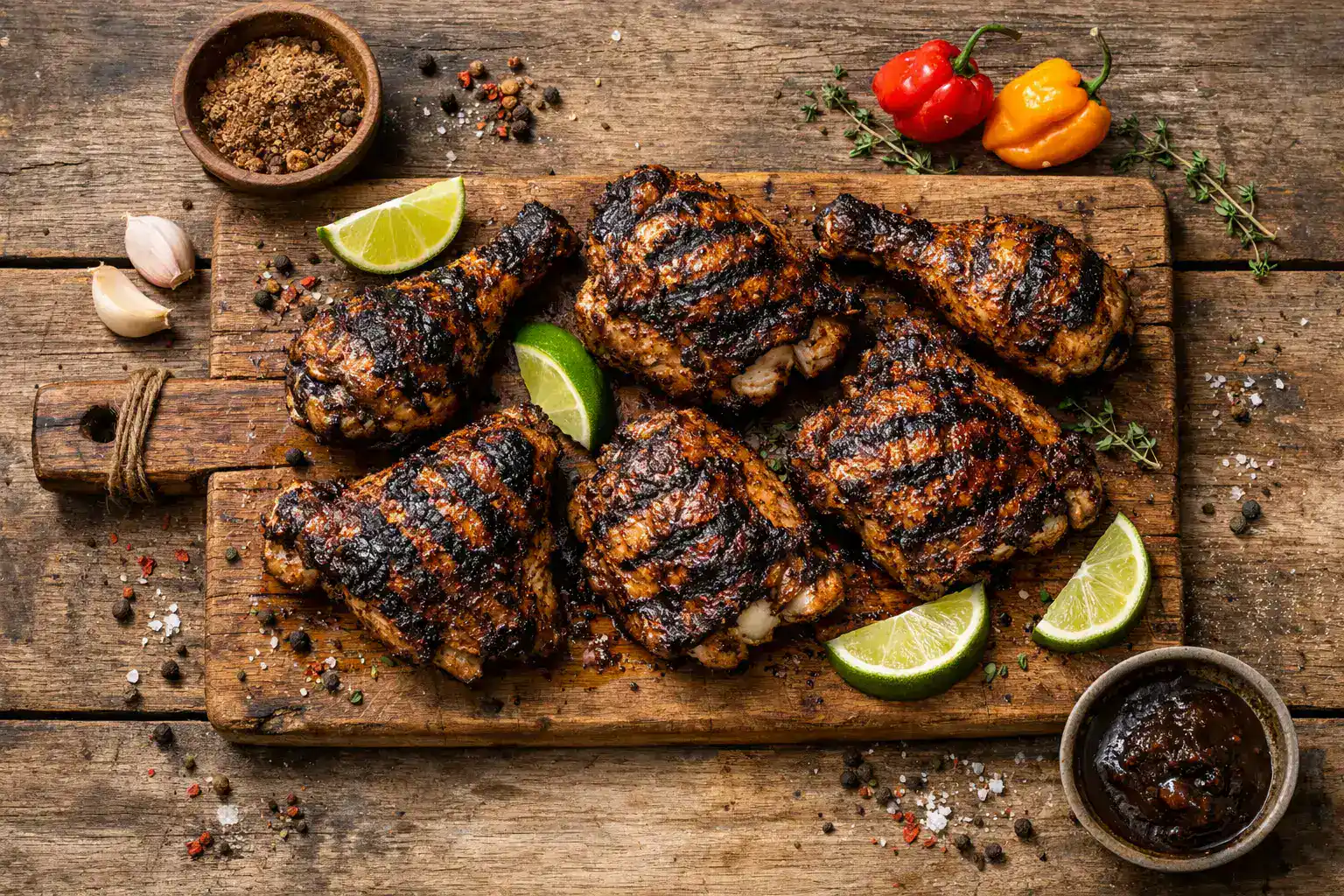
Quick Nutrition Facts
Per 1 Serving (150g grilled)
| Nutrient | Amount |
|---|---|
| Calories | 310 kcal |
| Protein | 48g |
| Carbohydrates | 3g |
| Fiber | 1g |
| Sugars | 1g |
| Fat | 11g |
| Saturated Fat | 3g |
| Sodium | 580mg |
| Iron | 2.1mg |
| Vitamin B6 | 0.9mg |
Macronutrient Breakdown
 ChatGPT
  Claude
  AI Mode
  Perplexity
NUTRITIONIST INSIGHT
Jerk chicken delivers 48g protein per serving with only 3g carbs—ideal for low-carb and keto diets. The scotch bonnet peppers contain capsaicin, which research shows has anti-inflammatory and metabolism-boosting properties.
Myth Busters
MYTH #1: Jerk Chicken Is Unhealthy Because It's Spicy
TRUTH: The spiciness comes from capsaicin in scotch bonnet peppers, which studies show has anti-inflammatory, antioxidant, and metabolism-boosting effects. Spicy foods don't damage the stomach lining in healthy individuals.
MYTH #2: Jerk Chicken Is High in Carbs
TRUTH: Traditional jerk chicken contains only 3g carbs per serving. The marinade uses spices, not sugars. Watch for commercial sauces with added sugar, but authentic jerk relies on allspice, thyme, and peppers.
MYTH #3: The Sodium Content Makes It Dangerous
TRUTH: At 580mg per serving, jerk chicken has moderate sodium. This is about 25% of daily value—comparable to many restaurant dishes. Adding chicken to meals actually helps moderate glycemic response and provides sustained energy.
MYTH #4: Jerk Chicken Causes Heartburn
TRUTH: While spicy foods can trigger symptoms in those with existing GERD, capsaicin doesn't cause stomach ulcers or damage. For most people, jerk chicken is well-tolerated and the capsaicin may even have gastroprotective effects.
MYTH #5: You Can't Eat Jerk Chicken on a Diet
TRUTH: With 310 calories and 48g protein, jerk chicken is excellent for weight loss. High-protein foods increase satiety and help preserve muscle during calorie restriction. Remove the skin for even fewer calories.
NutriScore by Health Goals
| Health Goal | NutriScore | Why This Score? |
|---|---|---|
| Weight Loss |  | Only 310 calories with 48g protein. High satiety, minimal carbs, capsaicin may boost metabolism. |
| Muscle Gain | | 48g complete protein per serving covers 85% daily needs. Ideal post-workout with rice or plantains. |
| Diabetes Management | | Only 3g carbs, virtually no blood sugar impact. Protein slows glucose absorption from accompanying foods. |
| PCOS Management | | Low-carb, high-protein profile supports insulin sensitivity. Anti-inflammatory capsaicin may help. |
| Pregnancy Nutrition |  | Chicken provides essential protein, iron, and B vitamins for fetal development. Reduce spice level if heartburn occurs. |
| Viral/Flu Recovery | | High protein supports immune function. Capsaicin clears congestion. Easy to digest when appetite is low. |
PERSONALIZED NUTRITION
Track your meals with NutriScan for personalized NutriScores based on your specific health goals!
Blood Sugar Response to Jerk Chicken
Jerk chicken has minimal impact on blood glucose due to its high protein and low carbohydrate content.
Typical Glucose Response Curve
This chart shows typical blood glucose response for general healthy individuals. Individual responses may vary. Not medical advice.
How to Maintain Stable Blood Sugar
Adding protein like chicken to carbohydrate-rich meals significantly reduces glycemic response:
- 🍚 Pair with rice and peas - The protein moderates the rice's glycemic impact
- 🥬 Add callaloo or vegetables - Fiber further flattens the glucose curve
- 🍌 Choose green plantains - Lower GI than ripe plantains
- ⏰ Eat protein first - Starting with chicken before carbs reduces spikes
This combination provides sustained energy without the blood sugar rollercoaster.
Cultural Significance
Jerk chicken is Jamaica's national dish and one of the Caribbean's most recognized culinary exports.
Origins & History:
- Developed by the Maroons (escaped African slaves) in Jamaica's Blue Mountains
- "Jerk" refers to the technique of poking meat to allow marinade penetration
- Originally cooked in earth pits over pimento (allspice) wood
- The method preserved meat in tropical heat before refrigeration
Traditional Preparation:
- Authentic jerk uses scotch bonnet peppers, allspice, thyme, garlic, and ginger
- Marinated 12-24 hours for flavor penetration
- Slow-smoked over pimento wood for distinctive flavor
- Served with rice and peas, festival bread, or bammy
Global Influence:
- Boston Bay, Jamaica is considered the birthplace of jerk
- Now popular worldwide in Caribbean diaspora communities
- Adapted versions found in London, New York, Toronto, and beyond
- Jerk seasoning now applied to pork, fish, shrimp, and vegetables
Compare & Substitute
Jerk Chicken vs Similar Protein Dishes (Per 150g Serving)
| Nutrient | 🍗 Jerk Chicken | 🍗 Grilled Chicken | 🍗 Tandoori Chicken | 🍖 Grilled Pork |
|---|---|---|---|---|
| Calories | 310 kcal | 248 kcal | 290 kcal | 340 kcal |
| Protein | 48g | 46g | 42g | 40g |
| Carbs | 3g | 0g | 5g | 0g |
| Fat | 11g | 5g | 12g | 18g |
| Sodium | 580mg | 120mg | 650mg | 450mg |
| Best For | Flavor + protein, low-carb | Lowest calories, plain base | Indian spiced, similar protein | Higher fat, different flavor |
Frequently Asked Questions
Is jerk chicken good for weight loss?
Yes, jerk chicken is excellent for weight loss with 310 calories and 48g protein per serving. The high protein content promotes satiety, helping you feel full longer. Capsaicin from scotch bonnet peppers may slightly boost metabolism.
Tips for weight loss: Choose breast meat, remove skin before eating, grill rather than fry, and pair with vegetables instead of rice.
Can diabetics eat jerk chicken?
Jerk chicken is very diabetes-friendly with only 3g carbs per serving. It has minimal impact on blood sugar levels.
Tips for diabetics:
- Avoid sweet jerk marinades with added sugar
- Check restaurant versions for hidden sugars
- Pair with non-starchy vegetables
- The protein helps moderate blood sugar from side dishes
Traditional jerk seasoning uses spices, not sugar, making authentic preparations ideal for blood sugar management.
How much protein is in jerk chicken?
A 150g serving of jerk chicken provides 48g of protein—approximately 85% of the daily recommended intake for most adults. This makes it one of the highest-protein dishes in Caribbean cuisine.
For muscle building, pair with complex carbs like rice and peas within 30 minutes post-workout.
What are the main health benefits of jerk chicken?
Key Benefits:
- High-Quality Protein: 48g complete protein supports muscle building and repair
- Anti-Inflammatory Capsaicin: Scotch bonnet peppers contain compounds that reduce inflammation
- Metabolism Support: Capsaicin may increase calorie burning
- B Vitamins: Essential for energy metabolism and nervous system function
- Iron: Supports oxygen transport and prevents anemia
- Low Carb: Ideal for keto, low-carb, and diabetic diets
Is jerk chicken spicy? Can I reduce the heat?
Traditional jerk chicken is very spicy—scotch bonnet peppers rate 100,000-350,000 on the Scoville scale.
To reduce heat:
- Use fewer scotch bonnets or substitute milder peppers
- Remove pepper seeds and membranes (where most capsaicin concentrates)
- Marinate for shorter time
- Serve with cooling sides like coleslaw or yogurt
The health benefits of capsaicin are dose-dependent, so even mild jerk provides some benefits.
What's the best way to cook jerk chicken?
Authentic method: Marinate 12-24 hours, then grill over charcoal with soaked pimento wood chips for smoky flavor.
Home alternatives:
- Oven: 375°F for 45-50 minutes, broil last 5 minutes for char
- Grill: Medium-high heat, 6-8 minutes per side
- Air fryer: 380°F for 20-25 minutes, flip halfway
Always ensure internal temperature reaches 165°F (74°C) for food safety.


Similar Nutritious Foods
4505 Chicharrones Classic Chili Salt
7 Eleven Japan Crispy Corn Cheese
Explore More Nutrition Tools & Resources
AI Calorie Counter App - Snap a Photo, Get Macros
AI Nutritionist App That Reads Your Logged Meals
Best Protein Supplements for Women
Bulking Meal Plan App That Sets Your Surplus
ChatGPT Calorie Counter Alternative That Keeps the Total
ChatGPT Diet Plan Alternative That Tracks What You Eat
ChatGPT Weight Loss Coach Alternative With a Food Log
Fast Food Calorie Counter App That Reads the Tray
Free Calorie Tracker App with AI Photo Scans | NutriScan
Indian Diet Plan App With Veg and Non Veg Meals
Indian Food Calorie Calculator - Get Instant Nutrition Facts for Desi Meals — 2026
Intermittent Fasting for Women, Timer and Meal Log App
Intermittent Fasting Tracker App - Free Fasting Timer
Macro Tracker App That Fills the Numbers From a Photo
Mediterranean Diet Meal Plan App That Counts the Oil
Micronutrient Tracker App for Vitamins and Minerals
MyFitnessPal Alternative That Stays Free | NutriScan
NutriScore App: A Free Grade on Every Meal | NutriScan
Nutrition Label Scanner App for the Amount You Ate
Second Trimester Protein Guide
Vegetarian Meal Plan App With a Protein Target
Voice Calorie Counter - Speak to Track Meals Hands-Free
Water and Calorie Tracker App - Free Water Log