Jollof Rice (West African): Calories, Nutrition and Health Benefits
West Africa's iconic one-pot rice dish bursting with tomato, peppers, and aromatic spices—a celebration on every plate.
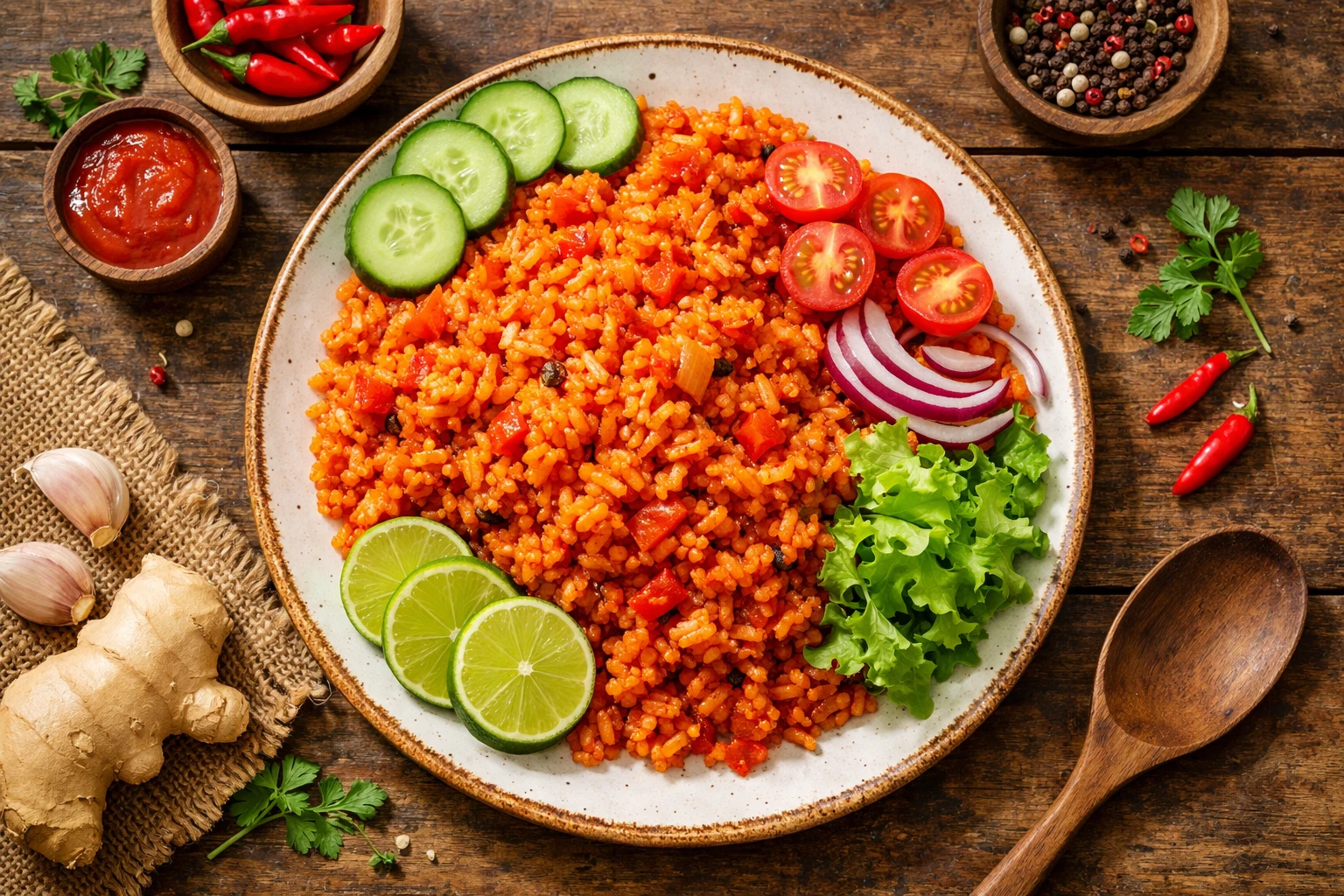
Quick Nutrition Facts
Per 1 Serving (250g)
| Nutrient | Amount |
|---|---|
| Calories | 320 kcal |
| Protein | 8g |
| Carbohydrates | 55g |
| Fiber | 3g |
| Sugars | 6g |
| Fat | 8g |
| Vitamin C | 22mg |
| Vitamin A | 680mcg |
| Iron | 1.8mg |
| Potassium | 320mg |
Macronutrient Breakdown
 ChatGPT
  Claude
  AI Mode
  Perplexity
NUTRITIONIST INSIGHT
Jollof rice gets its vibrant red color from tomatoes and red bell peppers, providing lycopene—a powerful antioxidant linked to heart health. The traditional spice blend adds flavor without extra sodium.
Myth Busters
MYTH #1: Jollof Rice Is Too High in Calories for Weight Loss
TRUTH: One serving of jollof rice has 320 calories, which is moderate for a complete meal. Portion control and preparation method determine whether it fits weight loss goals. Use less oil (reduce from 3-4 tbsp to 1 tbsp per pot), add vegetables, and limit portions to 200g to cut 80-100 calories per serving.
MYTH #2: All Jollof Rice Recipes Are the Same
TRUTH: Nigerian, Ghanaian, Senegalese, and Liberian jollof each have unique flavors, cooking techniques, and spice blends. Nigerian jollof often has a smokier flavor from "party rice" technique; Ghanaian jollof uses more tomato paste; Senegalese thieboudienne includes fish. Nutrition varies by recipe—traditional versions with chicken or fish provide more protein.
MYTH #3: The Oil Makes Jollof Unhealthy
TRUTH: While traditional recipes use 3-4 tablespoons of oil per pot (4-6 servings), you can reduce this significantly. Oil carries flavor from spices and prevents sticking, but 2 tablespoons of olive oil provides heart-healthy monounsaturated fats without excessive calories. Use non-stick pots and spray oil to reduce fat further.
MYTH #4: Brown Rice Jollof Isn't Authentic
TRUTH: While traditional jollof uses long-grain white rice, brown rice versions provide more fiber (4g vs 1g) and nutrients with similar flavor. The key is adjusting cooking time and liquid ratios. Brown rice jollof offers better blood sugar control and sustained energy, making it healthier for diabetes and weight management.
MYTH #5: Jollof Rice Has No Nutritional Value
TRUTH: Jollof rice is rich in vitamin C from tomatoes and peppers (22mg per serving), vitamin A from red peppers (680mcg), and lycopene—a powerful antioxidant. The tomato-based sauce provides anti-inflammatory compounds. When paired with protein and vegetables, it's a balanced, nutrient-dense meal.
NutriScore by Health Goals
| Health Goal | NutriScore | Why This Score? |
|---|---|---|
| Weight Loss |  | 320 calories moderate for main meal. Reduce oil, limit to 200g portions, add vegetables and lean protein for volume. |
| Muscle Gain |  | Good carb source (55g) for post-workout recovery. Add 150g chicken or fish for complete meal with 35-40g total protein. |
| Diabetes Management | | High GI from white rice. Use brown rice, limit to 150-200g portions, pair with protein and vegetables, monitor blood sugar. |
| PCOS Management | | High refined carbs affect insulin sensitivity. Use brown rice, limit to 1/2 serving, add protein and vegetables to balance. |
| Pregnancy Nutrition | | Provides vitamin A (680mcg) for fetal eye development, vitamin C, and iron. Add protein for complete nutrition. |
| Heart Health | | Lycopene from tomatoes supports cardiovascular health. Use olive oil instead of vegetable oil, reduce sodium from bouillon cubes. |
PERSONALIZED NUTRITION
Track your meals with NutriScan for personalized NutriScores based on your specific health goals!
Blood Sugar Response to Jollof Rice
Understanding how jollof rice affects your blood glucose helps you enjoy this flavorful dish while managing energy levels.
Typical Glucose Response Curve
This chart shows typical blood glucose response for general healthy individuals. Individual responses may vary. Not medical advice.
How to Flatten the Spike
Pairing jollof rice with protein and vegetables slows glucose absorption and reduces the peak blood sugar level:
- 🍗 Grilled or fried chicken - Traditional West African pairing, adds 25-30g protein
- 🐟 Fried fish or grilled tilapia - Coastal variation, omega-3 rich
- 🥗 Coleslaw or garden salad - Common side dish, adds fiber and volume
- 🥚 Hard-boiled eggs - Simple protein addition
This combination provides balanced macros and extends energy release for 3-4 hours.
Cultural Significance
Jollof rice is one of West Africa's most beloved and debated dishes, with each country claiming the best version.
In West Africa:
- Originated from the Wolof people of Senegal; "thieboudienne" is considered the ancestor
- National dish of multiple countries: Nigeria, Ghana, Senegal, Liberia, Sierra Leone
- Center of friendly rivalry—the "Jollof Wars" debate which country makes it best
- Essential at weddings, parties, celebrations—no event is complete without jollof
- Regional variations reflect local spices, cooking techniques, and protein pairings
Global Impact:
- Growing popularity in African diaspora communities worldwide
- Featured in international food festivals and African restaurants globally
- Symbol of West African culinary identity and cultural pride
- UNESCO recognized Senegalese thieboudienne as Intangible Cultural Heritage (2021)
- Social media phenomenon—#JollofWars trends regularly on Twitter
Compare & Substitute
Jollof Rice vs Similar Rice Dishes (Per 100g)
| Nutrient | 🍛 Jollof Rice (West African) | 🥘 Spanish Paella | 🍛 Biryani (Indian) | 🍚 Fried Rice (Chinese) |
|---|---|---|---|---|
| Calories | 128 kcal | 150 kcal | 170 kcal | 140 kcal |
| Carbs | 22g | 18g | 25g | 20g |
| Fiber | 1.2g | 1.5g | 1.0g | 0.8g |
| Protein | 3.2g | 8g | 6g | 4g |
| Fat | 3.2g | 6g | 7g | 5g |
| Vitamin C | 8.8mg | 12mg | 2mg | 3mg |
| Best For | Tomato flavor, vitamin A | Seafood lovers, higher protein | Aromatic spices, layered flavors | Quick meal, versatile |
Frequently Asked Questions
Is jollof rice good for weight loss?
Jollof rice can be enjoyed during weight loss with portion control and recipe modifications. One serving (250g) has 320 calories, which is moderate for a main meal but high if you're eating multiple servings.
Best practices: Reduce oil content from 4 tablespoons to 1-2 per pot; use 200g portions instead of 250g (saves 100 calories); add grilled chicken and large salad to increase volume and protein; choose brown rice for more fiber; eat for lunch when you need sustained energy; avoid fried plantains and other high-calorie sides.
Can diabetics eat jollof rice?
Diabetics can eat jollof rice in small portions with careful monitoring, but white rice has a high glycemic index (GI 73) that can spike blood sugar. The tomatoes and peppers add beneficial nutrients but don't significantly lower the glycemic impact.
Tips for diabetics:
- Use brown rice or mix 50% brown with 50% white rice
- Limit portions to 150-200g (smaller than standard serving)
- Pair with grilled chicken or fish (protein slows glucose absorption)
- Add non-starchy vegetables (cabbage, green beans, salad)
- Monitor blood sugar 2 hours after eating
- Best timing: lunch, not dinner or on empty stomach
Consult your healthcare provider before adding to your meal plan.
How much protein is in jollof rice?
One serving of jollof rice (250g) contains 8g of protein from the rice and tomato base. This is low for a complete meal, which is why jollof is traditionally served with protein-rich accompaniments.
To increase protein: Add 150g grilled chicken (adds 35g protein for 43g total); pair with fried fish or grilled tilapia (adds 25-30g protein); serve with boiled eggs (adds 12g protein per 2 eggs); add beans or chickpeas to the rice during cooking (traditional in some regions, adds 7-8g protein per cup).
What are the main health benefits of jollof rice?
Key Benefits:
- Lycopene from Tomatoes: Powerful antioxidant linked to heart health and reduced cancer risk
- Vitamin C: 22mg per serving (24% DV) supports immune function and iron absorption
- Vitamin A: 680mcg from red bell peppers supports eye health and immune function
- Complex Carbohydrates: Provides sustained energy for 3-4 hours
- Gluten-Free: Naturally safe for celiac disease and gluten sensitivity
- Anti-Inflammatory Compounds: Tomatoes, onions, and peppers contain beneficial phytonutrients
When prepared with less oil and paired with vegetables and lean protein, jollof rice is a nutritious, balanced meal.
What is the difference between Nigerian and Ghanaian jollof?
The friendly "Jollof Wars" debate centers on cooking technique, rice type, and flavor profile—both versions are delicious and nutritionally similar (within 20-30 calories per serving).
Nigerian Jollof:
- Uses long-grain parboiled rice; rice is firmer with distinct grains
- "Party rice" technique creates smoky flavor by allowing bottom to char slightly
- More pepper and spice (Scotch bonnet peppers, cayenne)
- Often cooked in large pots for celebrations, creating the prized "bottom of the pot" crispy layer
Ghanaian Jollof:
- Uses basmati rice for fluffier texture
- More tomato paste for deeper red color and richer tomato flavor
- Slightly sweeter flavor profile
- Cooked slowly with less stirring for softer, more integrated grains
Both versions use similar base ingredients (tomatoes, onions, peppers, stock, spices) and have comparable nutrition when prepared traditionally.
Is jollof rice healthy?
Jollof rice can be healthy when prepared thoughtfully and paired with nutritious accompaniments. The tomato-based sauce provides vitamins and antioxidants, but the refined white rice and oil content require moderation.
To make jollof healthier: Use brown rice for 3g more fiber per serving; reduce oil from 4 tablespoons to 1-2 per pot (saves 15-30g fat); replace 1-2 bouillon cubes with homemade stock or low-sodium broth; add vegetables like carrots, peas, green beans during cooking; serve with grilled lean protein instead of fried chicken; control portion sizes to 200-250g.
Health impact depends on preparation method, portion size, and what you pair it with. Traditional jollof with grilled chicken and salad is more balanced than jollof alone with fried sides.
How many servings of jollof rice should I eat?
General Guidelines:
- 1 serving (250g) - Most people for a complete meal with protein and vegetables (320 calories)
- Smaller portion (150-200g) - Weight loss, diabetes, or sedentary lifestyle; balance with large salad and lean protein
- Larger portion (300-350g) - Athletes, muscle gain, high-calorie needs; add protein source for balanced macros
Avoid excess: More than 1 serving per day provides too many refined carbs and calories for most people. Jollof is calorie-dense—easy to overeat at parties where it's served buffet-style. Use a measuring cup or plate portion guide to control serving size.
Track your meals with NutriScan app to see how jollof rice fits your personal nutrition goals.


Similar Nutritious Foods
4505 Chicharrones Classic Chili Salt
7 Eleven Japan Crispy Corn Cheese
Explore More Nutrition Tools & Resources
AI Calorie Counter App - Snap a Photo, Get Macros
AI Nutritionist App That Reads Your Logged Meals
Best Protein Supplements for Women
Bulking Meal Plan App That Sets Your Surplus
ChatGPT Calorie Counter Alternative That Keeps the Total
ChatGPT Diet Plan Alternative That Tracks What You Eat
ChatGPT Weight Loss Coach Alternative With a Food Log
Fast Food Calorie Counter App That Reads the Tray
Free Calorie Tracker App with AI Photo Scans | NutriScan
Indian Diet Plan App With Veg and Non Veg Meals
Indian Food Calorie Calculator - Get Instant Nutrition Facts for Desi Meals — 2026
Intermittent Fasting for Women, Timer and Meal Log App
Intermittent Fasting Tracker App - Free Fasting Timer
Macro Tracker App That Fills the Numbers From a Photo
Mediterranean Diet Meal Plan App That Counts the Oil
Micronutrient Tracker App for Vitamins and Minerals
MyFitnessPal Alternative That Stays Free | NutriScan
NutriScore App: A Free Grade on Every Meal | NutriScan
Nutrition Label Scanner App for the Amount You Ate
Second Trimester Protein Guide
Vegetarian Meal Plan App With a Protein Target
Voice Calorie Counter - Speak to Track Meals Hands-Free
Water and Calorie Tracker App - Free Water Log