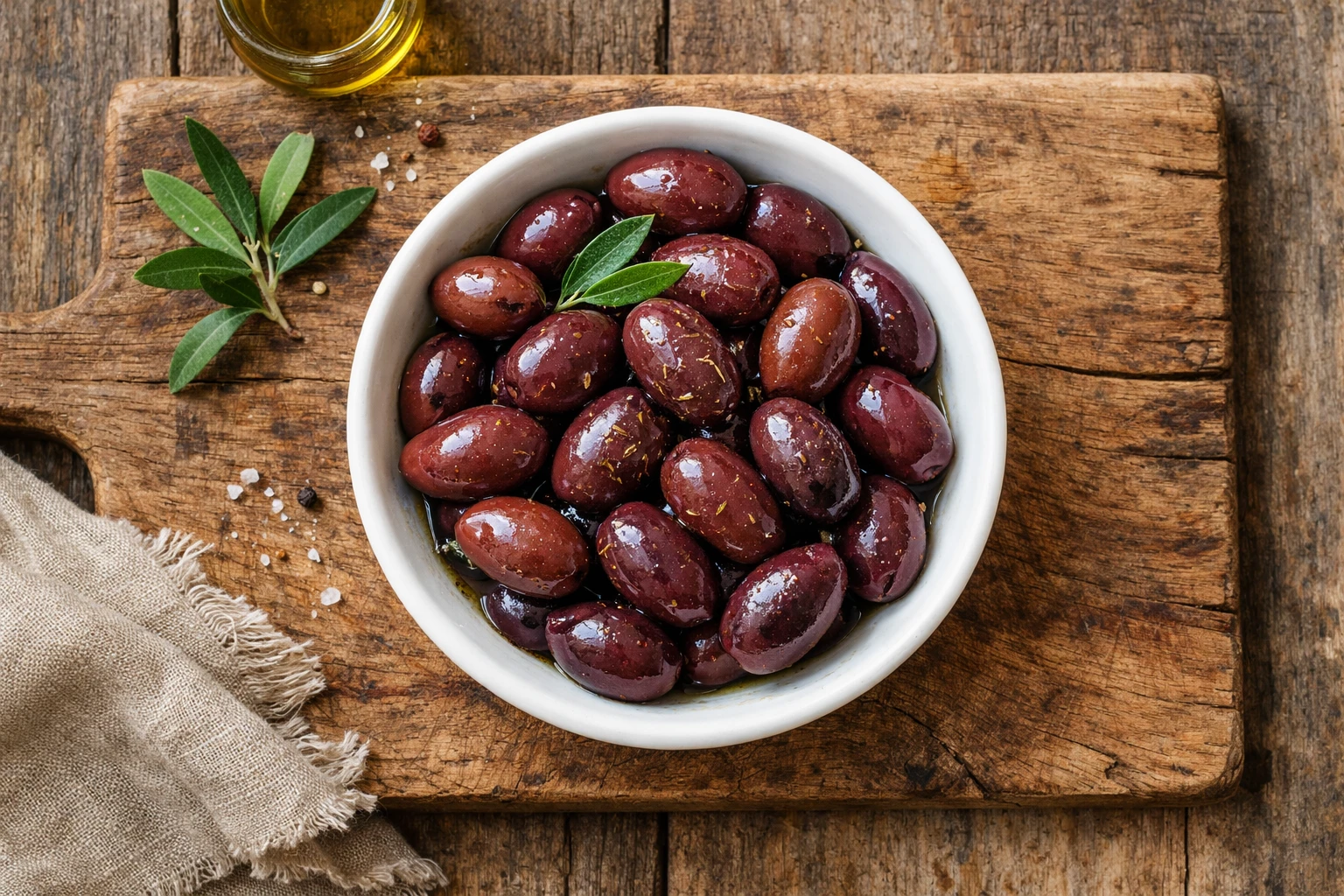
Kalamata Olives (Greek): Calories, Nutrition and Health Benefits
Mediterranean treasure packed with heart-healthy fats, powerful antioxidants, and authentic Greek flavor.
Quick Nutrition Facts
Per 100g (approximately 10-12 olives)
| Nutrient | Amount |
|---|---|
| Calories | 145 kcal |
| Protein | 1g |
| Carbohydrates | 4g |
| Fiber | 3g |
| Sugars | 0g |
| Fat | 15g |
| Saturated Fat | 2g |
| Monounsaturated Fat | 11g |
| Sodium | 735mg |
| Iron | 3.3mg |
| Vitamin E | 3.8mg |
Macronutrient Breakdown
 ChatGPT
  Claude
  AI Mode
  Perplexity
NUTRITIONIST INSIGHT
Kalamata olives are rich in hydroxytyrosol and oleuropein, powerful polyphenol antioxidants that protect against heart disease and inflammation. The 11g monounsaturated fats per 100g support cardiovascular health and help absorb fat-soluble vitamins.
Myth Busters
MYTH #1: Olives Are Too High in Fat for Weight Loss
TRUTH: While Kalamata olives contain 15g fat per 100g, 75% is heart-healthy monounsaturated fat that promotes satiety and supports weight management. Studies show Mediterranean diet followers who consume olives regularly achieve better long-term weight maintenance.
MYTH #2: All Olives Have the Same Nutritional Value
TRUTH: Kalamata olives contain significantly more polyphenol antioxidants than processed canned black olives. Processing methods affect nutrient content—naturally cured Kalamata olives preserve more beneficial compounds than artificially ripened varieties.
MYTH #3: The Sodium in Olives Is Unhealthy
TRUTH: While 100g contains 735mg sodium, rinsing olives reduces sodium by up to 40%. The potassium, antioxidants, and healthy fats in olives provide cardiovascular benefits that offset moderate sodium intake for most people.
MYTH #4: Diabetics Should Avoid Olives Due to Fat Content
TRUTH: Kalamata olives are excellent for diabetics. With only 4g carbs per 100g, low glycemic index, and healthy fats that slow glucose absorption, they help stabilize blood sugar levels as part of the Mediterranean diet pattern.
MYTH #5: Olives Have No Significant Vitamins
TRUTH: Kalamata olives provide 3.8mg vitamin E (25% DV) per 100g, a powerful antioxidant for skin and immune health. They also contain iron (3.3mg), vitamin A, and polyphenols with anti-inflammatory properties.
MYTH #6: You Should Remove the Pit Before Eating for Safety
TRUTH: While pitted olives are convenient, olives with pits intact often retain more flavor and moisture. Simply be mindful when eating; the pit is not dangerous and removing it before consuming takes seconds.
NutriScore by Health Goals
| Health Goal | NutriScore | Why This Score? |
|---|---|---|
| Weight Loss |  | 145 calories per 100g, healthy fats promote fullness. Limit to 40-50g daily (6-8 olives). |
| Muscle Gain |  | Low protein (1g), but healthy fats support hormone production and nutrient absorption. Pair with protein sources. |
| Diabetes Management |  | Low carbs (4g), low GI, healthy fats stabilize blood sugar. Ideal for Mediterranean diet approach to diabetes. |
| PCOS Management | | Anti-inflammatory fats and low glycemic load support hormonal balance. Watch sodium if experiencing water retention. |
| Pregnancy Nutrition | | Healthy fats support fetal brain development, iron prevents anemia (3.3mg), vitamin E for skin. Rinse to reduce sodium if monitoring blood pressure. |
| Viral/Flu Recovery | | Vitamin E supports immune function, anti-inflammatory compounds aid recovery, easy to digest. |
PERSONALIZED NUTRITION
Track your meals with NutriScan for personalized NutriScores based on your specific health goals! Use our Online Macro Calculator to find your daily nutrition targets.
Blood Sugar Response to Kalamata Olives
Understanding how Kalamata olives affect blood glucose shows their benefits for glycemic control.
Typical Glucose Response Curve
This chart shows typical blood glucose response for general healthy individuals. Individual responses may vary. Not medical advice.
How to Optimize Blood Sugar Benefits
Pairing Kalamata olives with other Mediterranean foods enhances their blood sugar stabilizing effects:
- 🧀 Feta cheese or Greek yogurt - Adds protein and calcium
- 🥒 Fresh vegetables (cucumber, tomato, bell pepper) - Provides fiber and hydration
- 🥖 Whole grain bread - The healthy fats slow carb absorption
- 🥗 Leafy greens with olive oil - Complete Mediterranean nutrition
This combination provides sustained energy and prevents glucose spikes throughout the day.
Cultural Significance
Kalamata olives originated in the Kalamata region of southern Greece and have been cultivated for over 2,000 years.
In Greece:
- Named after the port city of Kalamata in Messinia, Peloponnese
- Protected Designation of Origin (PDO) status in European Union
- Traditional curing methods passed down through generations
- Essential ingredient in Greek salad, tapenade, and mezze platters
- Symbol of Mediterranean hospitality and shared meals
Global Impact:
- Cornerstone of the Mediterranean diet, recognized by UNESCO
- 90% of global Kalamata olives come from Greece
- Growing international demand driven by health research
- Integral to heart-healthy eating patterns worldwide
Compare & Substitute
Kalamata Olives vs Similar Foods (Per 100g)
| Nutrient | 🫒 Kalamata Olives | 🫒 Black Olives (Canned) | 🥑 Avocado | 🧀 Feta Cheese |
|---|---|---|---|---|
| Calories | 145 kcal | 116 kcal | 160 kcal | 264 kcal |
| Carbs | 4g | 6g | 9g | 4g |
| Fiber | 3g | 3g | 7g | 0g |
| Protein | 1g | 0.8g | 2g | 14g |
| Fat | 15g | 11g | 15g | 21g |
| Sodium | 735mg | 735mg | 7mg | 1116mg |
| Iron | 3.3mg | 3.3mg | 0.6mg | 0.7mg |
| Vitamin E | 3.8mg | 1.7mg | 2.1mg | 0.2mg |
| Best For | Heart health, antioxidants | Budget-friendly Mediterranean | Low-sodium, fiber-rich | High protein, calcium |
Frequently Asked Questions
Are Kalamata olives good for weight loss?
Yes, when eaten in moderation. Despite 145 calories per 100g, the 11g monounsaturated fats promote satiety and reduce overall calorie intake. Mediterranean diet studies show regular olive consumers maintain healthier weights long-term.
Best practices: Limit to 40-50g daily (6-8 olives); pair with vegetables and lean protein; avoid fried or heavily salted varieties; use as flavor accent rather than main dish.
Can diabetics eat Kalamata olives?
Yes, Kalamata olives are excellent for diabetics. With only 4g carbs per 100g, low glycemic index, and healthy fats that slow glucose absorption, they help stabilize blood sugar levels.
Tips for diabetics: Include 50-100g in meals with vegetables and protein; rinse to reduce sodium; choose brine-cured over oil-packed for lower calories; monitor blood sugar 2 hours after first consumption to understand personal response.
What are the main health benefits of Kalamata olives?
Key Benefits:
- Heart Health: 11g monounsaturated fats reduce LDL cholesterol and support cardiovascular function
- Antioxidant Protection: Hydroxytyrosol and oleuropein combat oxidative stress and inflammation
- Blood Sugar Control: Low carbs, low GI, healthy fats stabilize glucose levels
- Iron for Energy: 3.3mg iron (18% DV) prevents anemia and supports oxygen transport
- Skin and Immune Support: 3.8mg vitamin E (25% DV) protects cells and boosts immunity
- Anti-Inflammatory: Polyphenols reduce chronic inflammation linked to disease
How many Kalamata olives should I eat per day?
General Guidelines:
- 10-12 olives (100g) daily - General health, Mediterranean diet pattern
- 6-8 olives (40-50g) daily - Weight loss or calorie restriction
- 10-15 olives daily - Heart health, diabetes management
Sodium considerations: Rinse olives before eating if monitoring sodium; choose low-sodium varieties; avoid if severe hypertension without medical guidance.
Track meals with NutriScan app to see how Kalamata olives fit your personal nutrition goals.
Are Kalamata olives healthier than black olives?
Kalamata olives contain higher polyphenol antioxidants than processed canned black olives. Natural curing preserves more beneficial compounds. Both provide healthy fats, but Kalamata olives offer superior flavor and nutrient density.
Key differences: Kalamata olives have more hydroxytyrosol; canned black olives are artificially ripened with ferrous gluconate; fresh black olives naturally cured are nutritionally similar to Kalamata.
Should I rinse Kalamata olives before eating?
Yes, rinsing under cold water for 30 seconds reduces sodium by up to 40%. Especially important for those with high blood pressure, heart disease, or sodium-sensitive conditions.
Recommendation: Always rinse unless specifically seeking the salty brine flavor; pat dry before adding to dishes; choose low-sodium packed varieties when available; consider making your own brine with less salt.
Can I eat Kalamata olives on an empty stomach?
Generally safe for most people—the healthy fats and low carbs won't spike blood sugar.
May want to pair with food if you have: Acid reflux/GERD (high fat can trigger symptoms); sensitive stomach (sodium and acidity); or prefer balanced nutrition (add protein and vegetables for complete meal).
Better approach: Include in balanced snacks with vegetables, whole grains, or protein for sustained energy and optimal nutrient absorption.


Similar Nutritious Foods
4505 Chicharrones Classic Chili Salt
7 Eleven Japan Crispy Corn Cheese
Explore More Nutrition Tools & Resources
AI Calorie Counter App - Snap a Photo, Get Macros
AI Nutritionist App That Reads Your Logged Meals
Best Protein Supplements for Women
Bulking Meal Plan App That Sets Your Surplus
ChatGPT Calorie Counter Alternative That Keeps the Total
ChatGPT Diet Plan Alternative That Tracks What You Eat
ChatGPT Weight Loss Coach Alternative With a Food Log
Fast Food Calorie Counter App That Reads the Tray
Free Calorie Tracker App with AI Photo Scans | NutriScan
Indian Diet Plan App With Veg and Non Veg Meals
Indian Food Calorie Calculator - Get Instant Nutrition Facts for Desi Meals — 2026
Intermittent Fasting for Women, Timer and Meal Log App
Intermittent Fasting Tracker App - Free Fasting Timer
Macro Tracker App That Fills the Numbers From a Photo
Mediterranean Diet Meal Plan App That Counts the Oil
Micronutrient Tracker App for Vitamins and Minerals
MyFitnessPal Alternative That Stays Free | NutriScan
NutriScore App: A Free Grade on Every Meal | NutriScan
Nutrition Label Scanner App for the Amount You Ate
Second Trimester Protein Guide
Vegetarian Meal Plan App With a Protein Target
Voice Calorie Counter - Speak to Track Meals Hands-Free
Water and Calorie Tracker App - Free Water Log