Kale Pesto: Calories, Nutrition and Health Benefits
A nutrient-dense twist on classic pesto, packed with vitamin K, heart-healthy fats, and powerful antioxidants from leafy kale.
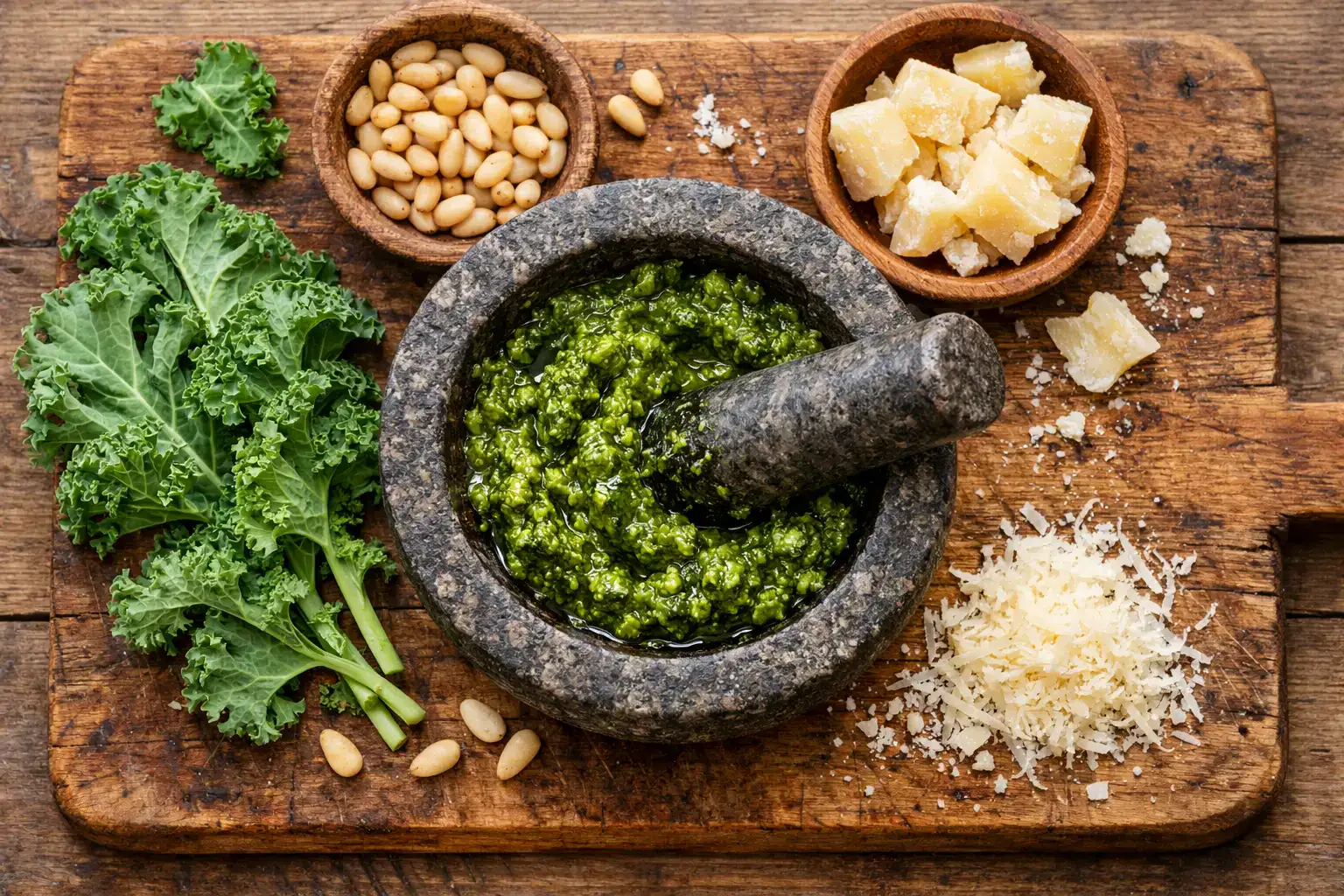
Quick Nutrition Facts
Per 2 Tablespoons (30g)
| Nutrient | Amount |
|---|---|
| Calories | 80 kcal |
| Protein | 2g |
| Carbohydrates | 3g |
| Fiber | 0.8g |
| Sugars | 0.5g |
| Fat | 7g |
| Vitamin K | 205mcg |
| Vitamin A | 1,020 IU |
| Vitamin C | 12mg |
| Iron | 0.9mg |
Macronutrient Breakdown
 ChatGPT
  Claude
  AI Mode
  Perplexity
NUTRITIONIST INSIGHT
Kale pesto delivers 684% of your daily vitamin K per 100g, far exceeding traditional basil pesto. The combination of olive oil fats with kale's sulforaphane improves antioxidant absorption by up to 3x compared to eating raw kale alone.
Myth Busters
MYTH #1: Kale Pesto Is Too High in Fat to Be Healthy
TRUTH: The 7g fat per serving comes primarily from olive oil (monounsaturated) and nuts. These heart-healthy fats actually reduce LDL cholesterol and improve cardiovascular health. The fat also helps your body absorb kale's fat-soluble vitamins A and K.
MYTH #2: All Pesto Is the Same Nutritionally
TRUTH: Kale pesto has 36% fewer calories than traditional basil pesto (267 vs 418 per 100g) and significantly more vitamin K, vitamin A, and fiber. Kale contains unique glucosinolates like sulforaphane with anti-cancer properties not found in basil.
MYTH #3: Cooking Kale Pesto Destroys All Nutrients
TRUTH: While some vitamin C is lost with heat, vitamin K is heat-stable and glucosinolates are partially preserved in pesto form. The olive oil base actually protects many antioxidants during light cooking. Using pesto as a finishing sauce minimizes nutrient loss.
MYTH #4: Kale Pesto Causes Thyroid Problems
TRUTH: Kale contains goitrogens, but the amount in a 2-tbsp pesto serving is negligible. Harvard's Nutrition Source confirms that healthy people with adequate iodine intake are not affected by dietary goitrogens. You would need to eat cups of raw kale daily to see any thyroid impact.
MYTH #5: Store-Bought Pesto Is Just as Good as Homemade
TRUTH: Commercial kale pesto often contains fillers, excess sodium (400-600mg per serving), and cheaper oils like sunflower or canola. Homemade versions use extra virgin olive oil and fresh ingredients, providing more polyphenols and better fatty acid profiles.
NutriScore by Health Goals
| Health Goal | NutriScore | Why This Score? |
|---|---|---|
| Weight Loss |  | Only 80 cal per serving with satiating healthy fats. Use 1-2 tbsp as pasta sauce replacement. Fiber and protein promote fullness. |
| Muscle Gain | | Good source of iron (0.9mg per serving) for oxygen transport. Add to chicken or fish for a complete post-workout meal with healthy fats. |
| Diabetes Management |  | Very low carbs (3g), healthy fats slow glucose absorption. Research shows kale suppresses postprandial blood glucose. Vitamin K supports insulin sensitivity. |
| PCOS Management | | Anti-inflammatory compounds reduce PCOS symptoms. Low glycemic impact, healthy fats support hormone balance. |
| Pregnancy Nutrition | | Rich in folate for neural tube development, vitamin K essential for blood clotting, iron for increased blood volume. Use pasteurized cheese. |
| Viral/Flu Recovery | | Vitamin C (12mg per serving) supports immunity, anti-inflammatory properties reduce symptoms, easy to add to soups and toast. |
PERSONALIZED NUTRITION
Track your meals with NutriScan for personalized NutriScores based on your specific health goals!
Blood Sugar Response to Kale Pesto
Understanding how kale pesto affects your blood glucose helps you optimize meal timing and pairings.
Typical Glucose Response Curve
This chart shows typical blood glucose response for general healthy individuals. Individual responses may vary. Not medical advice.
How to Flatten the Spike
Kale has been shown to suppress postprandial glucose increases in clinical studies. Pairing kale pesto with protein further blunts any glucose response:
- 🍗 Grilled chicken breast - Complete protein keeps blood sugar stable for hours
- 🐟 Baked salmon or white fish - Omega-3 fats plus protein for optimal glucose control
- 🥚 Hard-boiled eggs - Quick protein pairing for pesto toast or wraps
- 🫘 White beans or chickpeas - Added fiber and plant protein extends satiety
This combination keeps the glucose curve nearly flat, making kale pesto an ideal condiment for blood sugar management.
Cultural Significance
Pesto originated in Genoa, Italy, dating back to the 16th century. While traditional pesto alla genovese uses basil, modern kale pesto reflects the global superfood movement of the 2010s-2020s.
Italian Roots:
- Pesto derives from the Italian "pestare" (to crush/pound), traditionally made with mortar and pestle
- Ligurian cuisine considers pesto a sacred recipe; kale pesto is a modern evolution
- Italian nonnas increasingly accept kale as a valid green base alongside basil and parsley
In India:
- Kale gained popularity in urban India after 2015, now grown in Karnataka, Maharashtra, and Himachal Pradesh
- Indian adaptations replace pine nuts with cashews or peanuts and add green chili for heat
- Used as a chutney-style spread on rotis and parathas in health-conscious households
Global Impact:
- Kale pesto became a wellness staple in the US, UK, and Australia during the clean eating movement
- Plant-based diet trends in 2024-2026 boosted kale pesto as a dairy-free option (using nutritional yeast)
- Martha Stewart featured kale pesto as a top food trend for 2026
Compare & Substitute
Kale Pesto vs Similar Condiments (Per 100g)
| Nutrient | 🥬 Kale Pesto | 🌿 Basil Pesto | 🥑 Avocado Pesto | 🫒 Olive Tapenade |
|---|---|---|---|---|
| Calories | 267 kcal | 418 kcal | 290 kcal | 195 kcal |
| Carbs | 10g | 8g | 7g | 5g |
| Fiber | 2.7g | 1.5g | 3.2g | 2.5g |
| Protein | 6.7g | 9.8g | 4g | 1.5g |
| Fat | 23g | 38g | 27g | 18g |
| Vitamin K | 684mcg | 276mcg | 42mcg | 14mcg |
| Vitamin A | 3,400 IU | 1,200 IU | 290 IU | 180 IU |
| Vitamin C | 40mg | 5mg | 10mg | 1mg |
| Best For | Nutrient density, low calorie | Classic flavor, high protein | Creamy texture, heart health | Mediterranean dishes, low cal |
Frequently Asked Questions
Is kale pesto healthier than basil pesto?
Yes, kale pesto is generally the healthier option. It has 36% fewer calories per 100g (267 vs 418), 2.5x more vitamin K, 3x more vitamin A, and 8x more vitamin C. Kale also provides unique glucosinolates like sulforaphane that have anti-inflammatory and anti-cancer properties not found in basil.
When basil pesto wins: higher protein content (9.8g vs 6.7g per 100g) and more concentrated flavor.
How many calories are in kale pesto?
A 2-tablespoon (30g) serving of homemade kale pesto contains approximately 80 calories, with 7g fat, 3g carbs, and 2g protein.
Calorie comparison by serving: Homemade kale pesto (80 cal) vs store-bought kale pesto (90-110 cal) vs traditional basil pesto (125 cal) per 2 tbsp.
Can diabetics eat kale pesto?
Kale pesto is an excellent choice for diabetics. With only 3g carbs per serving and healthy fats that slow glucose absorption, it has minimal blood sugar impact. Clinical research shows kale suppresses postprandial glucose increases, and vitamin K in kale supports insulin sensitivity.
Tips for diabetics: Use as pasta sauce (control portion to 2 tbsp), spread on whole grain bread, or mix into vegetable soups for added nutrition without sugar spikes.
Is kale pesto safe during pregnancy?
Yes, kale pesto is safe and beneficial during pregnancy when prepared properly. It provides folate for neural tube development, vitamin K for healthy blood clotting, and iron for the increased blood volume needed during pregnancy.
Precautions: Use pasteurized parmesan or nutritional yeast instead of raw cheese. Wash kale thoroughly. Consume in normal food amounts (2-4 tbsp per serving).
What are the main health benefits of kale pesto?
Key Benefits:
- Bone Health: 205mcg vitamin K per serving (228% DV) supports calcium metabolism
- Heart Health: Monounsaturated fats from olive oil lower LDL cholesterol
- Anti-Inflammatory: Sulforaphane and quercetin reduce chronic inflammation
- Eye Health: Vitamin A and lutein protect against macular degeneration
- Blood Sugar Control: Low carbs plus compounds that suppress glucose spikes
- Cancer Prevention: Glucosinolates show anti-cancer activity in research studies
How long does homemade kale pesto last?
Storage guidelines:
- Refrigerated: 5-7 days in an airtight container with a thin layer of olive oil on top to prevent oxidation
- Frozen: 3-6 months in ice cube trays or freezer-safe containers
- Room temperature: Maximum 2 hours (discard after)
Freshness tips: Kale pesto darkens faster than basil pesto due to oxidation. A squeeze of lemon juice helps maintain color. Always check for off smells before using stored pesto.


Similar Nutritious Foods
4505 Chicharrones Classic Chili Salt
7 Eleven Japan Crispy Corn Cheese
Explore More Nutrition Tools & Resources
AI Calorie Counter App - Snap a Photo, Get Macros
AI Nutritionist App That Reads Your Logged Meals
Best Protein Supplements for Women
Bulking Meal Plan App That Sets Your Surplus
ChatGPT Calorie Counter Alternative That Keeps the Total
ChatGPT Diet Plan Alternative That Tracks What You Eat
ChatGPT Weight Loss Coach Alternative With a Food Log
Fast Food Calorie Counter App That Reads the Tray
Free Calorie Tracker App with AI Photo Scans | NutriScan
Indian Diet Plan App With Veg and Non Veg Meals
Indian Food Calorie Calculator - Get Instant Nutrition Facts for Desi Meals — 2026
Intermittent Fasting for Women, Timer and Meal Log App
Intermittent Fasting Tracker App - Free Fasting Timer
Macro Tracker App That Fills the Numbers From a Photo
Mediterranean Diet Meal Plan App That Counts the Oil
Micronutrient Tracker App for Vitamins and Minerals
MyFitnessPal Alternative That Stays Free | NutriScan
NutriScore App: A Free Grade on Every Meal | NutriScan
Nutrition Label Scanner App for the Amount You Ate
Second Trimester Protein Guide
Vegetarian Meal Plan App With a Protein Target
Voice Calorie Counter - Speak to Track Meals Hands-Free
Water and Calorie Tracker App - Free Water Log