Kataifi Dessert: Calories, Nutrition and Health Benefits
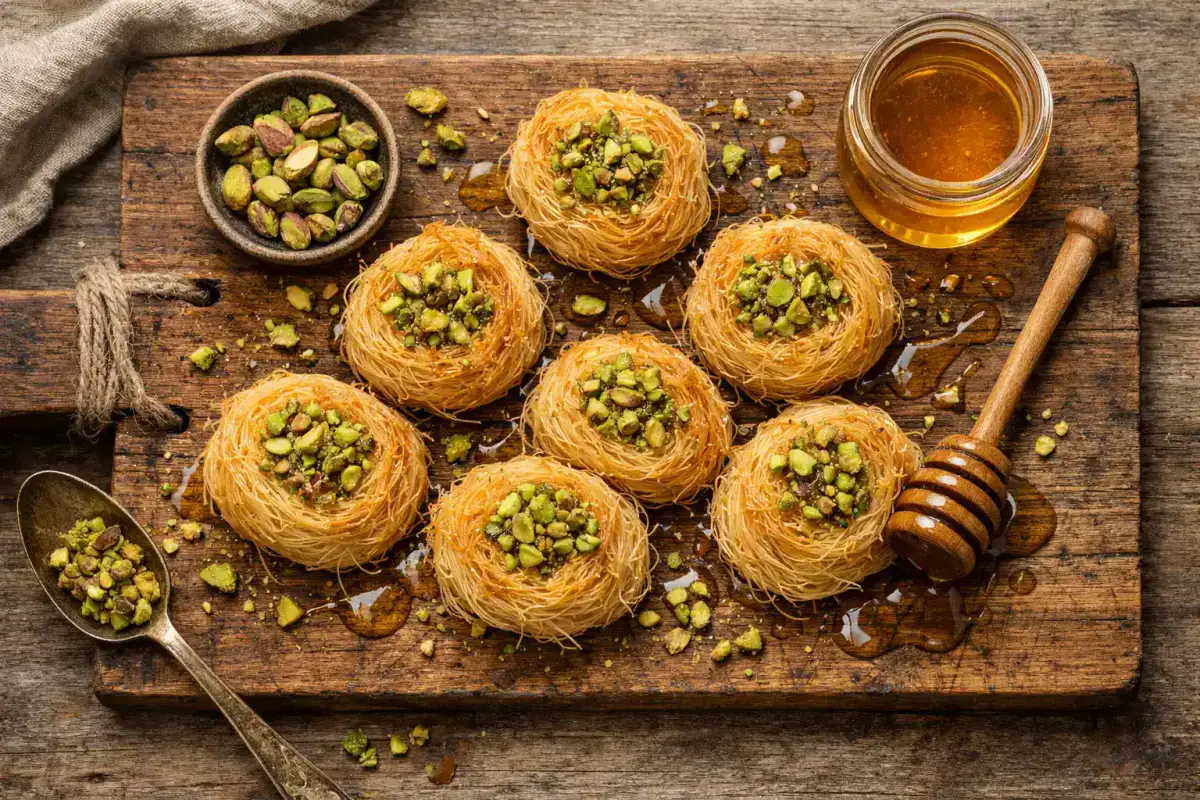
A golden, crispy Middle Eastern pastry made from shredded filo dough filled with nuts and soaked in sweet honey syrup, delivering 420 calories per 100g serving.
Quick Nutrition Facts
Per 1 Piece (100g)
| Nutrient | Amount |
|---|---|
| Calories | 420 kcal |
| Protein | 6g |
| Carbohydrates | 52g |
| Fiber | 2g |
| Sugars | 25g |
| Fat | 22g |
| Saturated Fat | 12g |
| Sodium | 150mg |
| Iron | 1.5mg |
| Calcium | 50mg |
Macronutrient Breakdown
 ChatGPT
  Claude
  AI Mode
  Perplexity
NUTRITIONIST INSIGHT
Kataifi is calorie-dense at 420 kcal per 100g, but the pistachio and walnut filling provides heart-healthy unsaturated fats, protein, and essential minerals. Keep portions small (1 piece) and pair with Greek yogurt or protein to slow sugar absorption.
Myth Busters
MYTH #1: Kataifi Is Just Empty Calories
TRUTH: While high in sugar, kataifi's nut filling provides protein, healthy fats, magnesium, and vitamin E. Pistachios alone contain 21% protein by weight and beneficial fatty acids.
MYTH #2: All Middle Eastern Sweets Are Equally Unhealthy
TRUTH: Kataifi varies significantly by recipe. Versions with more nuts and less syrup provide better nutrient density and lower glycemic impact. Baked versions are healthier than fried.
MYTH #3: You Must Avoid Kataifi Completely on a Diet
TRUTH: Portion control matters more than total avoidance. A 50g piece (210 calories) can fit into a balanced diet. Adding protein and fat to meals reduces postprandial glucose spikes by up to 73%.
MYTH #4: Honey Syrup in Kataifi Is Healthier Than Sugar
TRUTH: While honey has trace minerals and antioxidants, studies show honey and sucrose produce similar metabolic effects on blood glucose and triglycerides when consumed in equal carbohydrate amounts. Portion size matters most.
MYTH #5: Kataifi Has No Nutritional Value
TRUTH: The nut filling provides omega-3 fatty acids (walnuts), antioxidants, and protein that support cardiovascular health. One serving delivers 1.5mg iron (8% DV) and 50mg calcium.
NutriScore by Health Goals
| Health Goal | NutriScore | Why This Score? |
|---|---|---|
| Weight Loss |  | 420 calories per 100g with high sugar (25g). Limit to 1 small piece (50g) on special occasions. Choose nut-heavy versions for better satiety. |
| Muscle Gain |  | Provides 6g protein and 52g carbs for energy. Not ideal as a primary protein source but works as an occasional post-workout treat with added protein. |
| Diabetes Management | | High glycemic load due to sugar syrup. Pairing with protein reduces glucose spikes. Limit to 30-50g and monitor blood sugar closely. |
| PCOS Management | | High sugar affects insulin sensitivity. Consume rarely and in small portions (30g max). Choose versions with higher nut-to-pastry ratio. |
| Pregnancy Nutrition | | Nuts provide folate and healthy fats for fetal development. Moderate sugar intake; limit to 1 small piece occasionally. |
| Viral/Flu Recovery | | Quick energy from carbohydrates, iron for immunity. Easy to eat when appetite is low. The honey syrup provides soothing properties. |
PERSONALIZED NUTRITION
Track your meals with NutriScan for personalized NutriScores based on your specific health goals!
Blood Sugar Response to Kataifi
Understanding how kataifi affects your blood glucose can help you make informed decisions about portion size and meal pairing.
Typical Glucose Response Curve
This chart shows typical blood glucose response for general healthy individuals. Individual responses may vary. Not medical advice.
How to Flatten the Spike
Pairing kataifi with protein or healthy fat slows glucose absorption and reduces the peak blood sugar level:
- 🥛 Greek yogurt or labneh - Adds protein and probiotics, a traditional Middle Eastern pairing
- 🥜 Extra nuts on the side (pistachios, almonds) - Boosts healthy fats and protein
- 🧀 A small piece of cheese - Provides protein and fat to slow absorption
- 🍵 Unsweetened green tea - Catechins may help moderate glucose response
Eating a smaller portion (50g instead of 100g) and consuming it after a protein-rich meal significantly reduces the glucose spike.
Cultural Significance
Kataifi (also spelled kadayif, kadaif, or kunafa) traces its origins to 10th-century Levantine and Egyptian kitchens, making it one of the oldest continuously prepared desserts in the world.
In the Middle East:
- Central to Ramadan celebrations and Eid feasts across the Arab world
- A symbol of hospitality; serving kataifi to guests expresses warmth and generosity
- Particularly associated with Nablus, Palestine, where kunafa Nabulseyeh is a cultural touchstone
- Each region has unique variations: cheese-filled (Levant), nut-filled (Greece, Turkey), cream-filled (Egypt)
Global Spread:
- Greek kataifi with walnuts and honey is a staple in bakeries across Athens
- Turkish tel kadayif remains a beloved dessert served at celebrations
- The recent Dubai chocolate bar trend brought kataifi pastry to viral global attention
- Indian and South Asian adaptations use local nuts like cashews and cardamom flavoring
Historical Note: A 13th-century medieval Andalusian cookbook, Kitab al-Tabikh, describes an early version of kunafa with thin crepes stuffed with fresh cheese, baked and drizzled with honey and rose water syrup.
Compare & Substitute
Kataifi vs Similar Desserts (Per 100g)
| Nutrient | 🥮 Kataifi | 🍯 Baklava | 🧁 Gulab Jamun | 🍮 Rice Pudding |
|---|---|---|---|---|
| Calories | 420 kcal | 430 kcal | 387 kcal | 130 kcal |
| Carbs | 52g | 50g | 54g | 19g |
| Fiber | 2g | 2.5g | 0.5g | 0.3g |
| Protein | 6g | 7g | 4g | 3.5g |
| Fat | 22g | 24g | 18g | 4.5g |
| Sugar | 25g | 28g | 40g | 12g |
| Sodium | 150mg | 170mg | 80mg | 60mg |
| Best For | Festive occasions, nut lovers | Layered texture, pistachio fan | Indian celebrations, milk-based | Low-calorie dessert option |
Frequently Asked Questions
How many calories are in kataifi dessert?
100g of kataifi contains approximately 420 calories, with 52g carbohydrates, 22g fat, and 6g protein. A single piece typically weighs 80-120g depending on the recipe and size. The sugar syrup contributes roughly 100 of those calories.
Can diabetics eat kataifi?
Diabetics should exercise caution with kataifi due to its high sugar and carbohydrate content. If consumed, limit to a 30-50g portion (about half a piece), pair with protein like Greek yogurt or cheese, and monitor blood sugar 2 hours after eating.
Tips for diabetics: Eat after a protein-rich meal, choose nut-heavy versions, avoid additional sugary drinks alongside, and test your individual response.
Is kataifi safe during pregnancy?
Kataifi is generally safe during pregnancy in moderation. The pistachio and walnut filling provides folate, iron, and healthy fats that support fetal development. However, watch total sugar intake and limit to 1 small piece per occasion.
Avoid if: You have gestational diabetes (high sugar content), or the kataifi contains unpasteurized cheese filling.
What is the difference between kataifi and baklava?
Both are syrup-soaked Middle Eastern pastries with nut fillings, but they differ in pastry type. Kataifi uses shredded filo dough (thin vermicelli-like strands) creating a crispy, nest-like texture. Baklava uses layered filo sheets pressed together. Nutritionally they are similar at 420-430 calories per 100g.
How can I make kataifi healthier?
- Reduce syrup by 30-40% for less sugar while keeping moisture
- Use olive oil instead of butter to boost unsaturated fats
- Increase nut filling ratio for more protein and healthy fats
- Bake instead of fry to cut 50-80 calories per serving
- Add a light honey drizzle instead of full sugar syrup soak
How should I store kataifi?
Store at room temperature in an airtight container for 3-5 days. For longer storage, refrigerate for up to 2 weeks. Reheat in a 180C (350F) oven for 5-8 minutes to restore crispiness. Avoid microwaving as it makes the pastry soggy.


Similar Nutritious Foods
4505 Chicharrones Classic Chili Salt
7 Eleven Japan Crispy Corn Cheese
Explore More Nutrition Tools & Resources
AI Calorie Counter App - Snap a Photo, Get Macros
AI Nutritionist App That Reads Your Logged Meals
Best Protein Supplements for Women
Bulking Meal Plan App That Sets Your Surplus
ChatGPT Calorie Counter Alternative That Keeps the Total
ChatGPT Diet Plan Alternative That Tracks What You Eat
ChatGPT Weight Loss Coach Alternative With a Food Log
Fast Food Calorie Counter App That Reads the Tray
Free Calorie Tracker App with AI Photo Scans | NutriScan
Indian Diet Plan App With Veg and Non Veg Meals
Indian Food Calorie Calculator - Get Instant Nutrition Facts for Desi Meals — 2026
Intermittent Fasting for Women, Timer and Meal Log App
Intermittent Fasting Tracker App - Free Fasting Timer
Macro Tracker App That Fills the Numbers From a Photo
Mediterranean Diet Meal Plan App That Counts the Oil
Micronutrient Tracker App for Vitamins and Minerals
MyFitnessPal Alternative That Stays Free | NutriScan
NutriScore App: A Free Grade on Every Meal | NutriScan
Nutrition Label Scanner App for the Amount You Ate
Second Trimester Protein Guide
Vegetarian Meal Plan App With a Protein Target
Voice Calorie Counter - Speak to Track Meals Hands-Free
Water and Calorie Tracker App - Free Water Log