Kataifi Pastry Dessert: Calories, Nutrition and Health Benefits
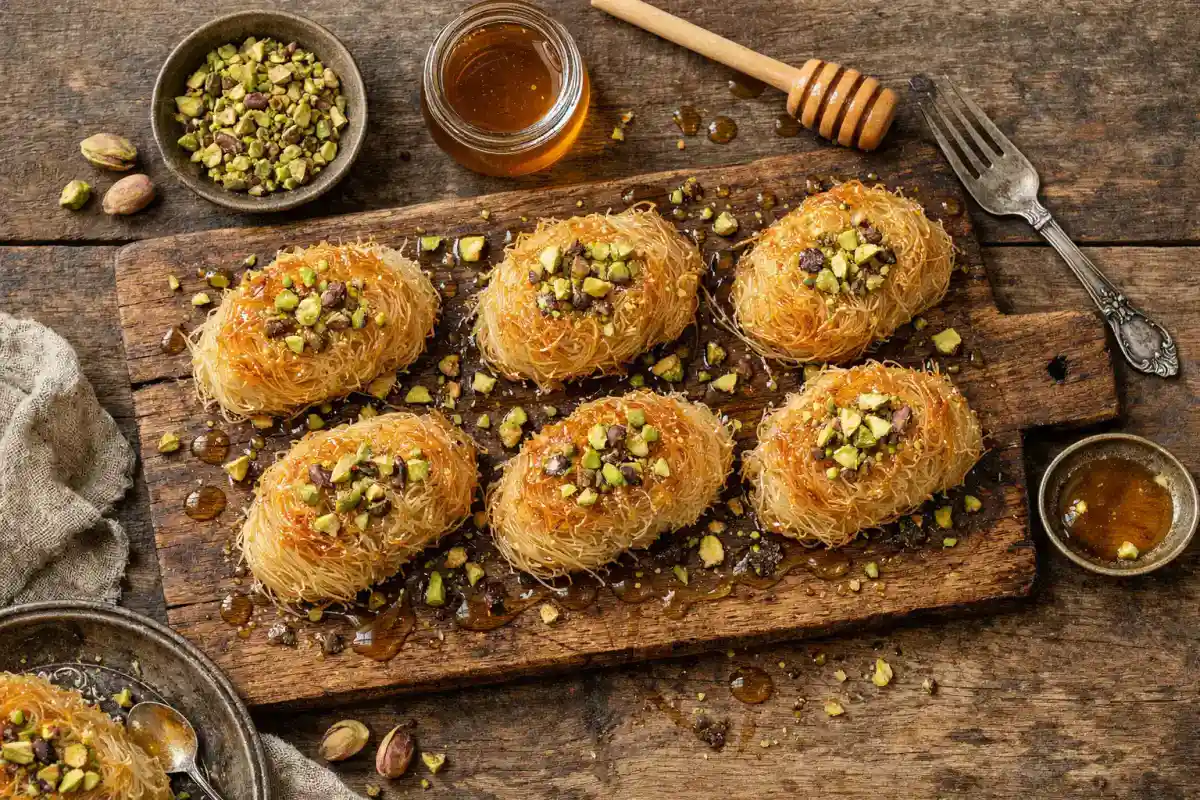
A beloved Middle Eastern shredded filo pastry soaked in honey syrup, packed with nuts, delivering 280 calories per piece with rich flavor and cultural heritage.
Quick Nutrition Facts
Per 1 Piece of Kataifi (80g)
| Nutrient | Amount |
|---|---|
| Calories | 280 kcal |
| Protein | 4g |
| Carbohydrates | 36g |
| Fiber | 1.2g |
| Sugars | 22g |
| Fat | 14g |
| Saturated Fat | 6g |
| Sodium | 85mg |
| Iron | 1.2mg |
| Calcium | 28mg |
Macronutrient Breakdown
 ChatGPT
  Claude
  AI Mode
  Perplexity
NUTRITIONIST INSIGHT
Kataifi delivers quick energy from its honey syrup and refined carbs, but the nut fillings add protein and healthy fats. Choosing pistachio-filled kataifi boosts your intake of B vitamins and antioxidants compared to plain syrup-soaked versions.
Myth Busters
MYTH #1: Kataifi Is Just Empty Calories
TRUTH: While kataifi is calorie-dense, nut-filled versions provide 4g protein, healthy monounsaturated fats, and minerals like iron and calcium per serving. The nut fillings contribute meaningful nutrients when consumed in moderation.
MYTH #2: All Middle Eastern Sweets Are Equally Unhealthy
TRUTH: Kataifi has less sugar per serving than many syrup-heavy desserts like baklava or basbousa. Portion-controlled dessert consumption can fit into a balanced diet without derailing health goals.
MYTH #3: Diabetics Must Completely Avoid Kataifi
TRUTH: Small portions (half piece, ~140 cal) paired with protein can be managed. Low-glycemic pairing strategies reduce postprandial glucose spikes in type 2 diabetes patients. Monitor blood sugar and consult your doctor.
MYTH #4: Kataifi Is Too Fatty to Be Part of a Healthy Diet
TRUTH: The 14g fat per serving includes healthy unsaturated fats from nuts (walnuts, pistachios). These provide omega-3 and omega-6 fatty acids beneficial for heart health. The key is portion control, not elimination.
MYTH #5: Homemade Kataifi Is Always Healthier Than Store-Bought
TRUTH: Homemade versions often use more butter and sugar syrup than commercial versions. Glycemic load depends on total sugar and fat content, not just whether it is homemade. Check actual ingredients and portions.
NutriScore by Health Goals
| Health Goal | NutriScore | Why This Score? |
|---|---|---|
| Weight Loss |  | 280 calories per piece with 22g sugar. Limit to half piece (140 cal) once weekly. Pair with protein to stay full. |
| Muscle Gain |  | Quick post-workout carbs (36g) for glycogen replenishment, but only 4g protein. Add Greek yogurt for complete recovery. |
| Diabetes Management | | High sugar (22g) and refined carbs spike blood glucose. Low-GI pairing strategies can help but limit to special occasions only. |
| PCOS Management | | Refined carbs and sugar affect insulin sensitivity. Limit to half piece monthly, choose nut-filled versions for added fiber. |
| Pregnancy Nutrition | | Provides quick energy and iron (1.2mg). Moderate sweet intake is acceptable during pregnancy with balanced meals. |
| Viral/Flu Recovery | | Easy-to-eat soft texture, quick energy from honey syrup. Good comfort food but pair with vitamin C-rich fruits for immunity. |
PERSONALIZED NUTRITION
Track your meals with NutriScan for personalized NutriScores based on your specific health goals!
Blood Sugar Response to Kataifi
Understanding how kataifi pastry affects your blood glucose helps you time consumption and choose smart pairings.
Typical Glucose Response Curve
*This chart shows typical blood glucose response for general healthy individuals. Individual responses may vary. Not medical advice.*
How to Flatten the Spike
Pairing high-GI desserts with protein or healthy fat slows glucose absorption and reduces the peak blood sugar level:
- 🥛 Greek yogurt or labneh - Protein and probiotics slow sugar absorption
- 🥜 Extra nuts on the side (almonds, walnuts) - Added fiber and healthy fats
- 🫖 Unsweetened green tea - Catechins may help moderate glucose response
- 🧀 A small piece of cheese - Fat and protein create a buffer against sugar spikes
Eat kataifi after a protein-rich meal rather than on an empty stomach for the best glycemic outcome.
Cultural Significance
Kataifi (also spelled kadayif, kadaif, or konafa) traces its origins to the Ottoman Empire, where palace kitchens perfected shredded dough desserts centuries ago.
In the Middle East:
- Central to Ramadan celebrations and Eid feasts across the Arab world
- Each region has signature variations: Lebanese with ashta cream, Palestinian with cheese, Turkish with pistachios
- Traditionally prepared by pouring thin batter through a sieve onto a hot rotating plate
- Symbol of hospitality served to honored guests with Arabic coffee
In Greece and the Mediterranean:
- Known as kataifi or kadaifi, filled with walnuts and soaked in honey syrup
- Served during Easter, Christmas, and name-day celebrations
- Greek versions often use cinnamon and clove-spiced syrup
- Popular in bakeries across Athens, Thessaloniki, and the islands
Global Adoption:
- Found in Middle Eastern bakeries worldwide from London to Sydney
- Modern fusion versions include chocolate, Nutella, and ice cream fillings
- Growing popularity on social media as a photogenic dessert
- Shredded dough now used in savory applications (prawn kataifi, cheese rolls)
Compare & Substitute
Kataifi vs Similar Desserts (Per 100g)
| Nutrient | 🥮 Kataifi | 🍯 Baklava | 🧁 Basbousa | 🥧 Kunafa |
|---|---|---|---|---|
| Calories | 350 kcal | 428 kcal | 337 kcal | 390 kcal |
| Carbs | 45g | 43g | 50g | 42g |
| Fiber | 1.5g | 2g | 0.8g | 1g |
| Protein | 5g | 6g | 4g | 7g |
| Fat | 17.5g | 25g | 15g | 20g |
| Sugar | 28g | 32g | 35g | 30g |
| Sodium | 106mg | 180mg | 150mg | 200mg |
| Best For | Moderate treat, nut nutrition | Rich indulgence, nut lover | Lighter texture, semolina base | Cheese/cream filling, protein |
Frequently Asked Questions
How many calories are in kataifi pastry?
1 piece of kataifi pastry dessert (80g) contains approximately 280 calories. Per 100g, kataifi provides about 350 calories with 45g carbohydrates, 17.5g fat, and 5g protein. Calorie count varies based on nut filling, butter content, and syrup saturation.
Is kataifi pastry healthy?
Kataifi is a calorie-dense dessert best enjoyed in moderation. Nut-filled versions provide protein, healthy fats, and minerals like iron. For the healthiest option, choose pistachio or walnut fillings and ask for light syrup.
Healthier choices: Opt for baked (not fried) kataifi, reduce syrup soaking time, and pair with protein-rich sides.
Can diabetics eat kataifi?
Diabetics should limit kataifi due to its high sugar (22g) and carb content (36g per serving).
Tips for diabetics:
- Eat half a piece maximum (140 calories, 18g carbs)
- Always pair with protein or healthy fat
- Consume after a balanced meal, never on empty stomach
- Monitor blood sugar 2 hours after eating
Consult your healthcare provider for personalized guidance.
What is kataifi pastry made of?
Kataifi dough is made from wheat flour batter poured through a fine sieve onto a hot rotating plate, creating thin vermicelli-like strands. The dessert is assembled by wrapping these strands around a nut filling (walnuts, pistachios, or almonds), baking with butter until golden, and soaking in sugar syrup or honey.
Is kataifi the same as kunafa?
Both use the same shredded filo dough but differ significantly in preparation. Kataifi typically wraps nuts in individual rolls, while kunafa layers the dough flat with cheese or cream fillings. Kunafa is baked as a large disc and inverted, while kataifi pieces are individually shaped.
How much kataifi can I eat on a diet?
Guidelines by goal:
- Weight loss: Half piece (40g, ~140 cal) once per week maximum
- Maintenance: 1 piece (80g, 280 cal) once or twice per week
- Muscle gain: 1 piece post-workout for quick carb replenishment, add protein source
Track your kataifi intake with NutriScan app to see how it fits your personal nutrition goals.




Similar Nutritious Foods
4505 Chicharrones Classic Chili Salt
7 Eleven Japan Crispy Corn Cheese
Explore More Nutrition Tools & Resources
AI Calorie Counter App - Snap a Photo, Get Macros
AI Nutritionist App That Reads Your Logged Meals
Best Protein Supplements for Women
Bulking Meal Plan App That Sets Your Surplus
ChatGPT Calorie Counter Alternative That Keeps the Total
ChatGPT Diet Plan Alternative That Tracks What You Eat
ChatGPT Weight Loss Coach Alternative With a Food Log
Fast Food Calorie Counter App That Reads the Tray
Free Calorie Tracker App with AI Photo Scans | NutriScan
Indian Diet Plan App With Veg and Non Veg Meals
Indian Food Calorie Calculator - Get Instant Nutrition Facts for Desi Meals — 2026
Intermittent Fasting for Women, Timer and Meal Log App
Intermittent Fasting Tracker App - Free Fasting Timer
Macro Tracker App That Fills the Numbers From a Photo
Mediterranean Diet Meal Plan App That Counts the Oil
Micronutrient Tracker App for Vitamins and Minerals
MyFitnessPal Alternative That Stays Free | NutriScan
NutriScore App: A Free Grade on Every Meal | NutriScan
Nutrition Label Scanner App for the Amount You Ate
Second Trimester Protein Guide
Vegetarian Meal Plan App With a Protein Target
Voice Calorie Counter - Speak to Track Meals Hands-Free
Water and Calorie Tracker App - Free Water Log