Khichdi: Calories, Nutrition and Health Benefits
Traditional comfort food combining rice and lentils for complete nutrition, easy digestion, and sustained energy.
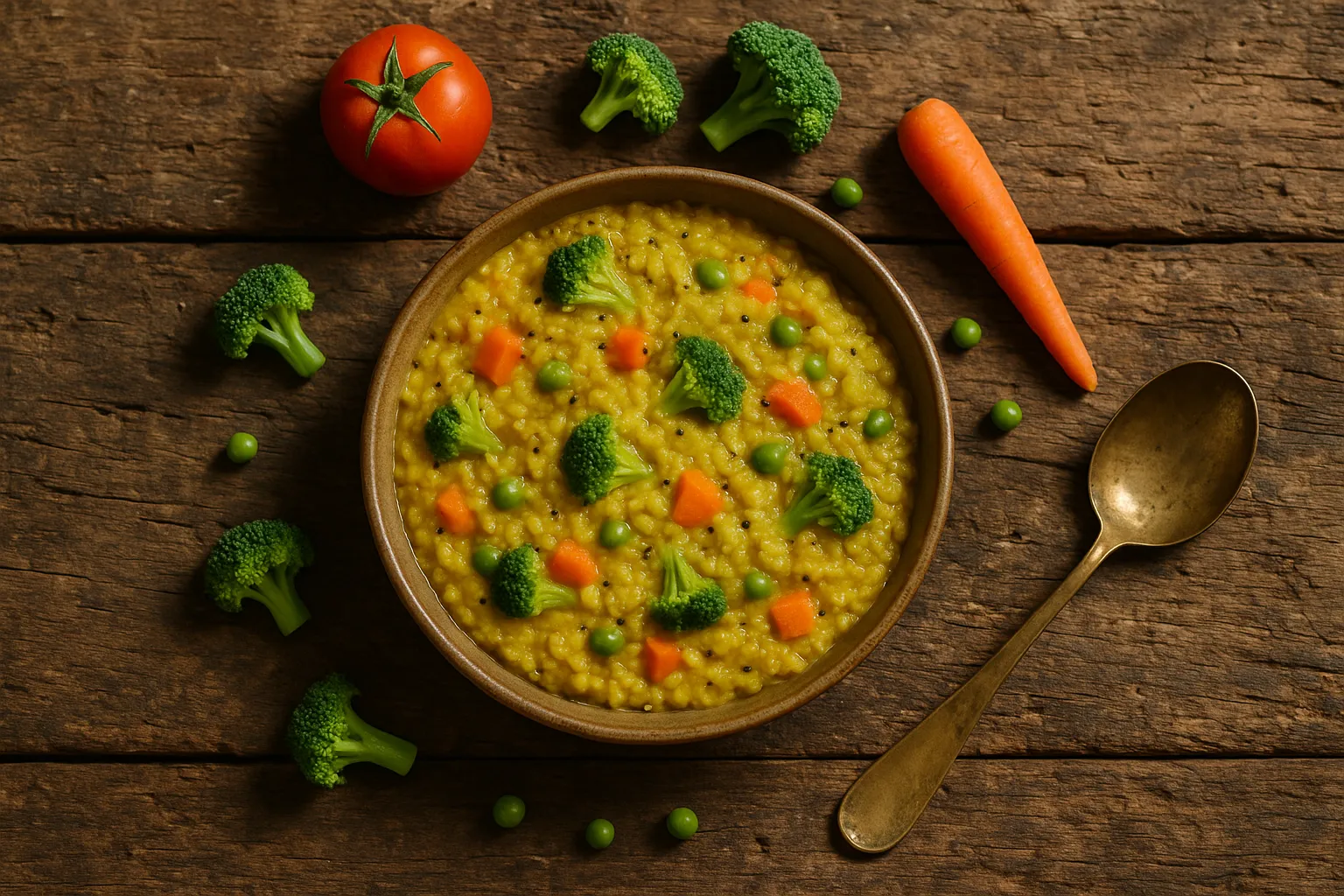
Quick Nutrition Facts
Per 1 Cup Cooked (240g)
| Nutrient | Amount |
|---|---|
| Calories | 150 kcal |
| Protein | 6.5g |
| Carbohydrates | 28g |
| Fiber | 4.2g |
| Sugars | 1.2g |
| Fat | 2.1g |
| Iron | 3.2mg |
| Zinc | 1.8mg |
| Magnesium | 65mg |
Macronutrient Breakdown
 ChatGPT
  Claude
  AI Mode
  Perplexity
NUTRITIONIST INSIGHT
Khichdi combines rice and lentils to create a complete protein with all 9 essential amino acids. The fiber content (4.2g) supports digestive health while maintaining steady blood sugar levels. Traditionally revered in Ayurveda for its healing properties.
Myth Busters
MYTH #1: Khichdi Is Only Comfort Food, Not Nutritious
TRUTH: Khichdi is nutrient-dense comfort food. The rice-lentil combination provides complete protein, fiber, iron, and easily digestible carbs. At 150 calories with 6.5g protein, it supports weight loss and muscle gain.
MYTH #2: Khichdi Causes Weight Gain
TRUTH: With only 150 calories per cup and 4.2g fiber, khichdi promotes fullness and satiety. When prepared with minimal oil and served with vegetables, it's an excellent weight loss meal. The resistant starch in cooled khichdi further aids fat burning.
MYTH #3: Khichdi Is Too High in Carbs
TRUTH: 28g carbs per cup are complex carbs with 4.2g fiber, resulting in only 24g net carbs. The low glycemic impact and fiber content make it suitable for diabetes management. Choose 1:1 rice-to-lentil ratio for lower carb content.
MYTH #4: Khichdi Is Only for Sick People
TRUTH: While khichdi aids recovery from illness, it's a complete meal suitable for everyone. Athletes use it for muscle recovery, pregnant women benefit from its digestibility, and health-conscious people enjoy it for balanced nutrition and easy meal prep.
MYTH #5: Only Indian Lentils Work for Khichdi
TRUTH: While traditional moong dal is ideal, any split lentils (red lentils, masoor dal) work well. Different lentil varieties offer varied mineral profiles and cooking times. Mix lentils to maximize nutritional diversity.
MYTH #6: Khichdi Must Have Ghee for Taste
TRUTH: While ghee enhances flavor and fat-soluble vitamin absorption, khichdi is nutritious with minimal fat. For weight loss, use 1 tsp ghee. For pregnancy, increase to 2 tsp for better nutrient absorption. Add turmeric and vegetables for flavor without extra fat.
NutriScore by Health Goals
| Health Goal | NutriScore | Why This Score? |
|---|---|---|
| Weight Loss |  | 150 calories, 4.2g fiber, 6.5g protein prevents muscle loss. Perfect light meal. Use 1:1 rice-lentil ratio for higher protein and satiety. |
| Muscle Gain |  | Complete protein with all amino acids, 28g carbs replenish glycogen. Add vegetables and pair with paneer/eggs for additional protein. |
| Diabetes Management | | Low GI, high fiber slows glucose absorption. Studies show lentils improve blood sugar control. Use 1:1 rice-lentil ratio, add green vegetables. |
| PCOS Management | | High protein, low sugar, fiber-rich supports PCOS insulin management. The complete protein helps balance hormones. |
| Pregnancy Nutrition | | Easy to digest, rich in iron (3.2mg) for pregnancy anemia, complete protein for fetal development, naturally soft texture suits sensitive digestion. Add vegetables for folate. |
| Viral/Flu Recovery | | Easily digestible, warm comfort food aids recovery, protein supports immune function, minerals like zinc (1.8mg) boost immunity. Add turmeric for antibacterial properties. |
PERSONALIZED NUTRITION
Track your meals with NutriScan for personalized NutriScores based on your specific health goals!
Blood Sugar Response to Khichdi
Understanding how khichdi affects your blood glucose helps optimize timing and preparation for your health goals.
Typical Glucose Response Curve
This chart shows typical blood glucose response for general healthy individuals. Individual responses may vary. Not medical advice.
How to Optimize Blood Sugar Response
Pairing khichdi with healthy additions further flattens glucose absorption:
- 🥬 Add green vegetables - Spinach, vegetables slow carb absorption
- 🧈 Ghee or healthy oil - Healthy fats slow glucose release
- 🥒 Pickle or fermented foods - Acids slow starch digestion
- 🌿 Turmeric and spices - Anti-inflammatory, improve digestion
- 🥚 Pair with eggs or paneer - Additional protein stabilizes blood sugar
This approach maximizes khichdi's nutritional benefits while maintaining steady blood sugar and sustained energy.
Cultural Significance
Khichdi holds deep cultural and nutritional importance across India and beyond.
In India:
- Ancient Ayurvedic text prescribes khichdi as "tridoshic" food balancing vata, pitta, and kapha
- Named from Sanskrit "khici" meaning "to mix"
- Traditional baby's first solid food across Indian families
- Healing food recommended during illness, pregnancy, and recovery
- Every Indian household has unique regional variations
Global Impact:
- Similar grain-legume combinations appear in cuisines worldwide (congee, risotto, dal-rice)
- Gaining popularity in Western health communities for its digestibility
- Recommended by nutritionists for IBS, digestive issues, and recovery
- Sustainable, economical protein source for global nutrition security
Compare & Substitute
Khichdi vs Similar Rice-Lentil Dishes (Per Cup Cooked)
| Nutrient | 🍛 Khichdi | 🍚 Dal-Rice | 🥘 Risotto | 🍵 Congee |
|---|---|---|---|---|
| Calories | 150 kcal | 180 kcal | 320 kcal | 80 kcal |
| Carbs | 28g | 32g | 45g | 18g |
| Protein | 6.5g | 8g | 5g | 2.5g |
| Fiber | 4.2g | 5.2g | 1.5g | 0.5g |
| Fat | 2.1g | 6g | 15g | 1g |
| Digestion | Easiest, soft texture | Good, coarser texture | Rich, heavier | Easiest, soupy |
| Best For | Weight loss, all goals | Muscle gain, recovery | Rich dinners, Western | Convalescence, elderly |
Frequently Asked Questions
Is khichdi good for weight loss?
Yes, khichdi is excellent for weight loss. At 150 calories per cup with 4.2g fiber, it promotes fullness and satiety. The complete protein (6.5g) prevents muscle loss during calorie deficit.
Best practices: Prepare with minimal oil (1 tsp ghee), add vegetables like spinach or carrots for volume without extra calories, limit portion to 1.5 cups per meal, and pair with salad or light vegetables.
Can diabetics eat khichdi?
Absolutely. Khichdi is one of the best meals for diabetes management. The low glycemic index and high fiber content slow carbohydrate absorption.
Tips for diabetics:
- Use 1:1 rice-to-lentil ratio for higher protein and lower carb impact
- Add vegetables (spinach, bottle gourd, pumpkin) for volume and fiber
- Eat whole cooked khichdi, not mashed (better for slower digestion)
- Monitor blood sugar response 2 hours after eating
- Pair with vegetables or salad for additional fiber
How much protein is in khichdi?
Khichdi provides 6.5g of complete protein per cooked cup (240g). The combination of rice and lentils creates a complete amino acid profile with all 9 essential amino acids, making it suitable for muscle building and recovery.
For higher protein, increase lentil proportion (1:1 ratio provides ~8g protein per cup) or add boiled eggs or paneer on the side.
What are the main health benefits of khichdi?
Key Benefits:
- Complete Protein: All 9 essential amino acids for muscle and tissue repair
- Easy Digestion: Slow-cooked, soft texture breaks down food, reducing digestive strain
- Blood Sugar Control: Low glycemic impact with 4.2g fiber per cup
- Iron Rich: 3.2mg iron supports energy and pregnancy health
- Nutrient Dense: 6 different nutrient categories (protein, carbs, fiber, iron, zinc, magnesium)
- Satiety: Fiber and protein combination promotes fullness and appetite control
Is khichdi easy to digest?
Khichdi is one of the easiest meals to digest due to:
- Long, slow cooking breaks down rice and lentil cell walls
- Soft texture requires minimal chewing and mechanical digestion
- Complete proteins and cooked starches absorb efficiently
- Traditional preparation with spices aids digestive enzymes
Perfect for pregnancy, post-surgery recovery, and IBS management. Add ghee (1-2 tsp) for better fat-soluble vitamin absorption and improved lubrication.
What is the best ratio of rice to lentils?
Different ratios for different goals:
- 2:1 (Traditional): Balanced nutrition, traditional taste, 150 cal per cup
- 1:1 (Weight Loss/Diabetes): Higher protein (8g), more fiber, lower carbs
- 3:1 (Muscle Gain): More carbs (35g) for glycogen replenishment and energy
Lentil varieties:
- Moong dal: Most easily digestible, mild flavor, lowest bloating
- Masoor dal (Red lentils): Cooks faster, earthy taste, rich iron
- Toor dal: Richer protein, needs pre-cooking, slightly harder to digest
When is the best time to eat khichdi?
Timing by goal:
- Weight Loss: Breakfast or lunch (1 cup with salad/vegetables)
- Muscle Gain: Post-workout within 30 minutes, allows rapid carb/protein absorption
- Diabetes: Any meal, best with vegetables to increase fiber and volume
- Pregnancy: Any time, excellent for sensitive digestion
- Recovery: Any time, easily digestible warm meal
IMPORTANT NOTE
Khichdi is best eaten warm. Allow 30 minutes digestion before intense exercise.
Can I make khichdi ahead of time?
Yes, khichdi refrigerates well for 3-4 days. Cooled khichdi develops resistant starch (acts like fiber), providing additional fat-burning benefits.
Best storage: Store in airtight containers, reheat gently with water or milk to restore soft texture. The cooled khichdi glucose response is lower, making it excellent for weight loss when eaten cold or at room temperature.


Similar Nutritious Foods
4505 Chicharrones Classic Chili Salt
7 Eleven Japan Crispy Corn Cheese
Explore More Nutrition Tools & Resources
AI Calorie Counter App - Snap a Photo, Get Macros
AI Nutritionist App That Reads Your Logged Meals
Best Protein Supplements for Women
Bulking Meal Plan App That Sets Your Surplus
ChatGPT Calorie Counter Alternative That Keeps the Total
ChatGPT Diet Plan Alternative That Tracks What You Eat
ChatGPT Weight Loss Coach Alternative With a Food Log
Fast Food Calorie Counter App That Reads the Tray
Free Calorie Tracker App with AI Photo Scans | NutriScan
Indian Diet Plan App With Veg and Non Veg Meals
Indian Food Calorie Calculator - Get Instant Nutrition Facts for Desi Meals — 2026
Intermittent Fasting for Women, Timer and Meal Log App
Intermittent Fasting Tracker App - Free Fasting Timer
Macro Tracker App That Fills the Numbers From a Photo
Mediterranean Diet Meal Plan App That Counts the Oil
Micronutrient Tracker App for Vitamins and Minerals
MyFitnessPal Alternative That Stays Free | NutriScan
NutriScore App: A Free Grade on Every Meal | NutriScan
Nutrition Label Scanner App for the Amount You Ate
Second Trimester Protein Guide
Vegetarian Meal Plan App With a Protein Target
Voice Calorie Counter - Speak to Track Meals Hands-Free
Water and Calorie Tracker App - Free Water Log