Kibbeh: Calories, Nutrition and Health Benefits
Levantine culinary masterpiece combining bulgur wheat and spiced meat, offering balanced protein, fiber, and authentic Middle Eastern flavor.
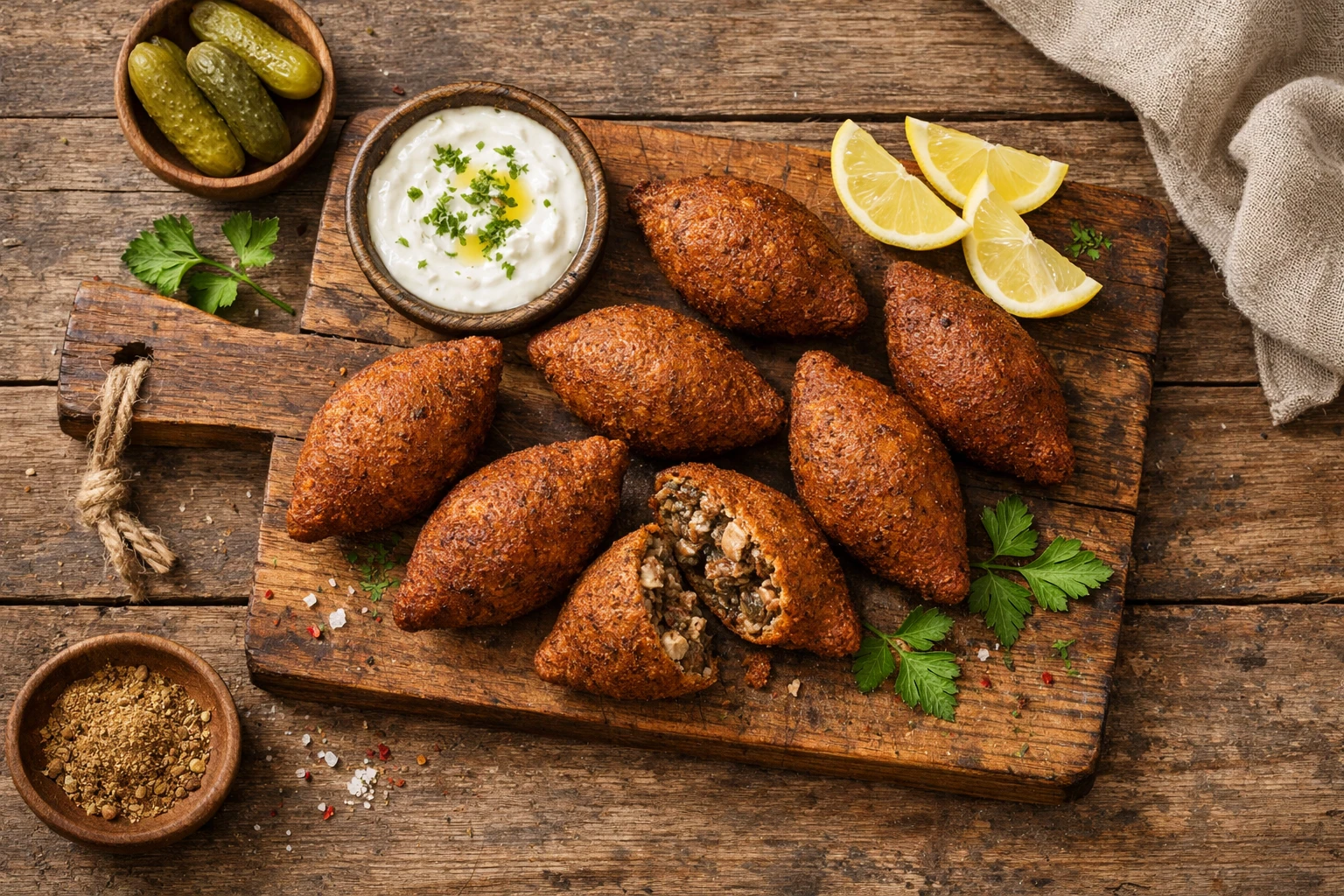
Quick Nutrition Facts
Per 2 Pieces (80g)
| Nutrient | Amount |
|---|---|
| Calories | 180 kcal |
| Protein | 12g |
| Carbohydrates | 12g |
| Fiber | 2.5g |
| Sugars | 0.5g |
| Fat | 10g |
| Iron | 2.1mg |
| Magnesium | 28mg |
| Phosphorus | 95mg |
| Vitamin B6 | 0.2mg |
Macronutrient Breakdown
 ChatGPT
  Claude
  AI Mode
  Perplexity
NUTRITIONIST INSIGHT
Kibbeh made with bulgur wheat provides lower glycemic index and high fiber compared to regular wheat dishes. The bulgur processing increases protein digestibility and mineral bioavailability while reducing antinutritional factors.
Myth Busters
MYTH #1: Kibbeh Is Too High in Calories for Weight Loss
TRUTH: Baked kibbeh has only 180 calories per 2 pieces with 12g protein. The high protein and fiber promote fullness. Choose baked over fried versions (which can have 300+ calories) to support weight management goals.
MYTH #2: All Middle Eastern Food Is Unhealthy
TRUTH: Kibbeh combines bulgur wheat with increased protein digestibility and lean meat for balanced nutrition. Traditional preparation methods enhance mineral bioavailability. Cooking method matters more than the dish itself.
MYTH #3: Kibbeh Has Too Much Fat
TRUTH: Well-prepared kibbeh with lean meat contains 10g fat per serving, much of it from healthy sources. The bulgur wheat provides complex carbs and fiber. Baking instead of deep-frying reduces fat by 40-50% while maintaining flavor.
MYTH #4: Bulgur Wheat Lacks Nutritional Value
TRUTH: Bulgur processing increases in-vitro protein digestibility by 20% and improves mineral bioavailability. It has lower glycemic index than refined grains and provides sustained energy without blood sugar spikes.
MYTH #5: Diabetics Should Avoid Kibbeh Completely
TRUTH: Kibbeh made with bulgur wheat has lower glycemic index and high fiber content. Diabetics can enjoy 1-2 pieces with vegetables and monitor blood sugar. The fiber helps slow glucose absorption.
NutriScore by Health Goals
| Health Goal | NutriScore | Why This Score? |
|---|---|---|
| Weight Loss |  | 180 calories, 12g protein promotes satiety, 2.5g fiber aids fullness. Choose baked version and limit to 2 pieces per meal. |
| Muscle Gain |  | Excellent protein (12g) with improved digestibility from bulgur processing, balanced carbs (12g) for energy, minerals for muscle function. |
| Diabetes Management | | Lower glycemic index from bulgur wheat, 2.5g fiber slows glucose absorption. Pair with vegetables and monitor levels. |
| PCOS Management |  | Moderate carbs affect insulin. Limit to 1-2 pieces, choose lean meat filling, pair with low-GI vegetables. |
| Pregnancy Nutrition | | Iron (2.1mg) for blood health, protein for fetal growth, B vitamins for energy. Ensure meat is fully cooked; baked version preferred. |
| Viral/Flu Recovery | | Easy to digest protein, minerals for immunity, complex carbs for sustained energy without digestive stress. |
PERSONALIZED NUTRITION
Track your meals with NutriScan for personalized NutriScores based on your specific health goals!
Blood Sugar Response to Kibbeh
Understanding how kibbeh affects your blood glucose can help you make informed decisions about portion sizes and meal pairings.
Typical Glucose Response Curve
This chart shows typical blood glucose response for general healthy individuals. Individual responses may vary. Not medical advice.
How to Flatten the Spike
Pairing kibbeh with protein-rich sides or vegetables slows glucose absorption and reduces peak blood sugar:
- 🥗 Mixed green salad with olive oil - Adds fiber and healthy fats
- 🥒 Cucumber yogurt (tzatziki) - Provides protein and probiotics
- 🍅 Fresh tomato and mint salad - Fiber and antioxidants
- 🫒 Hummus with vegetables - Complete protein and additional fiber
This combination extends energy release and maintains stable blood sugar levels for 3-4 hours.
Cultural Significance
Kibbeh is the national dish of Lebanon and Syria, with variations found throughout the Levantine region for over 1,000 years.
In Middle Eastern Culture:
- Considered the ultimate test of a cook's skill
- Traditional family recipes passed through generations
- Served at weddings, holidays, and special celebrations
- Variations include kibbeh nayyeh (raw), kibbeh bil sanieh (baked), kibbeh meshwiyyeh (grilled)
- Each region has unique spice blends and preparation methods
Global Impact:
- Recognized by UNESCO as part of Levantine culinary heritage
- Adapted in Armenian, Turkish, and Iraqi cuisines
- Modern versions include vegetarian bulgur-only preparations
- Growing popularity in health-conscious Western markets for bulgur benefits
Compare & Substitute
Kibbeh vs Similar Dishes (Per 100g)
| Nutrient | 🥟 Kibbeh (Baked) | 🫔 Falafel | 🧆 Meatballs | 🥙 Shawarma Wrap |
|---|---|---|---|---|
| Calories | 225 kcal | 333 kcal | 280 kcal | 250 kcal |
| Carbs | 15g | 32g | 8g | 22g |
| Fiber | 3.1g | 5g | 0.5g | 1.5g |
| Protein | 15g | 13g | 18g | 16g |
| Fat | 12.5g | 18g | 20g | 12g |
| Iron | 2.6mg | 3.3mg | 2.1mg | 1.8mg |
| Fiber | 3.1g (bulgur) | 5g (chickpeas) | 0.5g | 1.5g |
| Best For | Balanced protein & carbs | Vegetarian high-fiber meals | High protein muscle gain | Quick portable meals |
Frequently Asked Questions
Is kibbeh good for weight loss?
Kibbeh can support weight loss when prepared properly. Baked kibbeh has 180 calories per 2 pieces with 12g protein for satiety and 2.5g fiber for fullness.
Best practices: Choose baked over fried (saves 120+ calories); limit to 2-3 pieces per meal; pair with salad or grilled vegetables; use lean meat (beef or lamb with fat trimmed).
Can diabetics eat kibbeh?
Diabetics can eat kibbeh in moderation. Bulgur wheat has lower glycemic index and high fiber content compared to regular wheat products.
Tips for diabetics: Limit to 1-2 pieces per meal; choose baked versions; pair with vegetables and protein; monitor blood sugar 2 hours after eating; avoid fried preparations which add unnecessary fat and calories.
How much protein is in kibbeh?
Two pieces of kibbeh contain 12g of protein from the combination of meat filling and bulgur wheat. The bulgur processing increases protein digestibility, making the protein more bioavailable than raw ingredients.
For muscle gain or high-protein diets, kibbeh provides balanced protein with complex carbohydrates for sustained energy during workouts.
What are the main health benefits of kibbeh?
Key Benefits:
- Complete Protein: 12g per serving for muscle maintenance and repair
- Digestive Health: 2.5g fiber from bulgur supports regular bowel movements
- Lower Glycemic Index: Bulgur wheat prevents blood sugar spikes compared to refined grains
- Mineral Support: Iron (2.1mg) for blood health; magnesium (28mg) for muscle function; phosphorus (95mg) for bone health
- Improved Nutrient Absorption: Bulgur processing increases mineral bioavailability by 20-30%
- Sustained Energy: Complex carbohydrates provide 3-4 hours of steady energy
Is baked or fried kibbeh healthier?
Baked kibbeh is significantly healthier with 40-50% less fat and calories.
Baked kibbeh (per 100g): 225 calories, 12.5g fat, preserves protein and fiber, heart-healthy preparation.
Fried kibbeh (per 100g): 350+ calories, 25g fat (including saturated fat from oil), similar protein but higher cardiovascular risk.
Recommendation: Always choose baked, grilled, or air-fried versions for weight management, diabetes control, and heart health.
How many pieces of kibbeh should I eat?
General Guidelines:
- 2 pieces (80g) - Most people as appetizer or side dish (180 calories)
- 3-4 pieces (120-160g) - Active individuals, muscle gain, or main course with salad (270-360 calories)
- 1-2 pieces (40-80g) - Diabetes, PCOS, or strict calorie control
- 3 pieces (120g) - Pregnancy (balanced protein, iron, and energy)
Avoid excess: More than 4-5 pieces can provide too many calories and fat, especially if fried. Balance with vegetables and lean proteins throughout the day.
Track your meals with NutriScan app to see how kibbeh fits your personal nutrition goals.
What makes bulgur wheat in kibbeh healthy?
Bulgur wheat provides multiple health advantages: lower glycemic index for blood sugar control; high fiber (2.5g per serving) for digestive health; increased protein digestibility by 20%; improved mineral bioavailability (phosphorus, calcium, iron, magnesium); reduced antinutritional factors through processing.
This makes bulgur superior to refined wheat products for sustained energy, satiety, and overall nutritional value.


Similar Nutritious Foods
4505 Chicharrones Classic Chili Salt
7 Eleven Japan Crispy Corn Cheese
Explore More Nutrition Tools & Resources
AI Calorie Counter App - Snap a Photo, Get Macros
AI Nutritionist App That Reads Your Logged Meals
Best Protein Supplements for Women
Bulking Meal Plan App That Sets Your Surplus
ChatGPT Calorie Counter Alternative That Keeps the Total
ChatGPT Diet Plan Alternative That Tracks What You Eat
ChatGPT Weight Loss Coach Alternative With a Food Log
Fast Food Calorie Counter App That Reads the Tray
Free Calorie Tracker App with AI Photo Scans | NutriScan
Indian Diet Plan App With Veg and Non Veg Meals
Indian Food Calorie Calculator - Get Instant Nutrition Facts for Desi Meals — 2026
Intermittent Fasting for Women, Timer and Meal Log App
Intermittent Fasting Tracker App - Free Fasting Timer
Macro Tracker App That Fills the Numbers From a Photo
Mediterranean Diet Meal Plan App That Counts the Oil
Micronutrient Tracker App for Vitamins and Minerals
MyFitnessPal Alternative That Stays Free | NutriScan
NutriScore App: A Free Grade on Every Meal | NutriScan
Nutrition Label Scanner App for the Amount You Ate
Second Trimester Protein Guide
Vegetarian Meal Plan App With a Protein Target
Voice Calorie Counter - Speak to Track Meals Hands-Free
Water and Calorie Tracker App - Free Water Log