Kimbap: Calories, Nutrition and Health Benefits
Korea's beloved seaweed rice roll packed with colorful vegetables, protein, and balanced nutrition for a satisfying on-the-go meal.
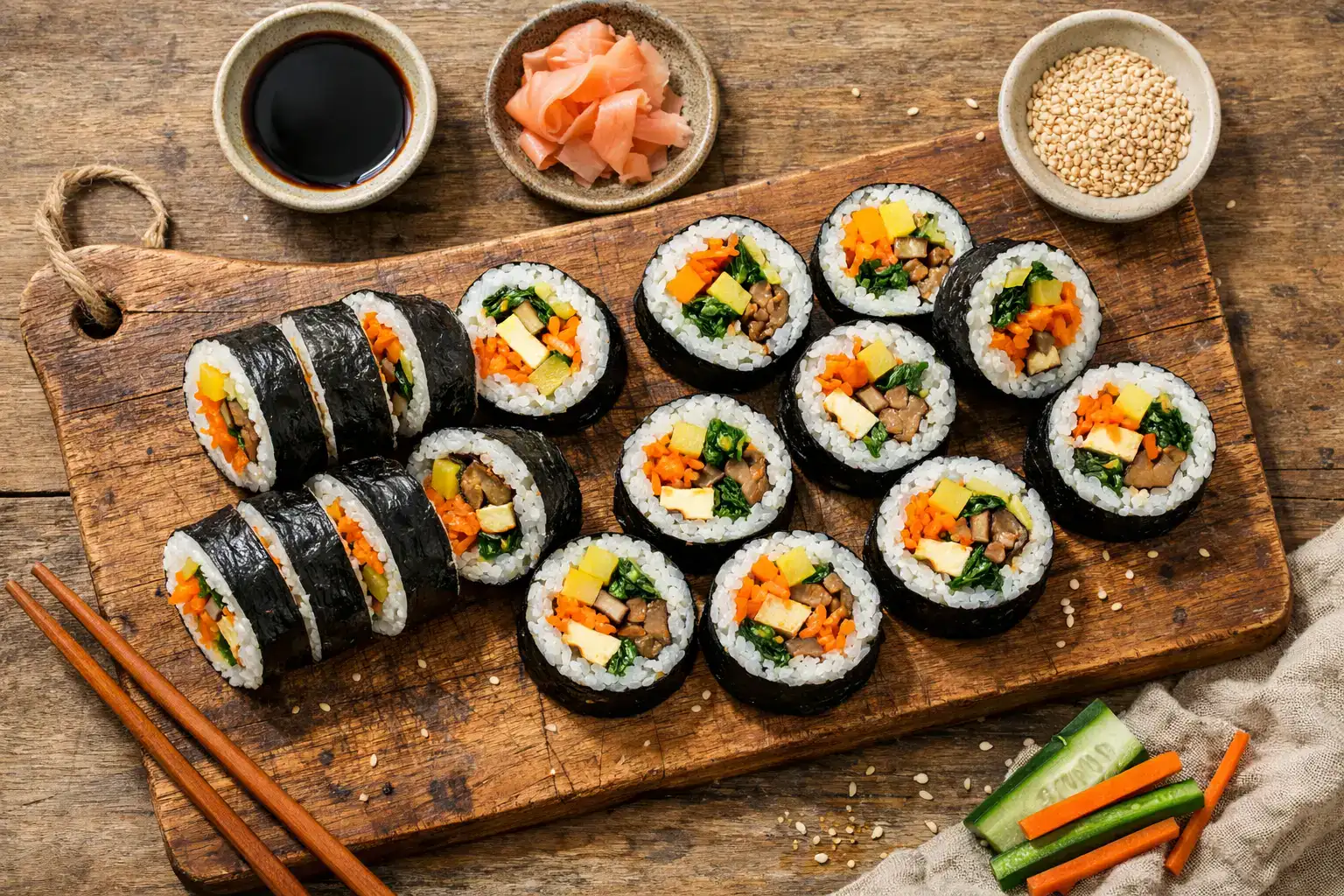
Quick Nutrition Facts
Per 1 Roll (200g)
| Nutrient | Amount |
|---|---|
| Calories | 300 kcal |
| Protein | 10g |
| Carbohydrates | 50g |
| Fiber | 3.5g |
| Sugars | 6g |
| Fat | 8g |
| Sodium | 706mg |
| Iron | 1.8mg |
| Calcium | 59mg |
| Potassium | 235mg |
Macronutrient Breakdown
 ChatGPT
  Claude
  AI Mode
  Perplexity
NUTRITIONIST INSIGHT
Kimbap provides a well-balanced meal with carbs from rice, protein from fillings, and essential iodine from nori seaweed. The combination of vegetables adds fiber and micronutrients, making it more nutritious than plain rice dishes.
Myth Busters
MYTH #1: Kimbap is Unhealthy Fast Food
TRUTH: Kimbap is a balanced meal with protein, vegetables, and carbs. Unlike fried fast food, it's steamed and rolled with minimal added fats. Seaweed provides essential minerals and antioxidants not found in typical fast foods.
MYTH #2: Kimbap and Sushi Are the Same
TRUTH: While similar in appearance, kimbap uses sesame oil-seasoned rice (not vinegared), typically has cooked fillings, and includes more vegetables. The flavor profiles and preparation methods differ significantly between Korean and Japanese traditions.
MYTH #3: Kimbap is Too High in Carbs
TRUTH: At 25g carbs per 100g, kimbap has moderate carbohydrate content similar to a sandwich. The protein and fiber from fillings help slow carb absorption, providing sustained energy rather than rapid spikes.
MYTH #4: Seaweed in Kimbap Has Too Much Iodine
TRUTH: The nori used in kimbap contains safe iodine levels for most people. Seaweed consumption actually helps prevent iodine deficiency, especially important for pregnant women and those avoiding iodized salt.
MYTH #5: Kimbap is Only for Snacking
TRUTH: One full roll (300 calories) with 10g protein makes kimbap a legitimate meal. It's commonly eaten as lunch in Korea. Pair with soup for a complete, satisfying meal that keeps you full for hours.
MYTH #6: All Kimbap Fillings Are Processed
TRUTH: Traditional kimbap contains fresh vegetables (spinach, carrots, radish), egg, and can include fresh beef or tofu. Vegetable-rich kimbap provides fiber, vitamins, and minerals with minimal processing.
NutriScore by Health Goals
| Health Goal | NutriScore | Why This Score? |
|---|---|---|
| Weight Loss |  | 150 calories per 100g with 5g protein and 1.5g fiber promotes fullness. Portion control key - stick to 1 roll. |
| Muscle Gain | | Good carb source (50g per roll) for energy. Add extra protein fillings (egg, beef, tofu) to boost to 15g+ protein. |
| Diabetes Management |  | White rice has moderate GI (64). Eat half portions, choose vegetable-heavy varieties, pair with protein. |
| PCOS Management | | Moderate carbs affect insulin. Choose brown rice kimbap when available, limit to half roll, add extra vegetables. |
| Pregnancy Nutrition |  | Seaweed provides essential iodine for fetal brain development. Folate from spinach, iron from vegetables. Avoid raw fish versions. |
| Viral/Flu Recovery | | Easy to digest, balanced nutrition for recovery. Gentle on stomach, provides sustained energy without heavy fats. |
PERSONALIZED NUTRITION
Track your meals with NutriScan for personalized NutriScores based on your specific health goals!
Blood Sugar Response to Kimbap
Understanding how kimbap affects your blood glucose helps optimize when and how to enjoy this Korean favorite.
Typical Glucose Response Curve
This chart shows typical blood glucose response for general healthy individuals. Individual responses may vary. Not medical advice.
How to Flatten the Spike
Pairing carbohydrates with protein and fiber slows glucose absorption and reduces blood sugar peaks:
- 🥗 Add extra vegetables - Cucumber, radish, or leafy greens on the side
- 🍳 Choose protein-rich fillings - Egg, beef, or tofu varieties
- 🥜 Pair with edamame - Adds plant protein and fiber
- 🍵 Drink green tea - May help moderate glucose response
This combination not only reduces the glucose spike but also extends energy release, keeping you satisfied longer.
Cultural Significance
Kimbap has been a beloved Korean dish since the early 20th century, evolving from Japanese influence into a distinctly Korean creation.
In Korea:
- Essential picnic and travel food - portable, no utensils needed
- Popular school lunch and office snack across all generations
- Regional variations: Chungmu-kimbap (no filling, served with squid), Mayak-kimbap (mini "addictive" rolls)
- Home cooking tradition passed through generations, each family has signature recipes
Global Impact:
- Growing popularity in Korean wave (Hallyu) countries
- Featured in Korean dramas and K-pop content worldwide
- Available in Korean restaurants, Asian supermarkets, and now mainstream grocery stores
- Recognized as a healthy alternative to fast food by health-conscious consumers globally
Compare & Substitute
Kimbap vs Similar Rice Rolls (Per 100g)
| Nutrient | 🍙 Kimbap | 🍣 Sushi Roll | 🌯 Burrito | 🥢 Onigiri |
|---|---|---|---|---|
| Calories | 150 kcal | 140 kcal | 180 kcal | 130 kcal |
| Carbs | 25g | 28g | 22g | 28g |
| Fiber | 1.5g | 0.5g | 2g | 0.5g |
| Protein | 5g | 4g | 7g | 3g |
| Fat | 4g | 3g | 7g | 1g |
| Sodium | 300mg | 350mg | 450mg | 280mg |
| Best For | Balanced portable meal | Quick light meal, raw fish lovers | Higher protein, heartier meal | Simple snack, low-fat |
Frequently Asked Questions
Is kimbap good for weight loss?
Yes, kimbap supports weight loss when eaten in moderation. At 150 calories per 100g with balanced macros, it provides sustained energy without excess calories. The fiber and protein from vegetable and meat fillings promote satiety.
Best practices: Limit to 1 roll per meal (300 calories), choose vegetable-heavy varieties, avoid fried versions, and pair with soup for added volume with minimal calories.
Can diabetics eat kimbap?
Diabetics can enjoy kimbap in moderation. The white rice has a GI around 64, but protein and vegetable fillings help moderate blood sugar response.
Tips for diabetics:
- Eat half a roll at a time (150 calories, 25g carbs)
- Choose varieties with more vegetables and protein
- Best timing: lunch when activity level is higher
- Monitor blood sugar 2 hours after eating
- Consider brown rice kimbap when available
How much protein is in kimbap?
One full kimbap roll (200g) contains 10 grams of protein from ingredients like egg, fish cake, and meat fillings. Per 100g, kimbap provides about 5g protein.
To increase protein: choose beef, tuna, or egg varieties. Add extra protein-rich fillings when making at home, or pair with edamame or tofu soup on the side.
What are the main health benefits of kimbap?
Key Benefits:
- Thyroid Health: Nori seaweed provides iodine essential for thyroid function
- Balanced Energy: Combination of carbs, protein, and fat for sustained energy
- Digestive Health: Fiber from vegetables supports gut health
- Nutrient Variety: Multiple fillings provide vitamins A, C, iron, and calcium
- Heart Health: Seaweed contains compounds that may support cardiovascular function
- Portable Nutrition: Complete meal nutrition in convenient handheld form
When is the best time to eat kimbap?
Depends on your goal:
- Weight Loss: Lunch (higher activity burns carbs) or post-workout. Avoid late evening.
- Muscle Gain: Post-workout (within 1 hour) for glycogen replenishment.
- Diabetes: Lunch when activity level is higher. Pair with soup for slower eating.
- Energy: 1-2 hours before physical activity or long work sessions.
IMPORTANT NOTE
Store at room temperature for same-day consumption only. Refrigerate if keeping longer, but rice texture may change.
Is homemade kimbap healthier than store-bought?
Homemade kimbap allows control over ingredients and sodium levels. You can use brown rice, add more vegetables, choose lean proteins, and reduce sesame oil for lower calories.
Homemade advantages:
- Control sodium (store-bought often high in salt)
- Fresh vegetables vs preserved
- Custom protein choices
- Portion control
- No preservatives
Store-bought convenience: Pre-portioned, convenient, consistent taste. Read labels for sodium content (aim for under 500mg per roll).
How many kimbap rolls should I eat per day?
General Guidelines:
- 1 roll (300 calories) - Standard meal portion for most people
- Half roll (150 calories) - Snack or side dish, good for diabetes/weight loss
- 1-2 rolls daily - Athletes, active individuals, or those with higher calorie needs
Avoid excess: More than 2 rolls per day may provide too much sodium (1,400mg+) and carbohydrates. Balance with protein and vegetable-based meals.
Track your meals with NutriScan app to see how kimbap fits your personal nutrition goals.
Can I eat kimbap during pregnancy?
Generally safe and nutritious for pregnancy when made with cooked ingredients.
Benefits during pregnancy:
- Iodine from seaweed for fetal brain development
- Folate from spinach for neural tube development
- Iron for increased blood volume
- Gentle, easily digestible meal for morning sickness
Precautions: Avoid raw fish varieties (choose cooked beef, egg, or vegetable). Check sodium intake if monitoring blood pressure. Consume within a few hours of preparation for food safety.


Similar Nutritious Foods
4505 Chicharrones Classic Chili Salt
7 Eleven Japan Crispy Corn Cheese
Explore More Nutrition Tools & Resources
AI Calorie Counter App - Snap a Photo, Get Macros
AI Nutritionist App That Reads Your Logged Meals
Best Protein Supplements for Women
Bulking Meal Plan App That Sets Your Surplus
ChatGPT Calorie Counter Alternative That Keeps the Total
ChatGPT Diet Plan Alternative That Tracks What You Eat
ChatGPT Weight Loss Coach Alternative With a Food Log
Fast Food Calorie Counter App That Reads the Tray
Free Calorie Tracker App with AI Photo Scans | NutriScan
Indian Diet Plan App With Veg and Non Veg Meals
Indian Food Calorie Calculator - Get Instant Nutrition Facts for Desi Meals — 2026
Intermittent Fasting for Women, Timer and Meal Log App
Intermittent Fasting Tracker App - Free Fasting Timer
Macro Tracker App That Fills the Numbers From a Photo
Mediterranean Diet Meal Plan App That Counts the Oil
Micronutrient Tracker App for Vitamins and Minerals
MyFitnessPal Alternative That Stays Free | NutriScan
NutriScore App: A Free Grade on Every Meal | NutriScan
Nutrition Label Scanner App for the Amount You Ate
Second Trimester Protein Guide
Vegetarian Meal Plan App With a Protein Target
Voice Calorie Counter - Speak to Track Meals Hands-Free
Water and Calorie Tracker App - Free Water Log