Kitchen Couture Olive Oil: Calories, Nutrition and Health Benefits
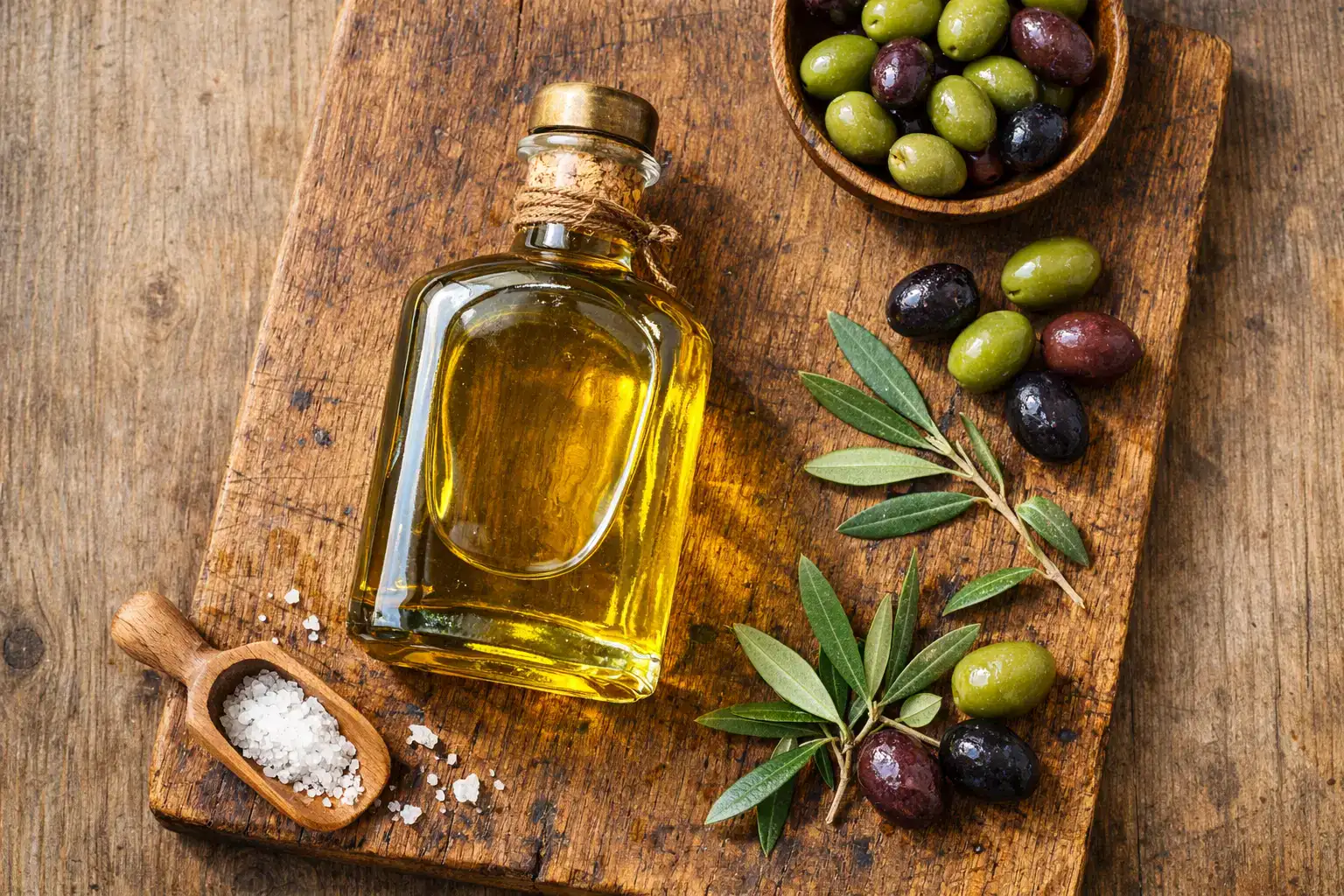
Premium extra virgin olive oil in an artisan bottle - the cornerstone of the Mediterranean diet with heart-healthy monounsaturated fats and powerful polyphenols.
Quick Nutrition Facts
Per 1 Tablespoon (14g)
| Nutrient | Amount |
|---|---|
| Calories | 119 kcal |
| Protein | 0g |
| Carbohydrates | 0g |
| Fiber | 0g |
| Sugars | 0g |
| Total Fat | 14g |
| Monounsaturated Fat | 10g |
| Polyunsaturated Fat | 1.4g |
| Saturated Fat | 2g |
| Vitamin E | 1.9mg |
| Vitamin K | 8.1mcg |
Macronutrient Breakdown
 ChatGPT
  Claude
  AI Mode
  Perplexity
NUTRITIONIST INSIGHT
Extra virgin olive oil is 73% oleic acid, a monounsaturated fat proven to reduce inflammation and support heart health. The polyphenols in EVOO act as powerful antioxidants that protect cells from oxidative damage.
Myth Busters
MYTH #1: Olive Oil Makes You Fat
TRUTH: While calorie-dense (119 cal/tbsp), olive oil's monounsaturated fats promote satiety and support metabolic health. Studies show Mediterranean diets rich in olive oil are associated with lower obesity rates than low-fat diets.
MYTH #2: You Can't Cook with Olive Oil at High Heat
TRUTH: EVOO has a smoke point of 375-410°F (190-210°C), suitable for sautéing, roasting, and most cooking. The polyphenols actually provide stability during heating. Only avoid for deep frying above 400°F.
MYTH #3: All Olive Oils Are the Same
TRUTH: Extra virgin olive oil (cold-pressed, first extraction) contains 30+ polyphenols and maximum antioxidants. Refined/light olive oils lose most beneficial compounds during chemical processing. Always choose EVOO for health benefits.
MYTH #4: Olive Oil Causes High Cholesterol
TRUTH: Olive oil actually improves cholesterol profiles by raising HDL (good) cholesterol and lowering LDL (bad) cholesterol. The monounsaturated fats replace harmful saturated and trans fats in your diet.
MYTH #5: Olive Oil Has No Nutritional Value Besides Fat
TRUTH: Beyond healthy fats, EVOO provides vitamin E (antioxidant), vitamin K (bone health), and over 30 polyphenolic compounds with anti-inflammatory, anticancer, and neuroprotective properties.
NutriScore by Health Goals
| Health Goal | NutriScore | Why This Score? |
|---|---|---|
| Weight Loss |  | Calorie-dense but promotes satiety. Limit to 1-2 tbsp/day; use as primary fat source instead of butter. |
| Muscle Gain | | Healthy calorie source for bulking, reduces inflammation for recovery. Add to meals, don't drink straight. |
| Diabetes Management |  | Zero carbs, zero glycemic impact. EVOO improves insulin sensitivity and blood sugar control. Use freely. |
| PCOS Management | | Anti-inflammatory polyphenols help manage PCOS symptoms. No insulin spike concerns. |
| Pregnancy Nutrition | | Safe and beneficial. Provides vitamin E for fetal development, healthy fats support brain development. Part of Mediterranean diet recommended during pregnancy. |
| Viral/Flu Recovery | | Anti-inflammatory properties support immune function. Easy to add to soups and meals for extra nutrition. |
PERSONALIZED NUTRITION
Track your meals with NutriScan for personalized NutriScores based on your specific health goals!
Blood Sugar Response to Olive Oil
Understanding how olive oil affects your blood glucose can help you make informed decisions about incorporating it into meals.
Typical Glucose Response Curve
This chart shows typical blood glucose response for general healthy individuals. Olive oil has zero carbs and minimal glycemic impact. Individual responses may vary. Not medical advice.
How Olive Oil Helps Flatten Blood Sugar Spikes
Adding olive oil to carbohydrate-rich meals slows glucose absorption and reduces blood sugar spikes:
- 🍞 Drizzle on bread - Instead of butter, use EVOO to slow carb absorption
- 🥗 Dress your salads - Fat with vegetables improves nutrient absorption
- 🍝 Add to pasta - Olive oil reduces the glycemic impact of pasta dishes
- 🥔 Roast vegetables - Cooking veggies in olive oil lowers their glycemic response
This combination not only reduces glucose spikes but also enhances the absorption of fat-soluble vitamins A, D, E, and K.
Cultural Significance
Olive oil has been called "liquid gold" for over 6,000 years, originating in the Mediterranean basin.
In Mediterranean Culture:
- Central to Greek, Italian, Spanish, and Middle Eastern cuisines
- Symbol of peace, prosperity, and wisdom since ancient times
- Used in religious ceremonies across Christianity, Judaism, and Islam
- Olympic athletes were anointed with olive oil in ancient Greece
In India:
- Growing popularity as a premium cooking oil for health-conscious consumers
- Used in Ayurvedic oil pulling (gandusha) for oral health
- Featured in high-end cooking and salad preparations
- Increasingly used for baby massage and skincare
Global Impact:
- Spain produces 50% of world's olive oil
- Mediterranean diet (olive oil-centric) recognized by UNESCO as cultural heritage
- Linked to longest-living populations in Blue Zones
Compare & Substitute
Olive Oil vs Other Cooking Oils (Per 100g)
| Nutrient | 🫒 EVOO | 🥥 Coconut Oil | 🧈 Butter | 🥑 Avocado Oil |
|---|---|---|---|---|
| Calories | 884 kcal | 862 kcal | 717 kcal | 884 kcal |
| Total Fat | 100g | 100g | 81g | 100g |
| Saturated Fat | 14g | 82g | 51g | 12g |
| Monounsaturated | 73g | 6g | 21g | 71g |
| Polyunsaturated | 11g | 2g | 3g | 14g |
| Vitamin E | 14mg | 0.1mg | 2.3mg | 13mg |
| Smoke Point | 375-410°F | 350°F | 302°F | 480-520°F |
| Best For | Daily cooking, dressing | Baking, high-heat | Flavor, baking | High-heat cooking |
Frequently Asked Questions
Is olive oil good for weight loss?
Yes, olive oil supports weight loss when used strategically. The monounsaturated fats promote satiety, helping control appetite. Replace butter and vegetable oils with 1-2 tablespoons of EVOO daily for best results.
Best practices: Use as primary cooking fat, drizzle on salads, don't add to already-fatty meals, measure portions (1 tbsp = 119 cal).
Can diabetics use olive oil?
Olive oil is excellent for diabetics. It has zero carbs and zero glycemic impact, meaning it won't raise blood sugar at all.
Tips for diabetics:
- Use freely as your primary cooking and dressing oil
- Drizzle on carb-rich foods to lower their glycemic impact
- Choose EVOO for maximum polyphenol benefits
- Replace butter and margarine to improve cholesterol
Studies show EVOO improves insulin sensitivity over time. Consult your healthcare provider for personalized guidance.
How many calories are in a tablespoon of olive oil?
One tablespoon (14g) of extra virgin olive oil contains 119 calories. All calories come from fat (14g), with zero protein, carbs, or fiber.
For cooking, this matters: a generous drizzle can add 200+ calories to a dish. Measure when tracking calories.
What are the main health benefits of olive oil?
Key Benefits:
- Heart Health: Monounsaturated fats lower LDL cholesterol and blood pressure
- Anti-Inflammatory: Polyphenols reduce chronic inflammation
- Brain Health: Linked to reduced Alzheimer's and cognitive decline risk
- Cancer Prevention: Antioxidants may reduce breast and colon cancer risk
- Blood Sugar Control: Improves insulin sensitivity in diabetics
- Skin Health: Vitamin E and antioxidants protect skin from aging
Is it safe to cook with olive oil at high heat?
Yes, EVOO is safe for most cooking. Its smoke point (375-410°F) handles sautéing, roasting, and pan-frying well.
Guidelines:
- Safe for: Sautéing, roasting, baking, pan-frying, grilling
- Avoid for: Deep frying above 400°F, smoking-hot wok cooking
- Better choice for high heat: Refined olive oil or avocado oil
The polyphenols in EVOO actually provide stability during heating, making it more resistant to oxidation than many seed oils.
What's the difference between extra virgin and regular olive oil?
Extra Virgin Olive Oil (EVOO):
- Cold-pressed from first extraction
- No chemicals or heat processing
- Maximum polyphenols (30+ compounds)
- Best flavor, most health benefits
- Best for: dressings, dipping, low-medium heat cooking
Regular/Refined Olive Oil:
- Chemically processed and filtered
- Neutral taste, fewer antioxidants
- Higher smoke point (470°F)
- Best for: high-heat cooking, baking
Recommendation: Use EVOO for health benefits and flavor; refined for very high-heat cooking.
How much olive oil should I consume daily?
General Guidelines:
- 1-2 tablespoons daily - Optimal for health benefits (238 cal)
- 3-4 tablespoons - Mediterranean diet allowance (more active individuals)
- Limit to 1 tbsp - If strictly counting calories for weight loss
The Mediterranean diet, associated with longest lifespans, uses olive oil as the primary fat source. Replace, don't add to, other fats in your diet.
Track your meals with NutriScan app to see how olive oil fits your personal nutrition goals.


Similar Nutritious Foods
4505 Chicharrones Classic Chili Salt
7 Eleven Japan Crispy Corn Cheese
Explore More Nutrition Tools & Resources
AI Calorie Counter App - Snap a Photo, Get Macros
AI Nutritionist App That Reads Your Logged Meals
Best Protein Supplements for Women
Bulking Meal Plan App That Sets Your Surplus
ChatGPT Calorie Counter Alternative That Keeps the Total
ChatGPT Diet Plan Alternative That Tracks What You Eat
ChatGPT Weight Loss Coach Alternative With a Food Log
Fast Food Calorie Counter App That Reads the Tray
Free Calorie Tracker App with AI Photo Scans | NutriScan
Indian Diet Plan App With Veg and Non Veg Meals
Indian Food Calorie Calculator - Get Instant Nutrition Facts for Desi Meals — 2026
Intermittent Fasting for Women, Timer and Meal Log App
Intermittent Fasting Tracker App - Free Fasting Timer
Macro Tracker App That Fills the Numbers From a Photo
Mediterranean Diet Meal Plan App That Counts the Oil
Micronutrient Tracker App for Vitamins and Minerals
MyFitnessPal Alternative That Stays Free | NutriScan
NutriScore App: A Free Grade on Every Meal | NutriScan
Nutrition Label Scanner App for the Amount You Ate
Second Trimester Protein Guide
Vegetarian Meal Plan App With a Protein Target
Voice Calorie Counter - Speak to Track Meals Hands-Free
Water and Calorie Tracker App - Free Water Log