KitKat 4 Finger: Calories, Nutrition and Health Benefits
Crispy wafer layers coated in smooth milk chocolate—a classic treat combining satisfying crunch with indulgent flavor for occasional snacking.
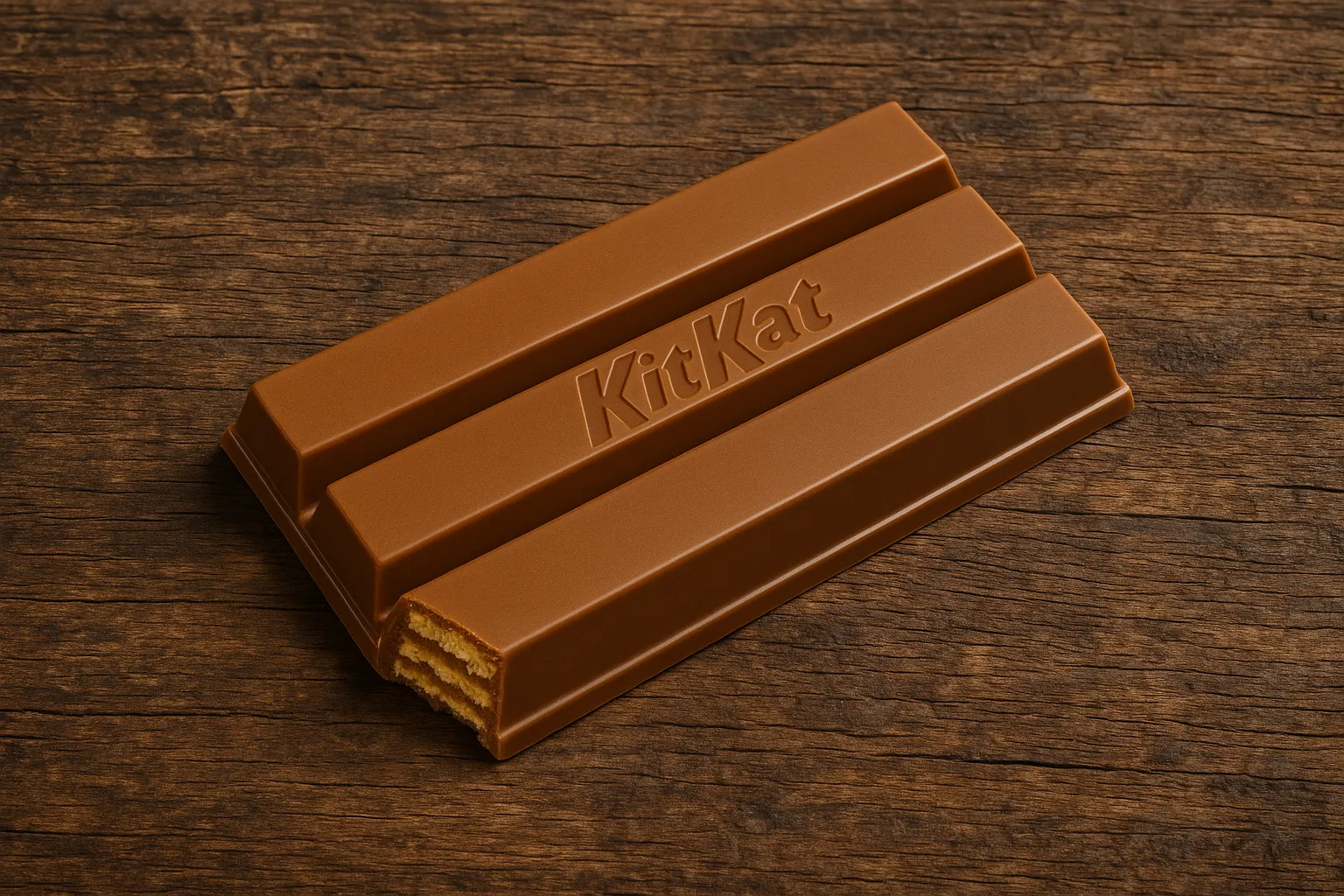
Quick Nutrition Facts
Per 1 Bar (45g)
| Nutrient | Amount |
|---|---|
| Calories | 218 kcal |
| Protein | 3.8g |
| Carbohydrates | 27g |
| Fiber | 0.5g |
| Sugars | 16g |
| Fat | 11g |
| Saturated Fat | 5.5g |
| Sodium | 58mg |
| Caffeine | 9mg |
Macronutrient Breakdown
 ChatGPT
  Claude
  AI Mode
  Perplexity
NUTRITIONIST INSIGHT
KitKat's appeal lies in its satisfying wafer crunch and portion control structure with individual fingers. While higher in sugar (16g per bar), the thin wafer design reduces overall fat density compared to solid chocolate bars.
KitKat Calories by Bar Size
KitKat calories depend on which bar you picked up, and pack sizes differ between markets. These are the figures Nestlé prints for the UK range, plus the 45 g bar sold in several other countries.
| Bar | Weight | Calories |
|---|---|---|
| One finger, from a 4 finger bar | About 10 g | 52 kcal |
| 2 Finger milk chocolate | 20.7 g | 104 kcal |
| 4 Finger milk chocolate, UK | 41.5 g | 209 kcal |
| 4 Finger milk chocolate, 45 g pack | 45 g | 218 kcal |
| Chunky milk | 40 g | 203 kcal |
| Milk chocolate, per 100 g | 100 g | 504 kcal |
Two things set the number. Sugar and wafer make up most of the bar, so a UK 4 finger runs to 26.1 g of carbohydrates, of which 21.3 g is sugar. The milk chocolate coating adds 10.2 g of fat, and fat is what pushes the per 100 g figure past 500 kcal. Official values come from kitkat.co.uk.
How that compares per serving
| Snack | Serving | Calories |
|---|---|---|
| KitKat 4 Finger | 41.5 g | 209 kcal |
| KitKat 2 Finger | 20.7 g | 104 kcal |
| Snickers | 52.7 g | 250 kcal |
Myth Busters
MYTH #1: Eating KitKat in Moderation is Fine for Any Diet
TRUTH: The 27g carbohydrates and 16g added sugars cause rapid blood glucose elevation. A study on chocolate consumption showed sustained energy crashes after 30-60 minutes, making it unsuitable for frequent consumption by anyone managing blood sugar.
MYTH #2: Breaking It Into Fingers Means Fewer Calories
TRUTH: The four-finger structure is purely marketing. All 218 calories are consumed whether you eat one finger or the whole bar. Breaking fingers provides portion control psychology but not metabolic benefit.
MYTH #3: KitKat is Healthier Because It Has Wafer, Not Solid Chocolate
TRUTH: While wafers reduce fat slightly (11g vs. 13g+ in solid bars), the carbohydrate and sugar content remains high, making it comparable nutritionally to other chocolate treats.
MYTH #4: The Caffeine in KitKat Provides Energy
TRUTH: At 9mg per bar, caffeine content is minimal (coffee has 95mg). The energy sensation comes from sugar-induced glucose spikes, not caffeine stimulation. This leads to crashes rather than sustained energy.
MYTH #5: Dark Chocolate KitKat is Significantly Healthier
TRUTH: Dark chocolate KitKat still contains 16g sugars and 24g carbs, with minimal additional antioxidants. The polyphenol benefit of dark chocolate requires 70%+ cacao, which KitKat dark does not achieve.
NutriScore by Health Goals
| Health Goal | NutriScore | Why This Score? |
|---|---|---|
| Weight Loss |  | 218 calories, minimal fiber (0.5g), high sugar crashes interrupt satiety. Best avoided or limited to once-monthly treats. |
| Muscle Gain |  | 27g carbs useful post-workout, but 3.8g protein insufficient for muscle synthesis. Pair with protein shake for better muscle support. |
| Diabetes Management |  | 16g added sugars and GI 70+ cause rapid spikes. Not recommended; explore sugar-free alternatives if cravings arise. |
| PCOS Management | | Refined carbs and sugar directly conflict with PCOS insulin management. Strict avoidance recommended. |
| Pregnancy Nutrition | | Occasional treat acceptable; carbs support energy needs. Limit to once weekly to control excess sugar intake during pregnancy. |
| Viral/Flu Recovery |  | Quick energy during recovery phase, easy to digest. However, energy crash may worsen weakness; better paired with protein/fat for stability. |
PERSONALIZED NUTRITION
Track your meals with NutriScan for personalized NutriScores based on your specific health goals!
Blood Sugar Response to KitKat
KitKat's high glycemic load triggers rapid glucose elevation followed by sharp decline, creating energy crashes typical of refined-sugar treats.
Typical Glucose Response Curve
This chart shows typical blood glucose response for general healthy individuals. Individual responses may vary. Not medical advice.
How to Mitigate the Spike
If consuming KitKat, pair with protein or fat to slow glucose absorption:
- 🥜 Peanut butter or almonds - Adds fat and protein; reduces peak glucose
- 🥛 Milk or curd (dahi) - Protein and calcium slow carb absorption
- 🥜 Nuts (handful) - Balanced fat and fiber prevent crash
- 🍗 Hard-boiled egg - Complete protein extends satiety and energy stability
Combining KitKat with protein extends energy duration by 2–3 hours compared to eating it alone.
Cultural Significance
KitKat, originally created by Rowntree's in York, England (1935), became a global icon for the "Have a break" campaign.
Global Adoption:
- Over 700 million sold annually across 100+ countries
- Japan pioneered regional flavors (matcha, wasabi, sweet potato); inspiration model for global variations
- India: Iconic afternoon tea snack since 1950s; significant share of chocolate consumption
- Nestle product now; ubiquitous in Western convenience culture
Wafer Chocolate Innovation:
The crispy wafer-and-chocolate combination revolutionized snacking, becoming the standard for portion-controlled chocolate treats worldwide.
Compare & Substitute
KitKat vs Similar Chocolate Snacks (Per Bar or Serving)
| Nutrient | 🍫 KitKat 4F (45g) | 🍫 Snickers (52.7g) | 🍫 Twix (50g) | 🍪 Digestive Biscuit (30g) |
|---|---|---|---|---|
| Calories | 218 kcal | 250 kcal | 250 kcal | 150 kcal |
| Carbs | 27g | 33g | 32g | 20g |
| Fiber | 0.5g | 1g | 0.5g | 1.5g |
| Protein | 3.8g | 4.2g | 2.2g | 2.8g |
| Fat | 11g | 12g | 12g | 6g |
| Sugar | 16g | 27g | 21g | 8g |
| Best For | Occasional treat | Energy boost | Caramel craving | Tea-time biscuit |
Frequently Asked Questions
Is KitKat 4 Finger good for weight loss?
Not ideal. At 218 calories with minimal fiber (0.5g) and high sugar (16g), KitKat provides calorie density without satiety. The refined carbs cause blood sugar crashes, triggering hunger within 30–60 minutes. Best avoided during weight loss; if desired, limit to once weekly and pair with protein.
Can diabetics eat KitKat?
Diabetics should avoid regular KitKat. The 27g carbohydrates, 16g sugars, and glycemic index around 70 cause rapid blood glucose elevation. Sugar-free KitKat variants are safer but still contain sugar alcohols; consult healthcare providers. Better alternatives: sugar-free dark chocolate or nuts.
How much sugar is in one KitKat bar?
16g of added sugars per 45g bar. This represents approximately 4 teaspoons of pure sugar, exceeding WHO recommendations for added sugar per serving. Children's guideline (max 25g daily) is exceeded by one bar alone.
When should I eat KitKat for best energy?
Post-workout (within 30 minutes) for glycogen replenishment or as afternoon snack to combat energy dips. However, pair with protein or fat to prevent crashes. Avoid on empty stomach, before sleep, or if managing blood sugar. Best consumed as once-weekly indulgence.
Is KitKat Dark healthier than regular KitKat?
Marginally. Dark KitKat has similar sugar (16g) and carbs (24g) with negligible antioxidant increase over milk chocolate. True dark chocolate benefit requires 70%+ cacao; KitKat dark achieves only 45–50%. Not significantly healthier; choose based on taste preference.
IMPORTANT NOTE
KitKat is a treat food, not a nutritious snack. Frequent consumption increases risk of weight gain, tooth decay, and blood sugar dysregulation. Reserve for occasional indulgences within balanced nutrition plans.
How many KitKat bars can I eat per day?
Maximum 1 bar daily without exceeding added sugar guidelines (25-36g); realistically, 1 bar weekly for most health goals. Athletes may tolerate post-workout consumption better due to carb utilization. Track total daily sugar intake; one KitKat may consume 40–65% of daily limit.
Does KitKat contain caffeine?
Yes, 9mg per bar from cocoa solids. This is minimal compared to coffee (95mg) or cola (34mg). The perceived energy boost comes from sugar spikes, not caffeine stimulation. Sensitive individuals may experience mild stimulation; not recommended before sleep.
How many KitKat calories are in a 4 finger bar?
A UK KitKat 4 Finger milk chocolate bar weighs 41.5 g and carries 209 kcal, with 26.1 g carbohydrates, 21.3 g sugars, 10.2 g fat and 2.8 g protein. That works out to about 52 kcal per finger and roughly 504 kcal per 100 g. The 45 g bar sold in some markets comes to 218 kcal, and a 2 Finger bar is 104 kcal. Figures are from Nestlé's own product pages.


Similar Nutritious Foods
4505 Chicharrones Classic Chili Salt
7 Eleven Japan Crispy Corn Cheese
Explore More Nutrition Tools & Resources
AI Calorie Counter App - Snap a Photo, Get Macros
AI Nutritionist App That Reads Your Logged Meals
Best Protein Supplements for Women
Bulking Meal Plan App That Sets Your Surplus
ChatGPT Calorie Counter Alternative That Keeps the Total
ChatGPT Diet Plan Alternative That Tracks What You Eat
ChatGPT Weight Loss Coach Alternative With a Food Log
Fast Food Calorie Counter App That Reads the Tray
Free Calorie Tracker App with AI Photo Scans | NutriScan
Indian Diet Plan App With Veg and Non Veg Meals
Indian Food Calorie Calculator - Get Instant Nutrition Facts for Desi Meals — 2026
Intermittent Fasting for Women, Timer and Meal Log App
Intermittent Fasting Tracker App - Free Fasting Timer
Macro Tracker App That Fills the Numbers From a Photo
Mediterranean Diet Meal Plan App That Counts the Oil
Micronutrient Tracker App for Vitamins and Minerals
MyFitnessPal Alternative That Stays Free | NutriScan
NutriScore App: A Free Grade on Every Meal | NutriScan
Nutrition Label Scanner App for the Amount You Ate
Second Trimester Protein Guide
Vegetarian Meal Plan App With a Protein Target
Voice Calorie Counter - Speak to Track Meals Hands-Free
Water and Calorie Tracker App - Free Water Log