Konjac Noodles (Shirataki): Calories, Nutrition and Health Benefits
The ultimate zero-calorie noodle made from glucomannan fiber - perfect for weight loss, blood sugar control, and satisfying pasta cravings guilt-free.
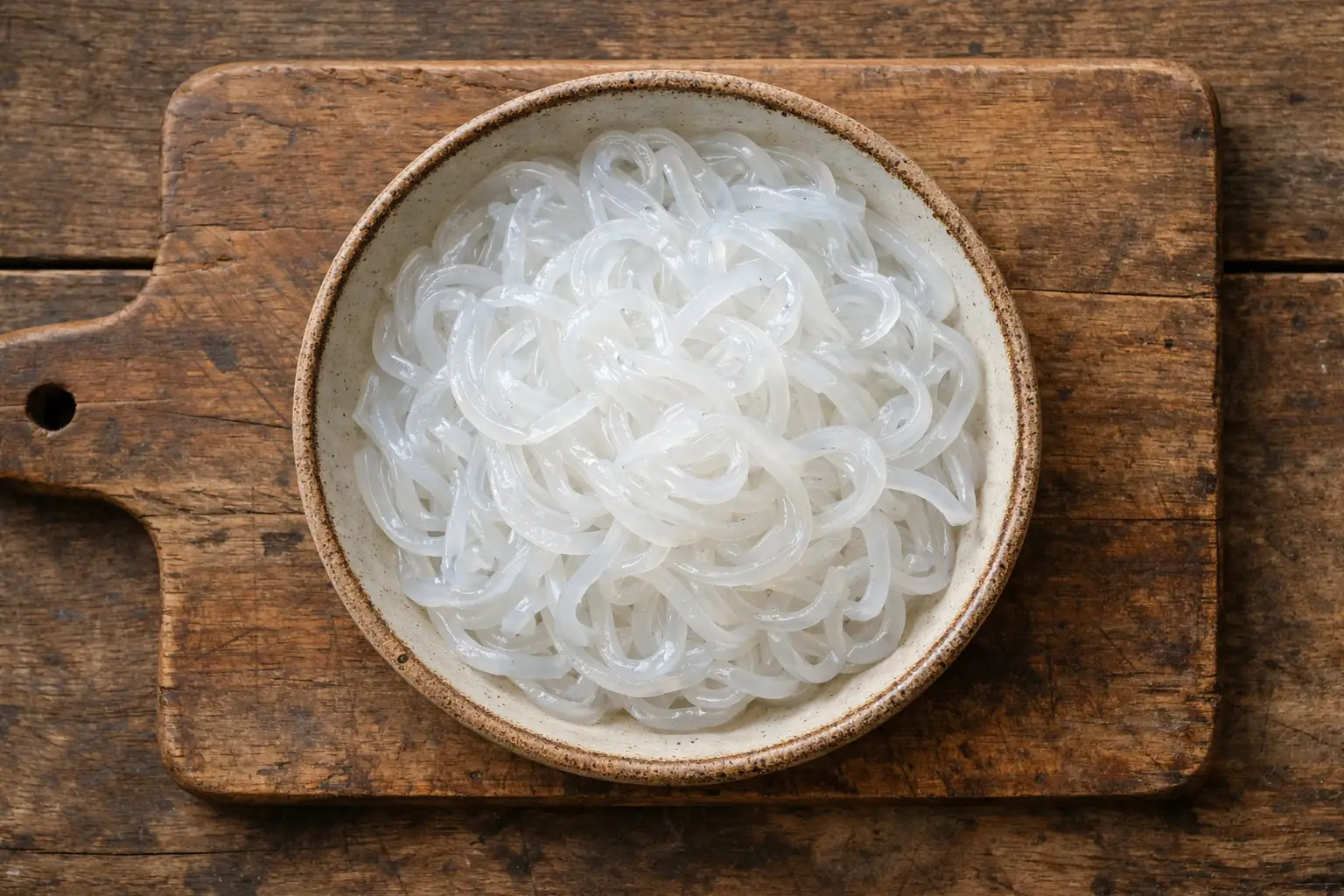
Quick Nutrition Facts
Per 200g Serving (1 pack)
| Nutrient | Amount |
|---|---|
| Calories | 10 kcal |
| Protein | 0g |
| Carbohydrates | 3g |
| Fiber | 3g |
| Sugars | 0g |
| Fat | 0g |
| Sodium | 10mg |
| Water Content | 97% |
| Glucomannan | 3g |
| Calcium | 40mg |
Macronutrient Breakdown
 ChatGPT
  Claude
  AI Mode
  Perplexity
NUTRITIONIST INSIGHT
Konjac noodles are 97% water and 3% glucomannan - a viscous fiber that can absorb up to 50 times its weight in water. This creates a gel-like consistency that slows digestion and keeps you feeling full for hours with virtually zero calories.
Myth Busters
MYTH #1: Konjac Noodles Have Zero Nutritional Value
TRUTH: While konjac noodles are extremely low in calories and macronutrients, their glucomannan fiber provides significant health benefits. Research shows glucomannan acts as a prebiotic, feeding beneficial gut bacteria and producing short-chain fatty acids that support immune function.
MYTH #2: Konjac Noodles Are Dangerous to Eat
TRUTH: Konjac noodles are safe when eaten normally with adequate water. The concern about choking applies to dry konjac supplements, not properly prepared noodles. Studies confirm konjac glucomannan is generally safe when consumed as food with sufficient hydration.
MYTH #3: You Can't Get Full on Zero-Calorie Noodles
TRUTH: The glucomannan fiber in konjac noodles expands in your stomach and significantly increases satiety. Studies show people eating konjac-based foods consume 23-47% fewer calories at subsequent meals.
MYTH #4: Konjac Noodles Taste Terrible
TRUTH: Plain konjac noodles are flavorless - which is actually an advantage. They absorb the flavors of sauces and seasonings well. The key is proper preparation: rinse thoroughly and dry-fry to improve texture before adding to dishes.
MYTH #5: Konjac Noodles Cause Severe Digestive Issues
TRUTH: Some people experience mild bloating or gas initially due to the high fiber content. This typically resolves as your gut adjusts. Start with small portions and increase gradually. Most people tolerate them well.
NutriScore by Health Goals
| Health Goal | NutriScore | Why This Score? |
|---|---|---|
| Weight Loss |  | Only 10 calories per 200g serving. Glucomannan fiber promotes satiety and reduces overall calorie intake. |
| Muscle Gain |  | Zero protein and minimal calories. Not suitable as a primary food for muscle building - use as a base and add protein sources. |
| Diabetes Management | | GI of 0. Studies show glucomannan reduces fasting blood sugar and HbA1c in people with type 2 diabetes. |
| PCOS Management | | Zero impact on blood sugar and insulin. Excellent pasta substitute for insulin resistance management. |
| Pregnancy Nutrition |  | Safe to eat but provides minimal nutrients. Glucomannan may help with pregnancy constipation but should not replace nutrient-dense foods. |
| Viral/Flu Recovery | | Provides no significant nutrients for immune support or recovery. Choose nutrient-dense foods during illness. |
PERSONALIZED NUTRITION
Track your meals with NutriScan for personalized NutriScores based on your specific health goals!
Blood Sugar Response to Konjac Noodles
Understanding how konjac noodles affect your blood glucose can help you make informed decisions about incorporating them into your diet.
Typical Glucose Response Curve
This chart shows typical blood glucose response for general healthy individuals. Individual responses may vary. Not medical advice.
How to Optimize Your Meal
Adding protein and vegetables to konjac noodles creates a more balanced, satisfying meal:
- 🥚 Add protein - Tofu, chicken, shrimp, or eggs for sustained energy
- 🥬 Include vegetables - Bok choy, mushrooms, spinach for nutrients
- 🥜 Add healthy fats - Sesame oil, peanut sauce for satiety
- 🌶️ Use flavorful sauces - Soy sauce, miso, curry paste for taste
This combination ensures you get adequate nutrition while enjoying the low-calorie benefits of konjac noodles.
Cultural Significance
Konjac (Amorphophallus konjac) has been cultivated in Asia for over 2,000 years, with deep roots in Japanese, Chinese, and Korean cuisines.
In Japan:
- Called "konnyaku" when formed into blocks or "shirataki" as noodles
- Traditional ingredient in oden (winter stew) and sukiyaki
- Used in Buddhist temple cuisine (shojin ryori) as a meat substitute
- Nicknamed "broom for the stomach" due to its cleansing properties
In China:
- Known as "moyu" (魔芋) or "devil's tongue"
- Used in Traditional Chinese Medicine for detoxification
- Popular in Sichuan cuisine with spicy preparations
Global Adoption:
- Gained popularity in the West as "miracle noodles" for weight loss
- Now available in most supermarkets as a keto and low-carb staple
- Growing market expected to reach $1.3 billion by 2028
Compare & Substitute
Konjac Noodles vs Other Noodles (Per 100g cooked)
| Nutrient | 🍜 Konjac Noodles | 🍝 Regular Pasta | 🍚 Rice Noodles | 🥒 Zucchini Noodles |
|---|---|---|---|---|
| Calories | 5 kcal | 131 kcal | 109 kcal | 17 kcal |
| Carbs | 1.5g | 25g | 24g | 3g |
| Fiber | 1.5g | 1.8g | 1g | 1g |
| Protein | 0g | 5g | 0.9g | 1.2g |
| Fat | 0g | 1.1g | 0.2g | 0.3g |
| GI | 0 | 45-55 | 53 | 15 |
| Best For | Weight loss, diabetes | Energy, athletes | Asian dishes | Keto, low-carb |
Frequently Asked Questions
Are konjac noodles good for weight loss?
Yes, konjac noodles are excellent for weight loss. A 200g serving has only 10 calories while providing 3g of glucomannan fiber that expands in your stomach.
Why they work: Studies show glucomannan supplementation significantly reduces body weight by increasing satiety and reducing overall calorie intake at meals.
Can diabetics eat konjac noodles?
Yes, konjac noodles are ideal for diabetics with a glycemic index of 0. Research shows glucomannan can reduce fasting blood sugar levels and HbA1c.
Tips for diabetics:
- Use as a pasta substitute in any meal
- Add protein and vegetables for balanced nutrition
- Safe to eat daily as part of a varied diet
- No portion restrictions needed for blood sugar control
How many calories are in konjac noodles?
A typical 200g serving contains approximately 10 calories. Per 100g, konjac noodles have only 5 calories, making them one of the lowest-calorie pasta alternatives available.
What are the main health benefits of konjac noodles?
Key Benefits:
- Weight Management: Near-zero calories with high satiety
- Blood Sugar Control: No impact on glucose levels
- Cholesterol Reduction: Glucomannan may lower LDL by up to 10%
- Digestive Health: Prebiotic fiber feeds beneficial gut bacteria
- Constipation Relief: Fiber increases bowel movement frequency
How do you cook konjac noodles properly?
Best preparation method:
- Rinse thoroughly - 2-3 minutes under running water removes odor
- Dry-fry in pan - 2-3 minutes without oil improves texture
- Add to hot sauce/dish - They absorb flavors well
- Season generously - Use flavorful sauces, garlic, ginger
IMPORTANT NOTE
Always drink plenty of water when eating konjac noodles. The fiber needs liquid to work properly.
Do konjac noodles have any side effects?
Some people may experience mild digestive effects initially:
- Bloating or gas (usually temporary)
- Loose stools if eaten in excess
Minimize issues by:
- Starting with small portions
- Drinking adequate water
- Chewing thoroughly
- Not eating on completely empty stomach
Can I eat konjac noodles every day?
Yes, konjac noodles are safe for daily consumption. However, they should not be your only food source as they provide minimal nutrients. Use them as part of a balanced diet with adequate protein, vegetables, and healthy fats.


Similar Nutritious Foods
4505 Chicharrones Classic Chili Salt
7 Eleven Japan Crispy Corn Cheese
Explore More Nutrition Tools & Resources
AI Calorie Counter App - Snap a Photo, Get Macros
AI Nutritionist App That Reads Your Logged Meals
Best Protein Supplements for Women
Bulking Meal Plan App That Sets Your Surplus
ChatGPT Calorie Counter Alternative That Keeps the Total
ChatGPT Diet Plan Alternative That Tracks What You Eat
ChatGPT Weight Loss Coach Alternative With a Food Log
Fast Food Calorie Counter App That Reads the Tray
Free Calorie Tracker App with AI Photo Scans | NutriScan
Indian Diet Plan App With Veg and Non Veg Meals
Indian Food Calorie Calculator - Get Instant Nutrition Facts for Desi Meals — 2026
Intermittent Fasting for Women, Timer and Meal Log App
Intermittent Fasting Tracker App - Free Fasting Timer
Macro Tracker App That Fills the Numbers From a Photo
Mediterranean Diet Meal Plan App That Counts the Oil
Micronutrient Tracker App for Vitamins and Minerals
MyFitnessPal Alternative That Stays Free | NutriScan
NutriScore App: A Free Grade on Every Meal | NutriScan
Nutrition Label Scanner App for the Amount You Ate
Second Trimester Protein Guide
Vegetarian Meal Plan App With a Protein Target
Voice Calorie Counter - Speak to Track Meals Hands-Free
Water and Calorie Tracker App - Free Water Log