Korean Cheese Corn: Calories, Nutrition and Health Benefits
Trending Korean street food fusion dish combining sweet corn, melted cheese, and savory butter for an irresistible sweet-savory experience.
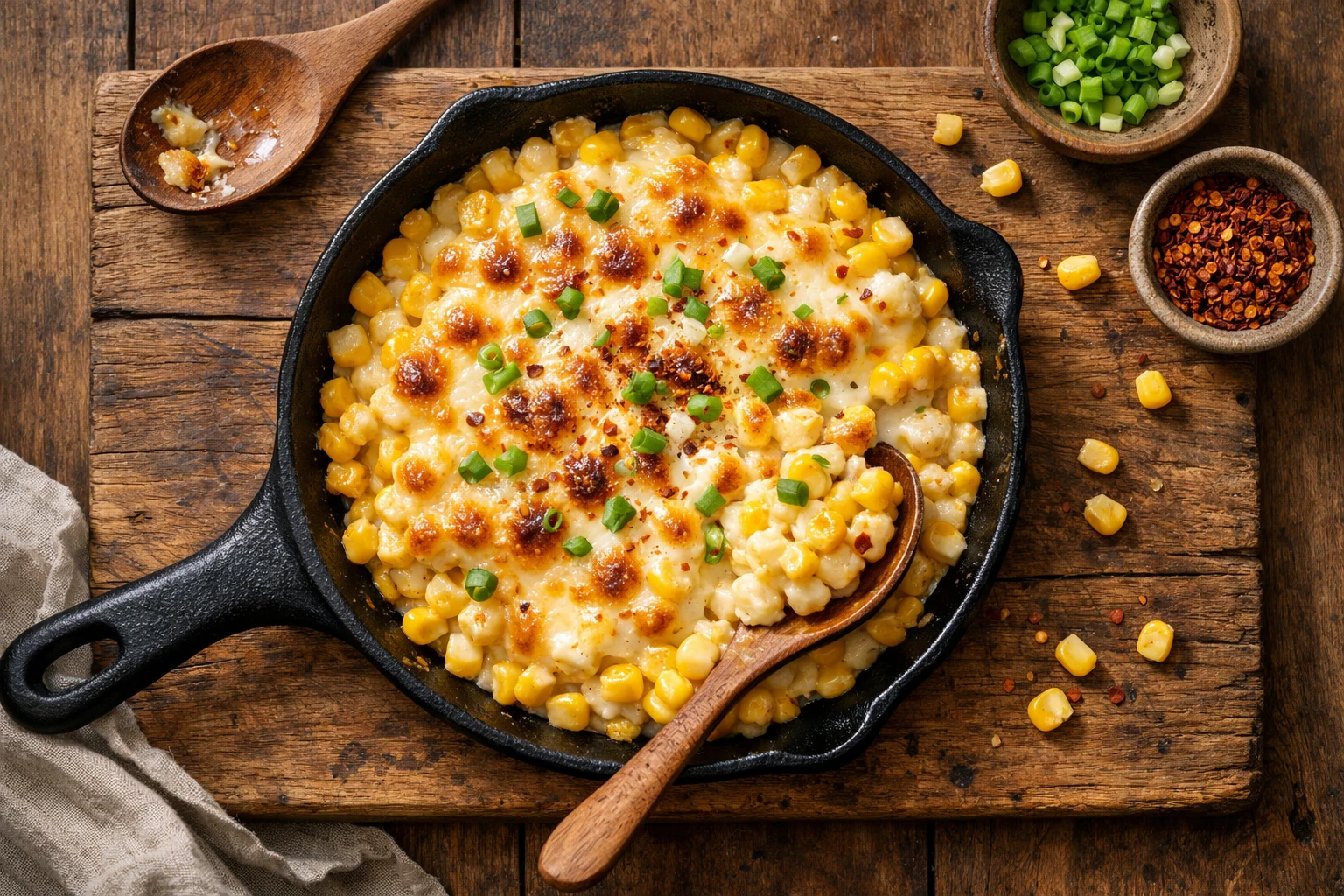
Quick Nutrition Facts
Per 1 Serving (150g)
| Nutrient | Amount |
|---|---|
| Calories | 180 kcal |
| Protein | 5g |
| Carbohydrates | 18g |
| Fiber | 2g |
| Sugars | 4g |
| Fat | 10g |
| Saturated Fat | 5g |
| Sodium | 220mg |
| Calcium | 120mg |
| Vitamin A | 180mcg |
Macronutrient Breakdown
 ChatGPT
  Claude
  AI Mode
  Perplexity
NUTRITIONIST INSIGHT
Korean cheese corn combines the moderate glycemic index of corn (GI 52) with protein-rich cheese, creating a balanced blood sugar response. The cheese provides calcium and protein while slowing carbohydrate absorption.
Myth Busters
MYTH #1: Korean Cheese Corn is Just Junk Food
TRUTH: While indulgent, cheese corn provides vitamins A and C from corn, plus calcium and protein from cheese. The corn contains antioxidants lutein and zeaxanthin for eye health. Enjoy as an occasional side dish, not daily staple.
MYTH #2: All Korean Street Food is Unhealthy
TRUTH: Korean street food has evolved from 1950s pojangmacha stalls to include nutritious options. Modern "NEW-PO" trend emphasizes cleaner ingredients. Choose grilled options, corn-based dishes, and vegetable-rich items for healthier choices.
MYTH #3: Cheese Corn Causes Blood Sugar Spikes
TRUTH: The combination of corn (moderate GI 52) with cheese protein helps control blood sugar. Protein slows carb absorption, preventing rapid spikes. Still, portion control is essential for diabetes management.
MYTH #4: Korean Cheese Corn Has No Nutritional Value
TRUTH: Sweet corn provides dietary fiber, potassium, and antioxidants. Cheese adds calcium (120mg per serving), protein (5g), and vitamin A. While calorie-dense, it's not nutritionally empty.
MYTH #5: You Can't Eat Cheese Corn on a Diet
TRUTH: Portion control makes it diet-friendly. A half serving (90 calories) with a protein-rich meal fits weight loss plans. Korean traditional diets emphasize moderation and balance, not elimination.
MYTH #6: Homemade Cheese Corn is Healthier Than Street Food
TRUTH: Partially true - homemade versions allow control over cheese, butter, and mayo amounts. However, authentic pojangmacha vendors often use quality ingredients. The difference lies in portion size and preparation method.
NutriScore by Health Goals
| Health Goal | NutriScore | Why This Score? |
|---|---|---|
| Weight Loss |  | 180 calories with 10g fat requires portion control. High satiety from protein and fiber. Best as occasional treat, limit to 1/2 serving. |
| Muscle Gain |  | Provides 5g protein plus 18g carbs for energy. Calcium supports muscle function. Good post-workout side dish when paired with lean protein. |
| Diabetes Management | | Moderate GI from corn balanced by cheese protein. Requires portion control (1/2 serving max), always pair with vegetables and lean protein. |
| PCOS Management | | Moderate carbs and saturated fat affect insulin sensitivity. Limit to 1/2 serving weekly, choose low-fat cheese versions. |
| Pregnancy Nutrition | | Provides calcium (120mg), vitamin A, and folate from corn. Ensure cheese is pasteurized. Good occasional side dish with balanced meals. |
| Heart Health | | High in saturated fat (5g) and sodium (220mg). Choose low-fat cheese, add less butter. Limit to occasional consumption for cardiovascular goals. |
PERSONALIZED NUTRITION
Track your meals with NutriScan for personalized NutriScores based on your specific health goals! Use our Online Macro Calculator to find your daily nutrition targets.
Blood Sugar Response to Korean Cheese Corn
Understanding how cheese corn affects your blood glucose helps you make informed decisions about portions and meal timing.
Typical Glucose Response Curve
This chart shows typical blood glucose response for general healthy individuals. Individual responses may vary. Not medical advice.
How to Flatten the Spike
Pairing cheese corn with lean protein and fiber-rich vegetables reduces blood sugar impact:
- Grilled chicken or salmon - Adds lean protein without extra carbs
- Mixed green salad - Provides fiber and volume
- Kimchi or pickled vegetables - Traditional Korean pairing with probiotic benefits
- Steamed broccoli or bok choy - Fiber and nutrients with minimal calories
This combination slows glucose absorption, extends satiety, and creates a more balanced Korean-style meal.
Cultural Significance
Korean cheese corn represents the fusion of Western ingredients with Korean culinary traditions, emerging from the vibrant pojangmacha street food culture.
Pojangmacha Heritage:
- Pojangmacha ("covered wagons") developed in the 1950s after Japanese rule ended
- Flourished in 1970s Seoul as palli-palli ("hurry up") culture kept workers out late
- Traditional vendors sold hotteok, gimbap, tteokbokki, and eventually fusion dishes
- Modern "NEW-PO" trend revives retro vibes with clean aesthetics for MZ generation (ages 20-30s)
Korean Wave Influence:
- 2024 marked Korean food's permanent global presence
- Cheese corn gained international fame through Korean dramas and social media
- NYC's Seoul Salon features upscale version with Gruyère and pork jowl
- Instagram-worthy presentation drives modern street food trends
Evolution:
- Started as simple corn + cheese mix in pojangmacha stalls
- Now includes variations: spicy gochugaru versions, truffle cheese corn, corn cheese ramen toppings
- Reflects Korea's embrace of fusion while maintaining cultural identity
Compare & Substitute
Korean Cheese Corn vs Similar Corn Dishes (Per 150g serving)
| Nutrient | Korean Cheese Corn | Elote (Mexican Street Corn) | Creamed Corn | Corn Salad | Grilled Corn (Plain) |
|---|---|---|---|---|---|
| Calories | 180 kcal | 220 kcal | 140 kcal | 130 kcal | 90 kcal |
| Carbs | 18g | 22g | 25g | 20g | 20g |
| Fiber | 2g | 3g | 2g | 3g | 2.5g |
| Protein | 5g | 6g | 3g | 3g | 3g |
| Fat | 10g | 12g | 4g | 5g | 1g |
| Sodium | 220mg | 380mg | 340mg | 180mg | 15mg |
| Calcium | 120mg | 80mg | 40mg | 30mg | 10mg |
| Vitamin C | 8mg | 12mg | 6mg | 10mg | 7mg |
| Best For | Korean meals, fusion sides | Mexican cuisine, BBQ | Comfort food, Thanksgiving | Light lunch, salad topping | Weight loss, clean eating |
Frequently Asked Questions
Is Korean cheese corn good for weight loss?
Korean cheese corn can fit into weight loss plans with careful portion control. At 180 calories per serving with 5g protein and 2g fiber, it provides moderate satiety.
Best practices for weight loss:
- Limit to half serving (90 calories) as a side dish
- Pair with large portion of vegetables and lean protein
- Eat as occasional treat (once weekly), not daily
- Make lighter version: reduce cheese by half, use low-fat cheese, skip mayo
The protein and fiber help with fullness, but the 10g fat makes it calorie-dense. Track portions carefully.
Can diabetics eat Korean cheese corn?
Diabetics can enjoy Korean cheese corn in small, controlled portions. The combination of corn (moderate GI 52) with cheese protein creates balanced blood sugar impact.
Tips for diabetics:
- Limit to 1/2 serving (9g net carbs) maximum
- Always pair with lean protein (grilled chicken, fish)
- Add fiber-rich vegetables (kimchi, leafy greens)
- Best timing: as part of lunch, not as snack or late-night food
- Monitor blood sugar 2 hours after eating
Cheese doesn't affect blood sugar and helps slow corn's carb absorption. Always consult your healthcare provider.
What is Korean cheese corn made of?
Korean cheese corn is a fusion side dish combining simple ingredients with bold flavor.
Main ingredients:
- Sweet corn kernels - Fresh, frozen, or canned
- Cheese - Mozzarella (for stretch), cheddar, or Gruyère
- Butter - For richness and browning
- Mayonnaise - Adds creaminess and tang (optional)
- Sugar - Touch of sweetness (1-2 tsp)
- Toppings - Parsley, green onions, or sesame seeds
Preparation: Mix corn with butter, mayo, and sugar. Top with shredded cheese. Bake at 375°F (190°C) for 15-20 minutes until golden and bubbly. Some versions add Korean chili flakes (gochugaru) for heat.
How many calories are in Korean cheese corn?
Standard serving (150g): Approximately 180 calories
- 10g fat (90 calories from fat)
- 18g carbohydrates (72 calories from carbs)
- 5g protein (20 calories from protein)
Calorie variations by size:
- Small side (100g): ~120 calories
- Large portion (200g): ~240 calories
- Restaurant/cafe serving: 200-280 calories (often larger with extra cheese)
Calorie content varies based on cheese type, butter amount, and mayo addition. Prepared cheese corn dishes average 170-200 calories per 150g serving.
Is Korean cheese corn healthy?
Korean cheese corn offers moderate nutritional benefits but is best enjoyed as an occasional treat rather than daily staple.
Health benefits:
- Vitamins & minerals: Vitamin A (eye health), vitamin C (immunity), calcium (bones)
- Antioxidants: Lutein and zeaxanthin protect eye health
- Fiber: 2g supports digestive health
- Protein: 5g provides satiety
Health concerns:
- High fat: 10g total, 5g saturated (affects heart health)
- Sodium: 220mg (can be higher in restaurant versions)
- Calorie-dense: Easy to overconsume
- Processed ingredients: Mayo and butter add empty calories
Verdict: Healthier than fried street foods, but not a health food. Enjoy 1-2 times per month as part of balanced Korean meal.
What is the origin of Korean cheese corn?
Korean cheese corn emerged from pojangmacha (street food stall) culture as part of Korea's fusion food movement.
Historical timeline:
- 1950s: Pojangmacha developed after Japanese rule ended, selling traditional Korean snacks
- 1970s-1980s: Western ingredients (cheese, corn) integrated into Korean street food
- 1990s-2000s: Cheese corn became popular side dish in Korean BBQ restaurants and cafes
- 2010s-2020s: Korean Wave (Hallyu) spread cheese corn globally through K-dramas and social media
Modern evolution:
- 2024-2025: "NEW-PO" trend modernizes pojangmacha with Instagram-worthy presentations
- Upscale restaurants feature gourmet versions with truffle oil, artisan cheeses
- Home cooks recreate viral TikTok/Instagram recipes
The dish represents Korea's ability to adapt global ingredients while maintaining distinct Korean flavor profiles.
When is the best time to eat Korean cheese corn?
Depends on your goal:
- Weight Loss: Lunch as small side dish paired with lean protein and vegetables. Avoid dinner/late night.
- Muscle Gain: Post-workout meal component (carbs + protein for recovery). Pair with chicken breast or salmon.
- Diabetes: Lunch or early dinner, always with balanced meal. Never as standalone snack.
- Social/Cultural: During Korean BBQ meals, pojangmacha outings, or family gatherings.
General recommendations:
- Best as side dish, not main course
- Pair with protein-rich Korean dishes (bulgogi, grilled fish, tofu)
- Eat earlier in day for better calorie utilization
- Avoid late-night consumption (slows digestion, affects sleep)
Korean cheese corn shines as part of communal Korean dining experience, not as solo snack.
Can I make healthier Korean cheese corn at home?
Yes! Homemade versions allow control over ingredients for better nutrition.
Healthier modifications:
Reduce fat/calories:
- Use low-fat mozzarella or part-skim cheese (-40 calories)
- Skip mayonnaise or use Greek yogurt instead (-50 calories)
- Reduce butter by half (-45 calories)
- Total savings: ~135 calories → 100-120 calories per serving
Boost nutrition:
- Add diced bell peppers (vitamin C, antioxidants)
- Mix in chopped spinach or kale (iron, fiber)
- Use fresh corn for better fiber content
- Top with green onions and sesame seeds (nutrients, flavor)
Cooking method:
- Air fry instead of deep fry
- Broil for crispy top without excess oil
- Use non-stick pan to reduce butter needs
Portion control:
- Make individual ramekins (pre-portioned)
- Freeze extras in 100g portions
- Pair with large salad to increase volume, reduce calorie density
Track ingredients with NutriScan app to calculate exact nutrition for your custom recipe.


Similar Nutritious Foods
4505 Chicharrones Classic Chili Salt
7 Eleven Japan Crispy Corn Cheese
Explore More Nutrition Tools & Resources
AI Calorie Counter App - Snap a Photo, Get Macros
AI Nutritionist App That Reads Your Logged Meals
Best Protein Supplements for Women
Bulking Meal Plan App That Sets Your Surplus
ChatGPT Calorie Counter Alternative That Keeps the Total
ChatGPT Diet Plan Alternative That Tracks What You Eat
ChatGPT Weight Loss Coach Alternative With a Food Log
Fast Food Calorie Counter App That Reads the Tray
Free Calorie Tracker App with AI Photo Scans | NutriScan
Indian Diet Plan App With Veg and Non Veg Meals
Indian Food Calorie Calculator - Get Instant Nutrition Facts for Desi Meals — 2026
Intermittent Fasting for Women, Timer and Meal Log App
Intermittent Fasting Tracker App - Free Fasting Timer
Macro Tracker App That Fills the Numbers From a Photo
Mediterranean Diet Meal Plan App That Counts the Oil
Micronutrient Tracker App for Vitamins and Minerals
MyFitnessPal Alternative That Stays Free | NutriScan
NutriScore App: A Free Grade on Every Meal | NutriScan
Nutrition Label Scanner App for the Amount You Ate
Second Trimester Protein Guide
Vegetarian Meal Plan App With a Protein Target
Voice Calorie Counter - Speak to Track Meals Hands-Free
Water and Calorie Tracker App - Free Water Log