Koshari: Calories, Nutrition and Health Benefits
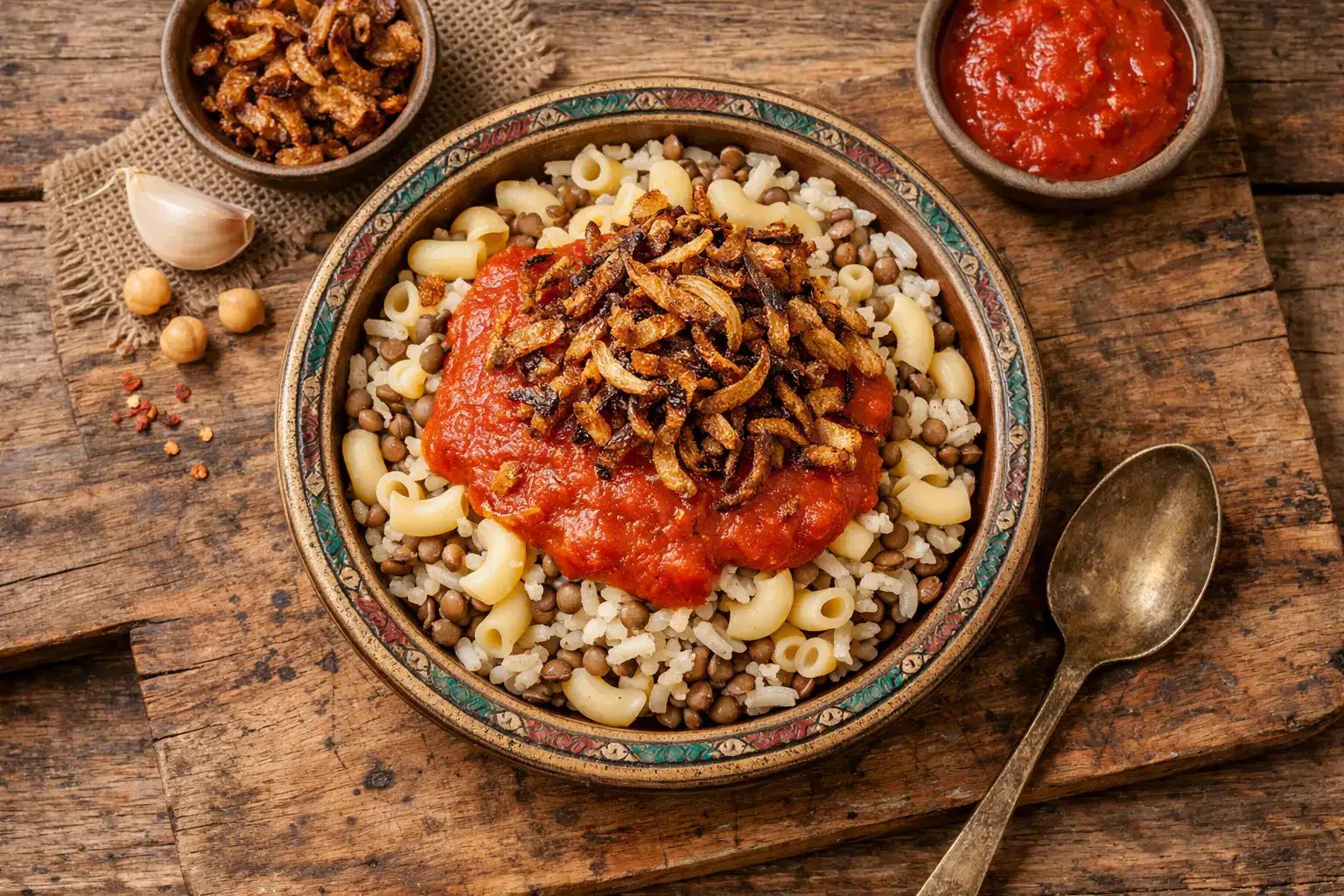
Egypt's beloved national dish combining rice, lentils, pasta, and chickpeas for a complete plant-based meal.
Quick Nutrition Facts
Per 1 Serving (300g)
| Nutrient | Amount |
|---|---|
| Calories | 280 kcal |
| Protein | 10g |
| Carbohydrates | 50g |
| Fiber | 8g |
| Sugars | 4g |
| Fat | 6g |
| Iron | 3.5mg |
| Folate | 120mcg |
| Magnesium | 65mg |
| Potassium | 380mg |
Macronutrient Breakdown
 ChatGPT
  Claude
  AI Mode
  Perplexity
NUTRITIONIST INSIGHT
Koshari combines complementary plant proteins from lentils, chickpeas, and rice, creating a complete amino acid profile. The 8g fiber supports digestive health and blood sugar control.
Myth Busters
MYTH #1: Koshari Is Too High in Carbs for Weight Loss
TRUTH: While koshari contains 50g carbs, the high fiber content (8g) slows digestion and promotes satiety, making it filling for fewer calories. One serving provides sustained energy without causing rapid blood sugar spikes. Portion control is key—stick to one 300g serving.
MYTH #2: Koshari Lacks Complete Protein
TRUTH: Koshari is a nutritional masterpiece combining rice and legumes to create complete protein with all essential amino acids. The lentils and chickpeas complement the rice's amino acid profile, making it ideal for vegan and vegetarian diets.
MYTH #3: The Fried Onions Make It Unhealthy
TRUTH: While fried onions add calories, they're used as a garnish (15-20g per serving, adding ~60 calories). The base dish remains nutritious and plant-based. For a lighter version, reduce fried onions or use air-fried alternatives.
MYTH #4: Koshari Is Just Street Food with No Nutritional Value
TRUTH: Koshari is a nutrient-dense dish providing iron (3.5mg), folate (120mcg), magnesium, and resistant starch from lentils. It's been Egypt's national dish for over a century precisely because it's affordable, filling, and nutritious.
MYTH #5: Diabetics Should Avoid Koshari
TRUTH: While high in carbs, the lentils and chickpeas provide resistant starch and fiber that moderate blood sugar response. Diabetics can enjoy smaller portions (150-200g) paired with vegetables and monitor glucose levels. The complex carbs digest slower than simple starches.
NutriScore by Health Goals
| Health Goal | NutriScore | Why This Score? |
|---|---|---|
| Weight Loss |  | 280 calories with 8g fiber promotes fullness. Complex carbs prevent crashes. Limit to 1 serving per day, add vegetables. |
| Muscle Gain |  | Moderate protein (10g) from plant sources. Best paired with lean protein or served post-workout for carb loading. |
| Diabetes Management | | Moderate GI (52-58) due to lentils and fiber. Eat smaller portions, pair with vegetables, monitor blood sugar. |
| PCOS Management | | High complex carbs affect insulin sensitivity. Limit to 1/2 serving, add protein and vegetables to balance macros. |
| Pregnancy Nutrition |  | Excellent source of folate (120mcg) for fetal development, iron (3.5mg) prevents anemia, fiber aids digestion. |
| Vegan/Vegetarian | | Complete plant-based protein, iron, folate, and complex carbs. Ideal one-bowl meal for plant-based diets. Pair with vitamin C source for better iron absorption. |
PERSONALIZED NUTRITION
Track your meals with NutriScan for personalized NutriScores based on your specific health goals!
Blood Sugar Response to Koshari
Understanding how koshari affects your blood glucose helps you enjoy this nutritious dish while maintaining stable energy levels.
Typical Glucose Response Curve
This chart shows typical blood glucose response for general healthy individuals. Individual responses may vary. Not medical advice.
How to Flatten the Spike
Pairing koshari with protein or vegetables slows glucose absorption and reduces the peak blood sugar level:
- 🥗 Large side salad - Adds fiber and reduces glycemic load
- 🍗 Grilled chicken or fish - Provides protein to balance carbs
- 🥚 Boiled eggs - Complete protein source
- 🥒 Cucumber, tomato, pickles - Traditional Egyptian accompaniments with minimal calories
This combination extends energy release and prevents post-meal crashes.
Cultural Significance
Koshari originated in Egypt during the 19th century, combining Italian, Indian, and Middle Eastern culinary influences into a uniquely Egyptian creation.
In Egypt:
- Egypt's undisputed national dish, served in dedicated koshari restaurants
- Originally a working-class meal, now beloved across all social classes
- Traditionally eaten for lunch, providing sustained energy for laborers
- Every Egyptian has their favorite koshari spot, sparking regional debates
- Sold from street carts to upscale restaurants; recipe varies by region
Global Impact:
- Growing popularity in Middle Eastern and Mediterranean restaurants worldwide
- Recognized as sustainable plant-based meal model (minimal environmental impact)
- Perfect example of food fusion: macaroni (Italy), rice (India), lentils and chickpeas (Middle East)
- Served at Egyptian cultural events and diaspora communities globally
Compare & Substitute
Koshari vs Similar Plant-Based Meals (Per 100g)
| Nutrient | 🍛 Koshari | 🍛 Daal Chawal (Indian) | 🌯 Burrito Bowl | 🍲 Falafel Plate |
|---|---|---|---|---|
| Calories | 93 kcal | 110 kcal | 120 kcal | 150 kcal |
| Carbs | 17g | 18g | 15g | 12g |
| Fiber | 2.7g | 3.2g | 2.5g | 3.0g |
| Protein | 3.3g | 4.5g | 5g | 6g |
| Fat | 2g | 2.5g | 4g | 7g |
| Iron | 1.2mg | 1.8mg | 1.0mg | 1.5mg |
| Best For | Balanced plant-based meal | Higher protein, Indian flavors | Customizable, Mexican fusion | Higher protein, fried |
Frequently Asked Questions
Is koshari good for weight loss?
Yes, koshari can support weight loss when eaten in controlled portions. One serving (300g) has 280 calories with 8g fiber that promotes fullness and prevents overeating. The complex carbs from rice, lentils, and pasta provide sustained energy without rapid blood sugar spikes that trigger cravings.
Best practices: Limit to 1 serving per day; add a large salad or grilled vegetables to increase volume without calories; avoid extra fried onions; eat for lunch rather than dinner for better calorie distribution.
Can diabetics eat koshari?
Diabetics can eat koshari in moderation, but portion control is essential due to the high carb content (50g per serving). The lentils and chickpeas provide fiber and resistant starch that moderate glucose impact compared to plain rice or pasta.
Tips for diabetics:
- Eat smaller portions (150-200g instead of 300g)
- Pair with lean protein (grilled chicken, fish) and vegetables
- Choose brown rice versions when available (lower GI)
- Monitor blood sugar 2 hours after eating
- Best timing: lunch, not dinner or on empty stomach
Consult your healthcare provider before adding to your meal plan.
How much protein is in koshari?
One serving of koshari contains 10g of plant-based protein from lentils, chickpeas, and rice. While moderate, the combination creates a complete protein with all essential amino acids, making it suitable for vegan and vegetarian diets.
For higher protein goals (muscle gain, athletic performance), pair koshari with 100-150g grilled chicken (adds 30-40g protein) or 2-3 boiled eggs (adds 12-18g protein).
What are the main health benefits of koshari?
Key Benefits:
- Complete Plant-Based Protein: Lentils and rice combine to provide all essential amino acids
- Digestive Health: 8g fiber supports regular bowel movements and gut bacteria
- Sustained Energy: Complex carbs prevent energy crashes throughout the day
- Iron for Blood Health: 3.5mg iron (20% DV) prevents anemia, especially important for vegans
- Folate for Cell Function: 120mcg supports pregnancy health and red blood cell production
- Budget-Friendly Nutrition: Affordable complete meal with shelf-stable ingredients
Is koshari vegan?
Yes, traditional koshari is 100% vegan, containing no animal products. It's made from rice, brown lentils, macaroni pasta, chickpeas, tomato sauce, crispy fried onions, and garlic vinegar sauce (da'a).
Koshari is an excellent vegan meal because it provides complete protein (all essential amino acids), iron, folate, complex carbs, and fiber in one dish. For optimal iron absorption from plant sources, pair with vitamin C-rich foods like lemon juice, tomatoes, or bell peppers.
What is koshari made of?
Core Ingredients:
- Rice: White or brown rice (some recipes use half rice, half vermicelli)
- Brown Lentils: Cooked until tender but firm
- Macaroni Pasta: Short elbow or penne pasta
- Chickpeas: Cooked or canned, drained
- Tomato Sauce: Spiced with cumin, coriander, garlic
- Crispy Fried Onions: Traditional topping
- Da'a Sauce: Garlic vinegar sauce for tang
Regional Variations: Some versions add vermicelli noodles fried in oil, different spice blends, or extra chickpeas. Every Egyptian family has their own recipe ratios.
How many servings of koshari should I eat per day?
General Guidelines:
- 1 serving (300g) - Most people for a complete meal (280 calories)
- 1/2 serving (150g) - Weight loss, diabetes, or PCOS management; pair with vegetables
- 1.5 servings (450g) - Athletes, muscle gain, high-calorie needs; add protein source
Avoid excess: More than 1 full serving per day provides too many carbs for most people, especially if you're sedentary or managing blood sugar. Balance with vegetables and protein throughout the day.
Track your meals with NutriScan app to see how koshari fits your personal nutrition goals.
When is the best time to eat koshari?
Depends on your goal:
- Weight Loss: Lunch (between 12-2 PM) for sustained afternoon energy; avoid dinner as carbs are less needed at night
- Muscle Gain: Post-workout (within 1-2 hours) for carb replenishment; or lunch for sustained energy
- Diabetes: Mid-day lunch, paired with protein and vegetables; monitor blood sugar
- General Health: Traditional Egyptian timing is lunch; provides energy for active afternoon hours
Koshari is heavy, so allow 3-4 hours before intense exercise or sleep for proper digestion.


Similar Nutritious Foods
4505 Chicharrones Classic Chili Salt
7 Eleven Japan Crispy Corn Cheese
Explore More Nutrition Tools & Resources
AI Calorie Counter App - Snap a Photo, Get Macros
AI Nutritionist App That Reads Your Logged Meals
Best Protein Supplements for Women
Bulking Meal Plan App That Sets Your Surplus
ChatGPT Calorie Counter Alternative That Keeps the Total
ChatGPT Diet Plan Alternative That Tracks What You Eat
ChatGPT Weight Loss Coach Alternative With a Food Log
Fast Food Calorie Counter App That Reads the Tray
Free Calorie Tracker App with AI Photo Scans | NutriScan
Indian Diet Plan App With Veg and Non Veg Meals
Indian Food Calorie Calculator - Get Instant Nutrition Facts for Desi Meals — 2026
Intermittent Fasting for Women, Timer and Meal Log App
Intermittent Fasting Tracker App - Free Fasting Timer
Macro Tracker App That Fills the Numbers From a Photo
Mediterranean Diet Meal Plan App That Counts the Oil
Micronutrient Tracker App for Vitamins and Minerals
MyFitnessPal Alternative That Stays Free | NutriScan
NutriScore App: A Free Grade on Every Meal | NutriScan
Nutrition Label Scanner App for the Amount You Ate
Second Trimester Protein Guide
Vegetarian Meal Plan App With a Protein Target
Voice Calorie Counter - Speak to Track Meals Hands-Free
Water and Calorie Tracker App - Free Water Log