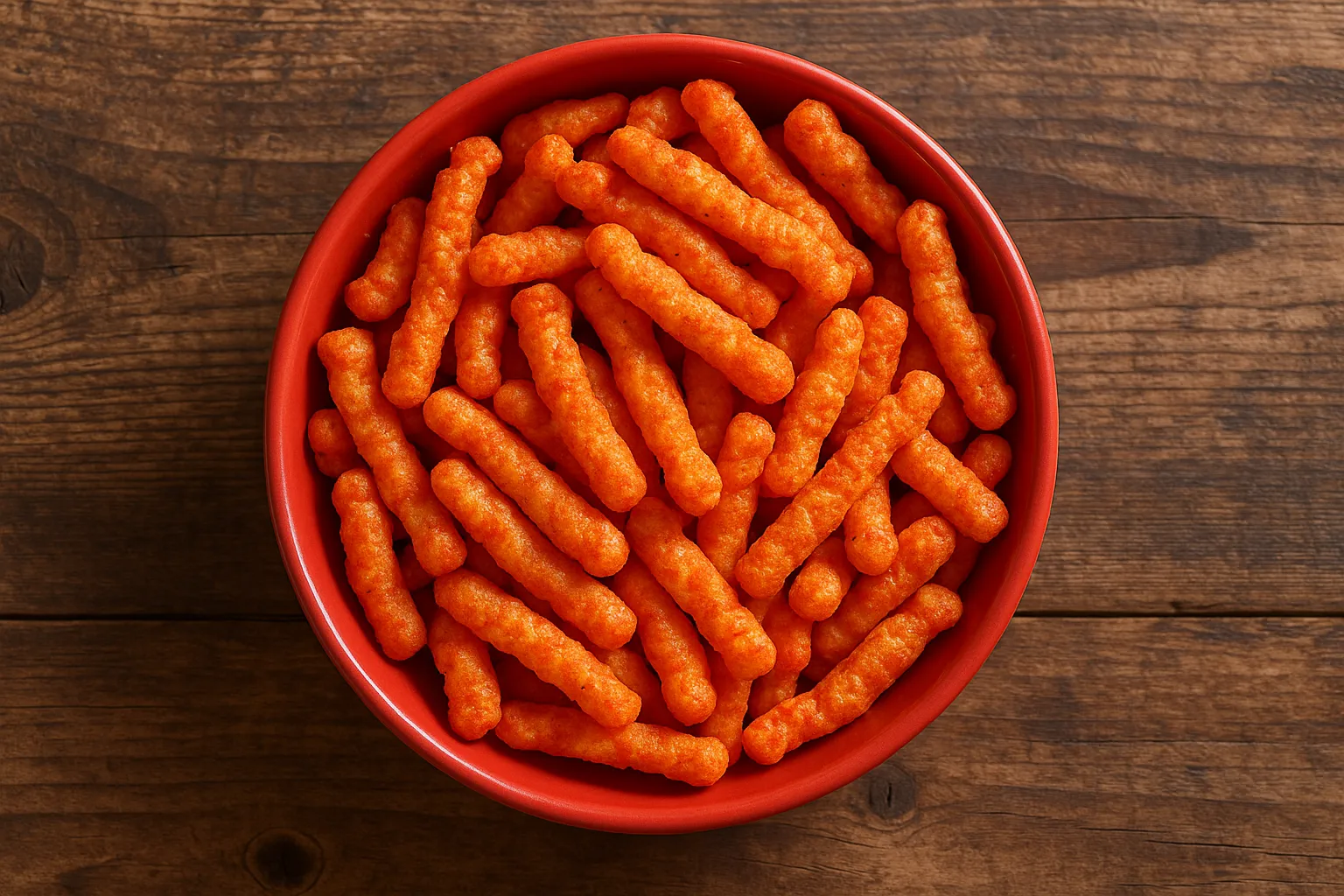
Kurkure Chilli Chatka: Calories, Nutrition and Health Benefits
Crunchy, spicy corn puffs with intense chilli heat—an occasional indulgence for those who love bold flavor, but best limited due to high trans fats, sodium, and empty calories.
Quick Nutrition Facts
Per 1 Serving (28g, ~15 pieces)
| Nutrient | Amount |
|---|---|
| Calories | 176 kcal |
| Protein | 2g |
| Carbohydrates | 16g |
| Fiber | 0.8g |
| Sugars | <0.5g |
| Fat | 10.5g |
| Saturated Fat | 4g |
| Trans Fat | ~0.3g |
| Sodium | 380mg |
| Potassium | 45mg |
Macronutrient Breakdown
 ChatGPT
  Claude
  AI Mode
  Perplexity
NUTRITIONIST INSIGHT
Kurkure Chilli Chatka is an ultra-processed snack with minimal nutritional value. The intense chilli flavor masks poor ingredient quality: refined corn meal, hydrogenated oils (trans fats), and excessive sodium. Unlike whole fruits or vegetables, there's no fiber, no phytonutrients, and no lasting satiety—making portion control nearly impossible.
Myth Busters
MYTH #1: Spicy Snacks Boost Metabolism Significantly
TRUTH: While capsaicin in chilli does increase thermogenesis by 2-5%, the effect is minimal and doesn't offset Kurkure's 176 calories and 10.5g fat. You'd need consistent high-dose capsaicin from whole peppers, not processed snacks, for meaningful metabolic boost.
MYTH #2: Corn Snacks Are Better Than Potato Chips
TRUTH: Kurkure and potato chips are nutritionally equivalent—both deep-fried, high in saturated fat (4g), low in fiber (0.8g), and linked to weight gain and inflammation. Neither is a healthy snack choice; swap both for whole-grain alternatives.
MYTH #3: The Chilli Color Means Antioxidants
TRUTH: The red color comes from artificial food coloring, not lycopene or natural antioxidants. Kurkure contains zero tomato or real chilli—only synthetic flavoring and color additives. Real chilli peppers provide antioxidants; processed snacks do not.
MYTH #4: One Serving Won't Hurt
TRUTH: One 28g serving contains 16% of your daily sodium limit (380mg of 2,300mg). Regular sodium overconsumption increases hypertension risk and strains kidney function. Even "occasional" becomes problematic if consumed weekly.
MYTH #5: Corn Is a Healthy Base
TRUTH: Kurkure uses refined cornmeal, stripped of fiber and micronutrients. Whole corn contains 3.7g fiber per 100g; Kurkure has only 0.8g per serving. After deep-frying and seasoning, the original corn's benefits are eliminated.
NutriScore by Health Goals
| Health Goal | NutriScore | Why This Score? |
|---|---|---|
| Weight Loss |  | High calorie density (6.3 kcal/g), low fiber (0.8g), high fat. Easy to overeat; 2-3 servings = 500+ calories with no satiety. |
| Muscle Gain |  | Only 2g protein per serving—insufficient for muscle recovery. High salt masks low micronutrient profile. Choose protein-rich whole foods instead. |
| Diabetes Management | | 16g refined carbs with minimal fiber (GI ~72); rapid blood sugar spike. High sodium complicates blood pressure. Avoid entirely. |
| PCOS Management | | High inflammatory trans fats exacerbate insulin resistance. Simple carbs worsen PCOS symptoms. Incompatible with PCOS nutrition goals. |
| Pregnancy Nutrition | | Zero folate, zero calcium, high sodium (risks preeclampsia). Trans fats cross the placenta and harm fetal brain development. Unsafe during pregnancy. |
| Viral/Flu Recovery | | Provides quick energy but lack of vitamin C, zinc, and fiber hinders immune recovery. Excessive salt depletes hydration needed during illness. Choose nutrient-dense alternatives. |
PERSONALIZED NUTRITION
Track how snacks like Kurkure affect your energy, digestion, and health goals with NutriScan for personalized NutriScores based on your needs!
Blood Sugar Response to Kurkure
Kurkure's refined carbs trigger rapid glucose spikes due to high glycemic index (GI ~72) and zero fiber buffering.
Typical Glucose Response Curve
*This chart shows typical blood glucose response for general healthy individuals. Individual responses may vary. Not medical advice.*
Pairing Strategy (Harm Reduction)
If consuming Kurkure, minimize blood sugar impact:
- Protein first: Eat Greek yogurt or almonds 10 minutes before snacking to slow carb absorption
- Hydration: Drink 250ml water to aid digestion and reduce sodium impact
- Post-meal walk: Light activity (10 min walk) post-snack improves glucose clearance by 20-30%
- Never alone: Never eat Kurkure on empty stomach; pair with fat/protein to blunt the spike
Reality: These hacks reduce but don't eliminate risks. Elimination is the safest approach.
Cultural Significance
Kurkure, launched in 1999 by PepsiCo in India, became iconic in Indian snacking culture. Its affordable price point and bold flavors captured youth markets across South Asia. Unlike traditional snacks (chikhalwali, bhel), Kurkure is mass-produced, standardized, and globally distributed.
In India:
- Massive brand loyalty, especially among young consumers (ages 8-25)
- Often paired with chai as an afternoon snack
- Sponsorship of regional cricket and entertainment events
- Part of casual social eating (not ceremonial)
- Available in 20+ regional flavor variations
Global Impact:
- Sold in 100+ countries with localized flavors
- Generated $2+ billion in annual revenue (PepsiCo snacks division)
- Symbol of Western-style processed food adoption in emerging markets
Compare & Substitute
Kurkure vs Similar Snacks (Per 28g serving)
| Nutrient | 🌶️ Kurkure Chilli | 🥒 Lay's Classic | 🍿 Popcorn (air) | 🥒 Baked Chips |
|---|---|---|---|---|
| Calories | 176 kcal | 152 kcal | 110 kcal | 120 kcal |
| Protein | 2g | 2g | 3.5g | 2.5g |
| Carbs | 16g | 15g | 11g | 16g |
| Fiber | 0.8g | 0.6g | 2.2g | 1.5g |
| Fat | 10.5g | 9g | 6g | 4.5g |
| Saturated Fat | 4g | 2.5g | 0.5g | 1g |
| Trans Fat | ~0.3g | ~0.1g | 0g | 0g |
| Sodium | 380mg | 160mg | 100mg | 190mg |
| Best For | Occasional treat | Occasional treat | Light snacking | Healthier option |
Recommendations:
- Best swap: Air-popped popcorn (3x more fiber, 1/3 the fat)
- Second option: Roasted chickpeas or nuts (higher protein, micronutrients)
- Third option: Whole fruit or vegetable sticks (zero trans fats, full fiber)
Frequently Asked Questions
Is Kurkure Chilli Chatka unhealthy?
Yes, it's an ultra-processed snack with minimal nutritional value. Per 28g serving: 176 calories, 10.5g fat (including ~0.3g trans fat), 380mg sodium, only 0.8g fiber, and zero vitamins or minerals. Regular consumption increases cardiovascular disease, obesity, and type 2 diabetes risk. Deep-fried snacks are linked to chronic inflammation and metabolic dysfunction.
How much sodium is too much from snacks?
Daily sodium limit: 2,300mg (AHA); ideal: 1,500mg. One Kurkure serving = 16% of limit. If you eat 2-3 servings daily plus processed meals, you'll exceed 3,500mg—increasing hypertension and kidney strain risk. Excessive sodium is the #3 dietary risk factor for premature death globally.
Can I eat Kurkure on a weight loss diet?
Not recommended. 176 calories per serving provides minimal satiety; you'll consume 2-3 servings (350-500 calories) without feeling full. The high fat content (10.5g) is calorie-dense; the high salt triggers water retention, masking weight loss progress. Better options: almonds (180 cal, 6.5g protein, 3.5g fiber per 28g) or popcorn (110 cal, high volume, satisfying crunch).
What's the difference between regular and Chilli Chatka Kurkure?
All Kurkure variants are nutritionally similar (~170-180 calories per 28g) but differ in flavoring compounds. Chilli Chatka uses capsaicin-based heat and chilli flavoring; others use milder spices. Nutritionally, the base is identical: refined cornmeal, hydrogenated oils, salt, additives. Chilli provides zero additional micronutrients.
Is the spice in Kurkure real chilli or artificial?
Artificial flavoring. Real chilli peppers contain capsaicin (metabolism booster), vitamin C, and antioxidants. Kurkure uses synthetic chilli flavoring (isoamyl acetate, ethyl butyrate) and red food coloring instead of actual peppers. You get the taste sensation but zero nutritional benefits of real chilli.
How often is safe to eat Kurkure?
Maximum: 2-3 times per month, one serving (28g) per occasion. Weekly or daily consumption compounds sodium, trans fat, and empty-calorie intake—increasing cardiovascular disease, obesity, and metabolic disease risk significantly. For perspective: 1 serving weekly = 19.7g trans fat/year; WHO recommends <2g/year total.




Similar Nutritious Foods
4505 Chicharrones Classic Chili Salt
7 Eleven Japan Crispy Corn Cheese
Explore More Nutrition Tools & Resources
AI Calorie Counter App - Snap a Photo, Get Macros
AI Nutritionist App That Reads Your Logged Meals
Best Protein Supplements for Women
Bulking Meal Plan App That Sets Your Surplus
ChatGPT Calorie Counter Alternative That Keeps the Total
ChatGPT Diet Plan Alternative That Tracks What You Eat
ChatGPT Weight Loss Coach Alternative With a Food Log
Fast Food Calorie Counter App That Reads the Tray
Free Calorie Tracker App with AI Photo Scans | NutriScan
Indian Diet Plan App With Veg and Non Veg Meals
Indian Food Calorie Calculator - Get Instant Nutrition Facts for Desi Meals — 2026
Intermittent Fasting for Women, Timer and Meal Log App
Intermittent Fasting Tracker App - Free Fasting Timer
Macro Tracker App That Fills the Numbers From a Photo
Mediterranean Diet Meal Plan App That Counts the Oil
Micronutrient Tracker App for Vitamins and Minerals
MyFitnessPal Alternative That Stays Free | NutriScan
NutriScore App: A Free Grade on Every Meal | NutriScan
Nutrition Label Scanner App for the Amount You Ate
Second Trimester Protein Guide
Vegetarian Meal Plan App With a Protein Target
Voice Calorie Counter - Speak to Track Meals Hands-Free
Water and Calorie Tracker App - Free Water Log