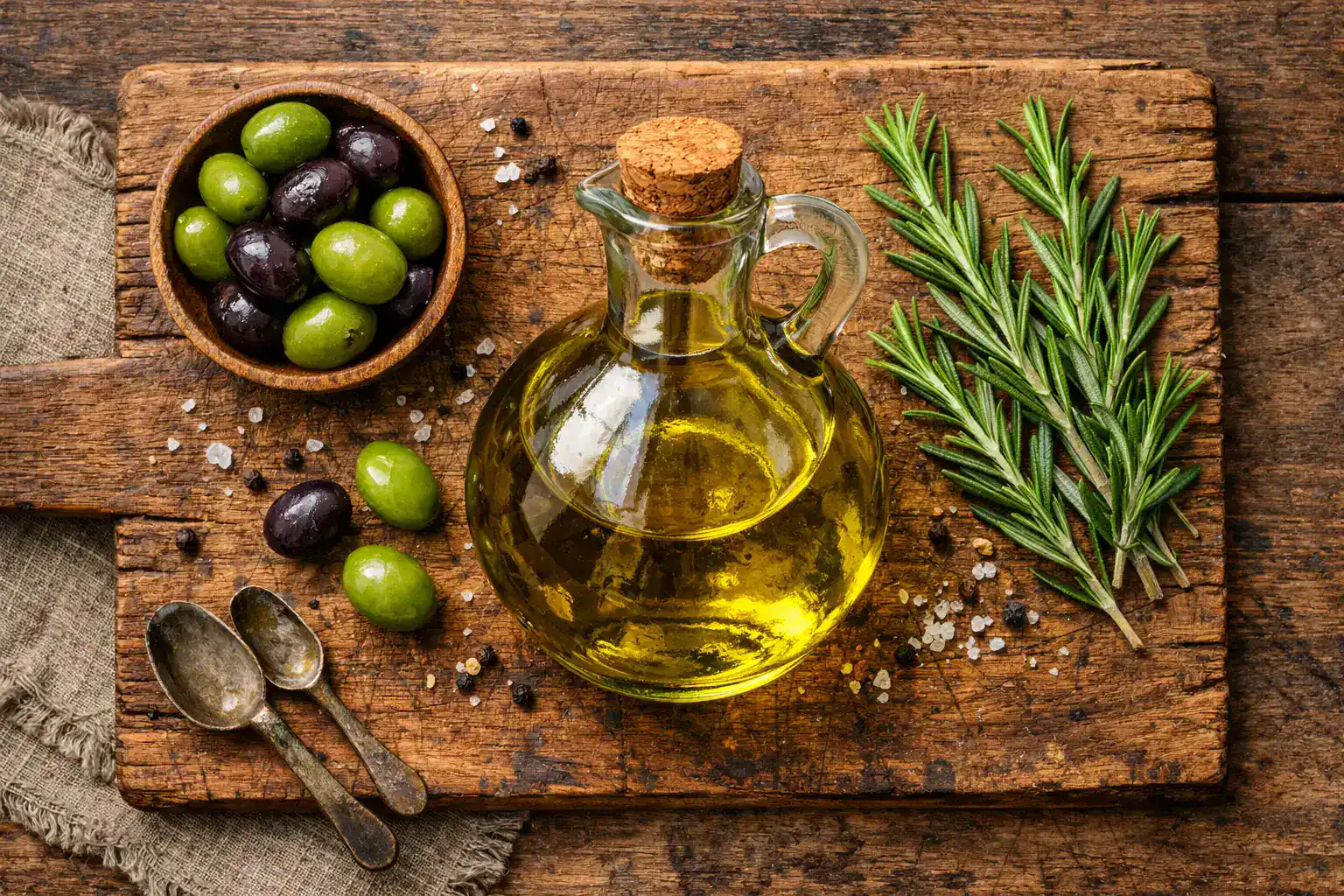
Kyoord High-Polyphenol Olive Oil: Calories, Nutrition and Health Benefits
A premium extra virgin olive oil packed with antioxidant polyphenols, heart-healthy monounsaturated fats, and anti-inflammatory compounds for every health goal.
Quick Nutrition Facts
Per 1 Tablespoon (14g)
| Nutrient | Amount |
|---|---|
| Calories | 120 kcal |
| Protein | 0g |
| Carbohydrates | 0g |
| Fiber | 0g |
| Sugars | 0g |
| Total Fat | 14g |
| Monounsaturated Fat | 10g |
| Saturated Fat | 2g |
| Polyunsaturated Fat | 1.5g |
| Vitamin E | 2mg |
| Vitamin K | 8.1mcg |
| Polyphenols | 400-800mg/kg |
Macronutrient Breakdown
 ChatGPT
  Claude
  AI Mode
  Perplexity
NUTRITIONIST INSIGHT
High-polyphenol olive oils like Kyoord deliver 3-5x more antioxidant polyphenols than standard EVOO. Just 1-2 tablespoons daily provides oleocanthal (a natural anti-inflammatory comparable to ibuprofen) and hydroxytyrosol, one of the most potent antioxidants found in food.
Myth Busters
MYTH #1: All Olive Oils Are the Same Nutritionally
TRUTH: Polyphenol content varies dramatically. Standard refined olive oil may contain under 100mg/kg polyphenols, while high-polyphenol EVOO like Kyoord contains 400-800mg/kg. These compounds drive the cardiovascular and anti-inflammatory benefits.
MYTH #2: Olive Oil Makes You Fat
TRUTH: Despite being calorie-dense (120 kcal/tbsp), people consuming at least half a tablespoon daily had 14% lower cardiovascular disease risk. Replacing saturated fats with olive oil supports weight management and metabolic health.
MYTH #3: You Shouldn't Cook with Extra Virgin Olive Oil
TRUTH: EVOO has a smoke point of 190-215C (375-420F), making it suitable for most cooking. However, polyphenols degrade at high heat. For maximum antioxidant benefit, use high-polyphenol oils as a finishing drizzle.
MYTH #4: Olive Oil Is Bad for Diabetics Because of Fat Content
TRUTH: Research shows EVOO actually reduces postprandial blood glucose spikes when added to high-glycemic meals. High-polyphenol EVOO significantly lowered fasting HbA1c and glucose in overweight type 2 diabetes patients.
MYTH #5: The Peppery Taste Means the Oil Is Rancid
TRUTH: The peppery, slightly bitter throat-catch is caused by oleocanthal, a powerful anti-inflammatory polyphenol. This sensation is actually a sign of high-quality, polyphenol-rich olive oil and indicates freshness, not spoilage.
NutriScore by Health Goals
| Health Goal | NutriScore | Why This Score? |
|---|---|---|
| Weight Loss |  | Calorie-dense at 120 kcal/tbsp but promotes satiety. Limit to 1 tbsp daily; replace other fats rather than adding. |
| Muscle Gain |  | Healthy calorie source with anti-inflammatory polyphenols that support recovery. Use 1-2 tbsp on meals for added energy. |
| Diabetes Management |  | EVOO reduces postprandial glucose spikes and may improve insulin sensitivity. High-polyphenol EVOO lowered HbA1c in studies. |
| PCOS Management | | Anti-inflammatory polyphenols help manage chronic inflammation linked to PCOS. Monounsaturated fats support hormone balance. |
| Pregnancy Nutrition | | Olive oil consumption during pregnancy confers protective effects on maternal-fetal outcomes. Rich in vitamin E and healthy fats for fetal development. |
| Viral/Flu Recovery | | Potent anti-inflammatory polyphenols (oleocanthal, hydroxytyrosol) support immune function and reduce inflammatory markers. |
PERSONALIZED NUTRITION
Track your meals with NutriScan for personalized NutriScores based on your specific health goals!
Blood Sugar Response to Olive Oil
Understanding how olive oil affects blood glucose helps optimize meal planning. As a pure fat with zero carbohydrates, olive oil itself does not raise blood sugar. Its value lies in moderating glucose response when paired with carb-rich foods.
Typical Glucose Response Curve (Meal with Olive Oil vs Without)
This chart shows typical blood glucose response when olive oil is added to a carb-rich meal. Individual responses may vary. Not medical advice.
How Olive Oil Flattens the Spike
Adding EVOO to high-glycemic meals slows gastric emptying and stimulates GLP-1 secretion, reducing postprandial glucose peaks:
- 🥗 Drizzle on salads with whole grains - Slows carb absorption from bread or pasta
- 🍞 Use as bread dip instead of butter - Replaces saturated fat with monounsaturated fat
- 🥣 Add to soups and stews - Increases polyphenol intake with meals
- 🥔 Finish roasted vegetables - Adds healthy fats to fiber-rich sides
This combination reduces glucose peaks and extends satiety, keeping energy levels stable for longer.
Cultural Significance
Olive oil has been a cornerstone of Mediterranean cuisine and medicine for over 5,000 years, with the earliest cultivation traced to ancient Crete and the Levant.
In the Mediterranean:
- Central to the PREDIMED study proving cardiovascular benefits of the Mediterranean diet
- Greek tradition of drinking a spoonful of olive oil each morning for longevity
- Used in religious ceremonies across Christianity, Judaism, and Islam
- Italy, Spain, and Greece produce over 70% of the world's olive oil
In India:
- Growing adoption in urban Indian kitchens as a health-conscious cooking oil
- Ayurvedic practitioners use olive oil for abhyanga (self-massage) and skin care
- Increasingly recommended by Indian nutritionists as a replacement for refined vegetable oils
Global Impact:
- World olive oil consumption exceeds 3 million tonnes annually
- High-polyphenol varieties represent the premium segment, tested and certified for polyphenol content
- EU-approved health claim: "Olive oil polyphenols contribute to the protection of blood lipids from oxidative stress" (for oils with >250mg/kg polyphenols)
Compare & Substitute
Kyoord Olive Oil vs Other Healthy Oils (Per 1 tbsp / 14g)
| Nutrient | Kyoord EVOO | Regular EVOO | Coconut Oil | Avocado Oil |
|---|---|---|---|---|
| Calories | 120 kcal | 120 kcal | 121 kcal | 124 kcal |
| Total Fat | 14g | 14g | 14g | 14g |
| Monounsaturated | 10g | 10g | 0.8g | 10g |
| Saturated | 2g | 2g | 12g | 1.6g |
| Polyunsaturated | 1.5g | 1.5g | 0.2g | 1.9g |
| Vitamin E | 2mg | 2mg | 0mg | 2.7mg |
| Polyphenols | 400-800mg/kg | 100-250mg/kg | Trace | Trace |
| Smoke Point | 190-215C | 190-215C | 177C | 271C |
| Best For | Raw finishing, dipping | All-purpose cooking | Baking, high-heat frying | High-heat searing |
Frequently Asked Questions
How many calories are in a tablespoon of Kyoord olive oil?
One tablespoon (14g) contains 120 calories, all from fat. Per 100g, olive oil provides 884 calories. This is standard across all olive oils since the caloric content comes from fat, which is consistent regardless of polyphenol levels.
What makes high-polyphenol olive oil different from regular EVOO?
3 key differences set high-polyphenol oils apart. Polyphenol content is 400-800mg/kg versus 100-250mg/kg in standard EVOO. The flavor is more peppery and bitter due to oleocanthal. Research shows stronger anti-inflammatory and cardiovascular benefits with higher polyphenol concentrations.
Is Kyoord olive oil good for diabetes management?
Yes. Studies show EVOO reduces postprandial glucose when added to carb-rich meals. A meta-analysis found that 25-50g daily significantly improves insulin sensitivity (HOMA-IR). High-polyphenol EVOO specifically lowered fasting HbA1c in overweight type 2 diabetes patients. Always consult your healthcare provider.
How much olive oil should I consume daily?
General Guidelines:
- 1 tablespoon daily - Minimum for health benefits (120 kcal)
- 1.5-2 tablespoons daily - Optimal for polyphenol benefits based on EU health claims (180-240 kcal)
- 3+ tablespoons daily - May be excessive for calorie-conscious individuals (360+ kcal)
Replace existing fats rather than adding olive oil on top of your current diet.
Can I cook with high-polyphenol olive oil?
You can, but heat degrades polyphenols. For maximum benefit, use it raw as a finishing oil, salad dressing, or bread dip. For cooking, keep temperatures at medium or below (under 180C/350F). Save high-polyphenol EVOO for finishing and use regular EVOO for cooking.
Is olive oil safe during pregnancy?
Yes, EVOO is considered safe and beneficial during pregnancy. Research shows it may reduce gestational diabetes risk, support healthy fetal development, and lower risk of small-for-gestational-age infants. 1-2 tablespoons daily provides vitamin E and essential fatty acids needed during pregnancy.
Track your meals with NutriScan app to see how olive oil fits your personal nutrition goals.


Similar Nutritious Foods
4505 Chicharrones Classic Chili Salt
7 Eleven Japan Crispy Corn Cheese
Explore More Nutrition Tools & Resources
AI Calorie Counter App - Snap a Photo, Get Macros
AI Nutritionist App That Reads Your Logged Meals
Best Protein Supplements for Women
Bulking Meal Plan App That Sets Your Surplus
ChatGPT Calorie Counter Alternative That Keeps the Total
ChatGPT Diet Plan Alternative That Tracks What You Eat
ChatGPT Weight Loss Coach Alternative With a Food Log
Fast Food Calorie Counter App That Reads the Tray
Free Calorie Tracker App with AI Photo Scans | NutriScan
Indian Diet Plan App With Veg and Non Veg Meals
Indian Food Calorie Calculator - Get Instant Nutrition Facts for Desi Meals — 2026
Intermittent Fasting for Women, Timer and Meal Log App
Intermittent Fasting Tracker App - Free Fasting Timer
Macro Tracker App That Fills the Numbers From a Photo
Mediterranean Diet Meal Plan App That Counts the Oil
Micronutrient Tracker App for Vitamins and Minerals
MyFitnessPal Alternative That Stays Free | NutriScan
NutriScore App: A Free Grade on Every Meal | NutriScan
Nutrition Label Scanner App for the Amount You Ate
Second Trimester Protein Guide
Vegetarian Meal Plan App With a Protein Target
Voice Calorie Counter - Speak to Track Meals Hands-Free
Water and Calorie Tracker App - Free Water Log