La Boulangere Pain au Chocolat: Calories, Nutrition and Health Benefits
A classic French butter pastry with dark chocolate batons, delivering flaky layers and rich flavor in every bite.
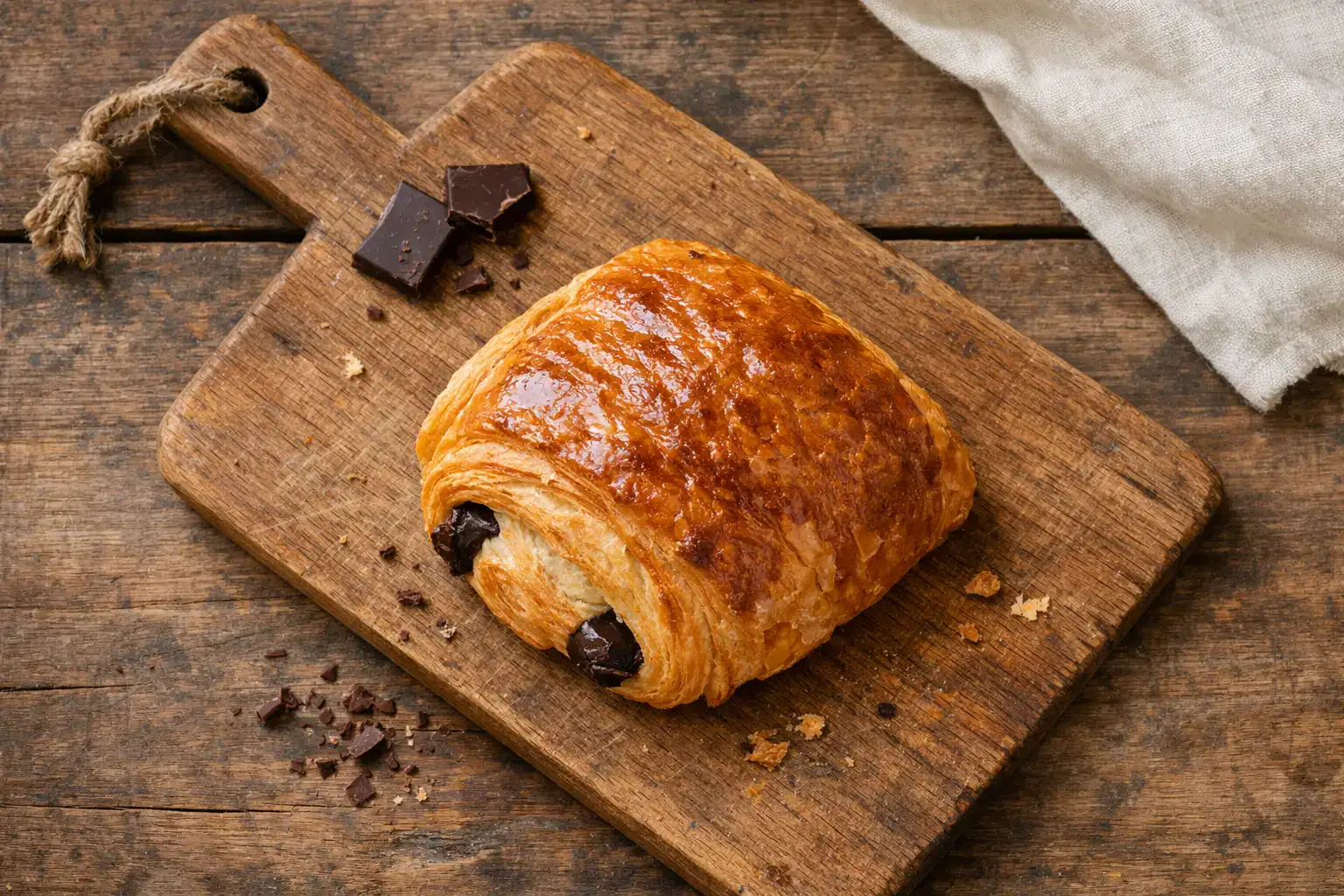
Quick Nutrition Facts
Per 1 Pain au Chocolat (45g)
| Nutrient | Amount |
|---|---|
| Calories | 190 kcal |
| Protein | 3g |
| Carbohydrates | 20g |
| Fiber | 1g |
| Sugars | 7g |
| Fat | 10g |
| Saturated Fat | 5.5g |
| Cholesterol | 5mg |
| Sodium | 170mg |
| Iron | 1mg |
Macronutrient Breakdown
 ChatGPT
  Claude
  AI Mode
  Perplexity
NUTRITIONIST INSIGHT
Pain au chocolat is calorie-dense at 422 kcal per 100g, with nearly half its calories from fat. The chocolate filling provides small amounts of iron and theobromine, but the refined flour and butter make this an occasional treat rather than a daily staple.
Myth Busters
MYTH #1: Pain au Chocolat Is Just Empty Calories
TRUTH: While calorie-dense, pain au chocolat provides 3g protein, 1g fiber, selenium (20% DV per 57g), thiamin (15% DV), and folate (15% DV per 57g). It is not nutrient-free, though it should be eaten in moderation.
MYTH #2: The Chocolate Makes It Much Worse Than a Plain Croissant
TRUTH: A chocolate croissant has only ~30-40 more calories than a plain croissant of similar size. The dark chocolate filling actually provides flavonoids and theobromine with potential cardiovascular benefits, though the amounts are small.
MYTH #3: You Should Never Eat Pastries If You Have Diabetes
TRUTH: Diabetics can enjoy pastries occasionally with proper portion control. Pairing with protein or healthy fat slows glucose absorption significantly. Eat a half portion with Greek yogurt or nuts rather than avoiding pastries entirely.
MYTH #4: All Butter in Pastries Is Harmful
TRUTH: While pain au chocolat is high in saturated fat (5.5g per pastry), not all saturated fats behave the same way. The overall dietary pattern matters more than a single food. Occasional enjoyment within a balanced diet is reasonable.
MYTH #5: Pain au Chocolat and Chocolatine Are Different Pastries
TRUTH: They are the same pastry. In northern France it is called pain au chocolat; in southwestern France, the term chocolatine is used. The recipe, ingredients, and nutritional profile are identical regardless of the name.
NutriScore by Health Goals
| Health Goal | NutriScore | Why This Score? |
|---|---|---|
| Weight Loss |  | 190 calories and 10g fat per small pastry is calorie-dense. Limit to 1 per week max; pair with protein to stay fuller. |
| Muscle Gain |  | Only 3g protein but provides 20g quick carbs for post-workout glycogen. Pair with a protein shake for better recovery. |
| Diabetes Management | | High GI (~70) refined flour spikes blood sugar. Pair with protein or fat to slow glucose absorption; eat half portion only. |
| PCOS Management | | Refined carbs and high glycemic load affect insulin sensitivity. Limit to rare occasions; prefer whole grain alternatives. |
| Pregnancy Nutrition | | Provides folate and iron but high in saturated fat. Safe when fully baked with pasteurized butter; enjoy occasionally. |
| Viral/Flu Recovery | | Easy to eat when appetite is low, provides quick energy (20g carbs). Small amounts of theobromine may help with cough suppression. |
PERSONALIZED NUTRITION
Track your meals with NutriScan for personalized NutriScores based on your specific health goals!
Blood Sugar Response to Pain au Chocolat
Understanding how pain au chocolat affects your blood glucose can help you make informed decisions about when and how to enjoy it.
Typical Glucose Response Curve
This chart shows typical blood glucose response for general healthy individuals. Individual responses may vary. Not medical advice.
How to Flatten the Spike
Pairing pain au chocolat with protein or healthy fat slows glucose absorption and reduces the peak blood sugar level:
- 🥜 Almond butter or a handful of almonds - Adds healthy fats and protein
- 🥛 Greek yogurt or cottage cheese - Provides protein and probiotics
- 🥚 Boiled or scrambled eggs - Complete protein source
- 🧀 A small slice of cheese - Protein and fat to slow digestion
This combination not only reduces the glucose spike but also extends energy release, keeping you fuller for longer.
Cultural Significance
Pain au chocolat is one of France's most iconic viennoiseries, with roots in Austrian baking traditions brought to Paris in the early 19th century.
In France:
- A breakfast staple alongside coffee (petit dejeuner); consumed by millions daily
- The pain au chocolat vs chocolatine debate divides northern and southern France
- Traditional recipes require 27 layers of laminated butter dough (pate feuilletee levee)
- Protected under French baking regulations for artisan boulangeries
Global Impact:
- Popularized worldwide through French bakery chains like Paul, Eric Kayser, and La Boulangere
- Costco and supermarket frozen versions have made it accessible globally
- The French viennoiserie market is valued at over 3 billion euros annually
- Pain au chocolat is the second most popular viennoiserie after the croissant
Compare & Substitute
Pain au Chocolat vs Similar Pastries (Per 100g)
| Nutrient | 🥐 Pain au Chocolat | 🥐 Plain Croissant | 🍩 Glazed Donut | 🍞 Whole Wheat Toast |
|---|---|---|---|---|
| Calories | 422 kcal | 406 kcal | 421 kcal | 247 kcal |
| Carbs | 49g | 43g | 53g | 41g |
| Fiber | 1.8g | 2.6g | 1.7g | 7g |
| Protein | 7g | 8g | 5g | 13g |
| Fat | 23g | 21g | 22g | 3.4g |
| Sugar | 19g | 6g | 23g | 4g |
| Sodium | 242mg | 424mg | 326mg | 400mg |
| Best For | Occasional treat, brunch | Lower sugar pastry option | Sweet indulgence | Daily breakfast, fiber |
Frequently Asked Questions
How many calories are in a La Boulangere Pain au Chocolat?
One La Boulangere Pain au Chocolat contains approximately 190 calories, with 10g total fat, 20g carbohydrates, and 3g protein. Per 100g, chocolate croissants contain about 422 kcal, making them calorie-dense compared to most breakfast options.
Best practice: Enjoy one pastry as an occasional treat rather than a daily breakfast. Pair with a source of protein for better satiety.
Is pain au chocolat bad for weight loss?
Pain au chocolat is calorie-dense but not off-limits for weight loss. At 190 calories per pastry, it can fit into a calorie-controlled diet when consumed mindfully.
Tips for weight-conscious consumption:
- Limit to 1 pastry per week maximum
- Eat it as part of a meal, not a snack
- Pair with protein (eggs, yogurt) to increase fullness
- Choose smaller La Boulangere versions over bakery-sized ones (which can be 300+ calories)
Can diabetics eat pain au chocolat?
Diabetics should be cautious due to the high glycemic index (~70) of refined flour pastries. However, complete avoidance is not necessary.
Tips for diabetics:
- Eat half a pastry at a time (10g carbs vs 20g)
- Always pair with protein or healthy fat
- Best timing: after a meal, not on empty stomach
- Monitor blood sugar 2 hours after eating
Consult your healthcare provider for personalized guidance.
Is pain au chocolat safe during pregnancy?
Pain au chocolat made with pasteurized butter and fully baked is generally safe during pregnancy. It provides small amounts of folate and iron, which are important during pregnancy.
Considerations:
- Ensure the pastry is fully baked (no raw dough)
- Butter should be from pasteurized milk
- High saturated fat content means moderation is key
- The small amount of caffeine (7mg per pastry) is well within safe limits
What is the difference between pain au chocolat and a chocolate croissant?
Pain au chocolat and chocolate croissant are the same pastry. In France, the name varies by region: pain au chocolat in the north and chocolatine in the south. Outside France, it is often marketed as a chocolate croissant.
The key difference from a regular croissant is the rectangular shape and two batons of dark chocolate baked inside the laminated dough.
How should I store La Boulangere Pain au Chocolat?
La Boulangere Pain au Chocolat is individually wrapped for freshness. Store at room temperature for up to the date printed on the package. For best results, warm in a preheated oven at 180C (350F) for 3-5 minutes before serving.
For opened packages, consume within 2-3 days or freeze for up to 3 months.


Similar Nutritious Foods
4505 Chicharrones Classic Chili Salt
7 Eleven Japan Crispy Corn Cheese
Explore More Nutrition Tools & Resources
AI Calorie Counter App - Snap a Photo, Get Macros
AI Nutritionist App That Reads Your Logged Meals
Best Protein Supplements for Women
Bulking Meal Plan App That Sets Your Surplus
ChatGPT Calorie Counter Alternative That Keeps the Total
ChatGPT Diet Plan Alternative That Tracks What You Eat
ChatGPT Weight Loss Coach Alternative With a Food Log
Fast Food Calorie Counter App That Reads the Tray
Free Calorie Tracker App with AI Photo Scans | NutriScan
Indian Diet Plan App With Veg and Non Veg Meals
Indian Food Calorie Calculator - Get Instant Nutrition Facts for Desi Meals — 2026
Intermittent Fasting for Women, Timer and Meal Log App
Intermittent Fasting Tracker App - Free Fasting Timer
Macro Tracker App That Fills the Numbers From a Photo
Mediterranean Diet Meal Plan App That Counts the Oil
Micronutrient Tracker App for Vitamins and Minerals
MyFitnessPal Alternative That Stays Free | NutriScan
NutriScore App: A Free Grade on Every Meal | NutriScan
Nutrition Label Scanner App for the Amount You Ate
Second Trimester Protein Guide
Vegetarian Meal Plan App With a Protein Target
Voice Calorie Counter - Speak to Track Meals Hands-Free
Water and Calorie Tracker App - Free Water Log