Labneh with Za'atar: Calories, Nutrition and Health Benefits
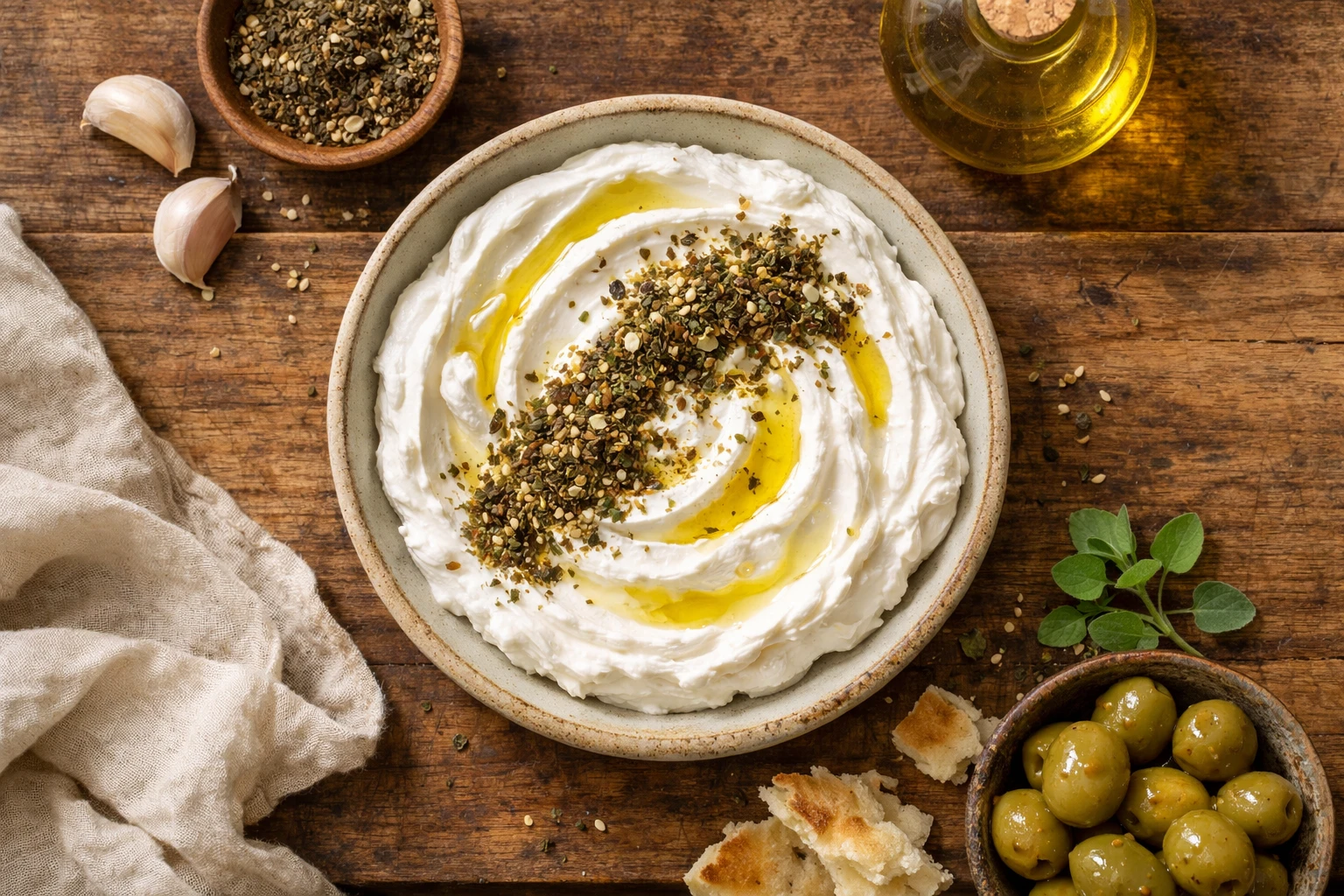
Creamy strained yogurt cheese from the Middle East, rich in protein and probiotics, traditionally served with za'atar herb blend.
Quick Nutrition Facts
Per Serving (110g / 1/2 cup)
| Nutrient | Amount |
|---|---|
| Calories | 180 kcal |
| Protein | 12g |
| Carbohydrates | 6g |
| Fiber | 0g |
| Sugars | 6g |
| Fat | 12g |
| Calcium | 200mg |
| Sodium | 220mg |
| Probiotics | Live cultures |
Macronutrient Breakdown
 ChatGPT
  Claude
  AI Mode
  Perplexity
NUTRITIONIST INSIGHT
Labneh contains 2.5 times more protein than regular yogurt due to the straining process. The live probiotics support gut health while za'atar adds antioxidants without extra calories.
Myth Busters
MYTH #1: Labneh Is Too High in Fat for Weight Loss
TRUTH: The 12g of fat is mostly healthy dairy fat that promotes satiety and helps absorb vitamins A, D, E, K. Probiotic yogurt consumption supports metabolic health and weight management. Choose full-fat over low-fat for better nutrient absorption and appetite control.
MYTH #2: Labneh Is Just Greek Yogurt
TRUTH: While both are strained yogurts, labneh is strained longer (12-24 hours vs 4-6 hours), resulting in thicker texture, higher protein concentration, and creamier consistency. Traditional labneh uses whole milk and differs in bacterial cultures.
MYTH #3: Diabetics Should Avoid Labneh Due to Dairy
TRUTH: Labneh has low glycemic impact with only 6g carbs per serving. Yogurt and fermented dairy products support calcium levels and metabolic health in pregnancy and can be part of diabetes management when portioned correctly.
MYTH #4: You Must Make Labneh at Home
TRUTH: Commercial labneh is widely available in supermarkets and maintains similar nutritional benefits. Check labels for live active cultures and minimal additives. Homemade allows control over fat content and straining time.
MYTH #5: Za'atar Adds Significant Calories
TRUTH: One tablespoon of za'atar adds only 15-20 calories while providing antioxidants from thyme, oregano, and sumac plus minerals from sesame seeds. The flavor boost helps satisfy cravings with minimal caloric impact.
NutriScore by Health Goals
| Health Goal | NutriScore | Why This Score? |
|---|---|---|
| Weight Loss |  | 12g protein promotes satiety, only 180 calories per serving. Probiotics support gut health linked to weight management. Limit to 1 serving daily. |
| Muscle Gain |  | Excellent protein source (12g) for muscle recovery, easily paired with post-workout meals, healthy fats support hormone production. |
| Diabetes Management | | Low carb (6g), high protein stabilizes blood sugar. Pair with vegetables or whole grains; monitor portions. |
| PCOS Management | | High protein helps manage insulin sensitivity. Choose full-fat for hormone balance. Limit to 1 serving if dairy-sensitive. |
| Pregnancy Nutrition | | Probiotic yogurt improves metabolic and infectious outcomes during pregnancy. Rich in calcium (200mg) and protein for fetal growth. |
| Viral/Flu Recovery | | Probiotics support immune function, easy to digest, high-quality protein aids recovery, calcium and vitamin A from dairy boost immunity. |
PERSONALIZED NUTRITION
Track your meals with NutriScan for personalized NutriScores based on your specific health goals!
Blood Sugar Response to Labneh
Understanding how labneh affects blood glucose helps with meal planning and portion control.
Typical Glucose Response Curve
This chart shows typical blood glucose response for general healthy individuals. Individual responses may vary. Not medical advice.
How to Optimize Blood Sugar Response
Pairing labneh with fiber and complex carbs slows glucose absorption and provides sustained energy:
- 🥒 Fresh vegetables - Cucumber, tomato, bell peppers add fiber and volume
- 🫓 Whole grain pita or crackers - Complex carbs balance the protein
- 🫒 Olives and olive oil drizzle - Healthy fats further stabilize blood sugar
- 🌰 Nuts and seeds - Add crunch, fiber, and plant protein
This combination creates a balanced Mediterranean-style meal with minimal blood sugar impact.
Cultural Significance
Labneh has been a Middle Eastern staple for over 2,000 years, originating in the Levant region.
In Middle Eastern Culture:
- Traditional breakfast food served with olive oil, za'atar, and pita bread
- Used as a mezze dip, sandwich spread, and cooking ingredient
- Traditional preservation method before refrigeration (rolled into balls and stored in olive oil)
- Essential component of Lebanese, Syrian, Palestinian, and Jordanian cuisine
Global Impact:
- Mediterranean diet staple linked to heart health and longevity
- Growing popularity in Western markets as Greek yogurt alternative
- Versatile ingredient in fusion cuisine (labneh cheesecake, labneh pasta)
- Rising demand positions labneh as bestselling dairy product worldwide
Compare & Substitute
Labneh vs Similar Dairy Products (Per 100g)
| Nutrient | 🧀 Labneh | 🥛 Greek Yogurt | 🧀 Cream Cheese | 🧀 Cottage Cheese |
|---|---|---|---|---|
| Calories | 164 kcal | 97 kcal | 342 kcal | 98 kcal |
| Carbs | 5.5g | 3.6g | 4.1g | 3.4g |
| Fiber | 0g | 0g | 0g | 0g |
| Protein | 10.9g | 10.2g | 5.9g | 11.1g |
| Fat | 10.9g | 5g | 34.2g | 4.3g |
| Calcium | 182mg | 110mg | 98mg | 83mg |
| Probiotics | Live cultures | Live cultures | None | Some varieties |
| Best For | Mediterranean meals, high protein | Lower-calorie high-protein dip | Baking, rich spreads | Low-fat high-protein snacking |
Frequently Asked Questions
Is labneh good for weight loss?
Yes, labneh supports weight loss with 12g protein per serving that promotes satiety and preserves muscle mass during calorie deficit. Low in carbs (6g) and rich in probiotics that support gut health. Best consumed as breakfast spread with vegetables or post-workout snack; limit to 1 serving (110g) daily for calorie control at 180 calories.
Can diabetics eat labneh?
Yes, diabetics can enjoy labneh in moderation. Low glycemic impact with only 6g carbs per serving and 12g protein helps stabilize blood sugar levels.
Tips for diabetics:
- Pair with low-carb vegetables like cucumber, tomatoes, or bell peppers
- Choose whole grain crackers over white pita bread
- Monitor portion sizes (stick to 110g serving)
- Check blood glucose 2 hours after eating
- Opt for full-fat over low-fat for better satiety and blood sugar control
How much protein is in labneh?
A 110g serving (1/2 cup) of labneh contains 12 grams of protein, equivalent to 1.5 eggs or 1/3 chicken breast. Per 100g, labneh provides 10.9g protein, which is 2.5 times higher than regular yogurt due to the straining process that concentrates protein while removing whey.
What are the main health benefits of labneh?
Key Benefits:
- High-Quality Protein: 12g per serving supports muscle maintenance and satiety
- Probiotic-Rich: Live cultures support digestive health and immunity
- Bone Health: 200mg calcium (15% daily value) strengthens bones
- Heart Health: Mediterranean diet staple linked to cardiovascular benefits
- Metabolic Support: Low-carb, high-protein profile aids blood sugar control
- Nutrient Absorption: Healthy fats help absorb fat-soluble vitamins A, D, E, K
Is labneh healthier than Greek yogurt?
Labneh and Greek yogurt are nutritionally similar, both being strained yogurts with high protein content (10-11g per 100g). Key differences: labneh is strained longer (12-24 hours vs 4-6 hours), resulting in thicker consistency and typically higher fat content (11g vs 5g per 100g); labneh uses whole milk traditionally while Greek yogurt offers low-fat options; both contain probiotics. Choose labneh for richer texture and Mediterranean recipes; Greek yogurt for lower-calorie option.
What is za'atar and its health benefits?
Za'atar is a traditional Middle Eastern herb blend containing dried thyme, oregano, marjoram, sumac, and toasted sesame seeds. One tablespoon (7g) provides 15-20 calories with antioxidants from herbs, iron and calcium from sesame seeds, and vitamin C from sumac. Health benefits include antioxidant support, immune function enhancement, and anti-inflammatory properties. Adds bold flavor to labneh without significant calories, making meals more satisfying.
How long does labneh last in the refrigerator?
Homemade labneh lasts 5-7 days refrigerated in an airtight container. Commercial labneh typically lasts 2-3 weeks after opening due to controlled production. Store covered with a thin layer of olive oil to extend freshness and add flavor. Discard if you notice sour smell, mold, or separation beyond normal whey pooling.
Can I make labneh at home?
Yes, homemade labneh is simple: mix 2 cups plain whole milk yogurt with 1/2 teaspoon salt; line a strainer with cheesecloth over a bowl; pour yogurt in and refrigerate 12-24 hours; longer straining creates thicker consistency. Homemade allows control over fat content, salt levels, and straining time; costs less than store-bought; requires only yogurt with live active cultures.


Similar Nutritious Foods
4505 Chicharrones Classic Chili Salt
7 Eleven Japan Crispy Corn Cheese
Explore More Nutrition Tools & Resources
AI Calorie Counter App - Snap a Photo, Get Macros
AI Nutritionist App That Reads Your Logged Meals
Best Protein Supplements for Women
Bulking Meal Plan App That Sets Your Surplus
ChatGPT Calorie Counter Alternative That Keeps the Total
ChatGPT Diet Plan Alternative That Tracks What You Eat
ChatGPT Weight Loss Coach Alternative With a Food Log
Fast Food Calorie Counter App That Reads the Tray
Free Calorie Tracker App with AI Photo Scans | NutriScan
Indian Diet Plan App With Veg and Non Veg Meals
Indian Food Calorie Calculator - Get Instant Nutrition Facts for Desi Meals — 2026
Intermittent Fasting for Women, Timer and Meal Log App
Intermittent Fasting Tracker App - Free Fasting Timer
Macro Tracker App That Fills the Numbers From a Photo
Mediterranean Diet Meal Plan App That Counts the Oil
Micronutrient Tracker App for Vitamins and Minerals
MyFitnessPal Alternative That Stays Free | NutriScan
NutriScore App: A Free Grade on Every Meal | NutriScan
Nutrition Label Scanner App for the Amount You Ate
Second Trimester Protein Guide
Vegetarian Meal Plan App With a Protein Target
Voice Calorie Counter - Speak to Track Meals Hands-Free
Water and Calorie Tracker App - Free Water Log