Lagman: Calories, Nutrition and Health Benefits
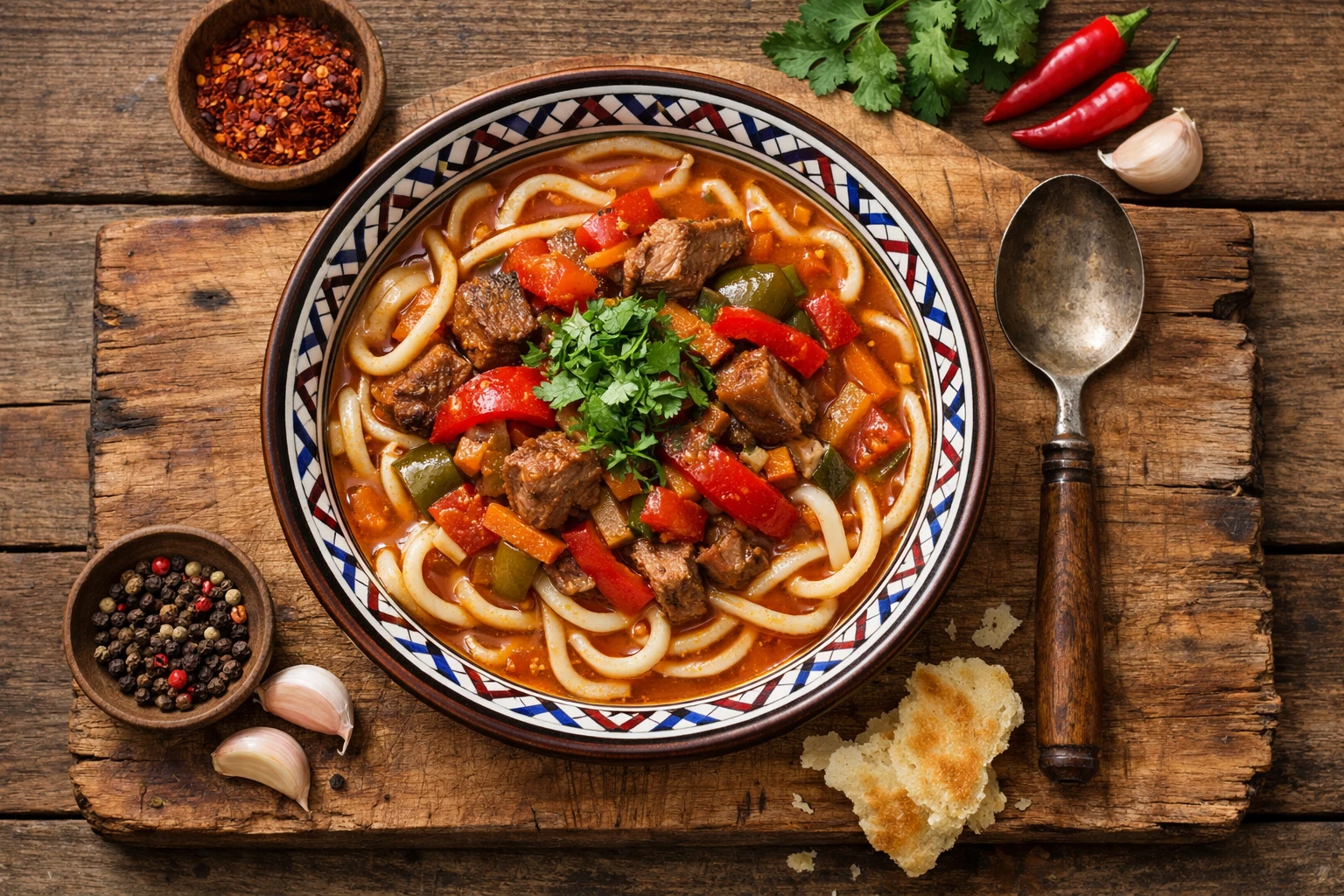
A hearty Central Asian noodle soup featuring hand-pulled noodles, tender lamb, and fresh vegetables in a savory cumin-spiced broth.
Quick Nutrition Facts
Per 1 Bowl Lagman (450g)
| Nutrient | Amount |
|---|---|
| Calories | 380 kcal |
| Protein | 22g |
| Carbohydrates | 45g |
| Fiber | 5g |
| Sugars | 6g |
| Fat | 12g |
| Saturated Fat | 4g |
| Sodium | 1100mg |
| Potassium | 650mg |
| Iron | 4.2mg |
| Vitamin C | 35mg |
Macronutrient Breakdown
 ChatGPT
  Claude
  AI Mode
  Perplexity
NUTRITIONIST INSIGHT
Lagman delivers complete nutrition in one bowl: 22g protein for muscle repair, complex carbs from hand-pulled noodles for sustained energy, and a rainbow of vegetables providing vitamins A, C, and potassium. The cumin and garlic add anti-inflammatory benefits.
Myth Busters
MYTH #1: Lagman Is Just Empty Carbs
TRUTH: Lagman is a balanced meal with 22g protein, 5g fiber, and vegetables. The hand-pulled noodles provide complex carbohydrates that digest slowly, unlike processed instant noodles. Studies show wheat noodles paired with protein have moderate glycemic response.
MYTH #2: The Broth Is Unhealthy Due to Fat
TRUTH: The lamb broth contains beneficial nutrients including iron, zinc, and B vitamins. While it has 12g fat per serving, much of this comes from lamb's naturally occurring conjugated linoleic acid (CLA), which may support metabolism.
MYTH #3: You Can't Eat Lagman on a Diet
TRUTH: At 380 calories with 22g protein, Lagman is more filling than many diet foods. The high protein and fiber content promotes satiety and reduces overall calorie intake. Request extra vegetables and less noodles for a lower-carb version.
MYTH #4: Lagman Is Too High in Sodium
TRUTH: While restaurant versions can be high in sodium (1100mg), homemade Lagman can be made with less salt. The potassium from vegetables (650mg) helps balance sodium's effects on blood pressure.
MYTH #5: All Noodle Soups Are the Same
TRUTH: Lagman's hand-pulled noodles have a chewier texture and different nutritional profile than processed noodles. The traditional cooking method and vegetable-rich broth make it more nutritious than instant ramen or cup noodles.
NutriScore by Health Goals
| Health Goal | NutriScore | Why This Score? |
|---|---|---|
| Weight Loss |  | 380 calories is moderate; request half noodles and extra vegetables. High protein promotes fullness. |
| Muscle Gain |  | Excellent 22g complete protein from lamb, 45g carbs for glycogen. Perfect post-workout meal. |
| Diabetes Management | | Moderate GI from wheat noodles. Request less noodles, more vegetables. Eat smaller portions. |
| PCOS Management | | Moderate carb content. Choose broth-heavy version with extra vegetables and half noodles. |
| Pregnancy Nutrition |  | Good iron (4.2mg) and protein for fetal development. Ensure lamb is fully cooked. Watch sodium intake. |
| Viral/Flu Recovery | | Warm broth soothes throat, vitamin C from vegetables supports immunity, protein aids recovery. |
PERSONALIZED NUTRITION
Track your meals with NutriScan for personalized NutriScores based on your specific health goals!
Blood Sugar Response to Lagman
Understanding how Lagman affects your blood glucose can help you make informed decisions about portion sizes and pairings.
Typical Glucose Response Curve
This chart shows typical blood glucose response for general healthy individuals. Individual responses may vary. Not medical advice.
How to Flatten the Spike
Pairing carbohydrate-rich foods with protein and fiber slows glucose absorption and reduces the peak blood sugar level:
- 🥬 Request extra vegetables - More carrots, peppers, and celery add fiber
- 🍋 Add vinegar or lemon - Acidic additions slow gastric emptying
- 🥗 Start with a salad - Fiber before carbs reduces glucose spike
- 🚶 Walk after eating - 15-minute walk helps glucose uptake
Cultural Significance
Lagman is the soul food of Central Asia, with deep roots in the Silk Road trading routes that connected East and West.
Origins and History:
- Name derives from Chinese "lamian" (拉面) meaning hand-pulled noodles
- Originated with Uyghur people in the Xinjiang region
- Spread along Silk Road to Uzbekistan, Kazakhstan, Kyrgyzstan, and Tajikistan
- Each region developed unique variations with local ingredients
Regional Variations:
- Uyghur Lagman: Spicier with more chili, often stir-fried (Gyuro lagman)
- Uzbek Lagman: Tomato-based broth, milder spices
- Kazakh Lagman: Heartier with more meat, thicker noodles
- Dungan Lagman: Chinese Muslim version with soy-based seasoning
Cultural Importance:
- Served at celebrations, weddings, and family gatherings
- The art of hand-pulling noodles is passed down through generations
- Represents hospitality - guests are always served lagman first
- Winter comfort food that warms both body and soul
Compare & Substitute
Lagman vs Similar Noodle Soups (Per Serving)
| Nutrient | 🍜 Lagman | 🍜 Pho | 🍜 Ramen | 🥣 Chicken Noodle |
|---|---|---|---|---|
| Calories | 380 kcal | 350 kcal | 450 kcal | 180 kcal |
| Carbs | 45g | 40g | 55g | 20g |
| Fiber | 5g | 2g | 3g | 2g |
| Protein | 22g | 25g | 18g | 12g |
| Fat | 12g | 8g | 18g | 5g |
| Sodium | 1100mg | 1200mg | 1800mg | 900mg |
| Iron | 4.2mg | 2.5mg | 2.8mg | 1.5mg |
| Best For | Balanced meal, muscle | Light meal, low fat | High energy, indulgence | Recovery, low calorie |
Frequently Asked Questions
How many calories are in Lagman?
A typical bowl of Lagman (450g) contains approximately 380 calories. Restaurant versions with extra oil or meat can reach 500-600 calories. Homemade versions can be lighter at 300-350 calories.
Calorie breakdown by component:
- Noodles (150g): ~200 calories
- Lamb meat (80g): ~120 calories
- Vegetables and broth: ~60 calories
Is Lagman healthy?
Yes, Lagman is a nutritionally balanced meal when eaten in moderation. It provides complete protein (22g), complex carbohydrates, fiber, iron, vitamin C, and potassium in one bowl.
Health benefits:
- 22g protein supports muscle maintenance
- 5g fiber aids digestion
- Iron (4.2mg) prevents anemia
- Vitamin C (35mg) boosts immunity
- Cumin and garlic have anti-inflammatory properties
Can diabetics eat Lagman?
Diabetics can enjoy Lagman with modifications. The wheat noodles have a moderate glycemic index.
Tips for diabetics:
- Request half portion of noodles
- Ask for extra vegetables
- Eat slowly and pair with fiber
- Monitor blood sugar 2 hours after eating
- Choose lunch over dinner for better glucose management
What is the difference between Lagman and Ramen?
While both are noodle soups, they differ significantly:
Lagman:
- Central Asian origin (Uyghur)
- Hand-pulled wheat noodles
- Lamb or beef based
- Cumin and tomato flavoring
- Chunky vegetables
Ramen:
- Japanese origin
- Factory-made alkaline noodles
- Pork or chicken based
- Soy, miso, or tonkotsu flavoring
- Topped with egg, nori, chashu
How do I make Lagman healthier?
Easy modifications:
- Use lean lamb or substitute with chicken
- Add more vegetables (double the peppers and carrots)
- Reduce noodle portion by half
- Make broth with less oil
- Use low-sodium soy sauce or salt alternatives
- Add fresh herbs like cilantro and dill
Is Lagman good for weight loss?
Lagman can fit into a weight loss diet with portion control. At 380 calories with 22g protein, it's more filling than many lower-calorie options.
Weight loss tips:
- Eat half a bowl (190 calories)
- Request extra vegetables, less noodles
- Skip any fried bread accompaniments
- Drink broth first to feel fuller
- Don't drink the entire broth (reduces sodium)


Similar Nutritious Foods
4505 Chicharrones Classic Chili Salt
7 Eleven Japan Crispy Corn Cheese
Explore More Nutrition Tools & Resources
AI Calorie Counter App - Snap a Photo, Get Macros
AI Nutritionist App That Reads Your Logged Meals
Best Protein Supplements for Women
Bulking Meal Plan App That Sets Your Surplus
ChatGPT Calorie Counter Alternative That Keeps the Total
ChatGPT Diet Plan Alternative That Tracks What You Eat
ChatGPT Weight Loss Coach Alternative With a Food Log
Fast Food Calorie Counter App That Reads the Tray
Free Calorie Tracker App with AI Photo Scans | NutriScan
Indian Diet Plan App With Veg and Non Veg Meals
Indian Food Calorie Calculator - Get Instant Nutrition Facts for Desi Meals — 2026
Intermittent Fasting for Women, Timer and Meal Log App
Intermittent Fasting Tracker App - Free Fasting Timer
Macro Tracker App That Fills the Numbers From a Photo
Mediterranean Diet Meal Plan App That Counts the Oil
Micronutrient Tracker App for Vitamins and Minerals
MyFitnessPal Alternative That Stays Free | NutriScan
NutriScore App: A Free Grade on Every Meal | NutriScan
Nutrition Label Scanner App for the Amount You Ate
Second Trimester Protein Guide
Vegetarian Meal Plan App With a Protein Target
Voice Calorie Counter - Speak to Track Meals Hands-Free
Water and Calorie Tracker App - Free Water Log