Laksa: Calories, Nutrition and Health Benefits
Malaysian spicy coconut curry noodle soup with rich aromatic spices, seafood, and satisfying noodles for a complete meal.
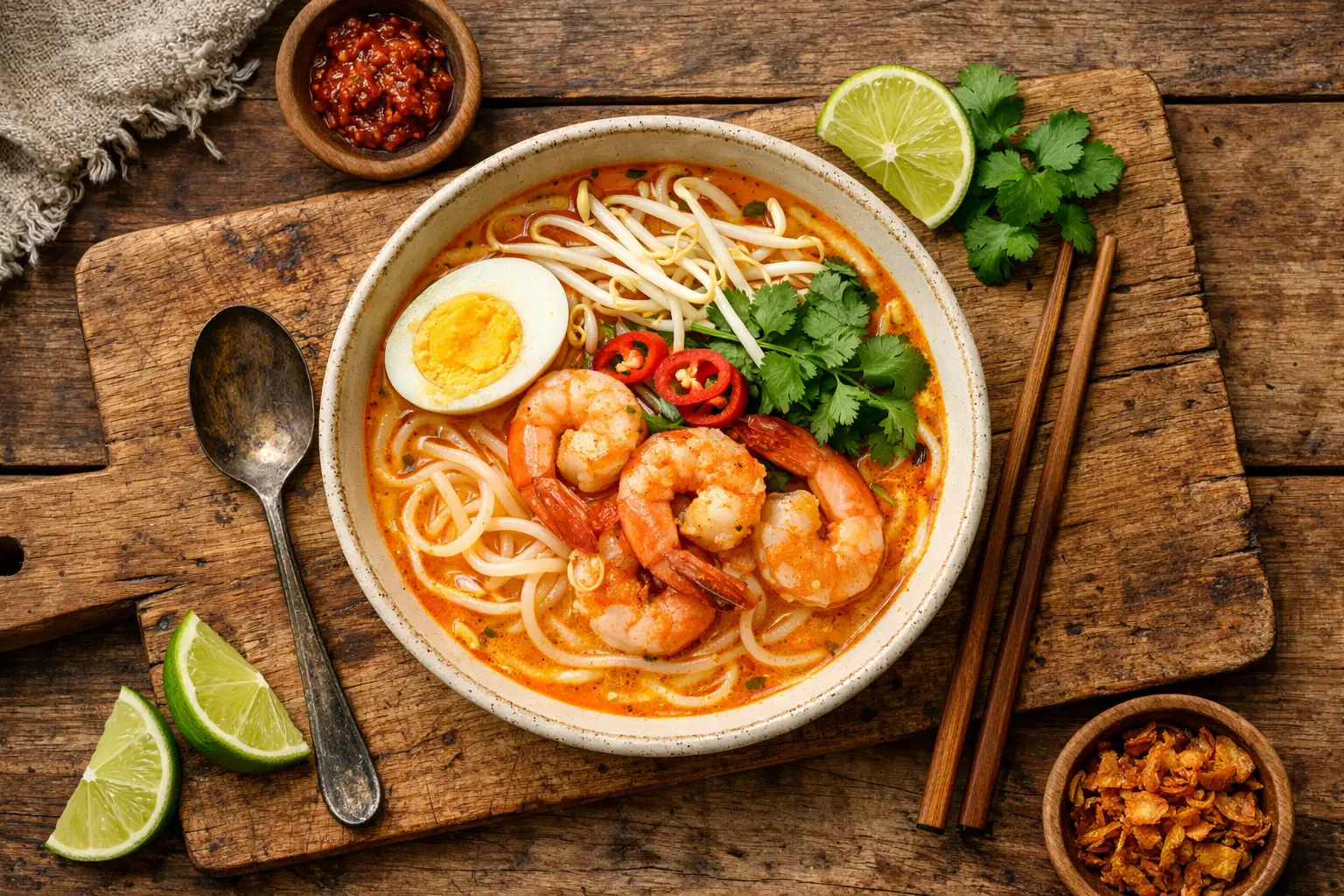
Quick Nutrition Facts
Per 1 Bowl (550g)
| Nutrient | Amount |
|---|---|
| Calories | 550 kcal |
| Protein | 22g |
| Carbohydrates | 52g |
| Fiber | 4g |
| Sugars | 6g |
| Fat | 28g |
| Saturated Fat | 20g |
| Sodium | 1200mg |
| Vitamin C | 15mg |
| Iron | 3.5mg |
Macronutrient Breakdown
 ChatGPT
  Claude
  AI Mode
  Perplexity
NUTRITIONIST INSIGHT
Laksa provides a complete meal with 22g protein from seafood and tofu, anti-inflammatory spices like turmeric and curcumin, and metabolism-boosting capsaicin from chili peppers. The coconut milk offers medium-chain triglycerides (MCTs) for sustained energy.
Myth Busters
MYTH #1: Laksa Is Too High in Calories for Weight Loss
TRUTH: At 550 calories with 22g protein and 4g fiber, laksa provides excellent satiety for a complete meal. High protein promotes fullness and can support weight loss when eaten as your main meal. Control portions and request extra vegetables.
MYTH #2: Coconut Milk Is Unhealthy
TRUTH: Coconut milk contains medium-chain triglycerides (MCTs) that are metabolized differently than long-chain fats. MCTs may support metabolism and provide quick energy. The saturated fat in coconut milk is primarily lauric acid, which has unique properties. Moderation is key.
MYTH #3: Diabetics Should Avoid Laksa Completely
TRUTH: Diabetics can enjoy laksa in moderation. Rice noodles have moderate GI (52-65), and the protein and fat slow glucose absorption. Request half noodles, add extra vegetables, and pair with fiber-rich sides to minimize blood sugar impact.
MYTH #4: Laksa Has No Nutritional Value
TRUTH: Laksa is nutrient-dense with complete protein (22g), vitamins from herbs and vegetables, iron from seafood, and anti-inflammatory compounds from turmeric, galangal, and lemongrass. The diverse ingredients create a balanced nutritional profile.
MYTH #5: All Laksa Is the Same
TRUTH: Curry laksa (coconut-based, 550 cal) differs significantly from asam laksa (tamarind-based, 350 cal). Asam laksa is lighter with no coconut milk. Katong laksa, Nyonya laksa, and Penang laksa each have unique spice profiles and calorie counts.
MYTH #6: Spicy Food Is Bad for Your Stomach
TRUTH: For most people, the capsaicin in laksa's chili supports digestion and metabolism. Only avoid if you have diagnosed GERD or gastritis. The spices actually provide anti-inflammatory benefits and may improve gut health through diverse plant compounds.
NutriScore by Health Goals
| Health Goal | NutriScore | Why This Score? |
|---|---|---|
| Weight Loss |  | 550 calories is filling but requires portion control. High protein (22g) promotes satiety. Best eaten as main meal with extra vegetables. |
| Muscle Gain |  | Excellent protein source (22g) with complete amino acids from seafood and eggs. Carbs (52g) support glycogen replenishment. Perfect post-workout meal. |
| Diabetes Management | | Moderate GI from rice noodles. Protein and fat slow glucose absorption. Request half noodles, add vegetables, monitor blood sugar. |
| PCOS Management | | High saturated fat may affect insulin sensitivity. Choose versions with light coconut milk, more protein, fewer noodles. Limit to 1-2 times per week. |
| Pregnancy Nutrition |  | Good protein (22g) for fetal development, iron from seafood. Ensure seafood is fully cooked. Moderate sodium intake. |
| Viral/Flu Recovery | | Hot spicy soup aids congestion, protein supports immunity, anti-inflammatory spices (turmeric, galangal) promote healing. Hydrating broth provides electrolytes. |
PERSONALIZED NUTRITION
Track your meals with NutriScan for personalized NutriScores based on your specific health goals!
Blood Sugar Response to Laksa
Understanding how laksa affects your blood glucose helps you make informed decisions about portion sizes and timing.
Typical Glucose Response Curve
This chart shows typical blood glucose response for general healthy individuals. Individual responses may vary. Not medical advice.
How to Flatten the Spike
Pairing strategies with protein and fiber reduce glucose peaks:
- 🥗 Side salad with vinegar dressing - Fiber and acetic acid slow absorption
- 🥚 Add extra egg or tofu - Increases protein content
- 🥦 Request extra vegetables - Adds fiber and nutrients
- 🍵 Green tea - Polyphenols may improve glucose metabolism
Eating laksa as your main meal (not as snack) and requesting half portion of noodles significantly reduces glycemic impact.
Cultural Significance
Laksa originated in the Peranakan (Straits Chinese) communities of Malaysia and Singapore, blending Chinese and Malay culinary traditions.
In Southeast Asia:
- Malaysia has 2 main types: curry laksa (coconut-based) and asam laksa (tamarind-based)
- Singapore's Katong laksa is eaten with spoon only (no chopsticks)
- Penang asam laksa ranked #7 in CNN's World's 50 Best Foods
- Each region's recipe reflects local spice preferences and available seafood
Cultural Impact:
- National dish status in Malaysia and Singapore
- Laksa festivals celebrate regional varieties and traditions
- Street food staple found in hawker centers across Southeast Asia
- Symbol of multicultural fusion in Peranakan cuisine
Compare & Substitute
Laksa vs Similar Noodle Soups (Per 100g)
| Nutrient | 🍜 Laksa (Curry) | 🍲 Pho (Vietnamese) | 🍝 Ramen | 🍜 Tom Yum Noodles |
|---|---|---|---|---|
| Calories | 100 kcal | 60 kcal | 85 kcal | 75 kcal |
| Carbs | 9.5g | 8g | 11g | 10g |
| Fiber | 0.7g | 0.5g | 0.8g | 0.6g |
| Protein | 4g | 3.5g | 4.5g | 3.8g |
| Fat | 5g | 1.5g | 3g | 2.5g |
| Sodium | 218mg | 195mg | 285mg | 210mg |
| Best For | Muscle gain, complete meal | Weight loss, light meals | Comfort food, quick meal | Low-cal, spicy soup fans |
Frequently Asked Questions
Is laksa good for weight loss?
Laksa can support weight loss when eaten in moderation as your main meal. At 550 calories with 22g protein and 4g fiber, it provides excellent satiety that reduces snacking. The high protein content helps preserve muscle during calorie restriction.
Best practices: Request light coconut milk (reduces 150+ calories), half portion of noodles, extra vegetables, and treat it as your complete meal rather than a side dish.
Can diabetics eat laksa?
Diabetics can enjoy laksa with modifications. Rice noodles have moderate glycemic index (52-65), and the combination of protein (22g) and fat (28g) slows glucose absorption.
Tips for diabetics:
- Request half portion of noodles (26g carbs vs 52g)
- Add extra protein (shrimp, tofu, eggs)
- Include fiber-rich vegetables
- Choose asam laksa (no coconut milk) for lower calorie option
- Monitor blood sugar 2 hours after eating
Always consult your healthcare provider for personalized guidance.
How much protein is in laksa?
A standard bowl of laksa contains 22g of protein from mixed sources including shrimp, fish cakes, tofu puffs, and eggs. This provides complete amino acids for muscle maintenance and recovery.
For higher protein, request double shrimp or extra eggs. Athletes and those building muscle can benefit from laksa as a post-workout meal.
What are the main health benefits of laksa?
Key Benefits:
- Complete Protein: 22g supports muscle maintenance and satiety
- Anti-inflammatory Spices: Turmeric, galangal, and lemongrass contain beneficial compounds
- Metabolism Boost: Capsaicin from chili increases thermogenesis
- Immune Support: Vitamin C, zinc from seafood, and aromatic herbs
- MCT Energy: Medium-chain triglycerides from coconut milk for sustained fuel
- Mineral Rich: Iron, zinc, and selenium from seafood and spices
Is laksa high in calories?
Yes, laksa is moderately high in calories at 550 per bowl, primarily from coconut milk (28g fat) and rice noodles (52g carbs). This makes it suitable as a complete main meal but requires portion awareness.
Calorie reduction strategies:
- Request light coconut milk (saves 150-200 cal)
- Half portion of noodles (saves 130 cal)
- More vegetables instead of noodles
- Share a bowl if having other dishes
Compare to asam laksa (350 cal) for a lighter tamarind-based alternative without coconut milk.
What is the difference between curry laksa and asam laksa?
The two main laksa types have distinct flavor profiles and nutrition:
Curry Laksa (Coconut-Based):
- Rich, creamy coconut curry broth
- 550 calories per bowl
- 28g fat from coconut milk
- Popular in Kuala Lumpur, Singapore
- Yellow-orange color from turmeric
Asam Laksa (Tamarind-Based):
- Sour, spicy fish broth (no coconut milk)
- 350 calories per bowl
- 12g fat (much lighter)
- Penang specialty, ranked #7 world's best foods
- Darker broth with mackerel flavor
Recommendation: Weight loss/diabetes = asam laksa. Muscle gain/high energy needs = curry laksa.
How many bowls of laksa should I eat?
General Guidelines:
- 1 bowl as main meal - Most people (provides complete nutrition)
- 1/2 bowl - Weight loss, diabetes, or when eating with other dishes
- 1 bowl post-workout - Athletes, muscle gain goals
Weekly limits:
- 2-3 times per week maximum due to high sodium (1200mg per bowl)
- Alternate with lighter noodle soups (pho, tom yum) for variety
- Balance with vegetable-rich meals on other days
Track your meals with NutriScan app to monitor sodium and calorie intake from laksa.
Can I eat laksa on a low-carb diet?
Traditional laksa is not suitable for strict low-carb or keto diets due to 52g carbs from rice noodles. However, you can create lower-carb versions:
Low-carb modifications:
- Replace noodles with shirataki (konjac) noodles (2g net carbs)
- Use zucchini noodles or cabbage strips
- Skip noodles entirely, focus on protein and broth
- Reduces carbs to 8-12g per bowl
The coconut curry broth itself is keto-friendly with healthy fats and minimal carbs.


Similar Nutritious Foods
4505 Chicharrones Classic Chili Salt
7 Eleven Japan Crispy Corn Cheese
Explore More Nutrition Tools & Resources
AI Calorie Counter App - Snap a Photo, Get Macros
AI Nutritionist App That Reads Your Logged Meals
Best Protein Supplements for Women
Bulking Meal Plan App That Sets Your Surplus
ChatGPT Calorie Counter Alternative That Keeps the Total
ChatGPT Diet Plan Alternative That Tracks What You Eat
ChatGPT Weight Loss Coach Alternative With a Food Log
Fast Food Calorie Counter App That Reads the Tray
Free Calorie Tracker App with AI Photo Scans | NutriScan
Indian Diet Plan App With Veg and Non Veg Meals
Indian Food Calorie Calculator - Get Instant Nutrition Facts for Desi Meals — 2026
Intermittent Fasting for Women, Timer and Meal Log App
Intermittent Fasting Tracker App - Free Fasting Timer
Macro Tracker App That Fills the Numbers From a Photo
Mediterranean Diet Meal Plan App That Counts the Oil
Micronutrient Tracker App for Vitamins and Minerals
MyFitnessPal Alternative That Stays Free | NutriScan
NutriScore App: A Free Grade on Every Meal | NutriScan
Nutrition Label Scanner App for the Amount You Ate
Second Trimester Protein Guide
Vegetarian Meal Plan App With a Protein Target
Voice Calorie Counter - Speak to Track Meals Hands-Free
Water and Calorie Tracker App - Free Water Log