Lay's American Cream & Onion: Calories, Nutrition and Health Analysis
A creamy, tangy flavored snack with higher sodium and fat content than plain varieties. Understanding artificial flavoring impact and portion control essential for health-conscious consumers.
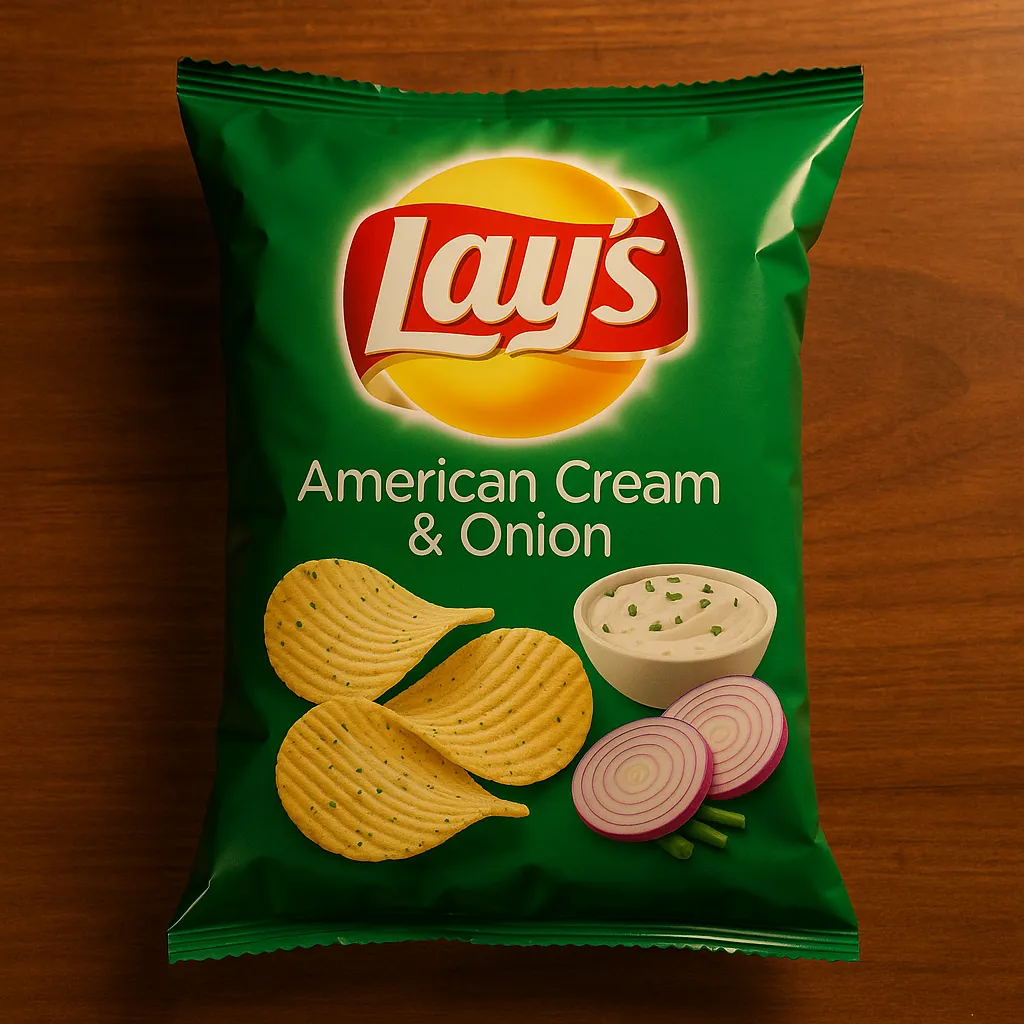
Quick Nutrition Facts
Per 1 Serving (28g)
| Nutrient | Amount |
|---|---|
| Calories | 160 kcal |
| Protein | 1.7g |
| Carbohydrates | 14g |
| Fiber | 1.2g |
| Sugars | 0.3g |
| Fat | 10.3g |
| Saturated Fat | 2.8g |
| Sodium | 270mg |
| Calcium | 45mg |
Macronutrient Breakdown
 ChatGPT
  Claude
  AI Mode
  Perplexity
NUTRITIONIST INSIGHT
Flavored chips like Cream & Onion contain both added oils (increasing fat content 5-10% above plain chips) and artificial flavor compounds derived from dairy, vegetables, and chemical enhancers. The combination of sour cream powder, onion powder, and lactose creates a "hyper-palatable" product that triggers stronger reward responses than plain salted chips, making overconsumption more likely even in portion-conscious individuals.
Myth Busters
MYTH #1: Flavored Chips Have Similar Nutrition to Plain Chips
TRUTH: Cream & Onion (160 cal, 10.3g fat, 270mg sodium) differs substantially from Classic Salted (155 cal, 9.5g fat, 180mg sodium). The cream-based flavoring adds extra fats and salt. Per-serving sodium increases 50%, making it worse for hypertension management. Check labels; flavored versions are not nutritionally equivalent.
MYTH #2: Artificial Flavors Are Dangerous
TRUTH: FDA-approved flavorings used in chips (maltodextrin, onion powder, sour cream powder) are safe in quantities typically consumed. However, daily consumption of multiple artificially-flavored processed foods adds cumulative additives. Natural alternatives (whole onion, Greek yogurt with herbs) provide authentic flavor without synthetic compounds.
MYTH #3: Cream Flavoring Comes From Real Dairy
TRUTH: "Sour cream powder" in chips is dairy-derived but lacks live cultures and probiotics of real sour cream. It's a dehydrated concentrate providing minimal dairy benefits while amplifying sodium and calories. Real sour cream on whole foods provides probiotics and better nutrient profile with better satiety.
MYTH #4: One Serving Never Hurts
TRUTH: Occasionally true, but flavor-enhanced chips increase consumption velocity. Palatable foods trigger faster eating rates and reduced satiety signals; people eating flavored chips consume 15-20% more total calories in one sitting compared to unflavored alternatives. Portion discipline is harder with flavored varieties.
MYTH #5: Flavored Chips Are Fine for Diabetics in Small Portions
TRUTH: While technically portionable, high fat (10.3g) and refined carbs (14g) combined worsen blood sugar control and insulin sensitivity. Saturated fat intake impairs glucose tolerance. Diabetics should avoid flavored chips entirely; whole foods (almonds, cheese, vegetables) provide better glycemic outcomes.
NutriScore by Health Goals
| Health Goal | NutriScore | Why This Score? |
|---|---|---|
| Weight Loss |  | 160 calories, 10.3g fat, minimal protein (1.7g). Higher than plain chips; flavor increases overconsumption risk. Strict portion control only; baked alternatives strongly recommended. |
| Muscle Gain | | Only 1.7g protein per serving; insufficient for muscle synthesis. Flavor and fat make it less efficient than whole foods; better options available for protein goals. |
| Diabetes Management |  | High carbs (14g) cause rapid glucose spikes; saturated fat (2.8g) impairs insulin sensitivity. Combination harmful for diabetics. Avoid completely; choose vegetables, nuts instead. |
| PCOS Management | | High fat and sodium, simple carbs. Worsens insulin resistance and hormonal balance. Increased sodium may worsen water retention. Not suitable for PCOS nutrition protocols. |
| Pregnancy Nutrition | | High sodium (270mg per serving) risks gestational hypertension. Minimal folate, iron, calcium. Artificial additives unnecessary. Nutrient-dense whole foods better choice for pregnancy. |
| Viral/Flu Recovery | | Excessive sodium stresses kidneys during recovery. Dairy derivative may worsen mucus production if dairy-sensitive. Broth, fresh vegetables, fruit better for immune recovery support. |
PERSONALIZED NUTRITION
Track your snack choices with NutriScan for personalized NutriScores based on your specific health goals!
Blood Sugar Response to Flavored Chips
Cream & Onion chips contain high-glycemic carbohydrates with added fats that impair glucose control.
Typical Glucose Response Curve
This chart shows typical blood glucose response. Individual responses may vary. Not medical advice.
Mitigating Glycemic Impact
High fat content in chips slows digestion but increases overall glycemic load:
- 🥜 Almonds or walnuts - Protein and fat blunt glucose absorption
- 🧀 Cheddar or hard cheese - Protein source, zero glycemic impact
- 🥒 Dill pickles - Vinegar slows carbohydrate absorption by 10-15%
- 🫘 Hummus - Chickpea protein and fiber offset chip carbs
However, chips with cream flavor remain high-risk due to refined carbs and saturated fat interaction. Better approach: choose vegetable-based snacks with protein, reserving chips for rare treats only.
Cultural Significance
Lay's Cream & Onion (introduced 1954) became a global classic, adapted across cultures with regional flavor profiles.
In India:
- Less popular than spice-forward varieties (Masala, Peri Peri); limited shelf space in most stores
- Perceived as "Western" or "mild" flavor unsuitable for Indian palate preferences
- Higher price point than Classic Salted limits mass market adoption
- Competing local brands offer spiced alternatives more aligned with Indian snacking culture
Global Context:
- Second-most popular flavor variant worldwide after plain salted
- North American staple for parties, picnics, casual snacking
- Environmental concern: single-use foil bags create plastic waste
- Marketing targets convenience and indulgence rather than nutrition
Compare & Substitute
Flavored Chips vs. Better Snack Alternatives (Per 28g)
| Snack Type | 🍟 Lay's Cream & Onion | 🥒 Pickled Vegetables | 🥜 Almonds (Roasted) | 🧀 Cheddar Cheese |
|---|---|---|---|---|
| Calories | 160 kcal | 12 kcal | 165 kcal | 115 kcal |
| Carbs | 14g | 2g | 6g | 0.7g |
| Fiber | 1.2g | 1.5g | 3.5g | 0g |
| Protein | 1.7g | 0.5g | 6g | 7.2g |
| Fat | 10.3g | 0.2g | 14g | 9.5g |
| Sodium | 270mg | 400-600mg | 2mg | 190mg |
| Best For | Occasional treat only | Hydration + raw vegetables | Sustained energy, satiety | Calcium + protein pairing |
Frequently Asked Questions
How much higher is the sodium in Cream & Onion compared to Classic Salted?
Cream & Onion contains 270mg sodium (12% DV) vs. Classic Salted at 180mg (8% DV)—a 50% increase. This comes from both salt and dairy-derived flavor compounds. People with hypertension or those limiting daily sodium should choose Classic Salted or better yet, unsalted alternatives (<5mg per serving).
Are the dairy ingredients in Cream & Onion safe for lactose-intolerant people?
Sour cream powder in Lay's Cream & Onion contains lactose. People with lactose intolerance may experience bloating, gas, or diarrhea within 1-2 hours. Those with milk allergies must avoid completely; always check ingredient labels for allergen warnings. Lactase-intolerant individuals should choose plain salted chips instead.
Why do flavored chips cause more overeating than plain chips?
Flavor complexity triggers stronger reward responses in the brain's dopamine centers. Foods with multiple taste dimensions (salty, creamy, savory) increase palatability and reduce satiety signals, causing people to eat 15-20% more in one sitting compared to plain varieties. Plate a single serving and immediately remove the bag to prevent uncontrolled consumption.
Can I include Cream & Onion chips in a balanced diet?
Technically yes, but rarely. 160 calories plus minimal nutritional benefit means displaced whole foods (almonds, cheese, vegetables) that provide superior satiety and micronutrients. For most people, occasional consumption (once monthly) is acceptable; weekly consumption establishes problematic eating patterns. Use NutriScan to track impact on daily macros.
Do flavored chips have more artificial ingredients than plain chips?
Yes. Plain Salted contains potatoes, vegetable oil, and salt (3 ingredients). Cream & Onion adds sour cream powder, onion powder, maltodextrin, whey, buttermilk powder, garlic powder, and lactose (10+ ingredients). Cumulative chemical additives increase with flavored varieties; check ingredient labels carefully.
How does Cream & Onion affect blood sugar compared to plain chips?
Both cause rapid glucose elevation, but the extra fat (10.3g vs. 9.5g) in Cream & Onion slows absorption slightly without reducing overall glycemic impact. Peak glucose elevation occurs 20-30 minutes after consumption; saturated fat content impairs insulin sensitivity recovery. For diabetics or prediabetics, both variants should be avoided completely.


Similar Snack Options
4505 Chicharrones Classic Chili Salt
7 Eleven Japan Crispy Corn Cheese
Explore More Nutrition Tools & Resources
AI Calorie Counter App - Snap a Photo, Get Macros
AI Nutritionist App That Reads Your Logged Meals
Best Protein Supplements for Women
Bulking Meal Plan App That Sets Your Surplus
ChatGPT Calorie Counter Alternative That Keeps the Total
ChatGPT Diet Plan Alternative That Tracks What You Eat
ChatGPT Weight Loss Coach Alternative With a Food Log
Fast Food Calorie Counter App That Reads the Tray
Free Calorie Tracker App with AI Photo Scans | NutriScan
Indian Diet Plan App With Veg and Non Veg Meals
Indian Food Calorie Calculator - Get Instant Nutrition Facts for Desi Meals — 2026
Intermittent Fasting for Women, Timer and Meal Log App
Intermittent Fasting Tracker App - Free Fasting Timer
Macro Tracker App That Fills the Numbers From a Photo
Mediterranean Diet Meal Plan App That Counts the Oil
Micronutrient Tracker App for Vitamins and Minerals
MyFitnessPal Alternative That Stays Free | NutriScan
NutriScore App: A Free Grade on Every Meal | NutriScan
Nutrition Label Scanner App for the Amount You Ate
Second Trimester Protein Guide
Vegetarian Meal Plan App With a Protein Target
Voice Calorie Counter - Speak to Track Meals Hands-Free
Water and Calorie Tracker App - Free Water Log