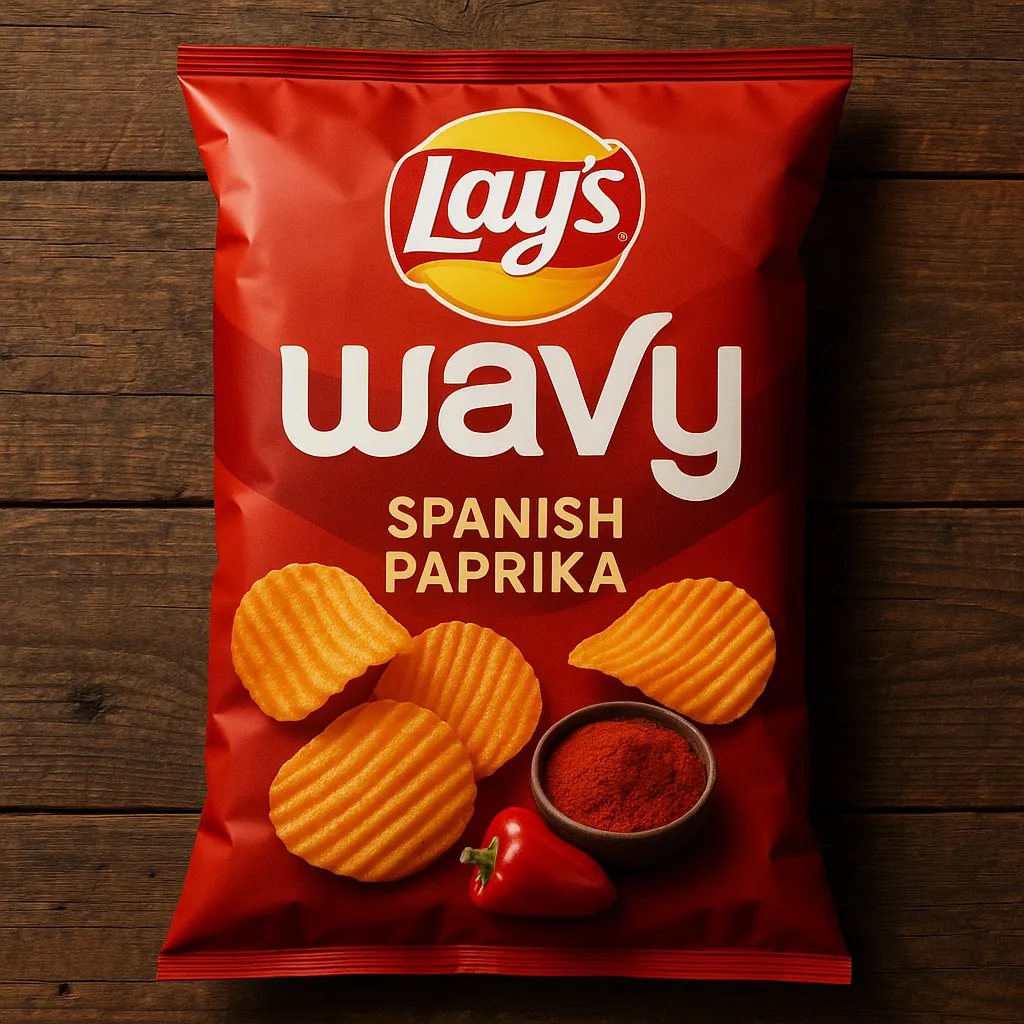
Lay's Wavy Spanish Paprika: Calories, Nutrition and Health Benefits
Crispy wavy-cut potato chips with smoky paprika flavor—addictive snacking that offers minimal nutrition and high caloric density.
Quick Nutrition Facts
Per 100g (Typical Serving Size)
| Nutrient | Amount |
|---|---|
| Calories | 536 kcal |
| Protein | 5.4g |
| Carbohydrates | 52g |
| Fiber | 4g |
| Sugars | 1g |
| Fat | 33g |
| Saturated Fat | 9g |
| Trans Fat | 0.5g |
| Sodium | 600mg |
| Potassium | 430mg |
Macronutrient Breakdown
 ChatGPT
  Claude
  AI Mode
  Perplexity
NUTRITIONIST INSIGHT
Lay's Wavy Spanish Paprika is a processed snack engineered for taste reward, not nutrition. The frying process creates trans fats; minimal fiber creates rapid blood sugar spikes despite moderate carbs. The wavy shape increases surface area and fat absorption. Paprika adds negligible antioxidants. Optimal consumption: save for rare occasions (once monthly), limit to 15g, and pair with protein.
Myth Busters
MYTH #1: Chips Are Less Fattening Than Chocolate
TRUTH: Both are high-calorie treats, but chips are worse. Chips provide 536 calories/100g with 33g fat and no nutrient density. Fried foods increase trans fat intake, raising cardiovascular disease risk. A 30g chip serving (161 cal) provides zero fiber, minerals, or vitamins. Plain chocolate offers cocoa antioxidants; chips offer nothing.
MYTH #2: Paprika Makes These Chips Healthier
TRUTH: Paprika at 0.1g per 100g chips contributes negligible antioxidants. Whole paprika powder contains 12mg capsanthin per 100g; in chips it's trace amounts. The "smoky flavor" doesn't offset 600mg sodium and trans fats. Real paprika (5g daily) offers health benefits; chips don't.
MYTH #3: "Made From Real Potatoes" Means They're Nutritious
TRUTH: Processing destroys potato's nutrition. Fresh potatoes offer 77 calories, 1.7g fiber, and 425mg potassium per 100g. Chips retain only calories (536 kcal), lose 57% of potassium due to salt processing, and add 33g oil. Boiled potatoes are nutritionally superior.
MYTH #4: The Wavy Shape Makes Them Less Fatty
TRUTH: Wavy design increases surface area by 30–40%, absorbing more oil during frying. Result: chips contain more fat than flat varieties (36g vs 30g per 100g). The shape is engineered to maximize palatability and fat absorption—not reduce it.
MYTH #5: Potato Chips Are a Good Carb Source
TRUTH: Refined carbs from frying are poor nutrition. Fried potatoes have glycemic index 60–75 vs boiled 56 or sweet potato 46. Chips provide rapid glucose spikes without satiety. Whole grains (brown rice, oats) provide carbs with fiber, micronutrients, and stable blood sugar.
NutriScore by Health Goals
| Health Goal | NutriScore | Why This Score? |
|---|---|---|
| Weight Loss |  | 536 kcal/100g, 33g fat, minimal fiber. Even 30g serving (161 cal) lacks satiety. Addictive reward pathway makes portion control difficult. Avoid entirely. |
| Muscle Gain |  | Only 5.4g protein per 100g (4% calories). High calories from fat, not protein. Trans fats reduce testosterone. Use whey protein, chicken, or legumes instead. |
| Diabetes Management | | High GI (60+), 48g net carbs per 100g causes rapid spikes. Associated with increased diabetes risk. Avoid completely. |
| PCOS Management | | Refined carbs worsen insulin resistance; trans fats increase inflammation. Avoid. Choose nuts or seeds with stable GI (<20). |
| Pregnancy Nutrition | | Trans fats compromise fetal brain development; 600mg sodium increases pre-eclampsia risk. Choose whole food carbs (sweet potato, oats). |
| Viral/Flu Recovery | | Lacks immune-supporting nutrients. High salt worsens dehydration. Fruit, yogurt, or bone broth provide recovery nutrition; chips provide empty calories. |
PERSONALIZED NUTRITION
Track your meals with NutriScan for personalized NutriScores based on your specific health goals!
Blood Sugar Response to Lay's Chips
Potato chips cause rapid, prolonged blood glucose elevation—particularly problematic for diabetes and weight management.
Typical Glucose Response Curve
This chart shows typical blood glucose response for general healthy individuals. Individual responses may vary. Not medical advice.
How to Minimize Blood Sugar Impact
- 🥜 Almonds or walnuts - 10g almonds (60 cal) reduce peak by 25–35%
- 🥛 Greek yogurt - Protein and fat slow carb absorption significantly
- 🥚 Cheese slice - Fat content extends energy release, prevents crash
- 🍗 Chicken breast - Protein-only pairing prevents glucose spike entirely
Better alternatives to chips:
- Roasted chickpeas (160 cal, 5g fiber, 6g protein per 100g)
- Homemade air-popped popcorn (30 cal, 3.5g fiber per 100g)
- Roasted mixed nuts (580 cal, 9g fiber, 17g protein per 100g)
Cultural Significance
Potato chips are a globally ubiquitous snack, with Lay's commanding 60% market share in India. Spanish paprika reflects international flavor trends, positioning chips as sophisticated snacking.
India's Chip Culture:
- Lay's Magic Masala dominates market; Spanish Paprika is imported premium variant
- Snacking culture prevalent during cricket matches, Bollywood films, social gatherings
- Positioned as affordable indulgence for middle class ($0.50–$1.50 per bag)
- Marketing emphasizes "crispy" texture and bold flavors over nutrition
Global Context:
- Fried potato chips originated Netherlands (1600s); industrialized in USA (1920s)
- Paprika flavor reflects European influence in global snack innovation
- Consumption rising in developing nations; linked to obesity epidemics
Reality Check: Chips are engineered ultra-processed food designed for maximum reward response. Spanish Paprika branding masks commodity junk food origin.
Compare & Substitute
Chips vs Healthier Alternatives (Per 100g)
| Nutrient | 🥔 Lay's Wavy Paprika | 🥜 Almonds | 🥒 Roasted Chickpeas | 🍿 Popcorn (Air Popped) |
|---|---|---|---|---|
| Calories | 536 kcal | 579 kcal | 364 kcal | 387 kcal |
| Carbs | 52g | 22g | 60g | 77g |
| Fiber | 4g | 12.5g | 15g | 14.4g |
| Protein | 5.4g | 21g | 19g | 13g |
| Fat | 33g | 50g | 4g | 3.7g |
| Sodium | 600mg | 1mg | 400mg | 660mg |
| Trans Fat | 0.5g | 0g | 0g | 0g |
| Best For | (Avoid) | Satiety, sustained energy | Fiber + protein combo | High-volume snack |
Frequently Asked Questions
How much of a serving should I eat?
Limit to 15g (one small handful, ~80 calories) if consuming at all. A standard chip bag is 30–50g, already exceeding healthy snack portion. Pair with 10g almonds or cheese to add protein and extend satiety.
Are baked Lay's chips healthier?
Slightly, but marginally. Baked chips contain 28g fat per 100g vs fried 33g; carbs stay at 52g. Calorie savings (~50 cal/100g) don't offset continued poor nutrition (minimal fiber, high sodium, refined carbs). Nuts remain superior choice.
What about Lay's Light chips?
Light versions use artificial sweeteners and reduced-fat oils. Often still contain 350+ calories per 100g, trans fats, and additive-heavy ingredient lists. Marketing term "light" refers to calories, not nutrition. Fresh fruit or nuts are legitimately healthier.
Can I eat chips on cheat day?
Cheat meals shouldn't include trans fats (pro-inflammatory, reduce hormone production). If having chips monthly, accept: one 30g serving ~160 calories, 30–60 min cardio to burn, blood sugar spike for 3–4 hours. Better cheat choices: pizza (whole grain crust), ice cream (moderation), or homemade fried foods.
Why are chips so addictive?
Fried carbs + salt create dopamine surges, particularly in reward-seeking individuals. Wavy shape increases surface area and fat absorption; flavor compounds trigger pleasure center. This is neurochemical manipulation, not taste. Whole foods don't trigger addiction despite equal or better taste.
Is paprika seasoning unhealthy?
Whole paprika powder (5g daily) is nutritious—rich in capsanthin antioxidants and vitamin C. In chips (0.1g per serving), it's negligible. The issue isn't paprika; it's frying process, salt, and refined carbs that overshadow minimal paprika benefits.


Similar Nutritious Fruits
4505 Chicharrones Classic Chili Salt
7 Eleven Japan Crispy Corn Cheese
Explore More Nutrition Tools & Resources
AI Calorie Counter App - Snap a Photo, Get Macros
AI Nutritionist App That Reads Your Logged Meals
Best Protein Supplements for Women
Bulking Meal Plan App That Sets Your Surplus
ChatGPT Calorie Counter Alternative That Keeps the Total
ChatGPT Diet Plan Alternative That Tracks What You Eat
ChatGPT Weight Loss Coach Alternative With a Food Log
Fast Food Calorie Counter App That Reads the Tray
Free Calorie Tracker App with AI Photo Scans | NutriScan
Indian Diet Plan App With Veg and Non Veg Meals
Indian Food Calorie Calculator - Get Instant Nutrition Facts for Desi Meals — 2026
Intermittent Fasting for Women, Timer and Meal Log App
Intermittent Fasting Tracker App - Free Fasting Timer
Macro Tracker App That Fills the Numbers From a Photo
Mediterranean Diet Meal Plan App That Counts the Oil
Micronutrient Tracker App for Vitamins and Minerals
MyFitnessPal Alternative That Stays Free | NutriScan
NutriScore App: A Free Grade on Every Meal | NutriScan
Nutrition Label Scanner App for the Amount You Ate
Second Trimester Protein Guide
Vegetarian Meal Plan App With a Protein Target
Voice Calorie Counter - Speak to Track Meals Hands-Free
Water and Calorie Tracker App - Free Water Log