Lean Chicken Breast: Calories, Nutrition and Health Benefits
The ultimate lean protein powerhouse: 31g protein, just 165 calories per 100g, and loaded with selenium and B vitamins for every fitness goal.
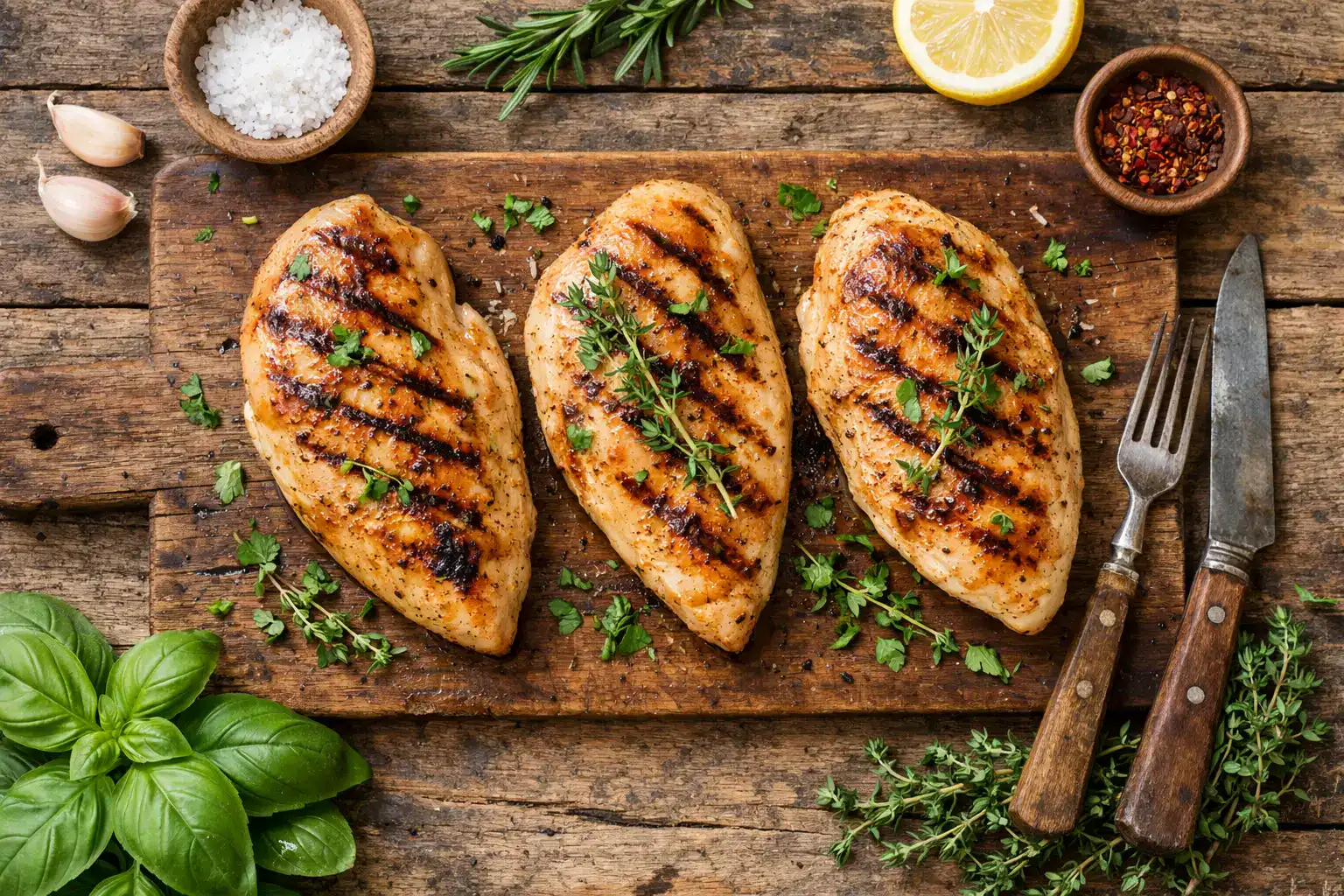
Quick Nutrition Facts
Per 100g Cooked Skinless Chicken Breast
| Nutrient | Amount |
|---|---|
| Calories | 165 kcal |
| Protein | 31g |
| Carbohydrates | 0g |
| Fiber | 0g |
| Sugars | 0g |
| Fat | 3.6g |
| Selenium | 27.6mcg |
| Niacin (B3) | 13.7mg |
| Vitamin B6 | 0.6mg |
| Phosphorus | 228mg |
Macronutrient Breakdown
 ChatGPT
  Claude
  AI Mode
  Perplexity
NUTRITIONIST INSIGHT
Chicken breast delivers 31g of complete protein per 100g with all nine essential amino acids. The 27.6mcg selenium (50% DV) acts as a powerful antioxidant, while niacin supports energy metabolism and heart health.
Myth Busters
MYTH #1: Chicken Breast Is Boring and Tasteless
TRUTH: Plain boiled chicken breast can be bland, but proper seasoning and cooking methods (grilling, baking, marinating) make it delicious. The neutral flavor profile actually makes it one of the most versatile proteins for meal prep.
MYTH #2: You Must Eat Chicken Breast for Muscle Gain
TRUTH: While chicken breast is excellent for muscle building (31g protein per 100g), other protein sources like fish, eggs, legumes, and dairy also stimulate muscle protein synthesis. Variety matters more than one single food.
MYTH #3: Chicken Breast Has No Fat at All
TRUTH: Skinless chicken breast contains 3.6g fat per 100g, including about 1g saturated fat. This small amount of fat is actually beneficial for absorbing fat-soluble vitamins and maintaining hormone balance.
MYTH #4: Raw Chicken Is Safe if It Looks Fresh
TRUTH: Raw chicken can harbor Salmonella and Campylobacter bacteria regardless of appearance. Always cook chicken breast to an internal temperature of 165F (74C). Use a meat thermometer, not color alone, to verify doneness.
MYTH #5: Frozen Chicken Breast Is Less Nutritious
TRUTH: Flash-frozen chicken breast retains virtually the same protein, vitamin, and mineral content as fresh chicken. Freezing at peak freshness can actually preserve nutrients better than refrigerated chicken stored for several days.
NutriScore by Health Goals
| Health Goal | NutriScore | Why This Score? |
|---|---|---|
| Weight Loss |  | Only 165 cal per 100g with 31g protein. High protein intake promotes satiety and reduces overall calorie intake. Ideal for calorie deficit diets. |
| Muscle Gain | | Complete protein with all essential amino acids. Stimulates muscle protein synthesis effectively, providing ~2.5g leucine per serving. |
| Diabetes Management | | Zero carbs, GI of 0. Protein from chicken helps slow carbohydrate absorption when eaten with carb-containing foods, reducing post-meal glucose spikes. |
| PCOS Management | | High protein, zero carbs supports insulin sensitivity. Selenium content aids thyroid function and hormonal balance. |
| Pregnancy Nutrition | | Essential protein for fetal tissue development, B6 for brain development, niacin for energy metabolism. Must cook to 165F (74C). |
| Viral/Flu Recovery | | Easily digestible lean protein supports immune cell production. Selenium and zinc boost immune defense. Classic chicken soup is backed by tradition and science. |
PERSONALIZED NUTRITION
Track your meals with NutriScan for personalized NutriScores based on your specific health goals!
Blood Sugar Response to Chicken Breast
Chicken breast has a glycemic index of 0 since it contains no carbohydrates, making it an ideal protein for blood sugar management.
Typical Glucose Response Curve
This chart shows typical blood glucose response for general healthy individuals. Individual responses may vary. Not medical advice.
How to Flatten the Spike
Pairing chicken breast with fiber-rich carbohydrates slows glucose absorption when eating mixed meals:
- 🥦 Steamed broccoli or roasted vegetables - Adds fiber and micronutrients
- 🍚 Brown rice or quinoa - Complex carbs with slower digestion
- 🥗 Mixed green salad with olive oil - Healthy fats and fiber combination
- 🫘 Lentils or chickpeas - Plant protein and fiber boost
Chicken breast protein itself helps moderate the glucose response from carbohydrate-containing sides, keeping you fuller for longer.
Cultural Significance
Chicken breast is one of the most consumed protein sources worldwide, with poultry being the most popular meat in over 100 countries.
In India:
- Tandoori chicken is one of the most iconic preparations globally
- Chicken tikka and butter chicken showcase breast meat in diverse spice profiles
- Grilled chicken breast gaining popularity in urban fitness culture
- India is the world's 5th largest poultry producer
Global Impact:
- Americans consume over 100 pounds of chicken per capita annually
- Lean chicken breast is the top protein choice for bodybuilders and athletes worldwide
- Chicken farming supports livelihoods of millions of small-scale farmers globally
- Most affordable complete protein source in many developing countries
Compare & Substitute
Chicken Breast vs Similar Proteins (Per 100g Cooked)
| Nutrient | 🍗 Chicken Breast | 🐟 Salmon | 🥩 Lean Beef (Sirloin) | 🦐 Shrimp |
|---|---|---|---|---|
| Calories | 165 kcal | 208 kcal | 197 kcal | 99 kcal |
| Carbs | 0g | 0g | 0g | 0g |
| Fiber | 0g | 0g | 0g | 0g |
| Protein | 31g | 20g | 26g | 24g |
| Fat | 3.6g | 13g | 10g | 0.3g |
| Selenium | 27.6mcg | 36mcg | 28mcg | 38mcg |
| Iron | 0.7mg | 0.3mg | 2.6mg | 0.5mg |
| Best For | Weight loss, muscle gain | Heart health, omega-3s | Iron needs, strength | Ultra-low calorie diets |
Frequently Asked Questions
How many calories are in 100g of chicken breast?
100g of cooked, skinless chicken breast contains approximately 165 calories. A typical whole breast (174g) provides about 284 calories with 54g of protein and 6.2g of fat.
By cooking method (per 100g): Grilled: 165 cal. Baked: 165 cal. Pan-fried (no oil): 170 cal. Deep-fried: 260+ cal.
Is chicken breast good for weight loss?
Yes, chicken breast is one of the best foods for weight loss. With 31g protein and only 165 calories per 100g, it scores high on the satiety index.
Best practices: Grill or bake instead of frying, remove skin before cooking, pair with vegetables, aim for 150-200g per meal for optimal protein intake.
Can diabetics eat chicken breast?
Chicken breast is excellent for diabetics. It has zero carbohydrates and a glycemic index of 0, meaning it causes no blood sugar spike on its own.
Tips for diabetics: Pair with low-GI sides (non-starchy vegetables, legumes), avoid breaded or sugar-glazed preparations, monitor portion sizes of accompanying carbs.
How much protein is in chicken breast?
100g of cooked skinless chicken breast provides 31g of complete protein with all 9 essential amino acids. A single breast (174g) delivers about 54g protein, meeting most of the daily requirement for an average adult.
For muscle gain, aim for 1.6-2.2g protein per kg body weight daily. Two chicken breast servings can cover 60-70% of this target.
Is chicken breast safe during pregnancy?
Fully cooked chicken breast is safe and highly beneficial during pregnancy. It provides essential protein for fetal development, vitamin B6 for brain formation, and niacin for energy metabolism.
Safety rules: Always cook to 165F (74C) internal temperature. Avoid deli-style cold chicken. Wash hands and surfaces after handling raw chicken. Consume within 3-4 days of cooking.
What is the best way to cook chicken breast?
Healthiest methods (lowest added calories):
- Grilling - Adds smoky flavor, minimal fat needed
- Baking at 400F (200C) - 20-25 minutes, even cooking
- Poaching - Gentlest method, retains moisture
- Air-frying - Crispy exterior without deep frying
Avoid: Deep frying (doubles calories), breading with flour (adds carbs), cooking with excessive butter or oil.
Track your protein intake with NutriScan app to ensure you hit your daily nutrition targets.


Similar Nutritious Foods
4505 Chicharrones Classic Chili Salt
7 Eleven Japan Crispy Corn Cheese
Explore More Nutrition Tools & Resources
AI Calorie Counter App - Snap a Photo, Get Macros
AI Nutritionist App That Reads Your Logged Meals
Best Protein Supplements for Women
Bulking Meal Plan App That Sets Your Surplus
ChatGPT Calorie Counter Alternative That Keeps the Total
ChatGPT Diet Plan Alternative That Tracks What You Eat
ChatGPT Weight Loss Coach Alternative With a Food Log
Fast Food Calorie Counter App That Reads the Tray
Free Calorie Tracker App with AI Photo Scans | NutriScan
Indian Diet Plan App With Veg and Non Veg Meals
Indian Food Calorie Calculator - Get Instant Nutrition Facts for Desi Meals — 2026
Intermittent Fasting for Women, Timer and Meal Log App
Intermittent Fasting Tracker App - Free Fasting Timer
Macro Tracker App That Fills the Numbers From a Photo
Mediterranean Diet Meal Plan App That Counts the Oil
Micronutrient Tracker App for Vitamins and Minerals
MyFitnessPal Alternative That Stays Free | NutriScan
NutriScore App: A Free Grade on Every Meal | NutriScan
Nutrition Label Scanner App for the Amount You Ate
Second Trimester Protein Guide
Vegetarian Meal Plan App With a Protein Target
Voice Calorie Counter - Speak to Track Meals Hands-Free
Water and Calorie Tracker App - Free Water Log