Lechon (Filipino Roast Pig): Calories, Nutrition and Health Facts
The iconic Filipino celebration dish featuring whole spit-roasted pig with irresistibly crispy skin and tender, flavorful meat.
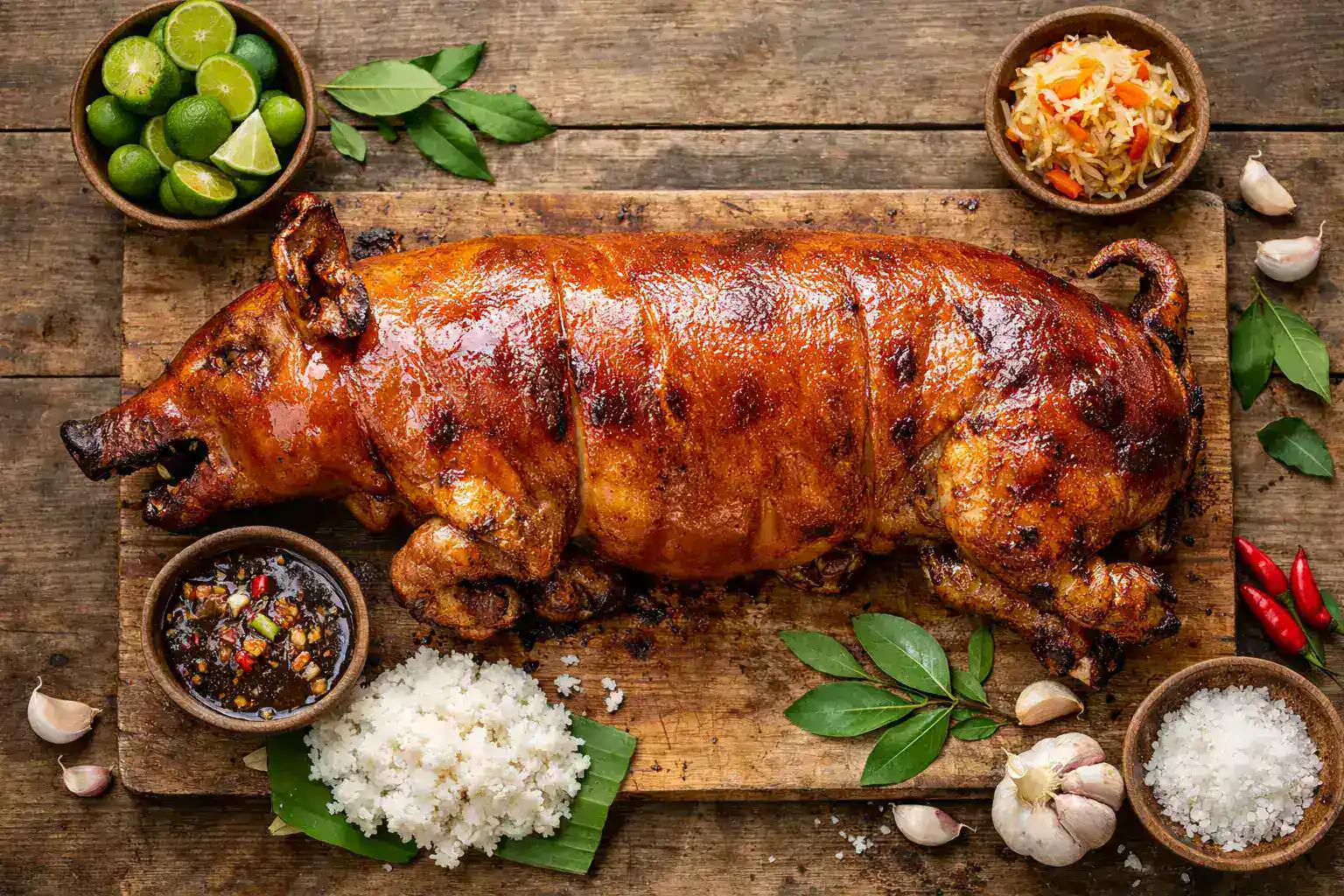
Quick Nutrition Facts
Per 100g Serving
| Nutrient | Amount |
|---|---|
| Calories | 294 kcal |
| Protein | 25.8g |
| Carbohydrates | 0g |
| Fiber | 0g |
| Sugars | 0g |
| Fat | 21.3g |
| Saturated Fat | 8g |
| Cholesterol | 89mg |
| Sodium | 65mg |
| Iron | 1.2mg |
Macronutrient Breakdown
 ChatGPT
  Claude
  AI Mode
  Perplexity
NUTRITIONIST INSIGHT
Lechon delivers impressive protein (25.8g per 100g) but comes with significant saturated fat (8g). For healthier enjoyment, choose lean loin cuts, skip the crispy skin, and balance with fiber-rich vegetables like ensaladang talong or atchara.
Myth Busters
MYTH #1: Lechon Is Pure Fat and Has No Nutritional Value
TRUTH: Lechon provides 25.8g of high-quality complete protein per 100g, along with B vitamins and minerals like zinc and iron. Pork is rich in B-complex vitamins and essential minerals, though the high saturated fat content requires moderation.
MYTH #2: Eating Lechon Skin Is Safe Because Fat Is Good
TRUTH: While some dietary fat is necessary, lechon skin is concentrated saturated fat. The American Heart Association recommends limiting saturated fat to less than 6% of daily calories because it raises LDL cholesterol and heart disease risk.
MYTH #3: Lechon Causes Immediate Heart Problems
TRUTH: Occasional consumption at fiestas won't cause immediate heart issues for healthy individuals. Cardiovascular risk increases with regular, excessive saturated fat consumption over time, not from single servings. Moderation is key.
MYTH #4: Diabetics Can Eat Unlimited Lechon Because It Has Zero Carbs
TRUTH: While lechon has no carbohydrates, high saturated fat intake worsens insulin resistance in diabetics. The zero-carb benefit doesn't offset the metabolic impact of excessive saturated fat consumption.
MYTH #5: All Parts of Lechon Are Equally Unhealthy
TRUTH: Nutritional content varies significantly by cut. Lean loin portions have less fat than belly (lechon liempo). Lean pork cuts like tenderloin improve body composition without adverse cardiovascular effects when part of a balanced diet.
NutriScore by Health Goals
| Health Goal | NutriScore | Why This Score? |
|---|---|---|
| Weight Loss |  | High calorie density (294 kcal/100g) and fat content. Limit to 50g serving max, choose lean cuts only. |
| Muscle Gain |  | Excellent protein (25.8g) for muscle synthesis. Choose lean portions, remove visible fat. |
| Diabetes Management | | Zero carbs but high saturated fat worsens insulin resistance. Limit to occasional small portions. |
| PCOS Management | | Saturated fat can worsen hormonal imbalance. Opt for lean protein sources instead. |
| Pregnancy Nutrition |  | Good protein and iron, but must be thoroughly cooked to 74°C/165°F to prevent listeria. Limit fatty portions. |
| Viral/Flu Recovery | | Protein supports recovery, but high fat may be hard to digest when ill. Choose lean broth-based dishes instead. |
PERSONALIZED NUTRITION
Track your meals with NutriScan for personalized NutriScores based on your specific health goals!
Blood Sugar Response to Lechon
Understanding how lechon affects your blood glucose can help you make informed decisions about when and how to eat it.
Typical Glucose Response Curve
This chart shows typical blood glucose response for general healthy individuals. Individual responses may vary. Not medical advice.
How to Minimize Metabolic Impact
Since lechon has zero carbohydrates, the blood sugar response is minimal. However, high saturated fat affects long-term insulin sensitivity. To minimize metabolic impact:
- 🥗 Pair with fiber-rich vegetables - Ensalada, atchara, or steamed kangkong aid digestion
- 🍚 Limit rice portions - Balance high-fat lechon with smaller carb servings
- 💧 Stay hydrated - Water helps process sodium and fat
- 🚶 Take a walk after eating - Light activity aids digestion and glucose regulation
Cultural Significance
Lechon is the undisputed king of Filipino celebrations, symbolizing prosperity, hospitality, and festive abundance.
In the Philippines:
- Centerpiece of fiestas, weddings, birthdays, and Christmas celebrations
- Cebu lechon is famous for its herb-stuffed, no-sauce-needed flavor
- Manila-style served with liver sauce (lechon sauce)
- Symbol of celebration status - having lechon indicates a special occasion
- Traditional preparation involves spit-roasting over charcoal for 4-6 hours
Regional Variations:
- Cebu: Stuffed with lemongrass, garlic, onions, and local herbs
- Manila/Luzon: Often served with thick liver-based sarsa
- Visayas: Known for crispier skin and lighter seasoning
- Mindanao: Influenced by local spice traditions
Global Recognition:
- Anthony Bourdain famously called Cebu lechon "the best pig ever"
- Filipino diaspora communities maintain lechon traditions worldwide
- Growing international awareness of Filipino cuisine features lechon prominently
Compare & Substitute
Lechon vs Similar Protein Sources (Per 100g)
| Nutrient | 🐷 Lechon | 🍗 Roast Chicken | 🥩 Beef Brisket | 🐟 Grilled Salmon |
|---|---|---|---|---|
| Calories | 294 kcal | 190 kcal | 331 kcal | 208 kcal |
| Carbs | 0g | 0g | 0g | 0g |
| Fiber | 0g | 0g | 0g | 0g |
| Protein | 25.8g | 28.9g | 26g | 25g |
| Fat | 21.3g | 8.1g | 24g | 12g |
| Sat. Fat | 8g | 2.3g | 9g | 2.5g |
| Cholesterol | 89mg | 88mg | 94mg | 63mg |
| Best For | Celebrations, high protein | Lean protein, everyday meals | High calorie needs | Heart health, omega-3s |
Frequently Asked Questions
How many calories are in a typical lechon serving?
A fiesta-size serving (150-200g) contains 440-590 calories. Per 100g, lechon has 294 calories with 25.8g protein and 21.3g fat. The crispy skin portion is higher in calories due to concentrated rendered fat.
Is lechon healthy or unhealthy?
Lechon offers nutritional benefits (high protein, B vitamins, zinc, iron) but also concerns (high saturated fat, cholesterol). For healthy individuals, occasional consumption at celebrations is fine. Regular intake increases cardiovascular risk due to saturated fat content.
Healthier choices:
- Select lean loin cuts over belly
- Remove crispy skin before eating
- Limit portion to 75-100g
- Balance with vegetables and fiber
Can diabetics eat lechon?
Diabetics can eat small portions (50-75g) of lean lechon occasionally. While it has zero carbs and minimal immediate blood sugar impact, high saturated fat worsens insulin sensitivity over time. Always pair with fiber-rich vegetables and monitor your response.
What is the healthiest way to eat lechon?
- Choose lean cuts - Loin and tenderloin areas have less fat
- Skip the skin - Reduces saturated fat intake significantly
- Control portions - 75-100g is a reasonable serving
- Add vegetables - Pair with ensalada, atchara, or steamed greens
- Limit frequency - Reserve for special occasions, not daily meals
Can pregnant women eat lechon?
Pregnant women can safely eat freshly cooked, well-done lechon in moderation. Critical safety requirements:
- Internal temperature must reach 74°C (165°F)
- Eat while hot - avoid room-temperature or reheated lechon
- Choose lean portions to limit saturated fat
- Avoid if left out for extended periods (listeria risk)
The protein and iron content supports pregnancy nutrition when prepared safely.
Is lechon belly (liempo) worse than regular lechon?
Yes, lechon belly (liempo) is fattier. It contains approximately 30% fat compared to 21% in mixed lechon portions. The belly has more marbling and rendered fat. For healthier options, choose cuts from the loin or leg areas instead.
How does lechon compare to other roasted meats?
Lechon has more fat than roast chicken (21g vs 8g per 100g) but similar protein content. Compared to beef brisket, lechon is slightly leaner. For heart-healthy alternatives with similar protein, choose skinless roast chicken or grilled fish.


Similar Nutritious Foods
4505 Chicharrones Classic Chili Salt
7 Eleven Japan Crispy Corn Cheese
Explore More Nutrition Tools & Resources
AI Calorie Counter App - Snap a Photo, Get Macros
AI Nutritionist App That Reads Your Logged Meals
Best Protein Supplements for Women
Bulking Meal Plan App That Sets Your Surplus
ChatGPT Calorie Counter Alternative That Keeps the Total
ChatGPT Diet Plan Alternative That Tracks What You Eat
ChatGPT Weight Loss Coach Alternative With a Food Log
Fast Food Calorie Counter App That Reads the Tray
Free Calorie Tracker App with AI Photo Scans | NutriScan
Indian Diet Plan App With Veg and Non Veg Meals
Indian Food Calorie Calculator - Get Instant Nutrition Facts for Desi Meals — 2026
Intermittent Fasting for Women, Timer and Meal Log App
Intermittent Fasting Tracker App - Free Fasting Timer
Macro Tracker App That Fills the Numbers From a Photo
Mediterranean Diet Meal Plan App That Counts the Oil
Micronutrient Tracker App for Vitamins and Minerals
MyFitnessPal Alternative That Stays Free | NutriScan
NutriScore App: A Free Grade on Every Meal | NutriScan
Nutrition Label Scanner App for the Amount You Ate
Second Trimester Protein Guide
Vegetarian Meal Plan App With a Protein Target
Voice Calorie Counter - Speak to Track Meals Hands-Free
Water and Calorie Tracker App - Free Water Log